Artwork
Augsburg
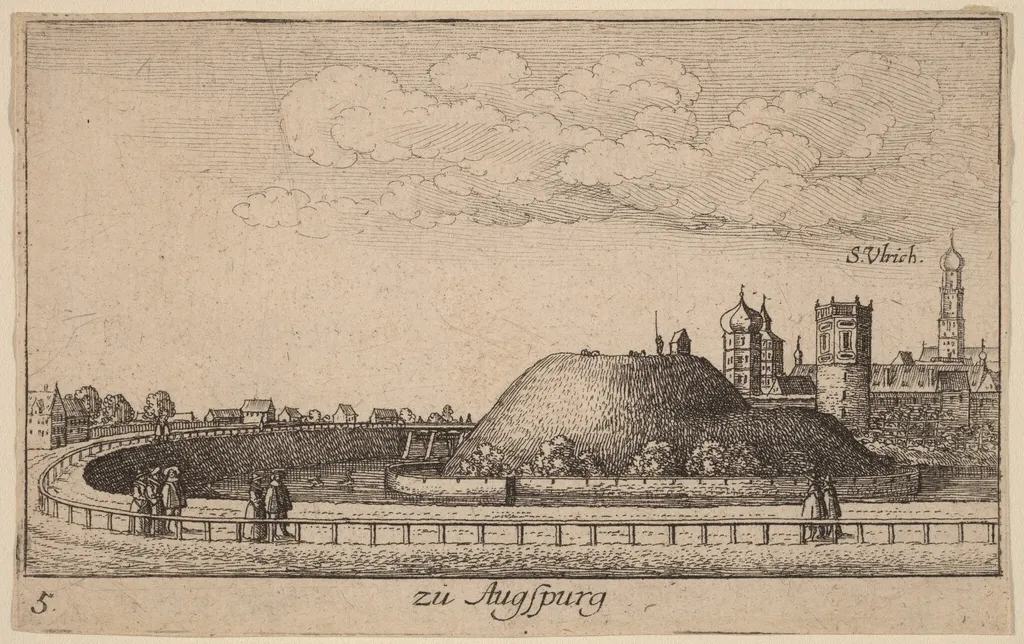
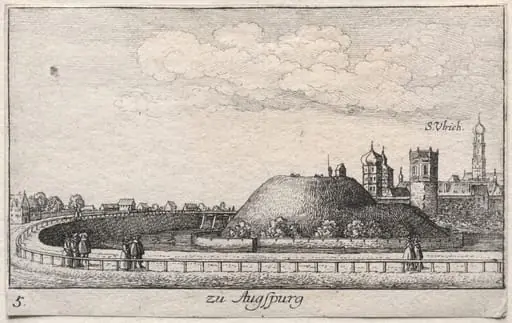
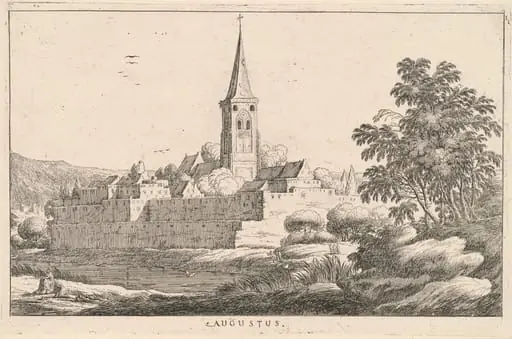
Augsburg is an ink print by the Baroque artist Wenceslaus Hollar. It dates from 1635 and is held in the collection of the National Gallery of Art.
About this work
You’ll see the city’s walls, towers, and streets all in sharp lines.
Wenceslaus Hollar made this detailed etching of Augsburg in 1635. You’ll see the city’s walls, towers, and streets all in sharp lines. The view looks down from a hill, like a map you can walk through.
Hollar loved showing cities this way. He traveled a lot and drew what he saw. This print is one of many city views he made.
Want to see more? Try looking up Rembrandt’s etchings—he did a similar style.
Overview
Augsburg is an etching created by Wenceslaus Hollar in 1635, exemplifying his skill in detailed topographical prints.
Subject & Meaning
The etching depicts a bird’s-eye view of Augsburg, showcasing its walls, towers, and streets with precision, reflecting Hollar’s travel-inspired documentation of urban landscapes.
Technique & Style
Executed in the veduta tradition, the work features sharp lines and a hilltop vantage point, characteristic of Hollar’s approach to capturing cities as navigable, detailed maps.
History & Provenance
Created during Hollar’s prolific period of producing city views, Augsburg represents a specific moment in his extensive output of topographical etchings.
Context
While Hollar’s style is distinct, his use of etching for detailed cityscapes can be contextualized alongside contemporaries like Rembrandt, who also explored the medium.
Artist & collection
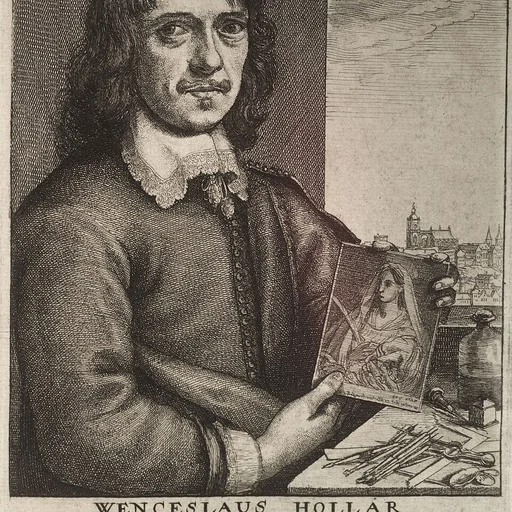
Artist
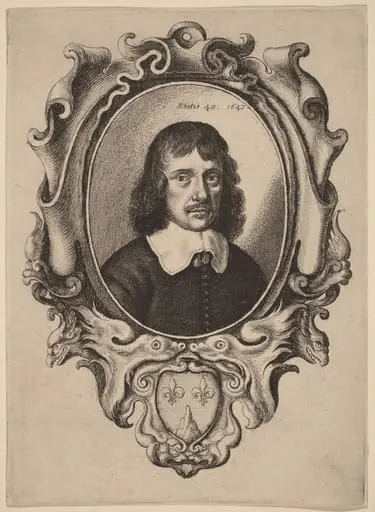
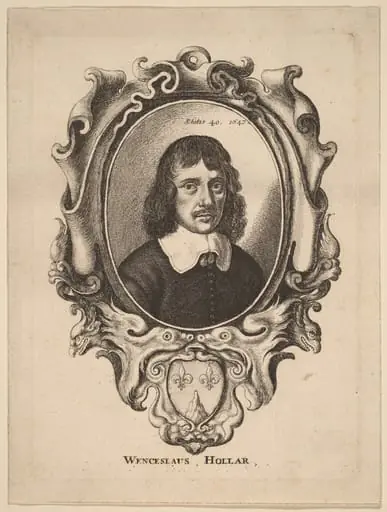
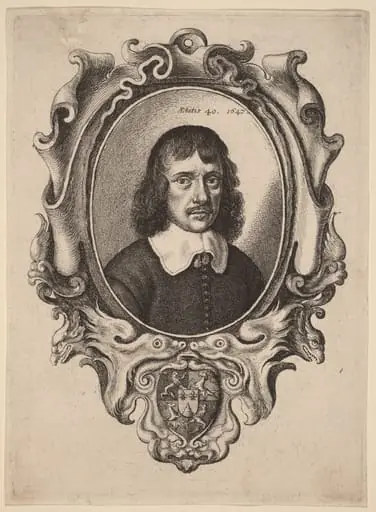
Wenceslaus Hollar (Czech: Václav Hollar (Czech pronunciation: ), German: Wenzel Hollar; 23 July 1607 – 25 March 1677) was a Czech engraver, etcher and painter.


![View of Nuremberg from the East [right section], by Hanns Lautensack](https://artifactworldgallery.com/img/hanns-lautensack--view-of-nuremberg-from-the-east-right-section--cd9d20af411c0891-w320.webp)