Artwork
View of Nuremberg from the East [right section]
![View of Nuremberg from the East [right section], by Hanns Lautensack, ink, 1552](https://artifactworldgallery.com/img/hanns-lautensack--view-of-nuremberg-from-the-east-right-section--cd9d20af411c0891-w1024.webp)
View of Nuremberg from the East [right section] is an ink print by the Renaissance artist Hanns Lautensack. It dates from 1552 and is held in the collection of the National Gallery of Art.
About this work
The right side shows Nuremberg’s city walls, towers, and rooftops under a cloudy sky.
The right side shows Nuremberg’s city walls, towers, and rooftops under a cloudy sky. The lines are sharp and fine, like scratches on metal. Each building has its own weight and shape.
This view comes from 1552. An artist used a needle on a copper plate to carve the scene. The ink then fills the grooves, making the print. Dry lines give the roofs a rough, real texture.
Try etching yourself at the National Gallery of Art, Washington.
Overview
Hanns Lautensack’s 1552 etching presents a panoramic view of Nuremberg as seen from the east. Executed in the mid‑sixteenth century, the print captures the city’s fortified walls, towers and densely packed rooftops beneath a muted sky. The composition is rendered with precise, linear detail, offering a documentary‑like record of the urban landscape during Lautensack’s residence in Nuremberg.
Subject & Meaning
The image focuses on the eastern segment of Nuremberg’s defensive perimeter, emphasizing the solidity of its walls and the verticality of its towers. By foregrounding architectural forms rather than human activity, the work underscores the city’s civic pride and its status as a fortified mercantile centre in the Holy Roman Empire.
Technique & Style
Lautensack employed copper‑plate etching, incising the scene with a fine needle before applying ink to the recessed lines. The resulting prints display crisp, delicate strokes that delineate individual roofs and structural details, while the dry, stippled textures suggest the roughness of tiled surfaces and the atmospheric quality of the cloudy sky.
History & Provenance
Born in Bamberg in 1524, Lautensack spent most of his career in Nuremberg, where he produced the majority of his prints and drawings. The etching reflects his practice as an etcher and draughtsman, following in the artistic lineage of his father, painter Paul Lautensack. The work has remained in scholarly collections as an example of early German cityscape printmaking.
Artist & collection
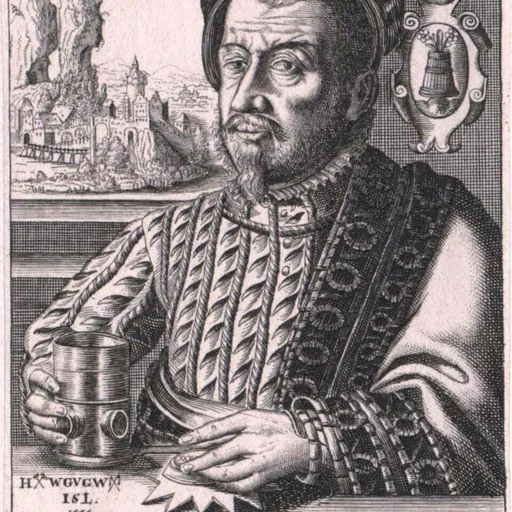
Artist
Hanns Lautensack (sometimes erroneously referred to as Hans Sebald Lautensack) (1524 – c.

![View of Nuremberg from the West [center section], by Hanns Lautensack](https://artifactworldgallery.com/img/hanns-lautensack--view-of-nuremberg-from-the-west-center-section--12422dca269411c0-w320.webp)
![View of Nuremberg from the East [left section], by Hanns Lautensack](https://artifactworldgallery.com/img/hanns-lautensack--view-of-nuremberg-from-the-east-left-section--53a897f84943df87-w320.webp) View of Nuremberg from the East [left section]
View of Nuremberg from the East [left section]![View of Nuremberg from the East [center section], by Hanns Lautensack](https://artifactworldgallery.com/img/hanns-lautensack--view-of-nuremberg-from-the-east-center-section--7aaed3dd23c167ee-w320.webp) View of Nuremberg from the East [center section]
View of Nuremberg from the East [center section]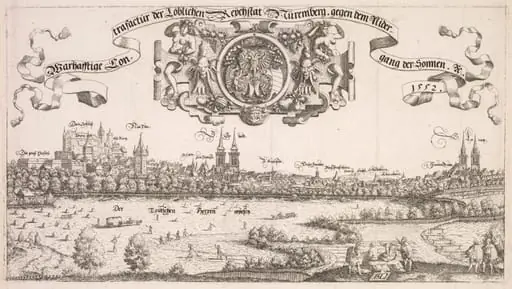 Panoramic View of Nuremberg: Center Portion
![View of Nuremberg from the West [right section], by Hanns Lautensack](https://artifactworldgallery.com/img/hanns-lautensack--view-of-nuremberg-from-the-west-right-section--8f7bb033ee717b8e-w320.webp) View of Nuremberg from the West [right section]
View of Nuremberg from the West [right section]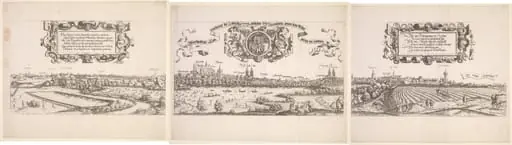 Panoramic View of Nuremberg
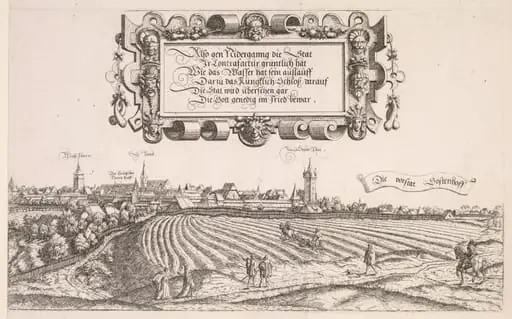 Panoramic View of Nuremberg: Right Portion
![View of Nuremberg from the West [left section], by Hanns Lautensack](https://artifactworldgallery.com/img/hanns-lautensack--view-of-nuremberg-from-the-west-left-section--8ac5006101a371ac-w320.webp) View of Nuremberg from the West [left section]
View of Nuremberg from the West [left section]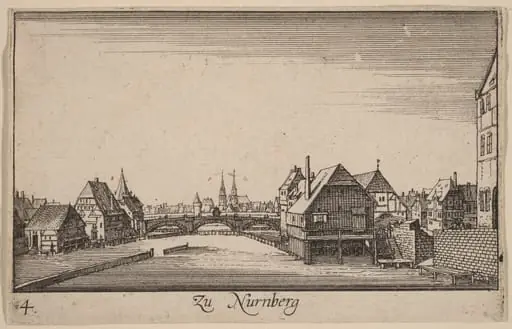 Nuremberg