Artwork
Ciuis Pragensis Filia
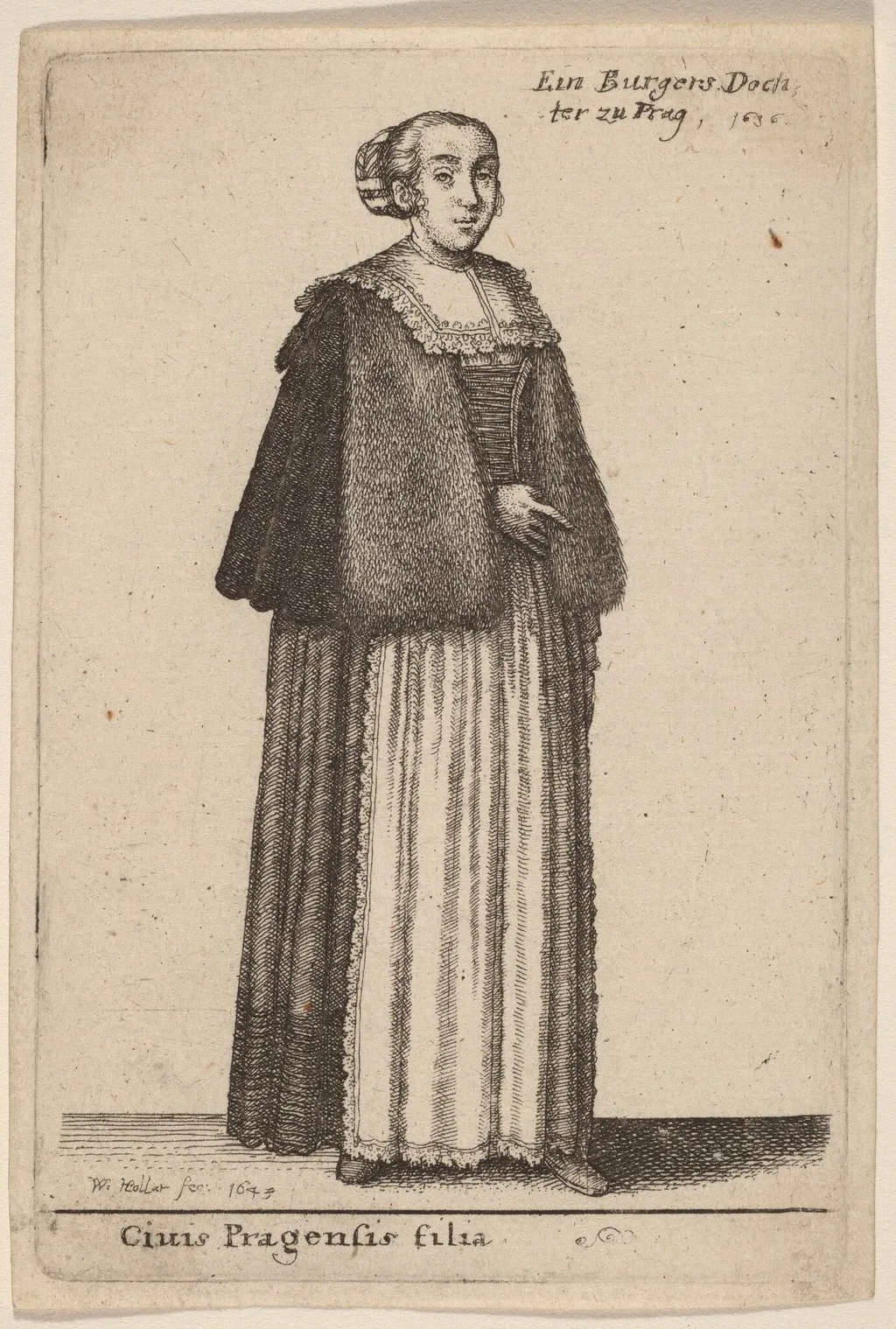
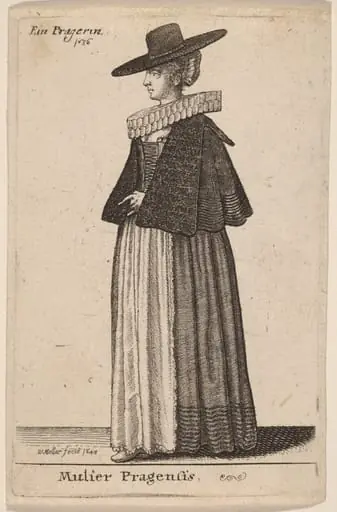
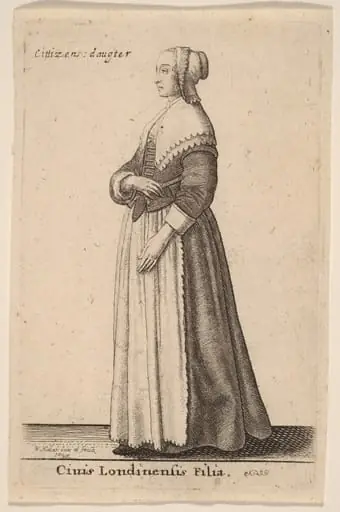
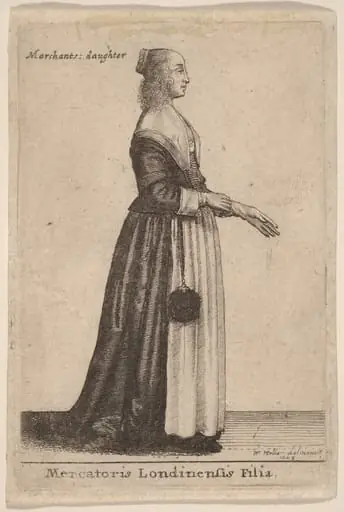
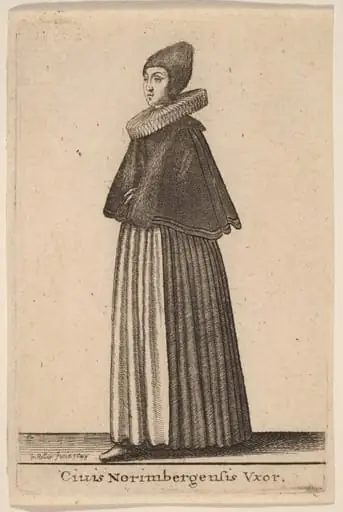
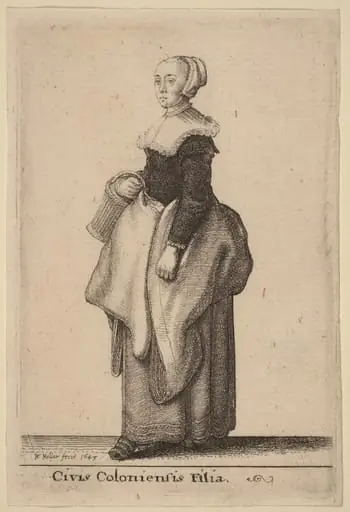
Ciuis Pragensis Filia is an ink print by the Baroque artist Wenceslaus Hollar. It dates from 1643 and is held in the collection of the National Gallery of Art.
About this work
Overview
Created in 1643 by Wenceslaus Hollar, *Ciuis Pragensis Filia* is an etching produced during his years in London. Though based in England, Hollar maintained a strong ties to his native Prague, a connection evident in this work. The print is one of several figural studies he made alongside his more widely known topographical views, blending personal memory with technical precision in ink on paper.
Subject & Meaning
The title, 'Daughter of a Citizen of Prague,' implies a symbolic representation of civic identity rather than a specific individual.
The figure is a woman depicted in quiet stillness, facing the viewer directly. Her attire—a dark cloak, white collar, and modest bodice—suggests provincial or middle-class Czech dress of the early 17th century. The shadow behind her and the restrained composition evoke a sense of solitude and dignity. The title, 'Daughter of a Citizen of Prague,' implies a symbolic representation of civic identity rather than a specific individual.
Technique & Style
Hollar employed fine, controlled lines typical of his etching method, using incised grooves to build texture and depth. The dark tones are achieved through dense hatching and cross-hatching, creating a somber, atmospheric effect. The figure emerges from the background with clarity, while the floor and shadow are rendered with minimal detail, focusing attention on the subject’s form and expression.
History & Provenance
Hollar produced this work during his extended stay in England, where he lived from the 1630s until his death in 1677. Though he documented English scenes extensively, he periodically returned to themes from his Bohemian youth. *Ciuis Pragensis Filia* is among the few figural prints from this period that reference his origins, suggesting a personal, perhaps nostalgic, intent behind its creation.
Context
In the mid-17th century, etching was widely used for both artistic and documentary purposes in Europe. Hollar’s work intersected with the growing interest in portraiture and regional identity amid the upheavals of the Thirty Years’ War. This print reflects a quiet counterpoint to the era’s grander historical narratives, offering instead a contemplative image of a woman tied to a city far from where she was depicted.
Legacy
Though less known than Hollar’s city views, this etching remains a significant example of his figural work. It demonstrates his ability to convey cultural memory through subtle detail and tone. Later collectors and scholars have noted its emotional restraint and technical discipline, positioning it as a quiet testament to the artist’s enduring connection to his homeland.
Artist & collection
Artist
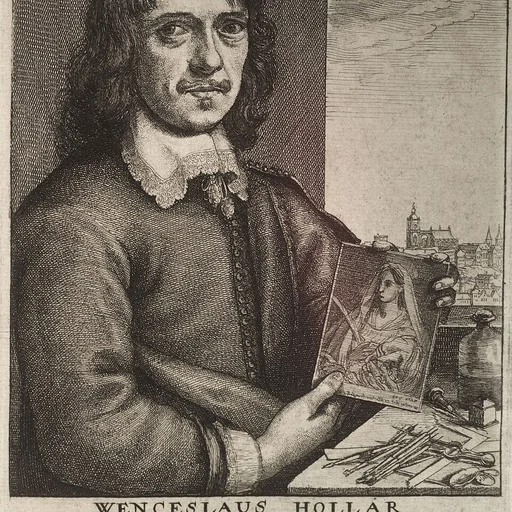
Wenceslaus Hollar (Czech: Václav Hollar (Czech pronunciation: ), German: Wenzel Hollar; 23 July 1607 – 25 March 1677) was a Czech engraver, etcher and painter.