Artwork
Civis Coloniensis Filia
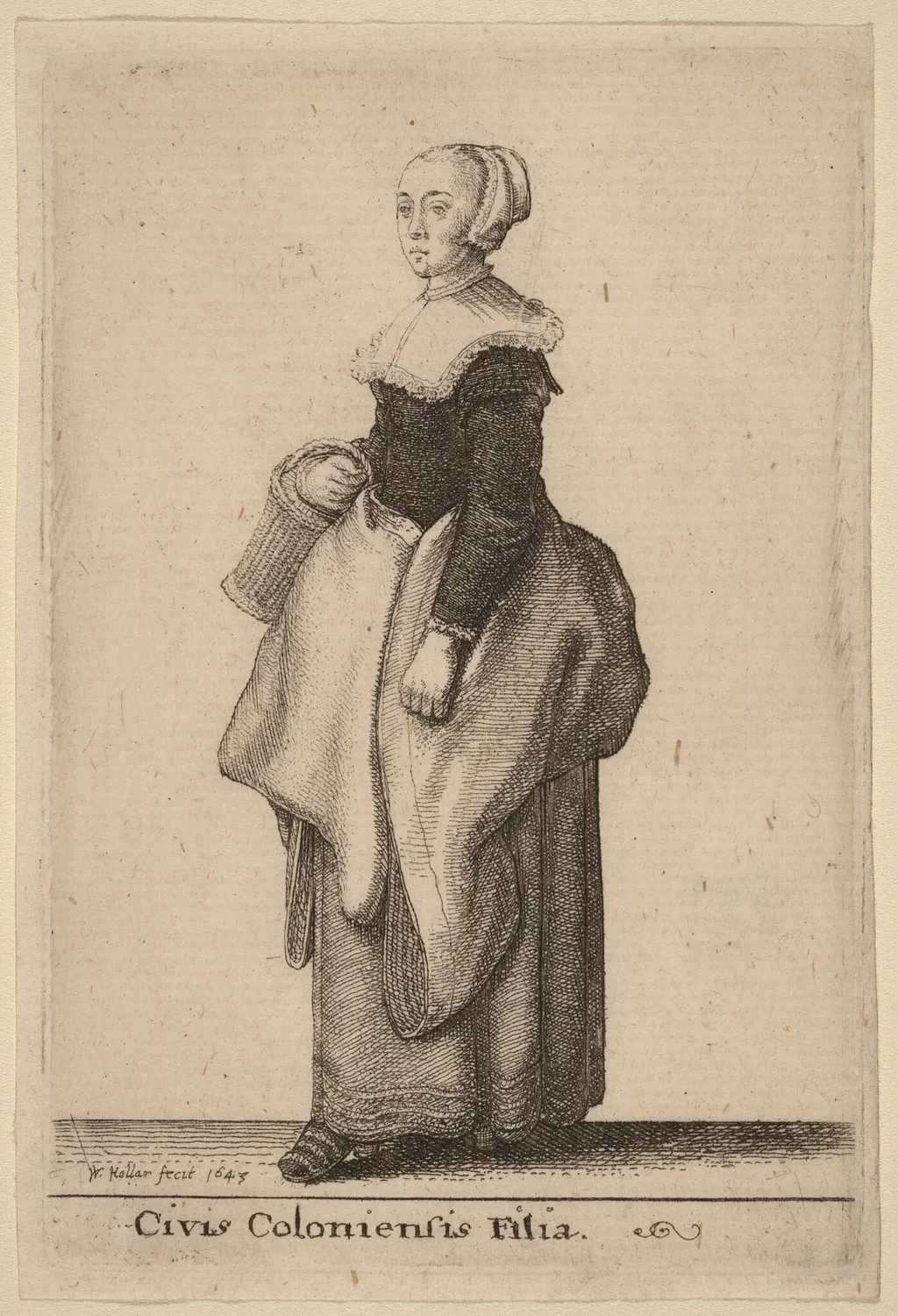
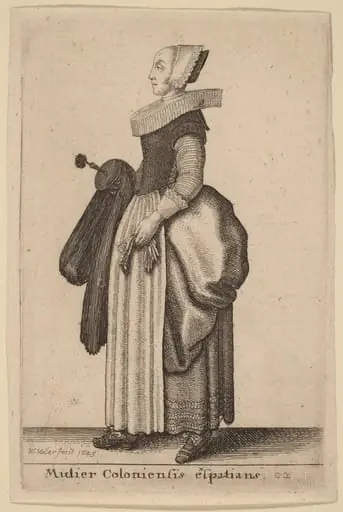
Civis Coloniensis Filia is an ink print by the Baroque artist Wenceslaus Hollar. It dates from 1643 and is held in the collection of the National Gallery of Art.
About this work
Overview
Civis Coloniensis Filia is an etching executed in 1643 by the Czech-born printmaker Wenceslaus Hollar, who spent much of his professional life in England. The work belongs to Hollar’s extensive series of urban and architectural prints, which record the visual culture of 17th‑century Europe.
Subject & Meaning
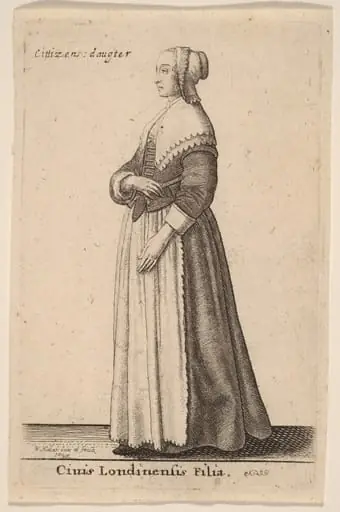
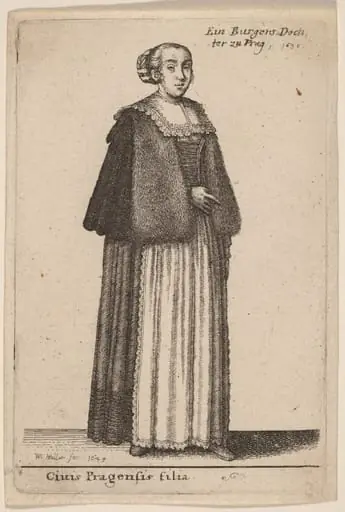
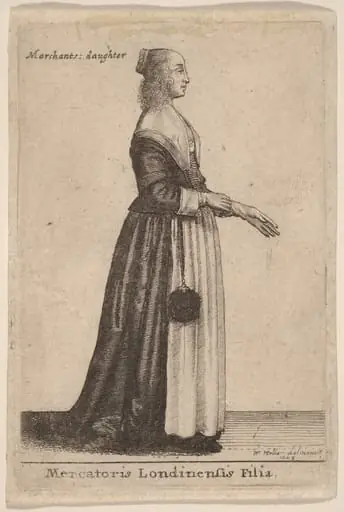
The image presents a solitary woman standing upright and turned toward the left. She is dressed in a dark gown trimmed with a white collar, wears a modest head covering, and holds a basket in her right hand, suggesting a domestic or market scene without an explicit narrative.
Technique & Style
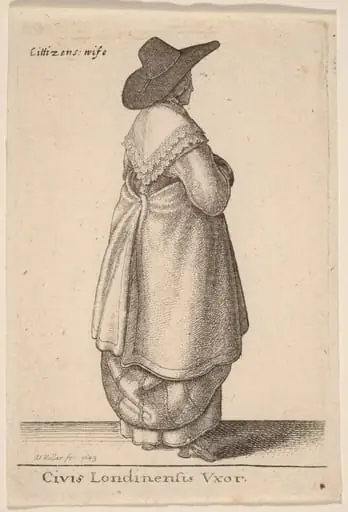
Rendered in fine etching, the print displays meticulous line work, especially in the rendering of fabric folds and the delicate treatment of the woman’s attire. The composition and decorative details reflect the Baroque aesthetic prevalent in mid‑17th‑century printmaking.
History & Provenance
Created during Hollar’s productive period in England, the etching forms part of his broader documentation of contemporary life and architecture. It was likely circulated among collectors interested in genre scenes and the visual record of everyday figures.
Context
Hollar’s output is notable for its systematic portrayal of cities, streets, and ordinary people. This work aligns with his interest in capturing the quotidian alongside more monumental architectural subjects, offering insight into the social fabric of his adopted environment.
Artist & collection
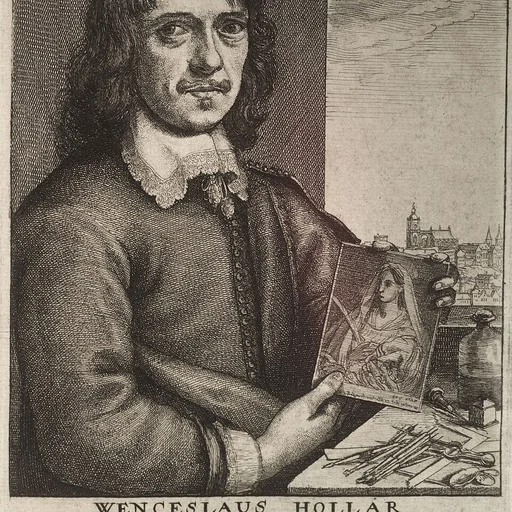
Artist
Wenceslaus Hollar (Czech: Václav Hollar (Czech pronunciation: ), German: Wenzel Hollar; 23 July 1607 – 25 March 1677) was a Czech engraver, etcher and painter.