Artwork
Cologne
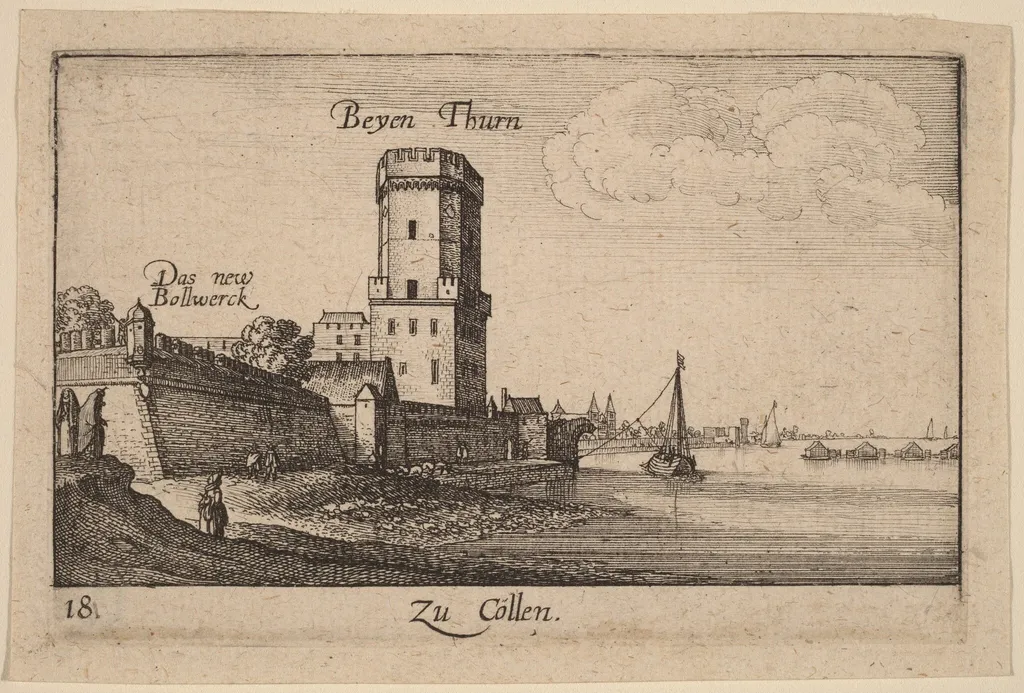
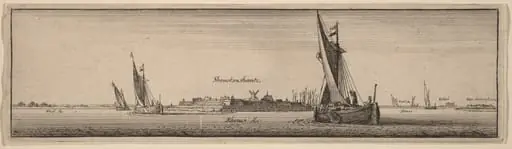
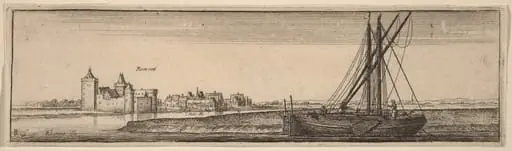
Cologne is an ink print by the Baroque artist Wenceslaus Hollar. It dates from 1635 and is held in the collection of the National Gallery of Art.
About this work
You can spot the cathedral’s twin spires in the center, a famous sight even then.
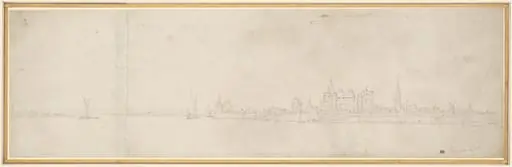
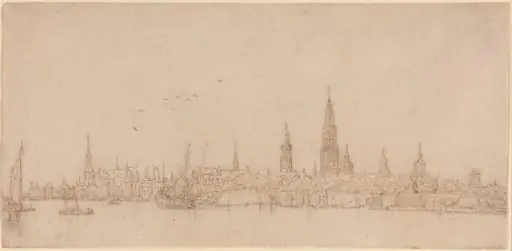
This etching shows a wide view of Cologne from across the Rhine River. The city’s walls, towers, and spires rise up in careful detail. You can spot the cathedral’s twin spires in the center, a famous sight even then.
Wenceslaus Hollar made this from a high vantage point. He etched it in 1635, before photography existed. The lines are so fine they feel almost photographic.
Look up etching next. It’s Hollar, Wenceslaus.
Overview
Wenceslaus Hollar’s 1635 etching presents a panoramic view of Cologne as seen from the opposite bank of the Rhine. The composition captures the city’s fortified walls, numerous towers, and the distinctive twin spires of its cathedral, rendered with meticulous line work that conveys a sense of depth and spatial clarity.
Subject & Meaning
The print serves as a visual record of Cologne’s urban landscape in the early seventeenth century, emphasizing the prominence of its ecclesiastical architecture within the broader civic setting. By foregrounding the cathedral’s spires, Hollar highlights the city’s religious identity while also documenting its defensive structures and riverine context.
Technique & Style
Executed in the etching medium, the work showcases Hollar’s command of fine line engraving, producing delicate, almost photographic details from a lofty viewpoint. The veduta approach—characterized by a measured, top‑down perspective—allows the artist to convey both architectural precision and atmospheric ambience across the river’s expanse.
History & Provenance
Born in Bohemia, Hollar spent much of his professional life in England, traveling across Europe to gather material for his prints. After completing this Cologne view, he continued to produce cityscapes until his death, after which he was interred in London. The etching has since been held in several museum collections, reflecting its value as a documentary source.
Context
Created during a period of heightened interest in topographical prints, the image aligns with contemporary efforts to map and visually catalogue major European cities. Cologne, a major trade hub on the Rhine, was a frequent subject for travelers and artists, and Hollar’s rendition contributes to the visual archive of its early modern appearance.
Artist & collection
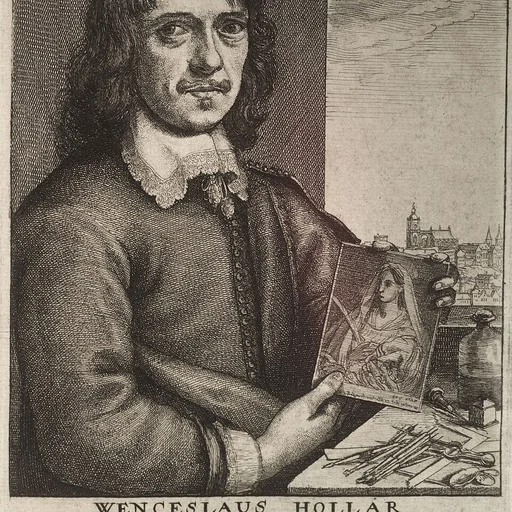
Artist
Wenceslaus Hollar (Czech: Václav Hollar (Czech pronunciation: ), German: Wenzel Hollar; 23 July 1607 – 25 March 1677) was a Czech engraver, etcher and painter.