Artwork
Speyer
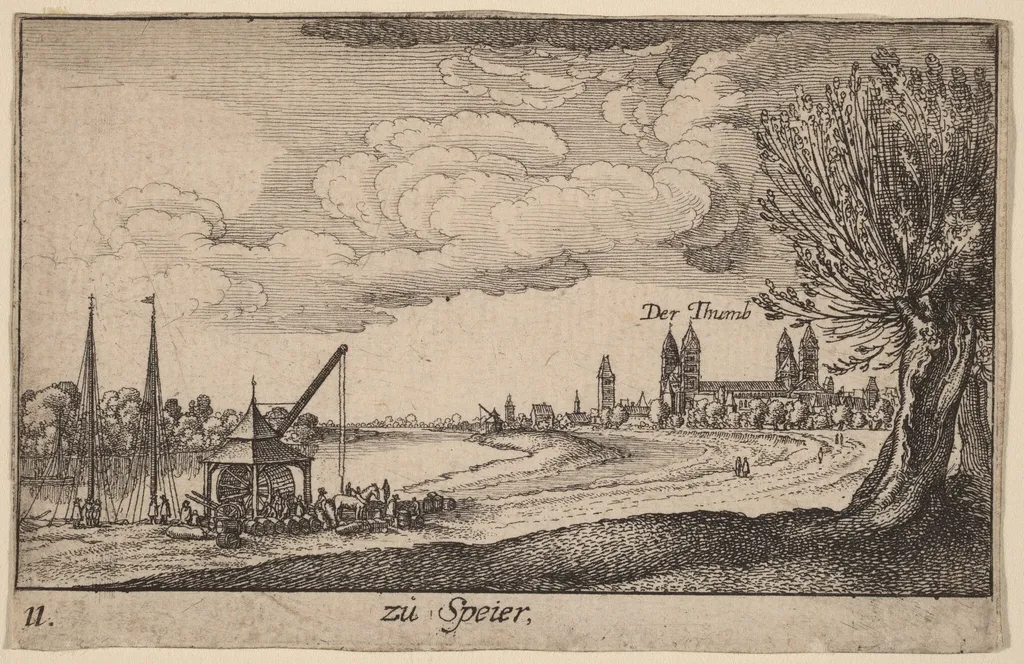
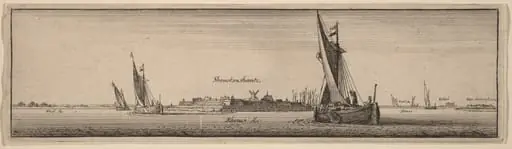
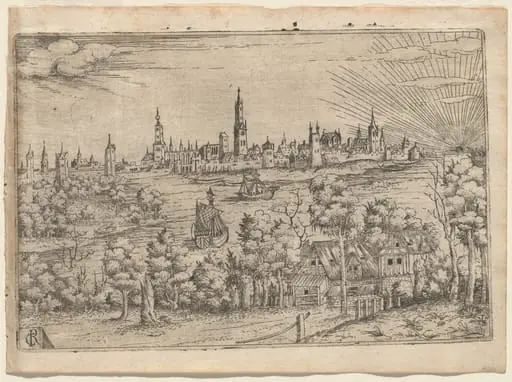
Speyer is an ink print by the Baroque artist Wenceslaus Hollar. It dates from 1635 and is held in the collection of the National Gallery of Art.
About this work
Overview
Created in 1635 by Wenceslaus Hollar, *Speyer* is a black-and-white etching depicting the German city along the Rhine.
Created in 1635 by Wenceslaus Hollar, *Speyer* is a black-and-white etching depicting the German city along the Rhine. Hollar, a Czech artist active in England, produced this work during his early travels in Europe. The print captures a specific urban vista with careful attention to architectural detail and spatial depth, reflecting his interest in documenting real places through precise graphic means.
Subject & Meaning
The scene portrays Speyer’s riverside with bustling activity near a crane and clustered buildings. A church with twin spires dominates the left, while a large tree on the right frames the distant skyline of pointed towers. The inscription 'Der Thumb' identifies a local landmark, grounding the image in topographical accuracy. The composition suggests a moment of daily life, emphasizing the city’s function as a commercial and religious center rather than idealizing its appearance.
Technique & Style
Hollar employed etching to render fine, controlled lines on a metal plate, allowing intricate textures in stone, water, and foliage. The sky is filled with softly modeled clouds, and the river’s curve guides the viewer’s eye through the composition. His use of cross-hatching and delicate line weight conveys volume and distance without color, relying on tonal variation and precise draftsmanship to achieve realism.
History & Provenance
Hollar made this print during a formative period of his career, shortly after leaving Prague and before settling in England. It likely served as a record of his observations during a journey through the Rhineland. The work was part of a broader European tradition of topographical prints, circulated among scholars and collectors interested in urban geography and architectural study.
Context
In the 1630s, etched city views were valued for their documentary function amid religious and political upheaval. Speyer, a historic imperial city, held symbolic importance as a former coronation site. Hollar’s depiction aligns with contemporary efforts to visually catalog European urban centers, offering a neutral, observational record rather than a propagandistic or romanticized image.
Legacy
Hollar’s *Speyer* exemplifies his enduring contribution to topographical printmaking. His method influenced later generations of engravers who sought to document architecture with fidelity. Though not widely known to the public today, the work remains a reference in studies of 17th-century German urban life and the evolution of print-based cartography.
Artist & collection
Artist
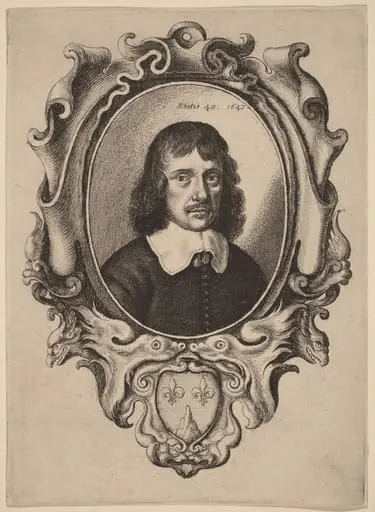
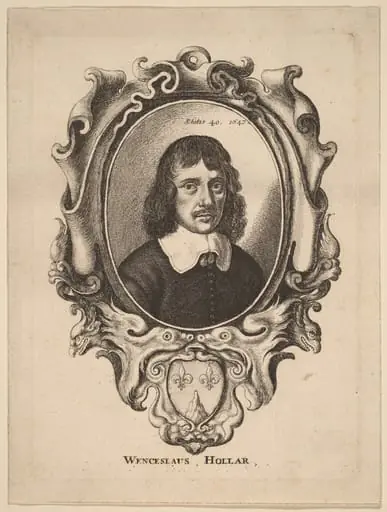
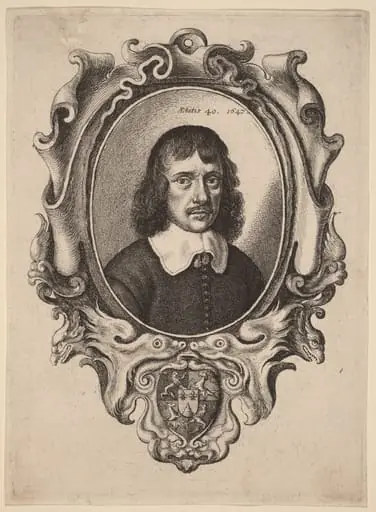
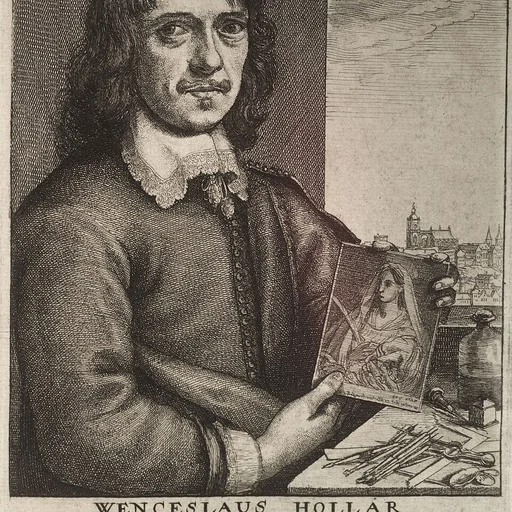
Wenceslaus Hollar (Czech: Václav Hollar (Czech pronunciation: ), German: Wenzel Hollar; 23 July 1607 – 25 March 1677) was a Czech engraver, etcher and painter.