Artwork
Dragonflies, a Bumble-Bee, and a Butterfly
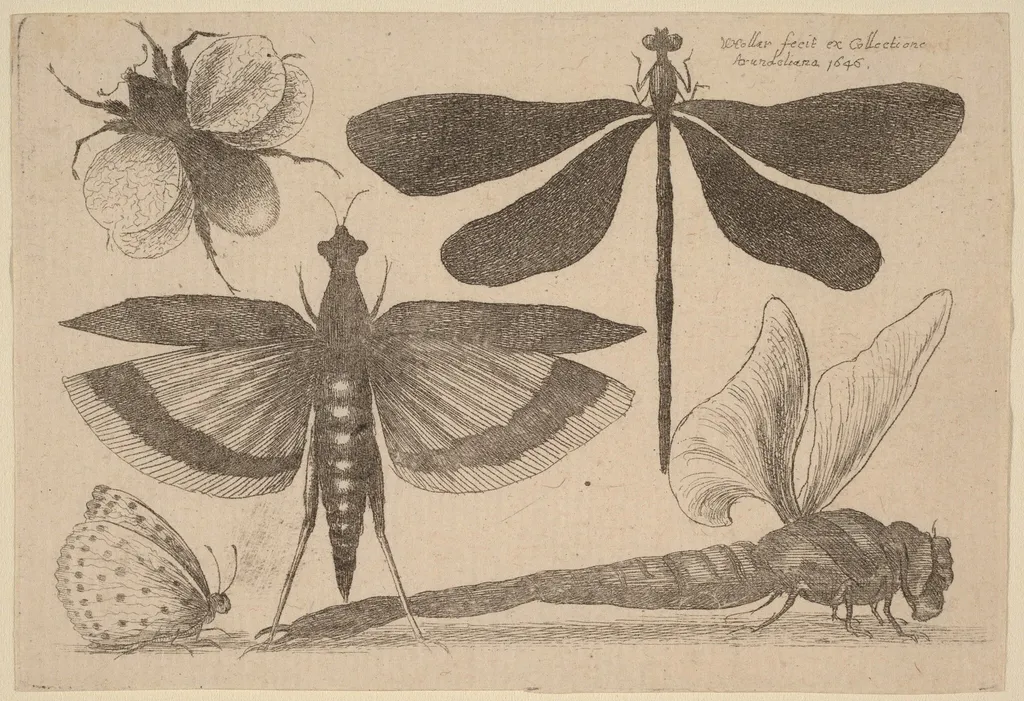
Dragonflies, a Bumble-Bee, and a Butterfly is an ink print by the Baroque artist Wenceslaus Hollar. It dates from 1646 and is held in the collection of the National Gallery of Art.
About this work
Overview
Dragonflies, a Bumble-Bee, and a Butterfly is an etching on laid paper created by Wenceslaus Hollar in 1646. Unlike his more common cityscapes and landscapes, this work focuses on the detailed representation of three insects.
Subject & Meaning
The etching depicts a dragonfly, a bumble-bee, and a butterfly perched on a leafy stem. Beyond its aesthetic appeal, the piece was part of the larger publication *Muscarum Scarabeorum*, which showcased 32 detailed prints of insects and moths.
Technique & Style
Characterized by Hollar's precise linework, the etching demonstrates his mastery of the medium. Notably, the bumble-bee's wings feature tiny, hair-like lines achieved through direct scratching on the metal plate, a hallmark of the etching process.
History & Provenance
Created in 1646 by Czech-born artist Wenceslaus Hollar (1607-1677), who primarily worked in England after relocating from Prague. The piece is part of a broader body of work within *Muscarum Scarabeorum*.
Context
While Hollar is renowned for his detailed cityscapes, such as *View of the Town of Cesky Krumlov*, this etching highlights his ability to capture natural subjects with equal precision, reflecting the scientific and artistic interests of his time.
Legacy
As part of *Muscarum Scarabeorum*, *Dragonflies, a Bumble-Bee, and a Butterfly* contributes to Hollar's legacy as a meticulous printmaker who documented both urban landscapes and the natural world with remarkable detail.
Artist & collection
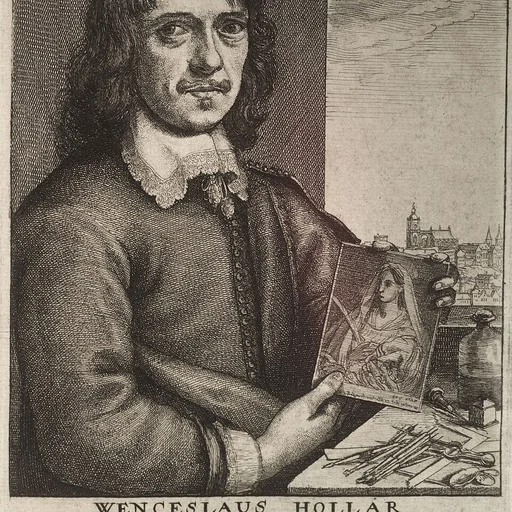
Artist
Wenceslaus Hollar (Czech: Václav Hollar (Czech pronunciation: ), German: Wenzel Hollar; 23 July 1607 – 25 March 1677) was a Czech engraver, etcher and painter.


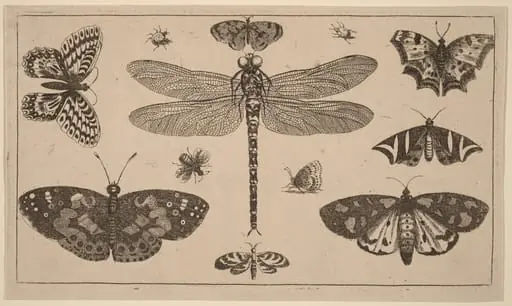 Dragonfly, Ladybirds, and Butterflies
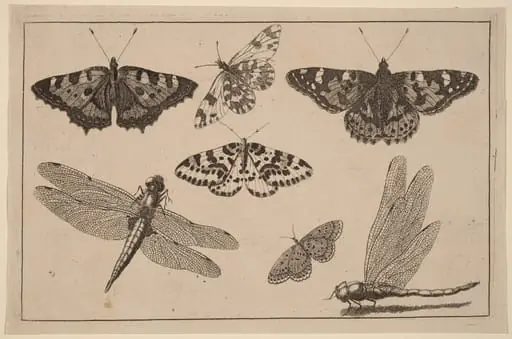 Two Dragonflies and Five Butterflies
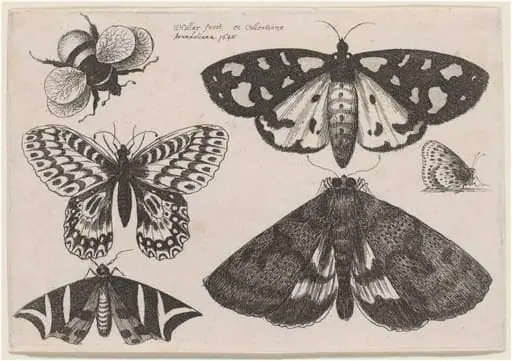 Three Moths, Two Butterflies, and a Bumble Bee
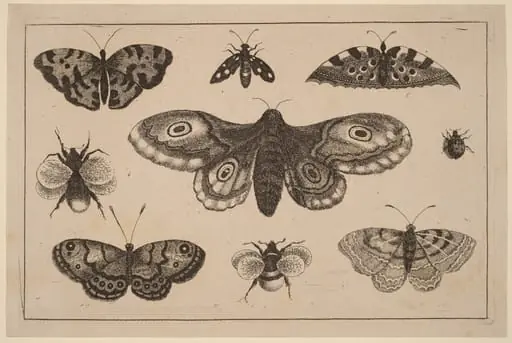 Moth, Butterflies, and Bees
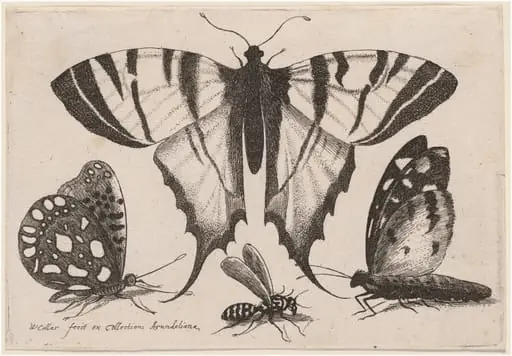 Two Butterflies, a Wasp, and a Moth
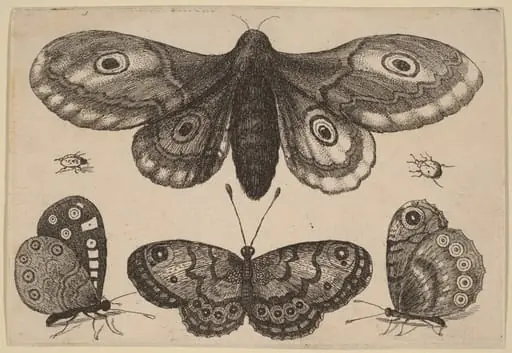 Moth, Three Butterflies, and Two Beetles
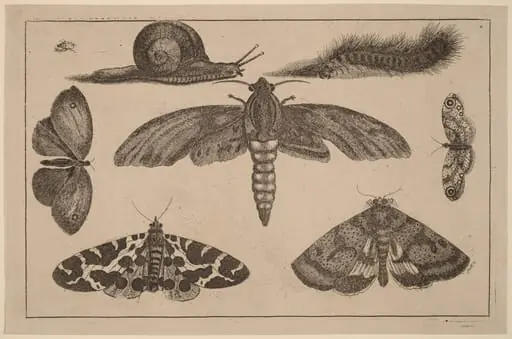 Six Insects, a Caterpillar, and a Snail
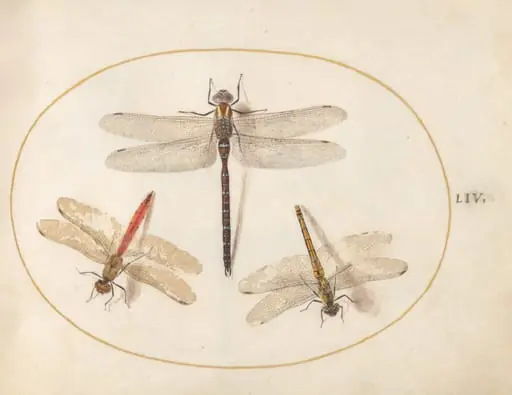 Plate 54: Hairy Dragonfly and Two Darters
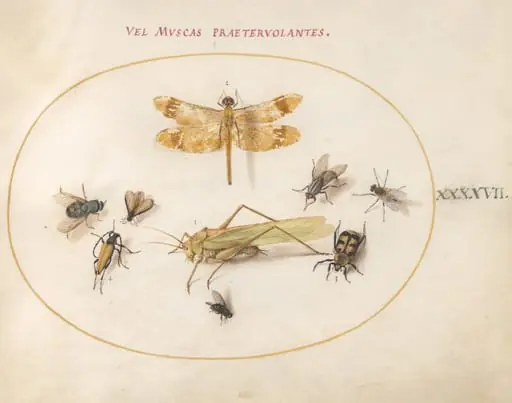 Plate 47: A Dragonfly (Banded Darter?), Grasshopper, Houseflies, a Carrion Beetle, a Flower Longhorn Beetle, and Other Insects
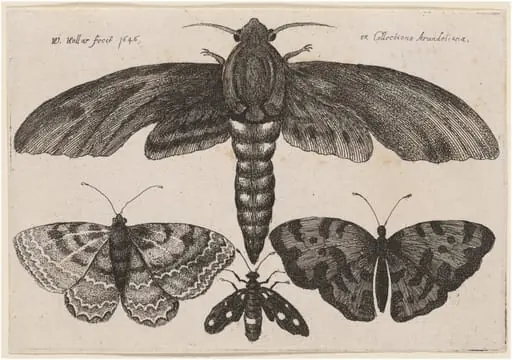 Moth and Three Butterflies
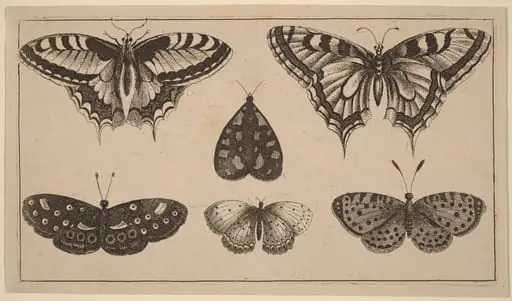 Five Butterflies and a Moth