Artwork
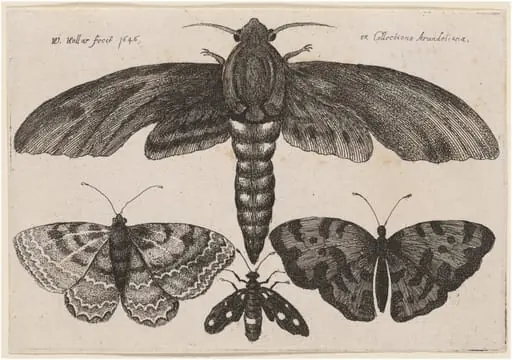
Two Butterflies, a Wasp, and a Moth
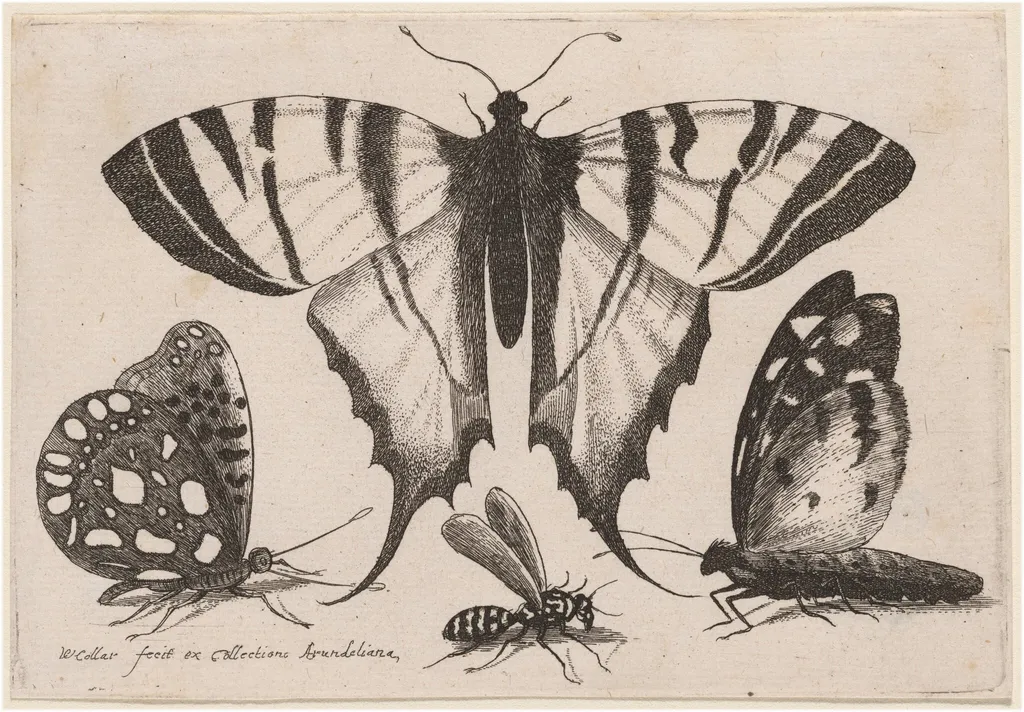
Two Butterflies, a Wasp, and a Moth is an ink print by the Baroque artist Wenceslaus Hollar. It dates from 1646 and is held in the collection of the National Gallery of Art.
About this work
Overview
Created in 1646 by Wenceslaus Hollar, this etching depicts four insects—two butterflies, a moth, and a wasp—on laid paper.
Created in 1646 by Wenceslaus Hollar, this etching depicts four insects—two butterflies, a moth, and a wasp—on laid paper. Though Hollar is best known for topographical views, this work reveals his engagement with natural observation. Rendered in monochrome, the print captures minute anatomical details through fine, controlled lines, reflecting a broader 17th-century interest in documenting the natural world with precision.
Subject & Meaning
The composition presents four insects arranged with careful spatial balance: a butterfly with white-spotted wings on the left, a tall moth with striped, fan-shaped wings at center, a wasp crawling below, and a second butterfly with bold black markings on the right. No symbolic or narrative context is implied; the focus is on accurate representation. The work functions as a scientific study, aligning with contemporary efforts to classify and illustrate natural forms.
Technique & Style
Hollar employed etching on a metal plate, using acid to bite fine lines into the surface, which were then inked and printed. His technique emphasizes delicate, continuous strokes to render wing veins, leg joints, and body segmentation with remarkable clarity. The absence of color heightens the emphasis on form and texture, demonstrating mastery in monochromatic detail and a commitment to observational fidelity over decorative effect.
History & Provenance
Hollar, a Czech artist who settled in England, produced this print during his time in London, where he worked for patrons interested in natural history. The work is dated 1646, placing it within a productive period of his career. While its early ownership is undocumented, it survives as part of a broader corpus of Hollar’s natural studies, preserved in institutional collections and private archives.
Context
In mid-17th-century Europe, scientific curiosity about insects grew alongside advances in microscopy and natural philosophy. Artists like Hollar contributed to this movement by translating observed specimens into precise graphic records. This print aligns with contemporaneous works by naturalists and illustrators who sought to document biodiversity, bridging art and emerging empirical science before the formalization of entomology as a discipline.
Legacy
Hollar’s insect studies, including this etching, remain valued for their technical precision and historical insight into early scientific illustration. Though not widely exhibited today, they serve as reference points for understanding how artists engaged with natural science before photography. The work exemplifies the quiet, methodical contribution of printmakers to the visual documentation of the natural world.
Artist & collection
Artist
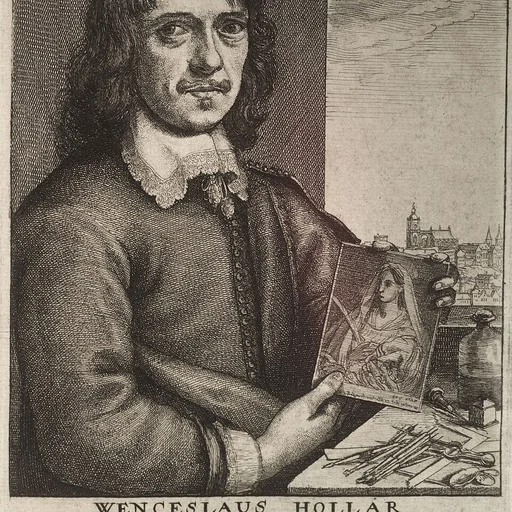
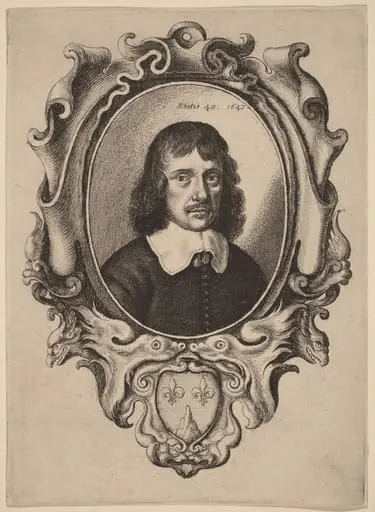
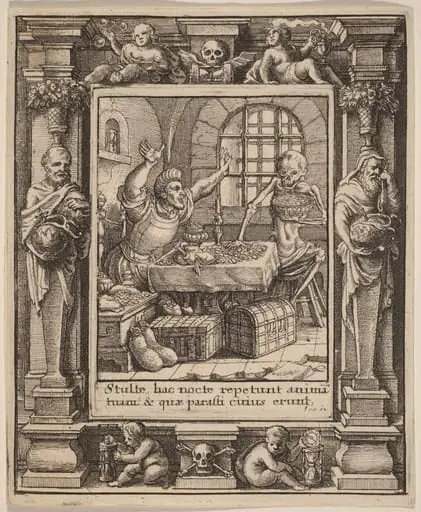
Wenceslaus Hollar (Czech: Václav Hollar (Czech pronunciation: ), German: Wenzel Hollar; 23 July 1607 – 25 March 1677) was a Czech engraver, etcher and painter.


 Moth and Three Butterflies
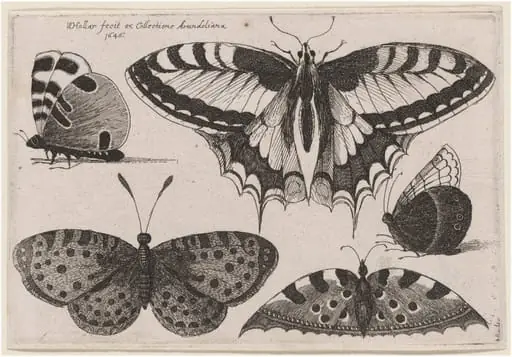 Three Butterflies and Two Moths
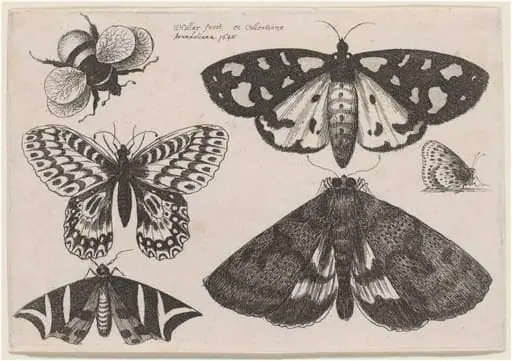 Three Moths, Two Butterflies, and a Bumble Bee
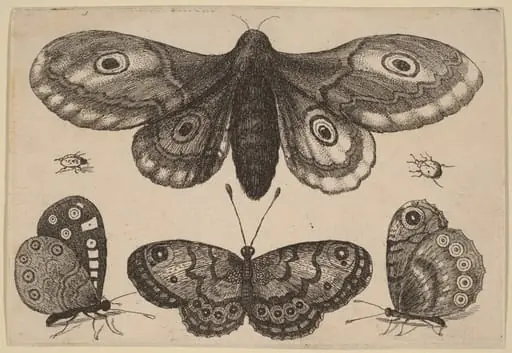 Moth, Three Butterflies, and Two Beetles
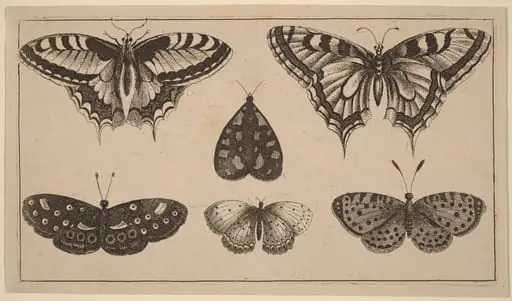 Five Butterflies and a Moth
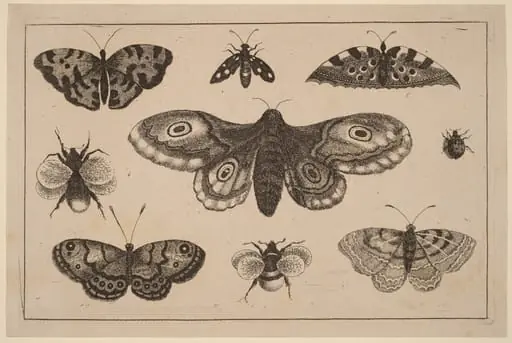 Moth, Butterflies, and Bees
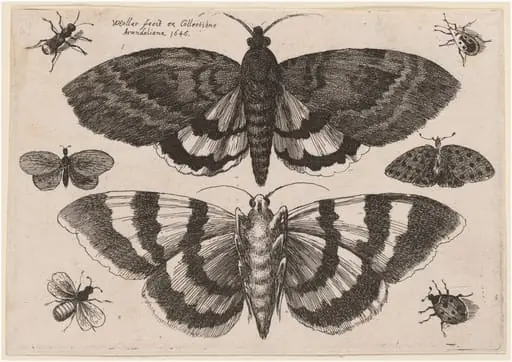 Two Moths and Six Insects
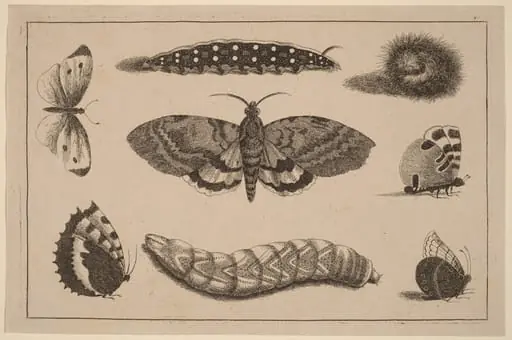 Three Caterpillars, a Moth, and Four Butterflies
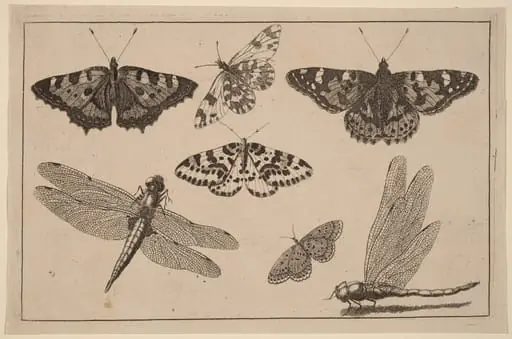 Two Dragonflies and Five Butterflies
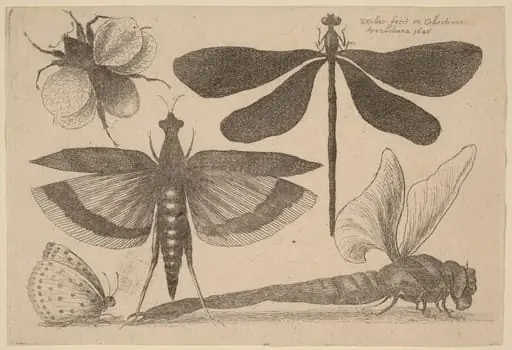 Dragonflies, a Bumble-Bee, and a Butterfly