Artwork
Three Moths, Two Butterflies, and a Bumble Bee
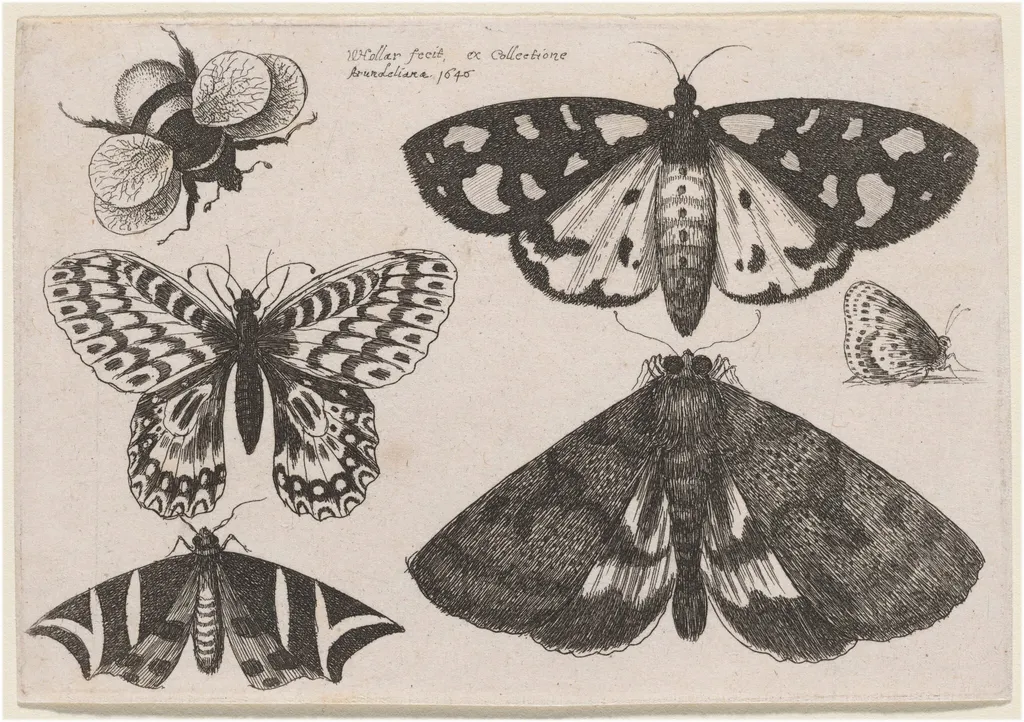
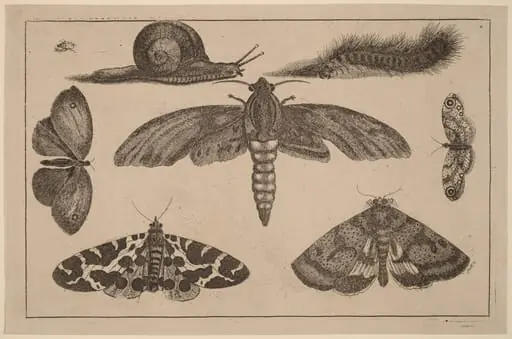
Three Moths, Two Butterflies, and a Bumble Bee is an ink print by the Baroque artist Wenceslaus Hollar. It dates from 1646 and is held in the collection of the National Gallery of Art.
About this work
Overview
Created in 1646 by Wenceslaus Hollar, this etching on laid paper presents a close study of six native insects: three moths, two butterflies, and a bumblebee.
Created in 1646 by Wenceslaus Hollar, this etching on laid paper presents a close study of six native insects: three moths, two butterflies, and a bumblebee. Though Hollar is better known for architectural and topographical prints, this work reveals his attention to natural detail. The composition arranges the insects in a loosely grouped, overlapping formation against a pale background, emphasizing their delicate forms through precise line work.
Subject & Meaning
The insects depicted are rendered without symbolic or narrative context, focusing instead on their physical structure and variation in form. The inclusion of both moths and butterflies—often grouped in naturalist studies—suggests an interest in biological diversity. The bumblebee, hovering slightly above the others, introduces a sense of motion. The work functions as a scientific observation rather than an allegory, reflecting 17th-century curiosity about the natural world.
Technique & Style
Hollar employed fine, controlled etching lines to capture the texture of wings and fur, using cross-hatching and stippling to suggest depth and surface. The monochrome palette enhances the clarity of anatomical details, while the light beige paper provides subtle contrast. The insects are arranged with slight overlaps, creating a sense of spatial depth despite the flatness of the medium. Each form is isolated yet connected, demonstrating mastery of minute detail within a small scale.
History & Provenance
The print was produced during Hollar’s time in England, where he worked under the patronage of the Earl of Arundel. Many of his natural studies, including this one, were likely made for private collections interested in natural philosophy. Though no specific early ownership records are widely documented, the work aligns with other scientific prints circulating among European collectors of the period, particularly those drawn to entomological illustration.
Context
In mid-17th-century Europe, detailed natural observation gained traction alongside the rise of empirical science. Hollar’s etching fits within a broader trend of artists documenting flora and fauna with accuracy, often for scholarly or aristocratic audiences. While not published as part of a formal treatise, this print reflects the same spirit of inquiry seen in contemporary works by naturalists like John Ray and Robert Hooke.
Legacy
This etching remains a quiet example of Hollar’s versatility beyond urban landscapes. It contributes to the historical record of early scientific illustration in print, demonstrating how artistic skill could serve observational science. Though not widely reproduced, it is held in institutional collections as a representative work of naturalist printmaking from the period, valued for its precision and restraint.
Artist & collection
Artist
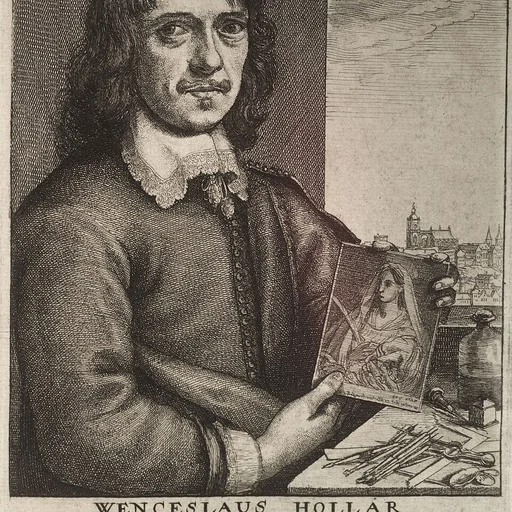
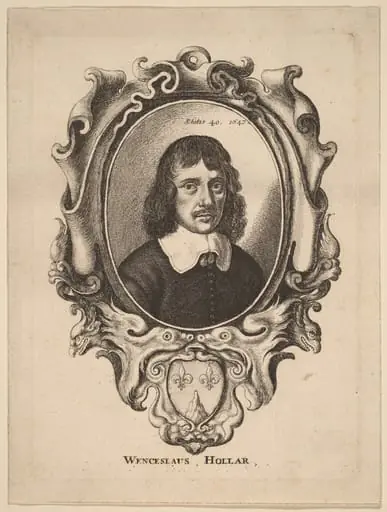
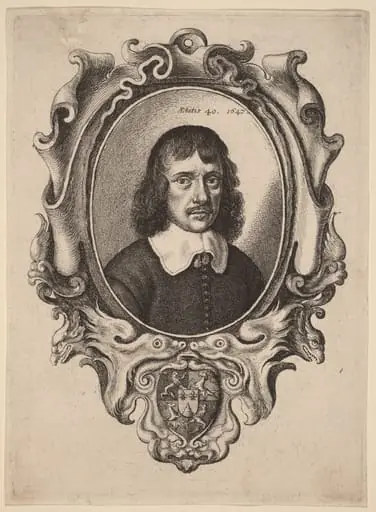
Wenceslaus Hollar (Czech: Václav Hollar (Czech pronunciation: ), German: Wenzel Hollar; 23 July 1607 – 25 March 1677) was a Czech engraver, etcher and painter.


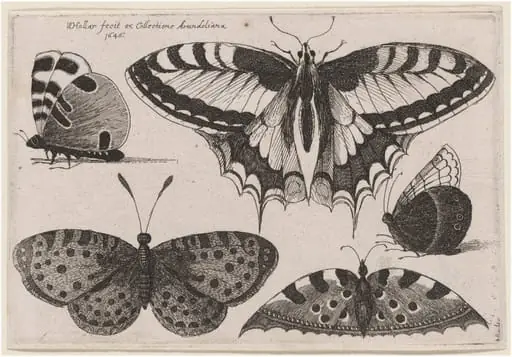 Three Butterflies and Two Moths
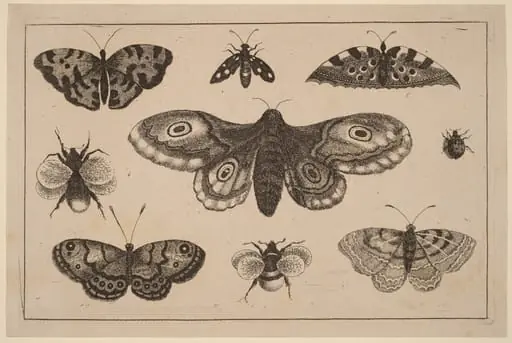 Moth, Butterflies, and Bees
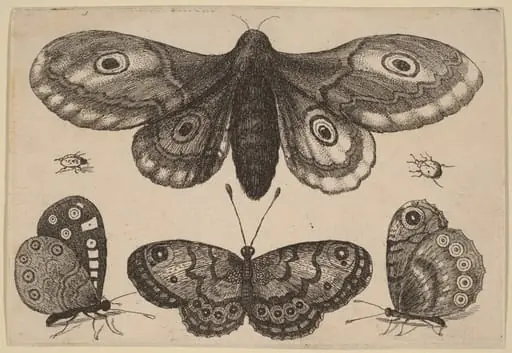 Moth, Three Butterflies, and Two Beetles
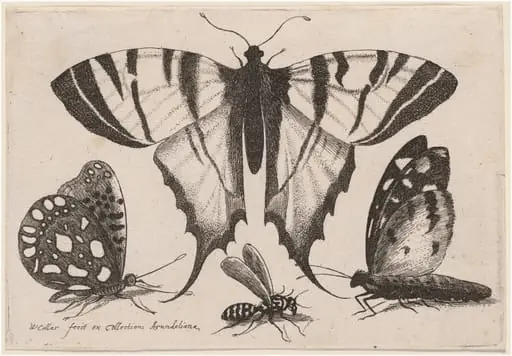 Two Butterflies, a Wasp, and a Moth
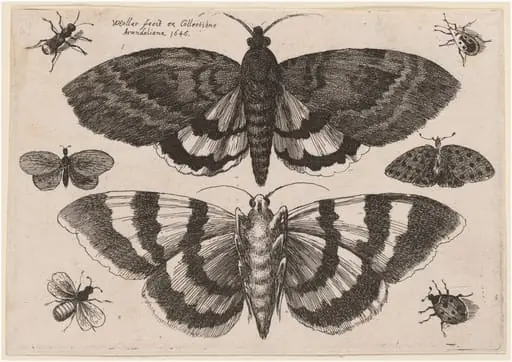 Two Moths and Six Insects
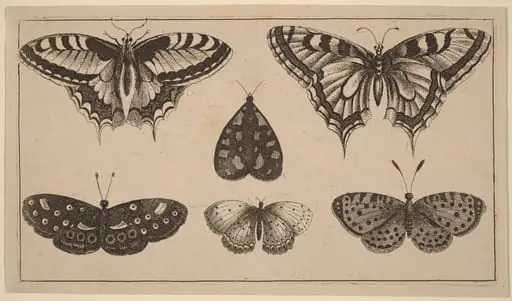 Five Butterflies and a Moth
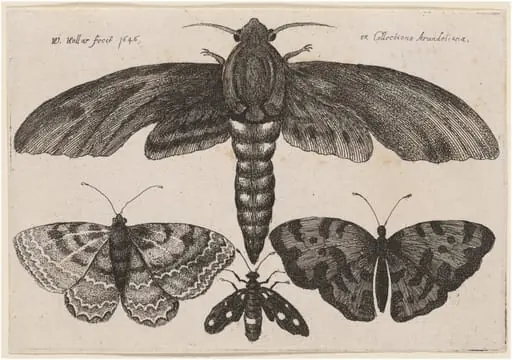 Moth and Three Butterflies
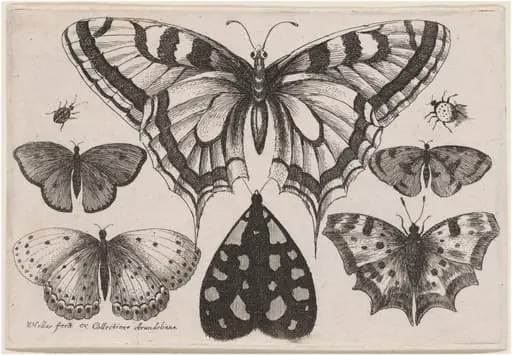 Five Butterflies, a Moth, a Beetle, and a Spider
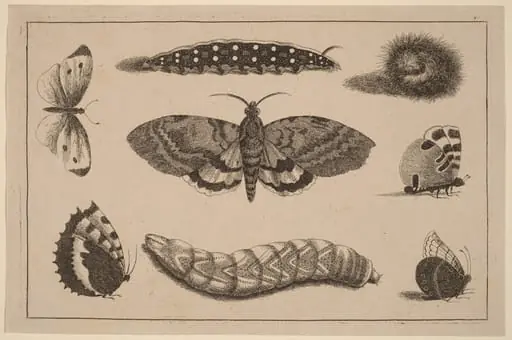 Three Caterpillars, a Moth, and Four Butterflies
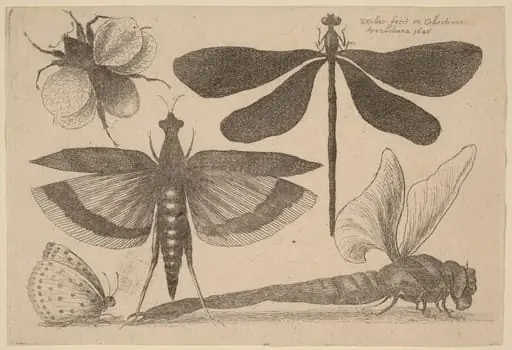 Dragonflies, a Bumble-Bee, and a Butterfly
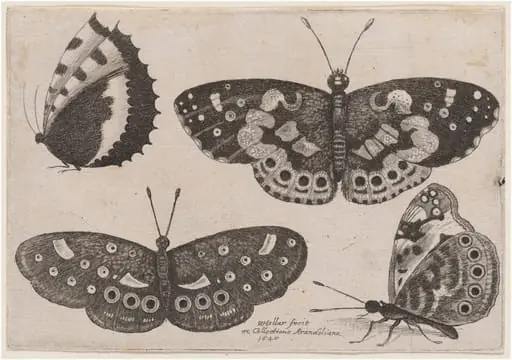 Four Butterflies
 Six Insects, a Caterpillar, and a Snail