Artwork
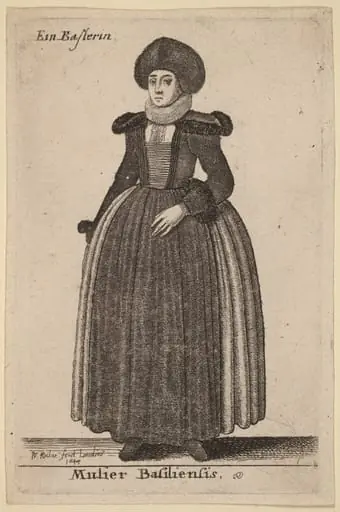
Virgo Basiliensis
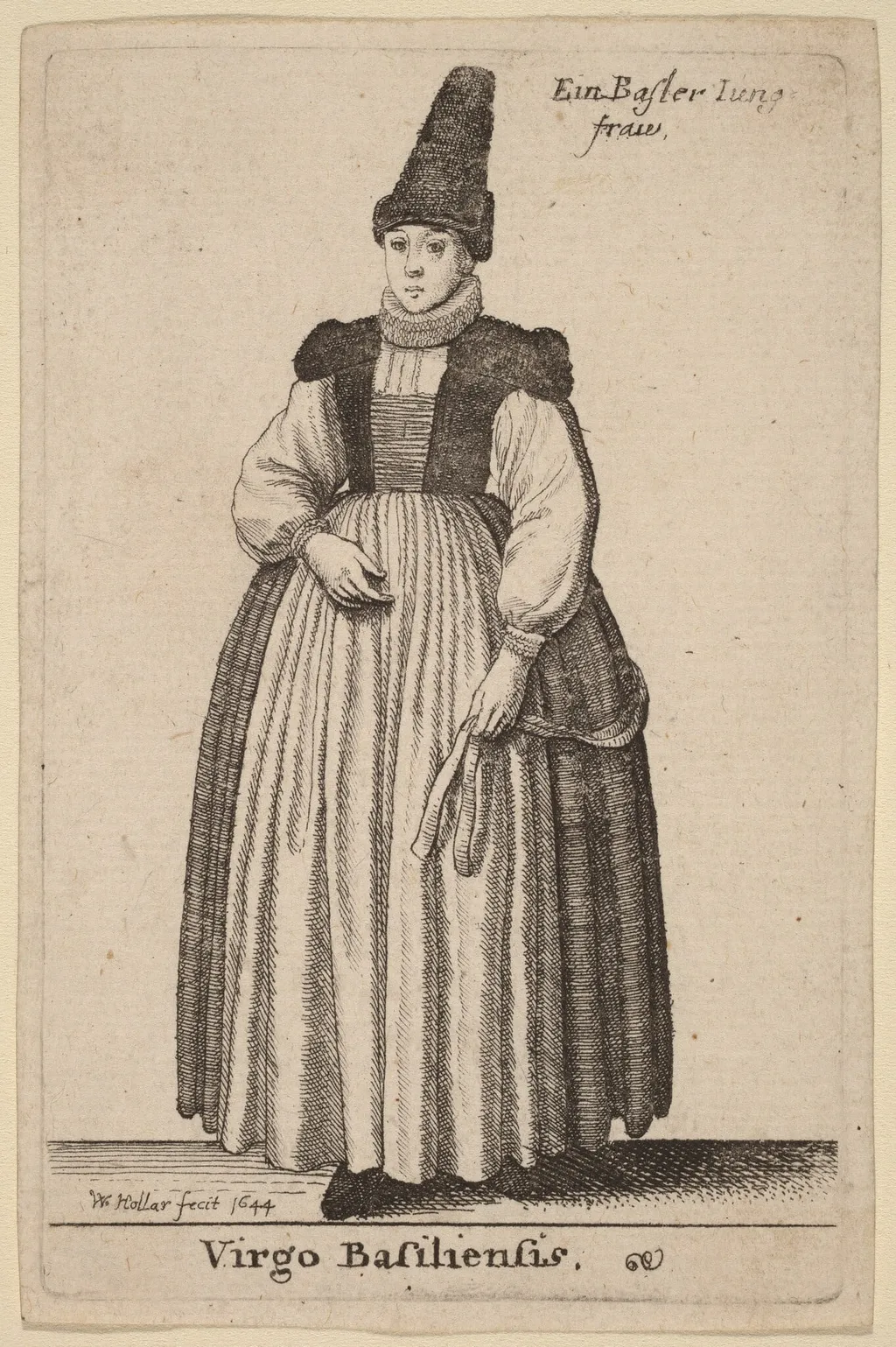
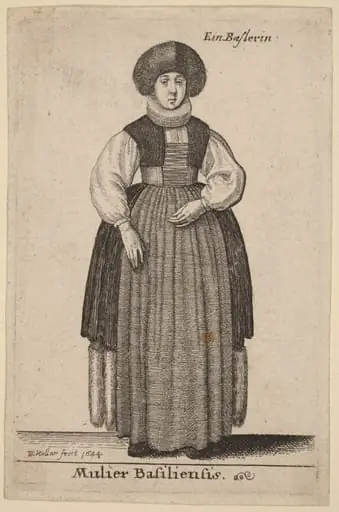
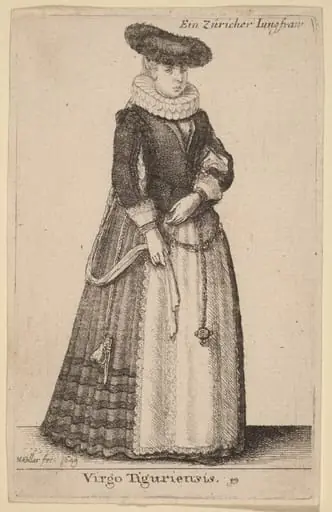
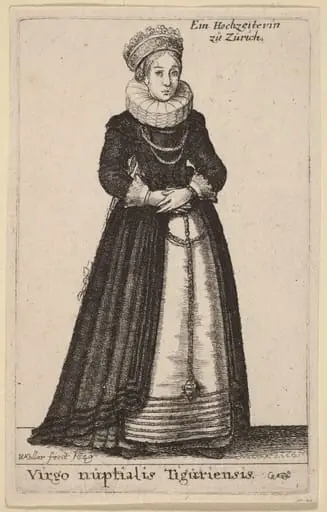
Virgo Basiliensis is an ink print by the Baroque artist Wenceslaus Hollar. It dates from 1644 and is held in the collection of the National Gallery of Art.
About this work
Overview
Though best known for topographical views, this work shifts focus to a solitary female figure, rendered with precision and restraint.
Wenceslaus Hollar, a Czech artist active in 17th-century England, produced *Virgo Basiliensis* in 1644 as a finely detailed etching. Though best known for topographical views, this work shifts focus to a solitary female figure, rendered with precision and restraint. The piece exemplifies Hollar’s mastery of line and texture in printmaking, capturing form without embellishment. It stands as one of his more intimate portraits, distinct from his broader urban scenes.
Subject & Meaning
The figure is a woman standing upright, hands gently clasped, dressed in a long gown, dark vest, and a tall, pointed headdress. Her posture and attire convey quiet dignity and modesty, typical of idealized female representations in early modern Europe. The title, meaning 'Royal Virgin,' suggests a symbolic or allegorical reference, possibly to the Virgin Mary or a noblewoman embodying virtue. The plain background eliminates distraction, emphasizing her stillness and inner composure.
Technique & Style
Hollar employed fine, controlled etching lines to define the contours of the figure and fabric folds, demonstrating his technical discipline. The absence of tonal shading or atmospheric effects reflects his preference for clarity over drama. His use of cross-hatching and delicate stippling renders texture subtly, particularly in the hat and garment. The composition’s minimalism highlights his ability to convey presence through line alone, a hallmark of his draftsmanship.
History & Provenance
Created during Hollar’s years in London, the etching emerged amid his prolific output for patrons and publishers. It was likely made for private circulation or as part of a series of allegorical figures. No early ownership records are widely documented, but the work survives in several major print collections, including those of the British Museum and the Metropolitan Museum of Art. Hollar, who died in London in 1677, was buried at St Margaret’s Church, Westminster.
Context
In mid-17th-century England, printmaking served both documentary and symbolic purposes. Hollar’s work intersected with the intellectual and religious currents of the time, where allegorical imagery often conveyed moral or spiritual ideals. The depiction of a modest, veiled woman aligns with contemporary ideals of female virtue, particularly during the Civil War period, when traditional values were being reasserted amid political upheaval.
Legacy
Though less famous than his cityscapes, *Virgo Basiliensis* remains a significant example of Hollar’s ability to infuse portraiture with quiet gravitas. It influenced later generations of printmakers who valued precision and restraint. The work is studied today for its technical finesse and its reflection of 17th-century ideals of femininity, offering insight into how identity and virtue were visually constructed in early modern Europe.
Artist & collection
Artist
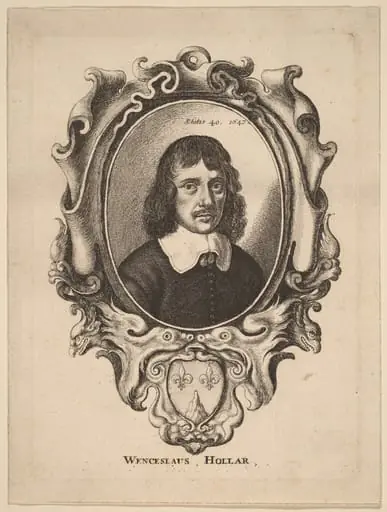
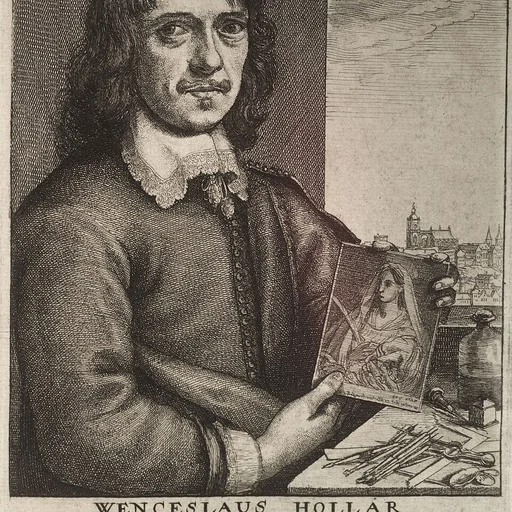
Wenceslaus Hollar (Czech: Václav Hollar (Czech pronunciation: ), German: Wenzel Hollar; 23 July 1607 – 25 March 1677) was a Czech engraver, etcher and painter.