Artwork
Mulier Generosa Graeca in Civitate Pera
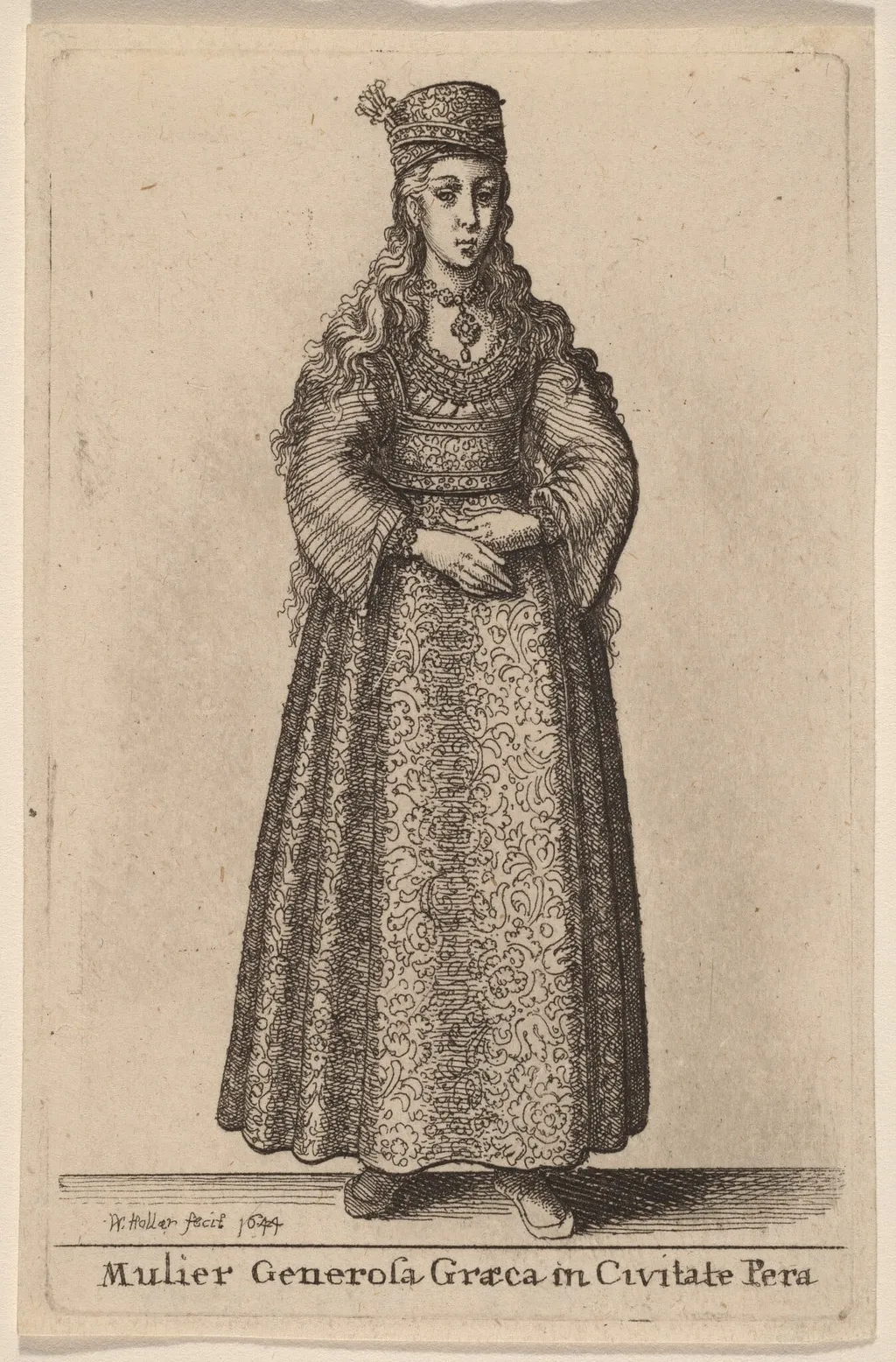
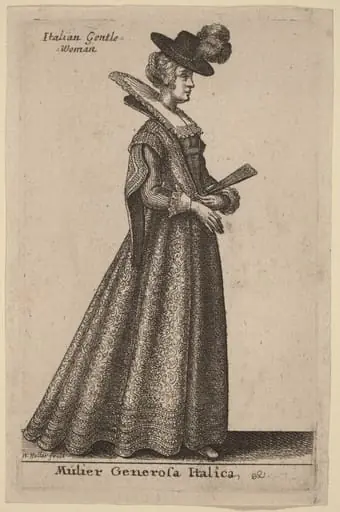
Mulier Generosa Graeca in Civitate Pera is an ink print by the Baroque artist Wenceslaus Hollar. It dates from 1644 and is held in the collection of the National Gallery of Art.
About this work
The text below says "Mulier Generosa Graeca in Civitate Pera," which might hint at her role or where she’s from.
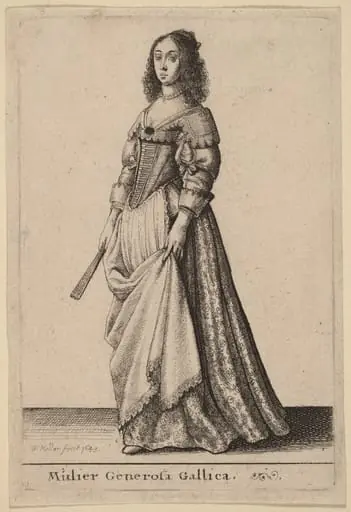
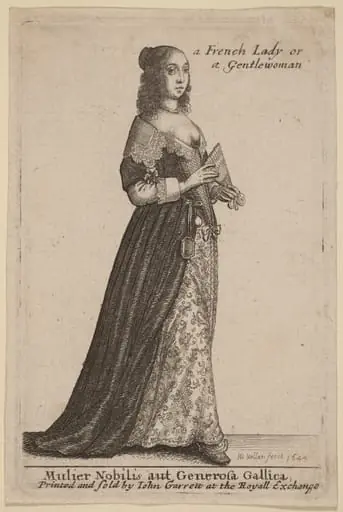
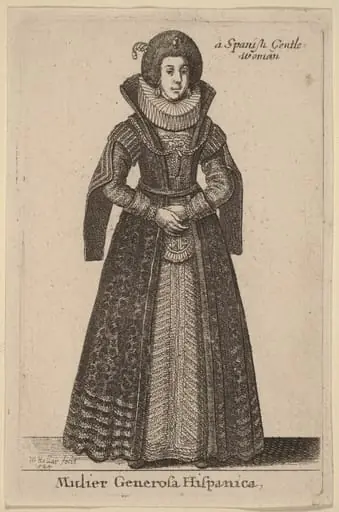
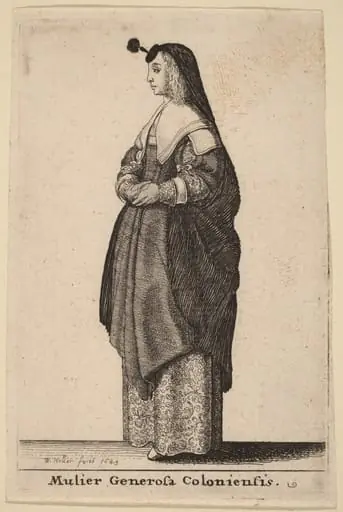
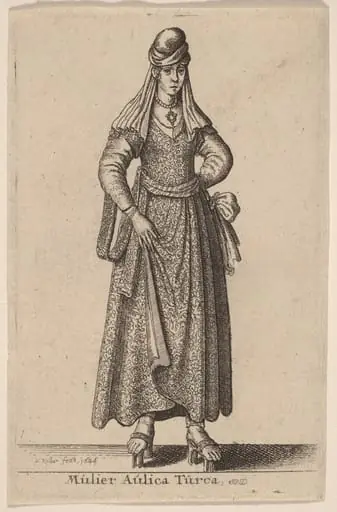
This is a black-and-white drawing of a woman standing still, dressed in old-fashioned clothes. Her long skirt has swirling patterns, and she wears a tall hat with a feather. Her hands are folded in front of her, and she looks straight ahead with a calm face.
The text below says "Mulier Generosa Graeca in Civitate Pera," which might hint at her role or where she’s from. The artist signed it in 1644, so it’s from that year.
If you like this style, look up etching to see how artists like this made detailed prints.
Overview
Created in 1644, *Mulier Generosa Graeca in Civitate Pera* is an etched print by the Czech-born artist Wenceslaus Hollar, who spent the bulk of his professional life in England. The image presents a solitary female figure rendered in monochrome, standing upright with her hands folded and gazing directly at the viewer. The title, rendered in Latin, identifies the subject as a Greek noblewoman situated in the historic district of Pera.
Subject & Meaning
The central figure is dressed in period attire: a long, patterned skirt, a tall hat crowned with a feather, and a composed expression. The inscription suggests a specific social status—"generosa" indicating nobility—and a geographic reference to Pera, the former European quarter of Istanbul. While no narrative scene unfolds, the work conveys a quiet dignity associated with the portrayed woman’s rank and cultural background.
Technique & Style
Executed as an etching, the print showcases Hollar’s meticulous line work, a hallmark of his mid‑17th‑century practice. Fine cross‑hatching and delicate incisions define the folds of the garment and the texture of the hat’s feather, creating tonal variation without the use of colour. The composition aligns with the veduta tradition, emphasizing precise, almost documentary rendering of figures and attire.
History & Provenance
Hollar signed and dated the plate in 1644, situating the work within his most productive period in England, when he produced numerous urban and architectural studies. The print has circulated among collectors of early modern prints and appears in several catalogues of Hollar’s oeuvre, confirming its attribution and providing a clear provenance from the artist’s workshop to later institutional holdings.
Artist & collection
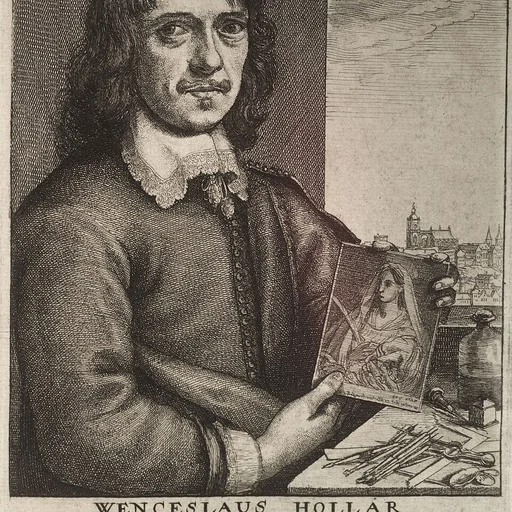
Artist
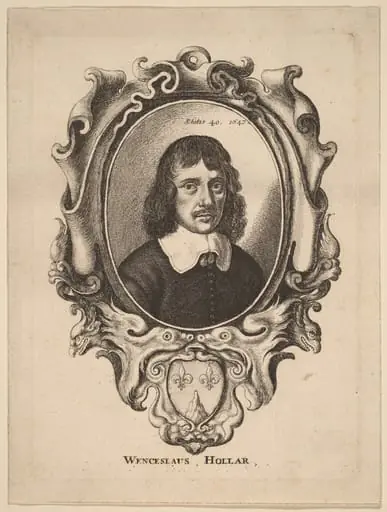
Wenceslaus Hollar (Czech: Václav Hollar (Czech pronunciation: ), German: Wenzel Hollar; 23 July 1607 – 25 March 1677) was a Czech engraver, etcher and painter.