Artwork
Wesel
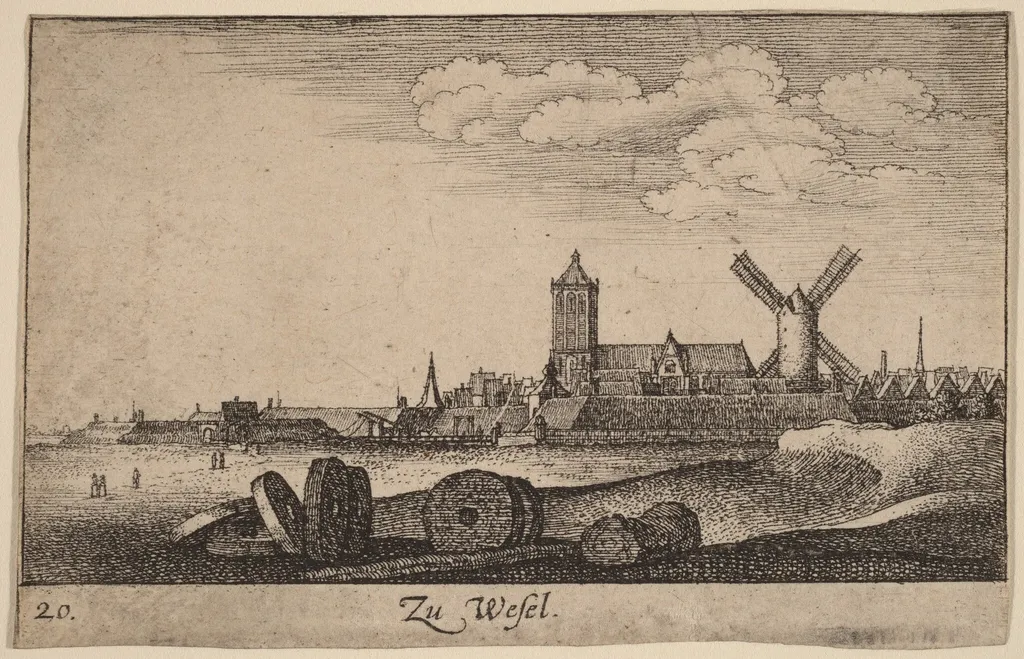
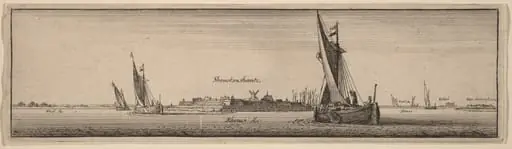
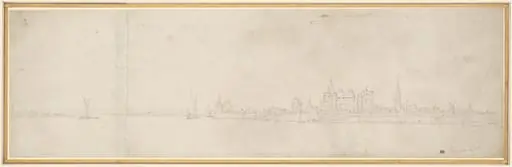
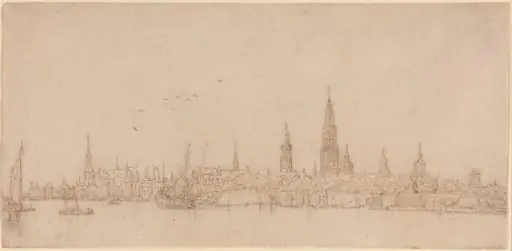
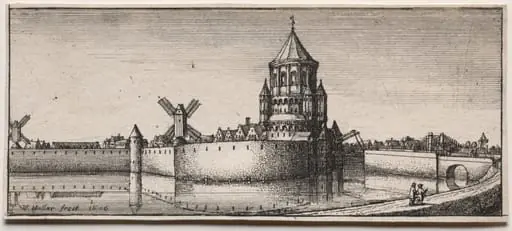
Wesel is an ink print by the Baroque artist Wenceslaus Hollar. It dates from 1635 and is held in the collection of the National Gallery of Art.
About this work
This etching shows a detailed view of Wesel, a German town. Hollar’s lines are sharp and precise. You can count bricks in the walls and count ships on the river.
This was made in 1635, when towns like Wesel were busy trading posts. Hollar traveled a lot, so he knew how to show a place clearly.
Want to see more? Try etching by Hollar, Wenceslaus.
Overview
The etching 'Wesel' is a work by Wenceslaus Hollar, created in 1635. It is a print that showcases the artist's skill in capturing detailed topographical views.
Subject & Meaning
The work depicts the German city of Wesel in the 17th century, highlighting its urban landscape and busy riverfront, characteristic of trading posts during that era.
Technique & Style
Hollar's etching is marked by sharp, precise lines that allow for a high level of detail, evident in the rendering of the city's walls and the vessels on the river, exemplifying the veduta tradition.
Context
Produced in 1635, 'Wesel' reflects the artist's experience as a traveler and his ability to clearly represent the places he visited, capturing the essence of urban centers like Wesel during a period of significant commercial activity.
Artist & collection
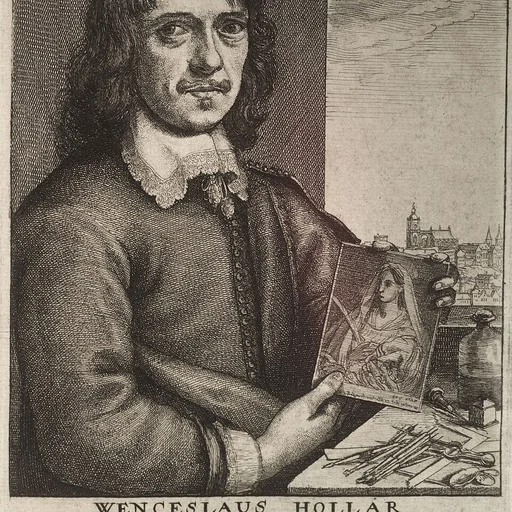
Artist
Wenceslaus Hollar (Czech: Václav Hollar (Czech pronunciation: ), German: Wenzel Hollar; 23 July 1607 – 25 March 1677) was a Czech engraver, etcher and painter.