Artwork
Pond and a Village
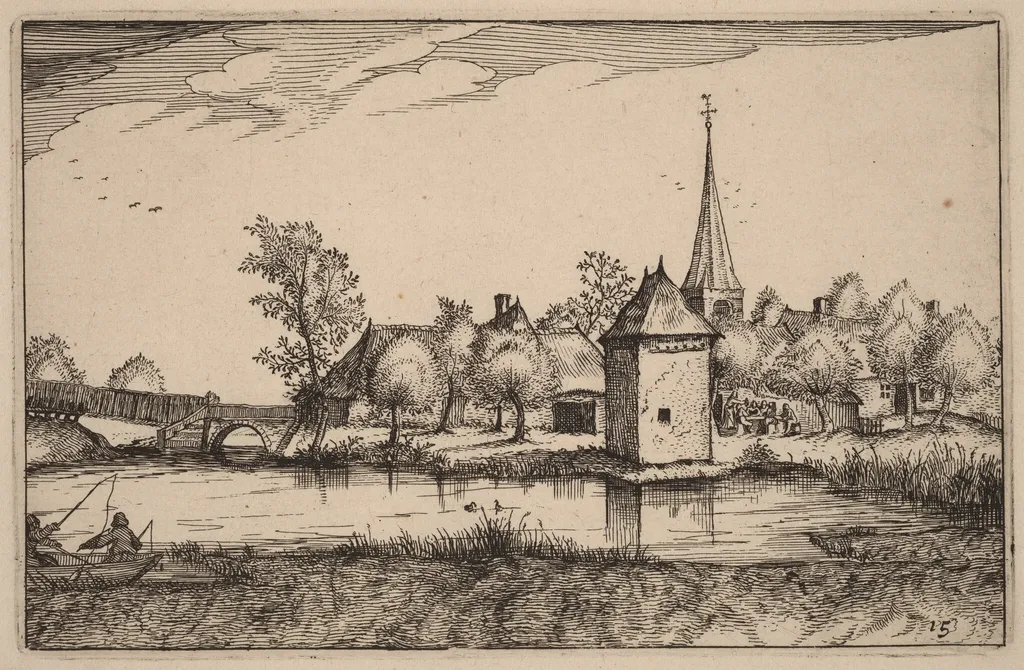
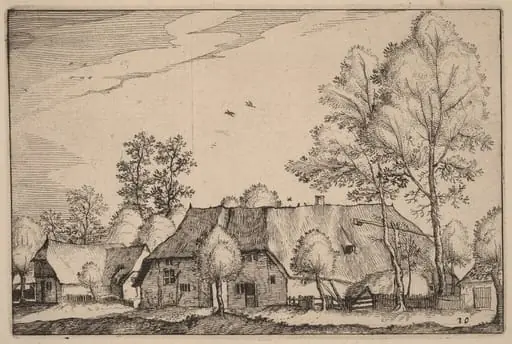
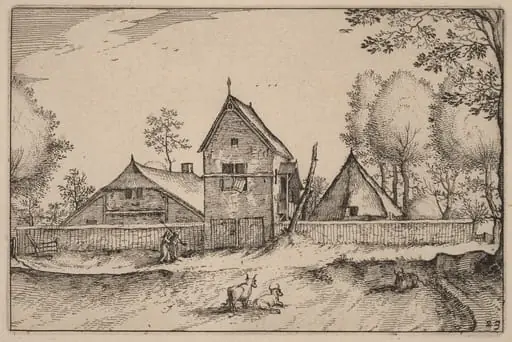
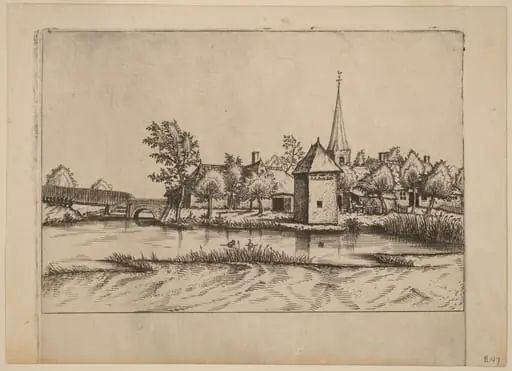
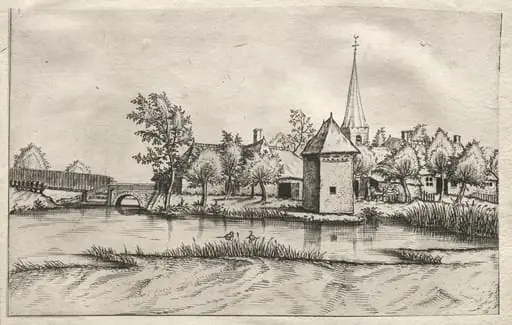
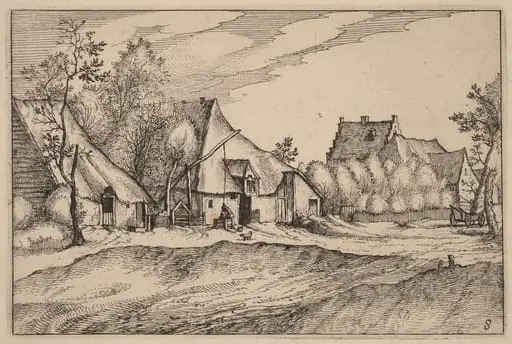
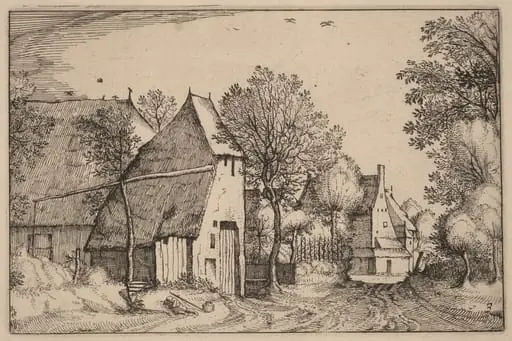
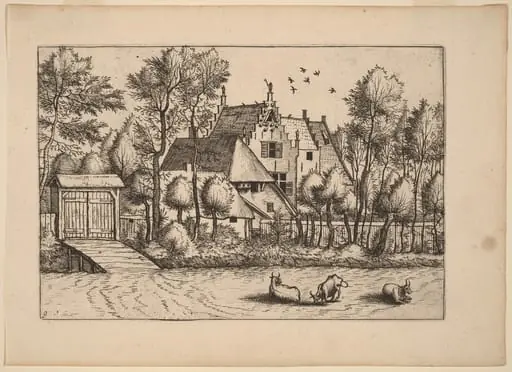
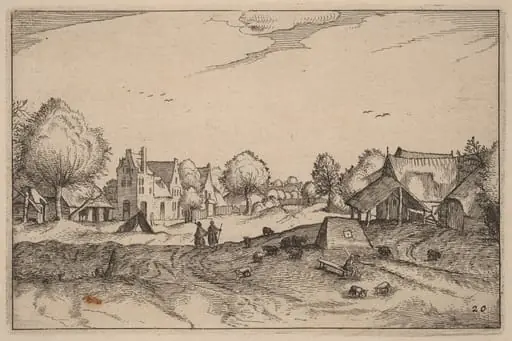
Pond and a Village is an ink print by the Baroque artist Claes Jansz Visscher. It dates from 1612 and is held in the collection of the National Gallery of Art.
About this work
Overview
Visscher, known for his cartographic work and publishing enterprise in Amsterdam, applied his precision draftsmanship to landscape imagery.
Created in 1612 by Claes Jansz Visscher, *Pond and a Village* is a black-and-white etching that captures a quiet Dutch rural scene. Visscher, known for his cartographic work and publishing enterprise in Amsterdam, applied his precision draftsmanship to landscape imagery. The print reflects the era’s interest in documenting everyday environments with technical clarity, serving both artistic and observational purposes before the advent of photography.
Subject & Meaning
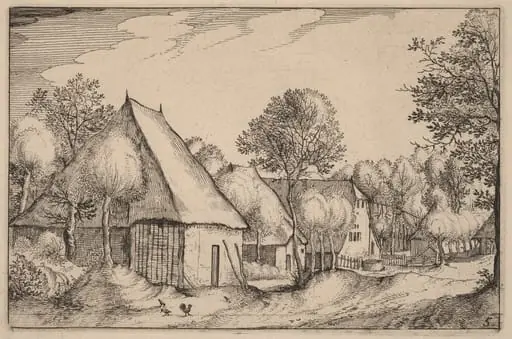
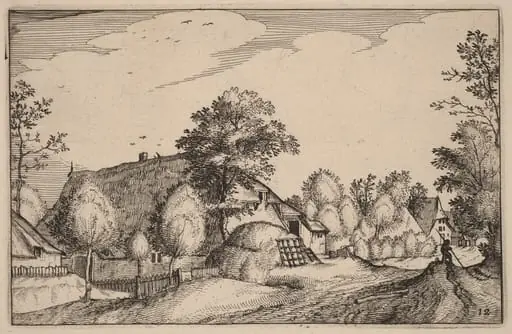
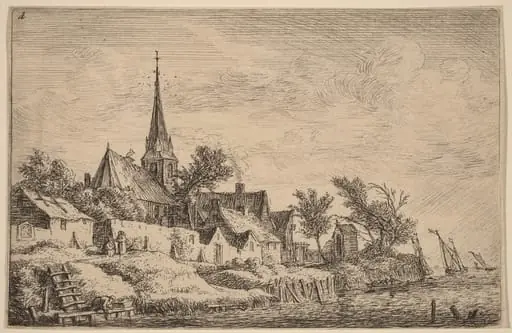
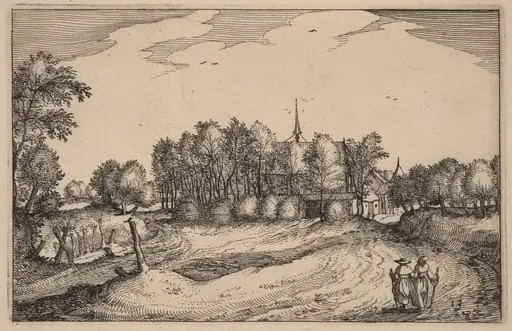
The scene centers on a modest village clustered around a church with a tall spire, situated beside a still pond. A narrow stream feeds into the water, crossed by a low arched bridge. Figures in the foreground row a boat, while others stand near the shore, suggesting daily life rather than grand narrative. The composition conveys stillness and order, emphasizing harmony between human settlement and natural topography, typical of Dutch topographical prints of the time.
Technique & Style
Visscher employed fine, controlled etching lines to model light and texture without color. The delicate cross-hatching defines the surfaces of buildings, trees, and water, while varying line density creates subtle tonal gradations. The composition is carefully balanced, with the church spire acting as a vertical anchor amid horizontal land and water forms. This method allowed for high detail and reproducibility, aligning with the print’s function as a record of place.
History & Provenance
The work emerged from Visscher’s Amsterdam-based publishing house, which specialized in maps and topographical prints. His family maintained the business for generations, producing numerous engraved views of Dutch towns and landscapes. *Pond and a Village* likely circulated as part of a broader collection of regional scenes, valued for its accuracy and craftsmanship rather than as a unique artistic statement.
Context
In early 17th-century Holland, detailed landscape imagery flourished alongside scientific and commercial interests in mapping and land use. Etchings like this served practical ends—aiding navigation, land management, or civic pride—while also appealing to collectors interested in the natural world. Visscher’s work reflects a culture that prized observation, precision, and the documentation of place as both utility and cultural identity.
Legacy
Visscher’s prints, including this one, contributed to a tradition of Dutch topographical art that influenced later landscape documentation. Though not widely exhibited today, such works remain important for understanding how early modern Europeans visualized and recorded their environment. His family’s publishing legacy ensured the survival and dissemination of these images, preserving a visual record of rural Dutch life in the pre-photographic age.
Artist & collection

Artist
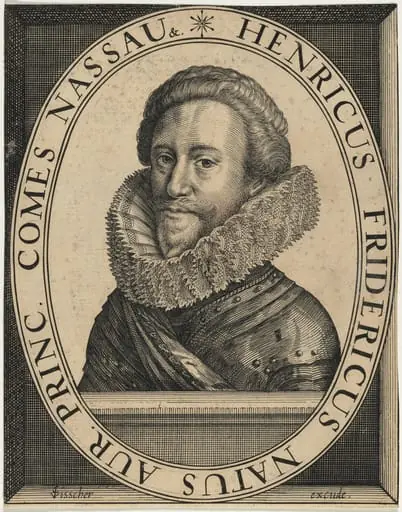
Claes Janszoon Visscher (1587 – 19 June 1652) was a Dutch Golden Age draughtsman, engraver, mapmaker, and publisher.