Artwork
Singing Guitarist (recto); Reclining Woman Leaning on Her Arm (verso)
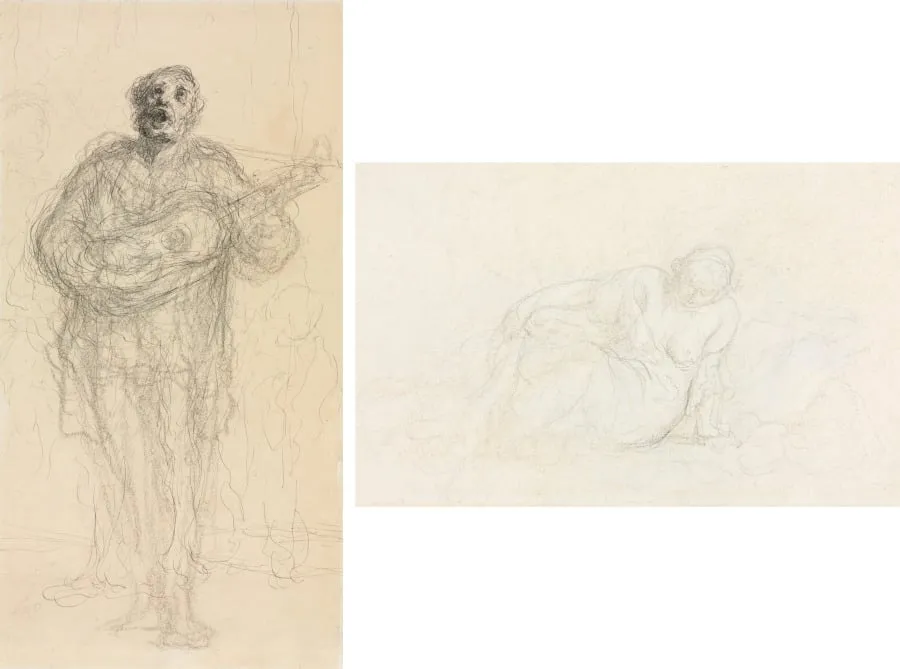
Singing Guitarist (recto); Reclining Woman Leaning on Her Arm (verso) is a drawing by the Impressionist artist Honoré Daumier. It dates from 1858 and is held in the collection of the Cleveland Museum of Art.
About this work
Overview
This double-sided drawing by Honoré Daumier, dated 1858, features two distinct figures on a single sheet of paper.
This double-sided drawing by Honoré Daumier, dated 1858, features two distinct figures on a single sheet of paper. The recto depicts a slender man, possibly a street performer, rendered with rapid, energetic strokes. The verso shows a reclining woman, drawn more subtly and faintly, as if secondary or partially obscured. The work exemplifies Daumier’s habit of reusing paper, capturing fleeting moments with minimal means.
Subject & Meaning
The figure on the front appears to be a musician, his posture suggesting performance, though his face is indistinct, emphasizing gesture over identity. The woman on the reverse, curled in repose, conveys quiet intimacy. Together, they reflect Daumier’s interest in ordinary life—public spectacle and private stillness coexisting on the same surface, hinting at the duality of human experience.
Technique & Style
Daumier employed quick, loose ink lines to convey motion and form without detail. The guitarist’s body is built from smudged, overlapping strokes, while the woman’s outline is fainter, almost ghostly, suggesting a later addition or an afterthought. The contrast in pressure and density reveals his spontaneous process—drawing as immediate observation rather than polished composition.
History & Provenance
The drawing entered the collection of The Cleveland Museum of Art as part of a larger group of Daumier’s works acquired in the 20th century. Its dual-sided nature reflects common 19th-century practices of conserving paper. No earlier ownership records are widely documented, but its condition suggests it was kept as a study, not a finished piece for public display.
Context
Created during Daumier’s mature period, this drawing aligns with his broader engagement with urban life under the July Monarchy and Second Empire. While his caricatures targeted political figures, these sketches reveal his quieter observations of common people—musicians, laborers, and women in private moments—captured without satire, yet with deep empathy.
Legacy
Daumier’s unpolished, expressive drawings influenced later generations of realist and modern artists who valued immediacy over finish. This work, like many of his studies, demonstrates how sketching could serve as both documentation and emotional resonance. Its survival underscores the artistic value once assigned to what was originally considered ephemeral.
Artist & collection
Artist
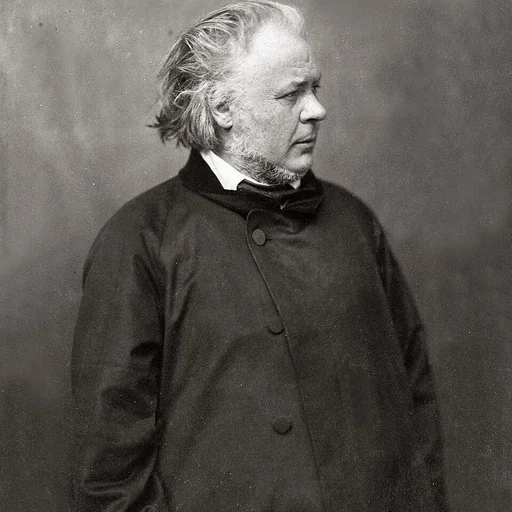
Honoré-Victorin Daumier was a French painter, sculptor, and printmaker, whose many works offer commentary on the social and political life in France, from the Revolution of 1830 to the fall of the Second French Empire in 1870.

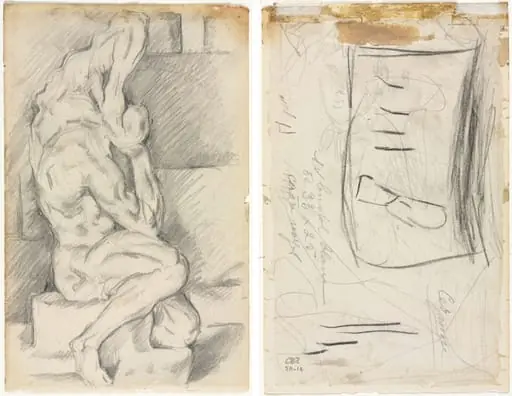 Sketch of Anatomical Sculpture (recto) Sketch of Madame Cézanne (verso)
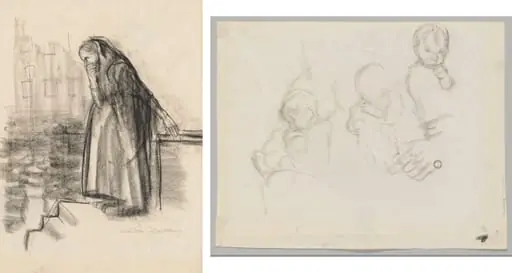 Pregnant Woman Contemplating Suicide (recto) Three Studies of a Child (verso)
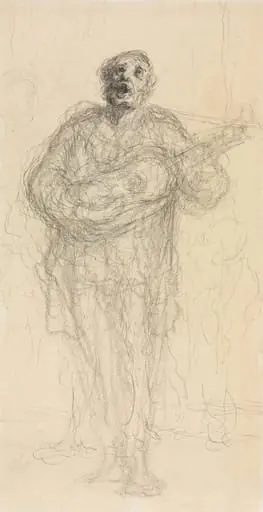 Singing Guitarist (recto)
 Desene copii
 Courtesan (recto) Figure Sketches (verso)
 Figure studies and a head fot the mosaic decoration of the dome of St. Paul's Cathedral
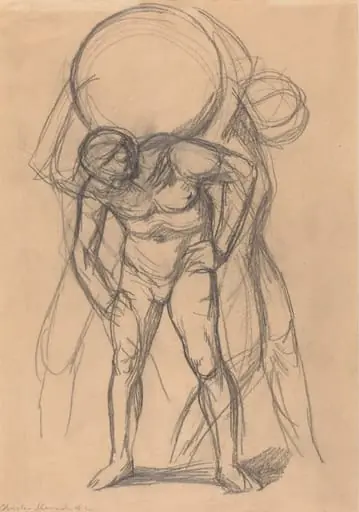 Study of Atlas
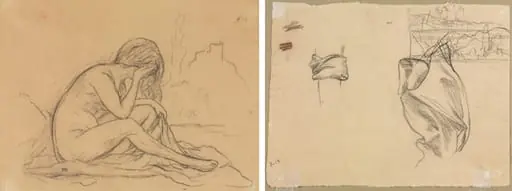 Study of a Female Nude (possibly for an unrealized allegorical painting) (recto); Studies of Drapery and Study of a Landscape (verso)
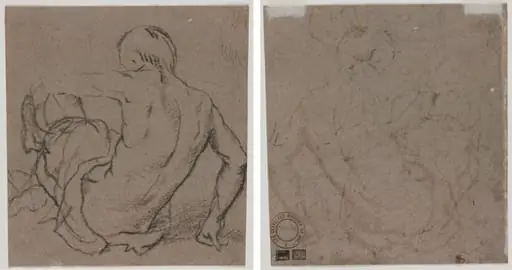 Man Seated on the Ground, Seen from Behind (recto); Sketch (verso)
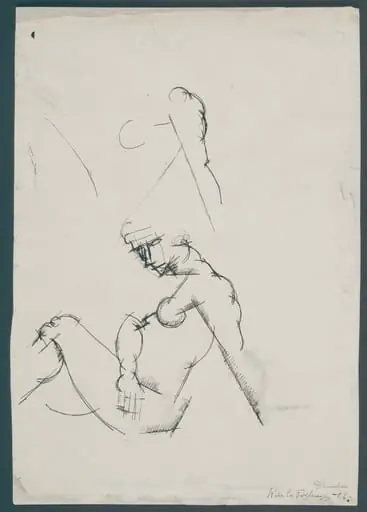 Untitled