Artwork
Ornament
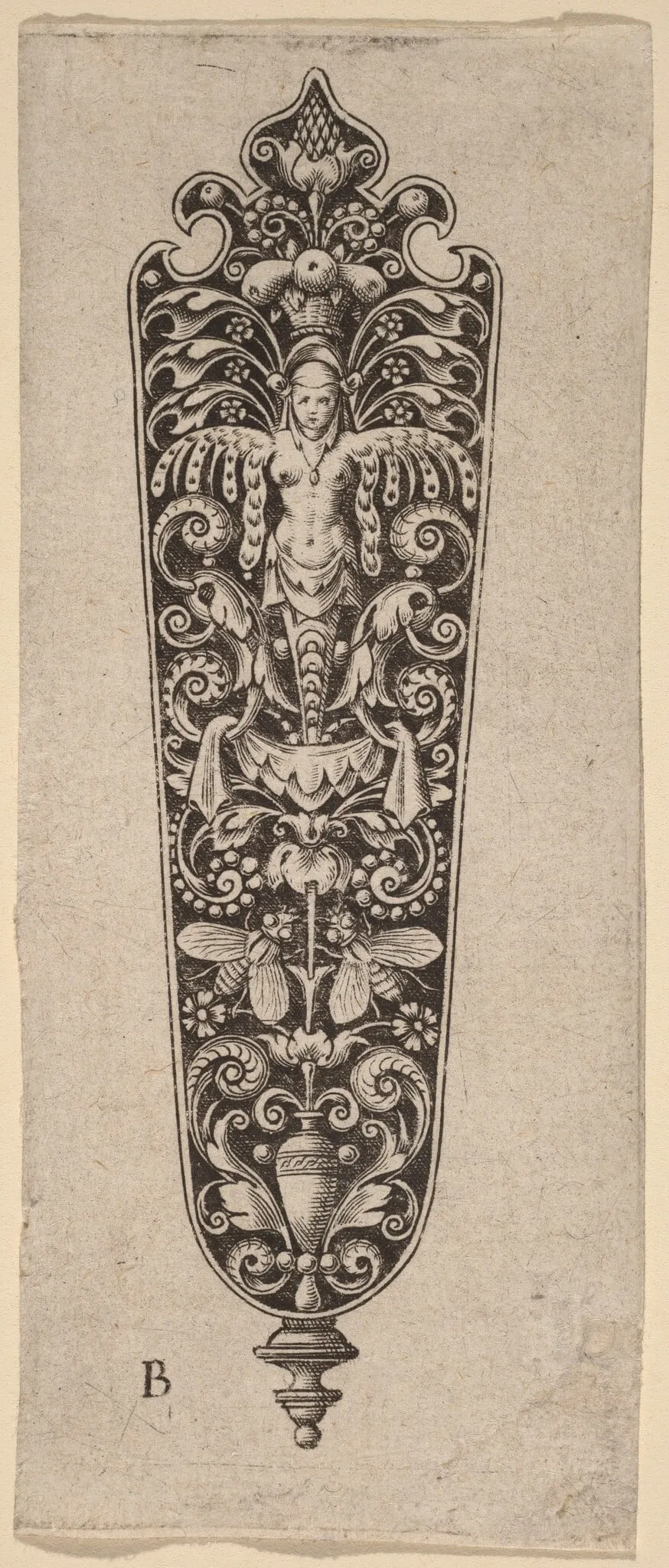
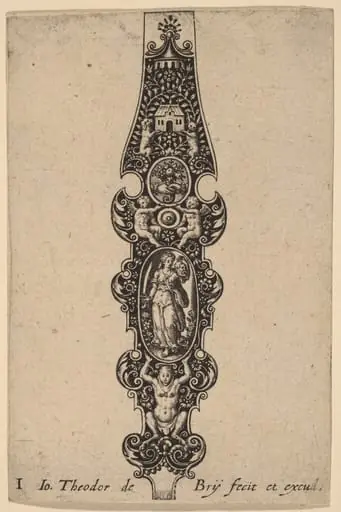
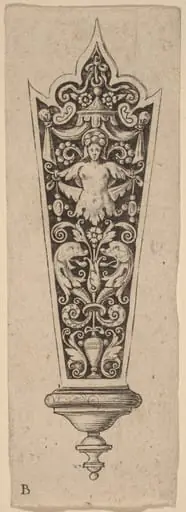
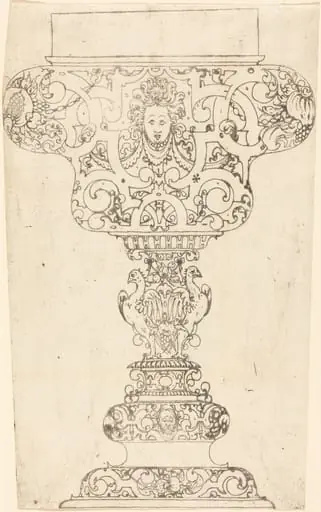
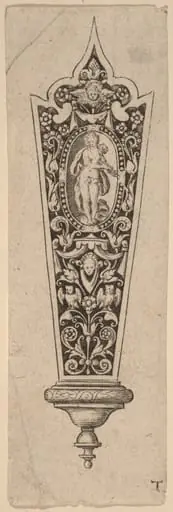
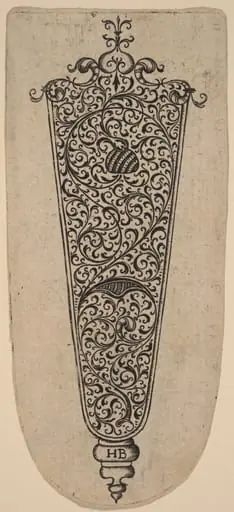
Ornament is an ink print by the Renaissance artist Theodor de Bry. It dates from 1563 and is held in the collection of the National Gallery of Art.
About this work
Overview
This work exemplifies his technical precision and fascination with decorative forms, predating his better-known illustrations of New World expeditions.
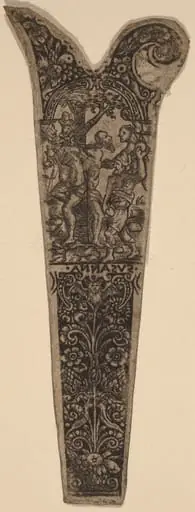
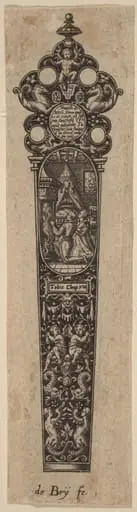
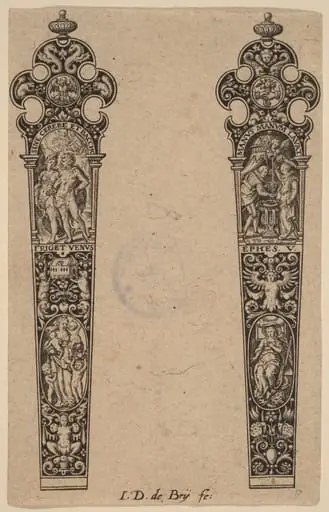
Created in 1563 by Theodor de Bry, *Ornament* is a black-and-white engraving produced during his early years in Frankfurt. De Bry, a Walloon exile from the Spanish Netherlands, turned to printmaking after fleeing religious persecution. This work exemplifies his technical precision and fascination with decorative forms, predating his better-known illustrations of New World expeditions. It stands as an independent study in ornamental design rather than an illustration for a text.
Subject & Meaning
At the center of the composition stands a winged female figure holding a vase, her form interwoven with botanical elements. Surrounding her are small figures and swirling vines that blur the boundary between human and natural forms. The imagery evokes classical allegory and Renaissance ideals of harmony between humanity and nature, though no specific mythological narrative is identifiable. The figure functions more as a personification of abundance or artistic inspiration than a named deity.
Technique & Style
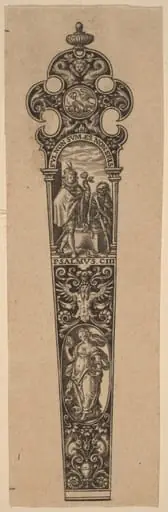
De Bry employed fine-line engraving to render intricate details with clarity and depth. The composition is densely packed with scrolling foliage, delicate floral motifs, and minute figures, all rendered in monochrome to emphasize line and texture. The vertical format and symmetrical arrangement reflect Mannerist tendencies of the period, where complexity and elegance took precedence over spatial realism. The technique required meticulous control, typical of goldsmiths trained in metalwork.
History & Provenance
Produced in 1563, shortly after de Bry settled in Frankfurt, *Ornament* likely served as a pattern sheet for artisans or as a standalone decorative print. It predates his famous illustrated travel accounts and reflects his early career focus on ornamental design. No early ownership records are documented, but such prints were commonly circulated among craftsmen and collectors in German-speaking regions during the late 16th century.
Context
In mid-16th-century Europe, engraved ornaments were widely used in book illustration, architecture, and decorative arts. De Bry’s work aligns with a broader trend among Northern Renaissance artists who adapted classical motifs into elaborate, stylized compositions. His training as a goldsmith informed his precision, while the Protestant Reformation’s suppression of religious imagery may have encouraged a shift toward secular decoration.
Legacy
Though less known than his later publications, *Ornament* demonstrates de Bry’s foundational skill in engraving and his ability to synthesize classical and naturalistic elements. It influenced contemporaries working in decorative arts and contributed to the dissemination of Mannerist design principles across Northern Europe. The print remains a testament to the role of printmakers in shaping visual culture beyond narrative illustration.
Artist & collection
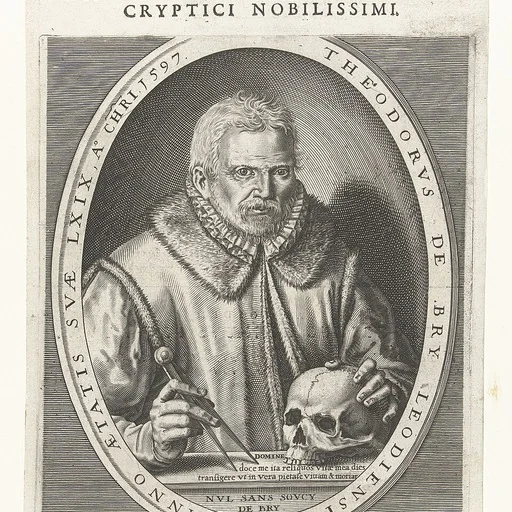
Artist
Theodor de Bry (also Theodorus de Bry; 1528 – 27 March 1598) was a Walloon engraver, goldsmith, editor and publisher, famous for his depictions of early European expeditions to the Americas.