Artwork
Copie după C. Baba
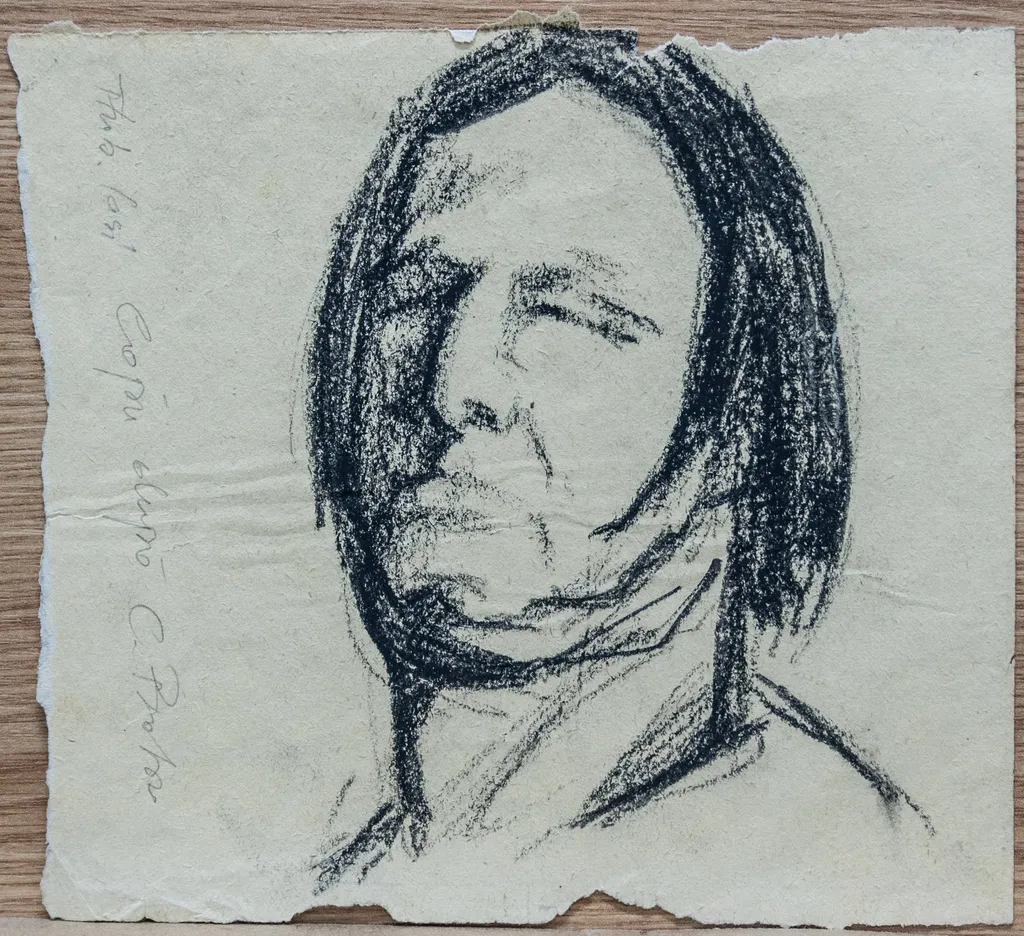
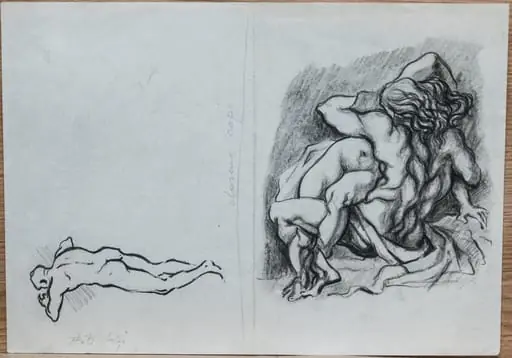
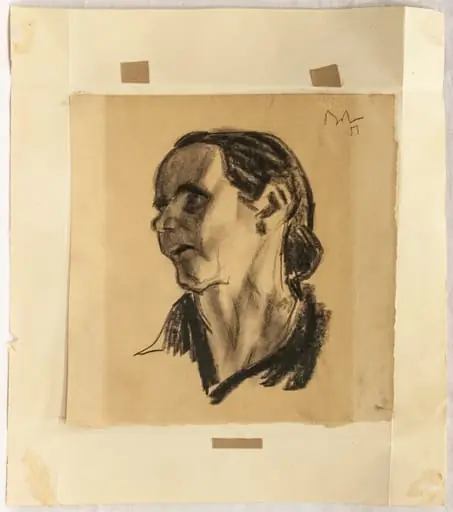
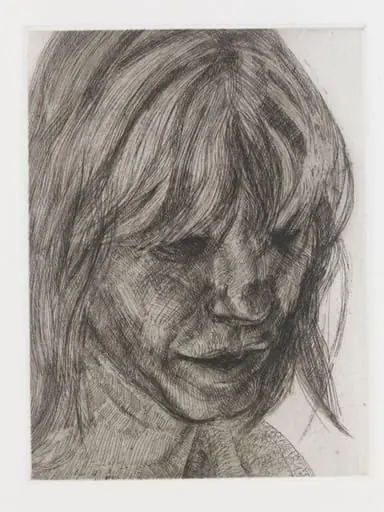
Copie după C. Baba is a drawing by Teodor Hrib. It dates from 1950 and is held in the collection of the Gavrila Simion Eco-Museum Research Institute Tulcea.
About this work
Overview
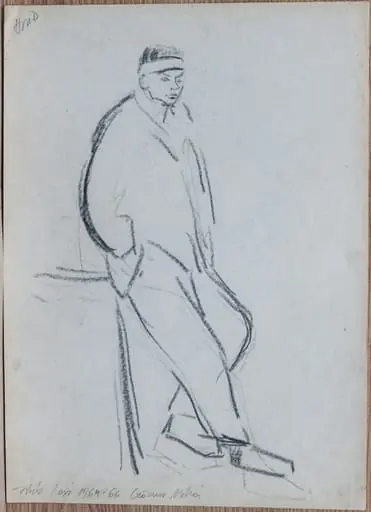
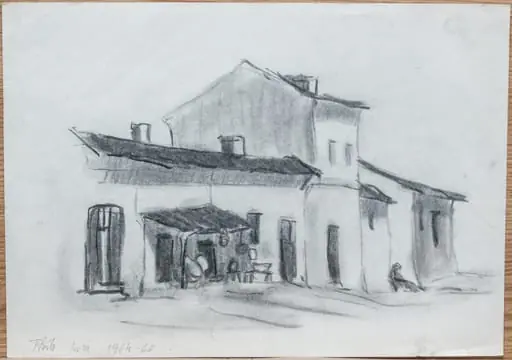
Created around 1950 by Teodor Hrib, this drawing is a study after a work by C. Baba. Executed in pencil on aged paper, it bears signs of wear, including frayed edges and a weathered surface. The piece was acquired by the Museum of Ethnography, where it is preserved as part of a collection documenting artistic practice and influence in mid-20th century Romania.
Subject & Meaning
The drawing depicts a human face rendered with minimal detail, focusing on structure rather than individual identity. It functions as a learning exercise, reflecting Hrib’s engagement with Baba’s stylistic approach. The absence of context or narrative suggests an intent to study form, expression, and technique rather than convey a specific story or character.
Technique & Style
Hrib employed parallel hatching—repeated, unidirectional strokes—to model volume and shadow. The density of lines varies across the face, creating subtle tonal shifts without blending or smudging. The method is economical and direct, emphasizing line over tone, and reflects a draftsperson’s focus on observation rather than finish.
History & Provenance
The work entered the Museum of Ethnography’s collection in the latter half of the 20th century, likely through donation or institutional acquisition.
The work entered the Museum of Ethnography’s collection in the latter half of the 20th century, likely through donation or institutional acquisition. Its condition—worn paper, torn edges—suggests it was handled frequently, possibly used in teaching or as a reference. No earlier ownership records are documented, but its status as a copy implies it was made within an artistic circle familiar with Baba’s work.
Context
In postwar Romania, artists often studied established figures like C. Baba as part of formal training. Hrib’s sketch fits within this pedagogical tradition, where copying served as a means to internalize technique. The drawing’s informal nature aligns with classroom or studio exercises common among students and emerging artists during this period.
Legacy
Though not a finished work, the drawing preserves a moment of artistic transmission—Hrib’s engagement with Baba’s visual language. It stands as evidence of how influence operated through direct, hands-on study. Its preservation in a museum underscores the value placed on such preparatory works as records of artistic development.
Artist & collection
Artist
Teodor Hrib shaped small plaster figures and ink drawings in the 1800s academic tradition.
Museum
Gavrila Simion Eco-Museum Research Institute Tulcea
Continue through works from the same source collection.
![Two Marquesans [recto], by Paul Gauguin](https://artifactworldgallery.com/img/paul-gauguin--two-marquesans-recto--916b716ab0d6c759-w320.webp)