Artwork
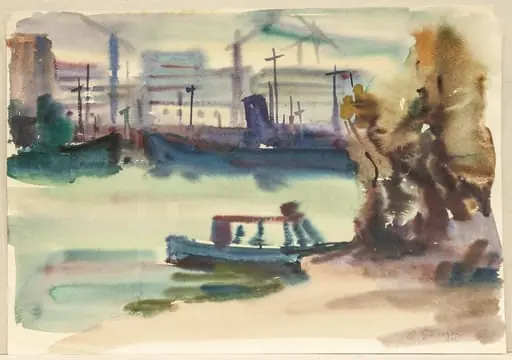
Desen după C. Baba - Veneția
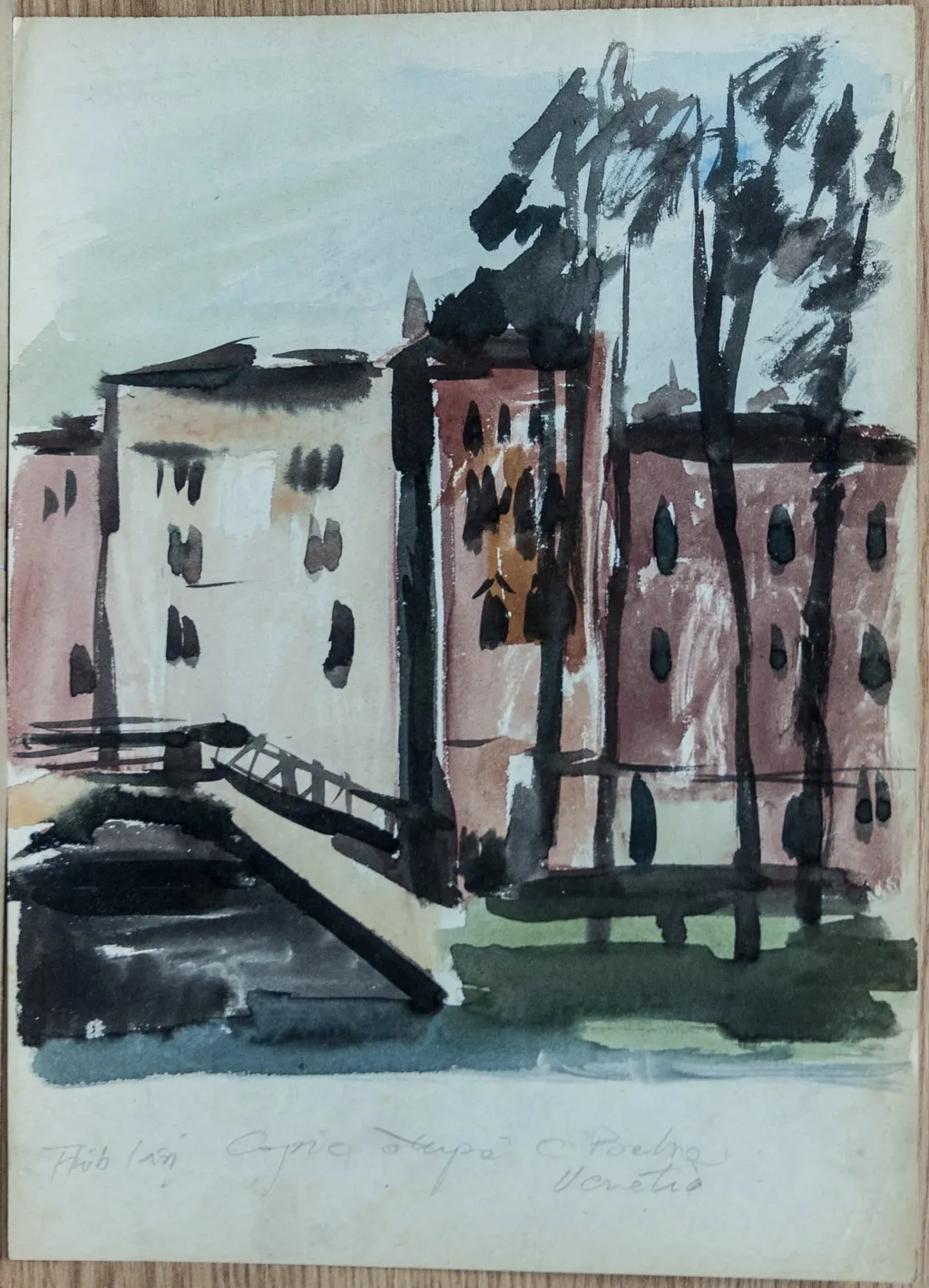
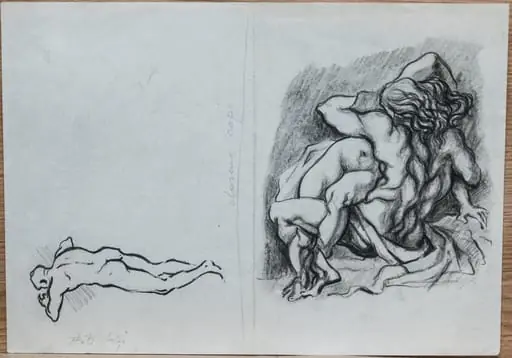
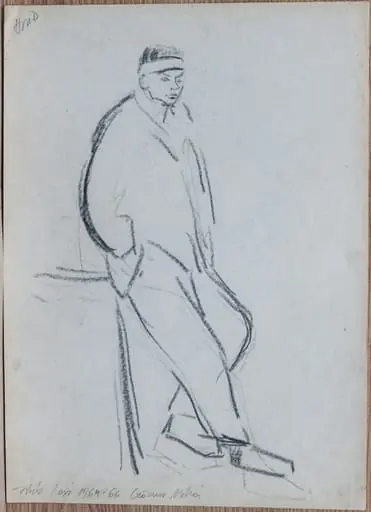
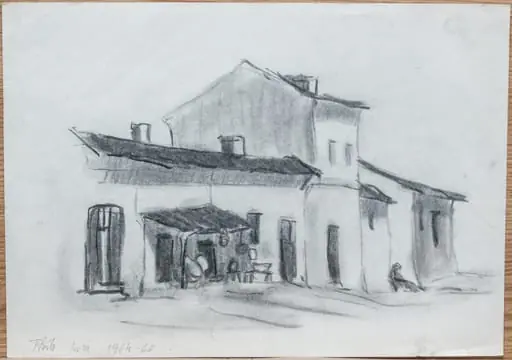
Desen după C. Baba - Veneția is a print by Teodor Hrib. It dates from 1950 and is held in the collection of the Gavrila Simion Eco-Museum Research Institute Tulcea.
About this work
Overview
The work reflects a personal interpretation of Venice, rendered with minimal detail and rapid, expressive strokes.
Created around 1950 by Romanian artist Teodor Hrib, this drawing is a pencil sketch titled 'Desen după C. Baba - Veneția.' It is part of the collection at the Museum of Ethnography. The work reflects a personal interpretation of Venice, rendered with minimal detail and rapid, expressive strokes. Its modest scale and informal execution suggest it was made as a private study rather than a finished piece.
Subject & Meaning
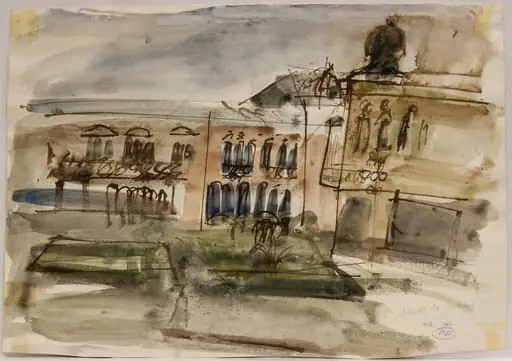
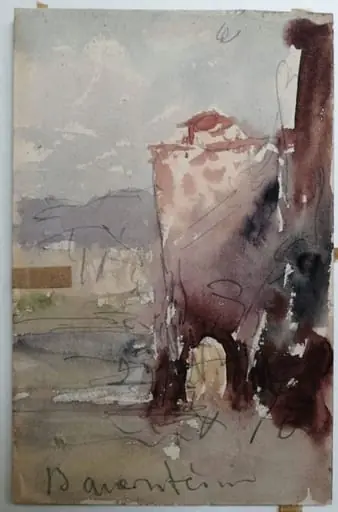
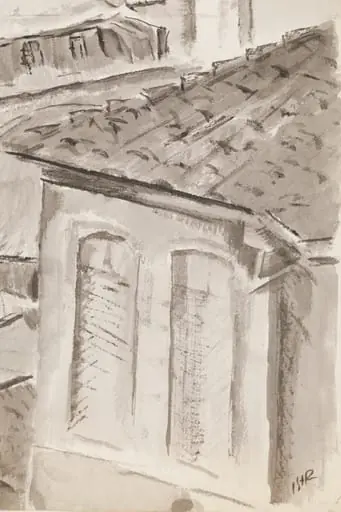
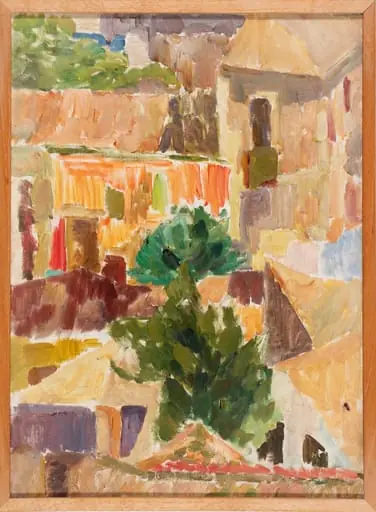
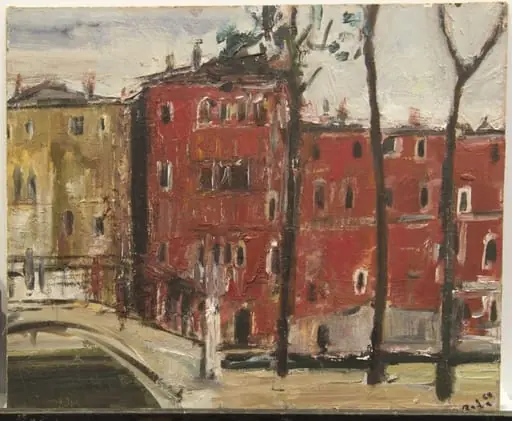
The drawing depicts a simplified urban scene: three vertical structures, a bridge, and foreground trees, all labeled 'Veneția.' The absence of specific landmarks implies the artist was not aiming for topographical accuracy. Instead, the image conveys a memory or impression of Venice—reduced to essential forms, evoking atmosphere over detail. The label anchors the scene geographically while leaving its emotional tone open.
Technique & Style
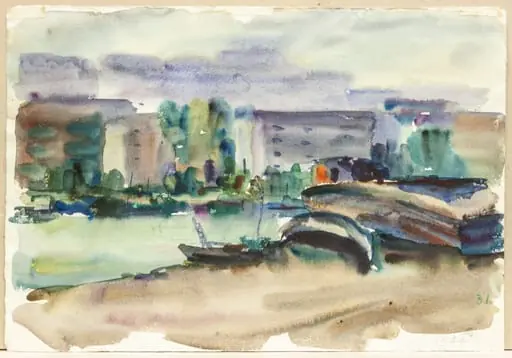
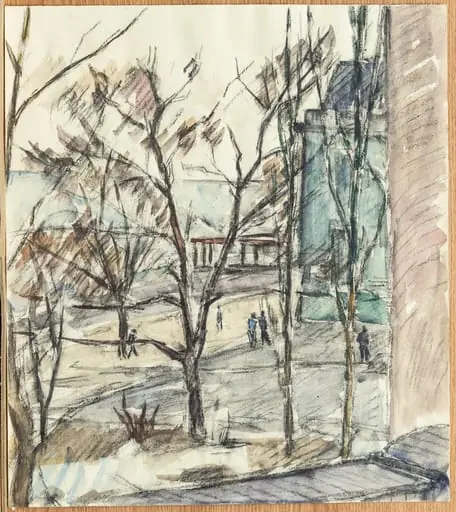
Hrib employed loose, unrefined pencil lines to construct the composition. Buildings are rendered with flat planes and dark, irregular windows; the bridge is defined by heavy, bold strokes. Trees appear as rough clusters of dark branches, contrasting with the pale wash of walls and the soft blue-green of water. The quick, gestural handling suggests spontaneity, possibly drawn from recollection rather than direct observation.
History & Provenance
The drawing was made in the early 1950s and entered the collection of the Museum of Ethnography in Romania. Its origin traces to Hrib’s engagement with the work of Constantin Baba, a fellow Romanian artist known for expressive figuration. Though not a direct copy, the title indicates a stylistic or thematic homage. The piece remained in private hands before institutional acquisition.
Context
In postwar Romania, artists often turned to travel sketches and memory-based imagery due to limited access to foreign destinations. Hrib’s drawing reflects this broader trend—Venice, a distant and romanticized city, was rendered through internalized visual fragments. The sketch aligns with a generation’s practice of using drawing as a tool for personal exploration amid restricted mobility.
Legacy
This work contributes to the understanding of Romanian mid-century graphic art as a space for quiet, introspective observation. While not widely exhibited, it exemplifies how artists processed distant places through simplified forms and personal notation. Its presence in the Museum of Ethnography underscores its value as a cultural artifact of everyday artistic practice rather than public display.
Artist & collection
Artist
Teodor Hrib shaped small plaster figures and ink drawings in the 1800s academic tradition.
Museum
Gavrila Simion Eco-Museum Research Institute Tulcea
Continue through works from the same source collection.