Artwork
Pregătirea de vânătoare
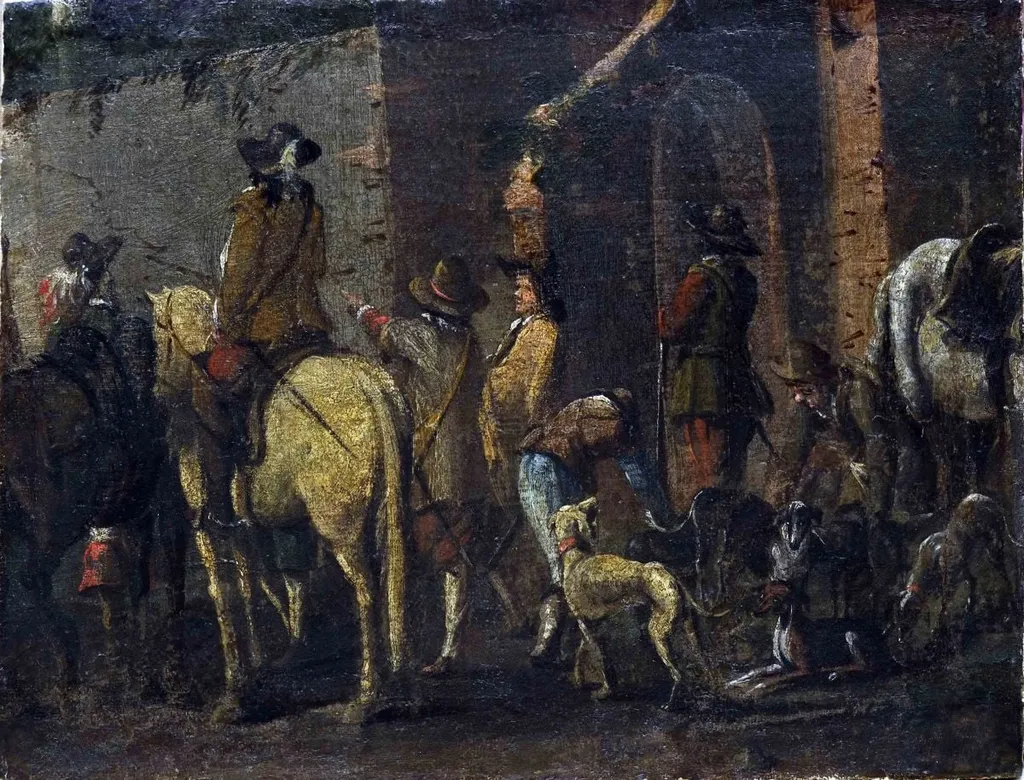
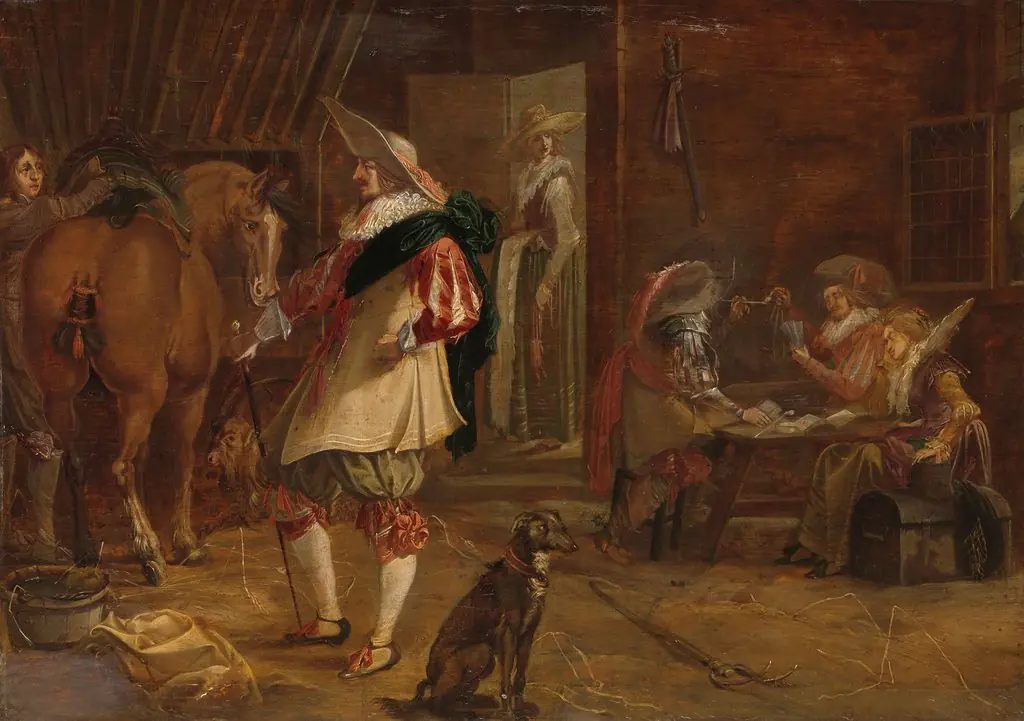
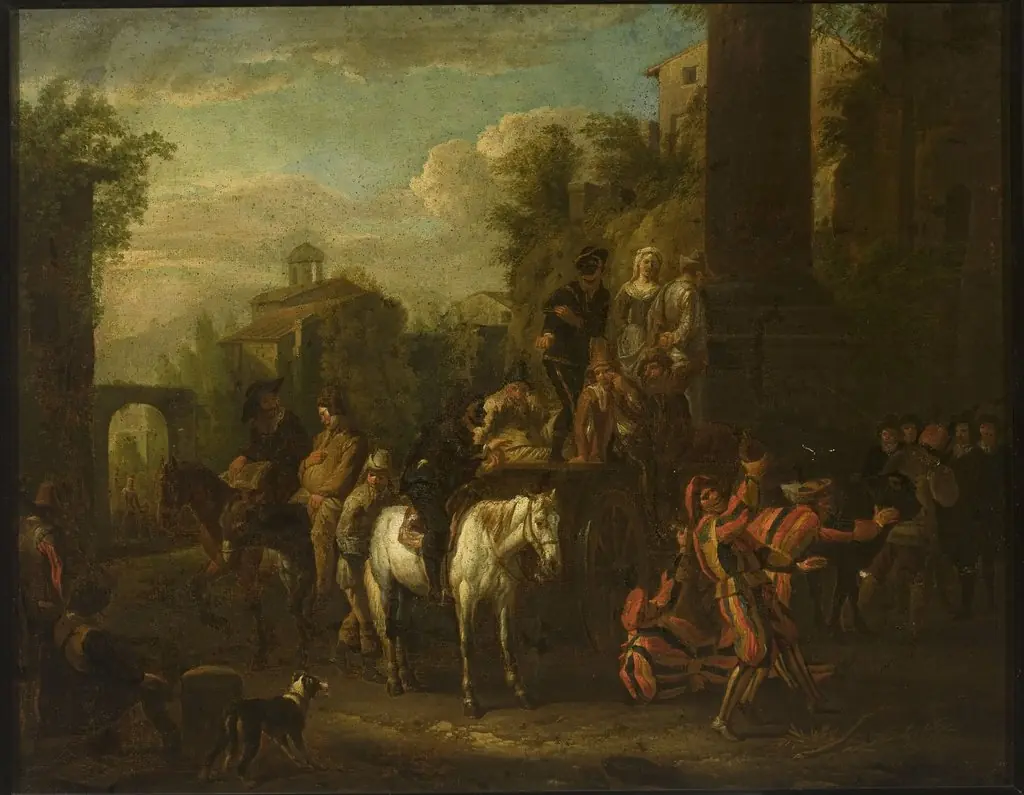
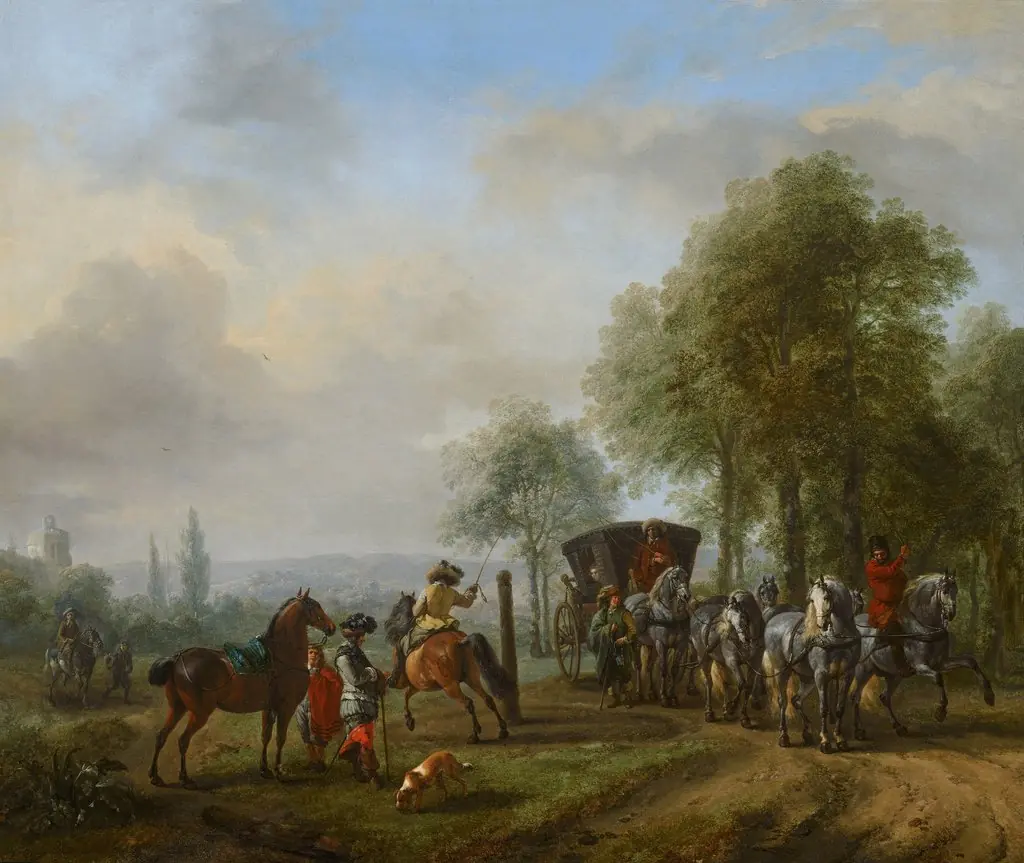
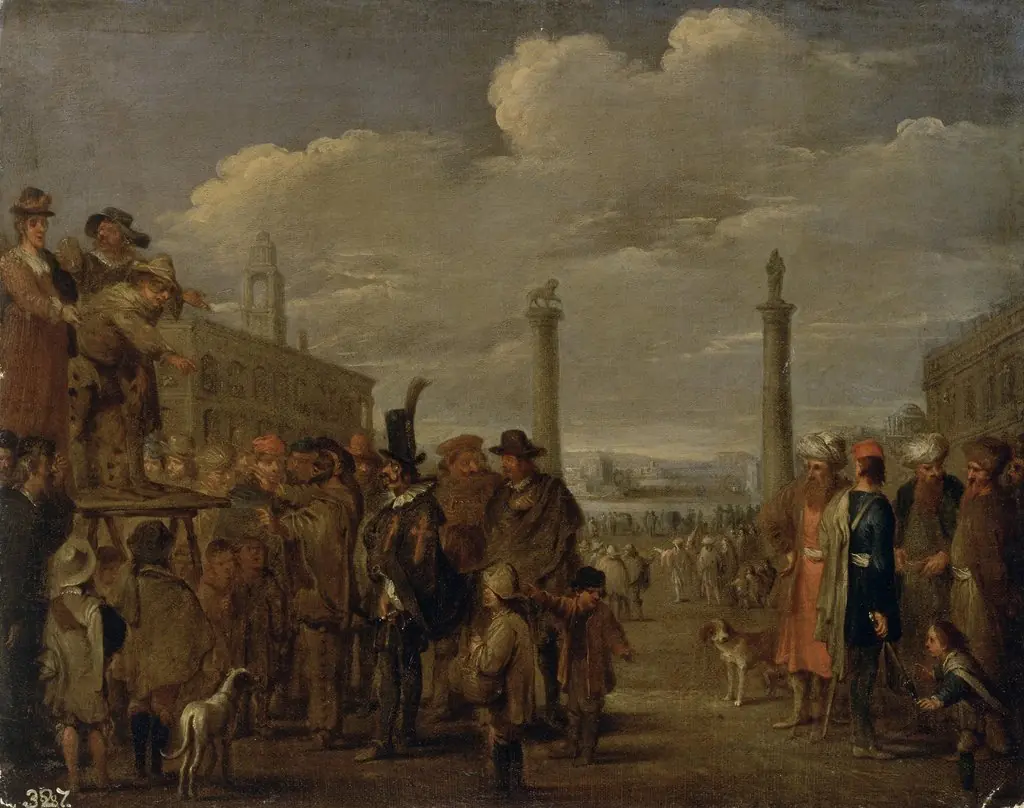
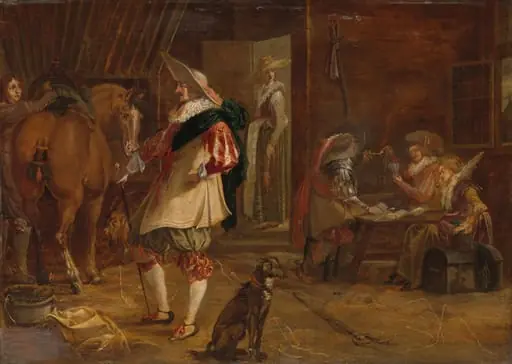
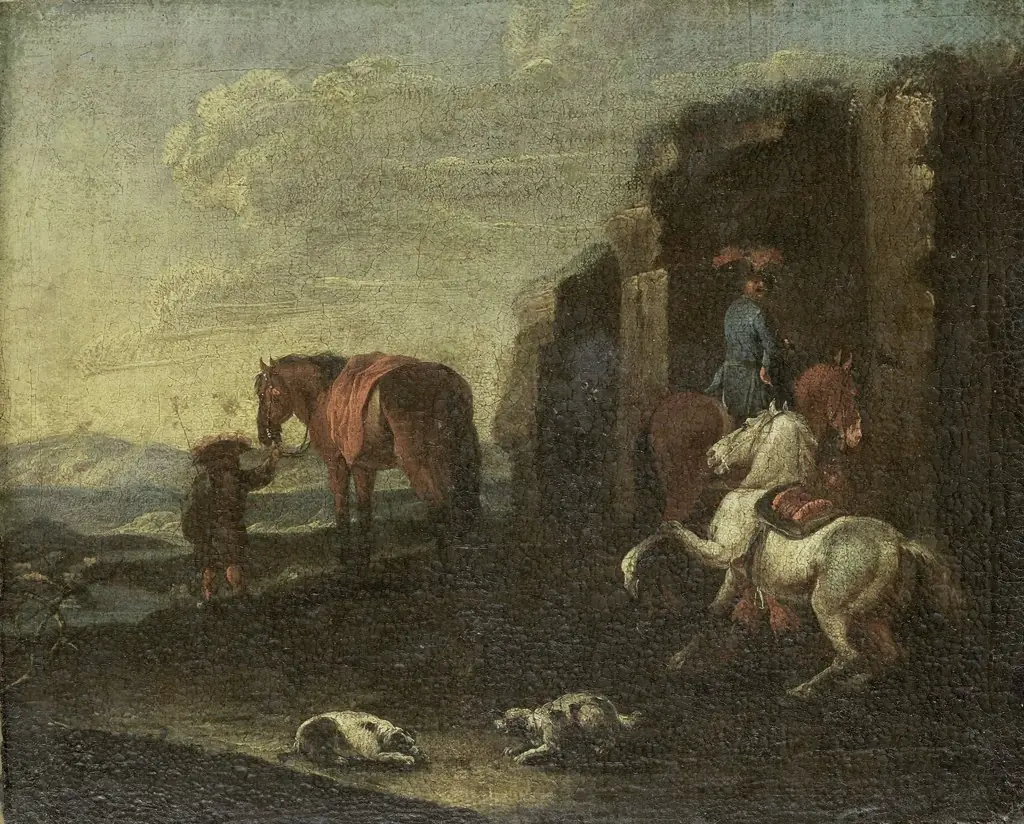
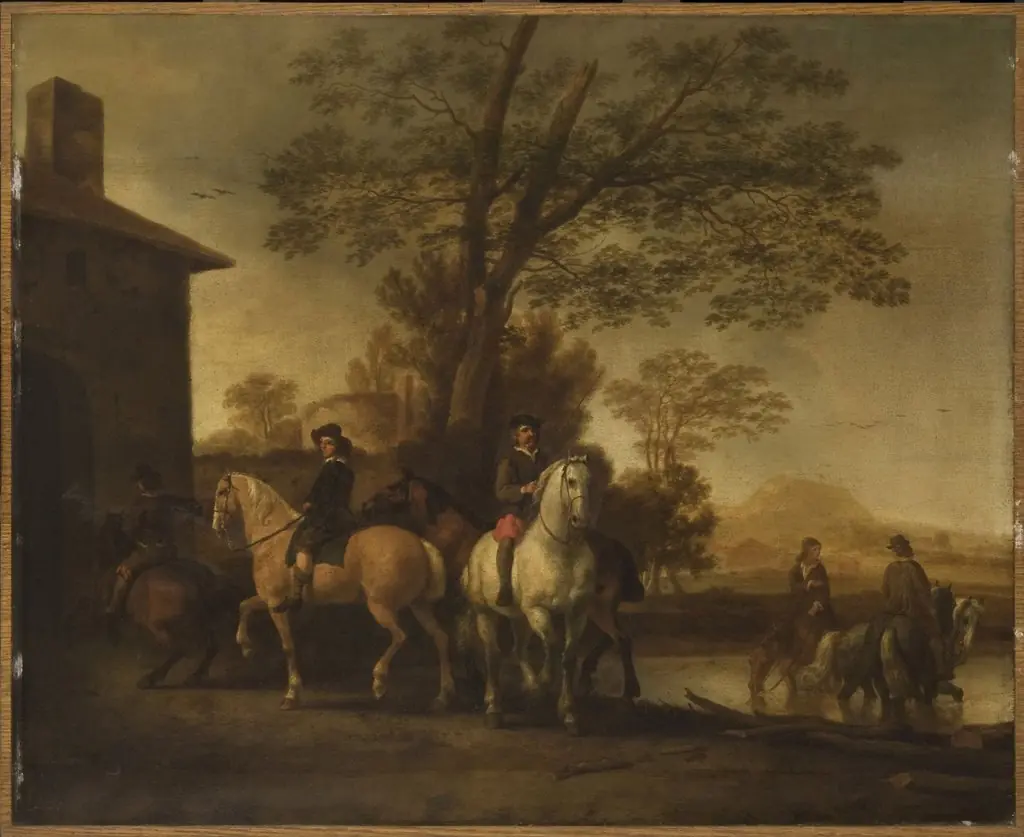
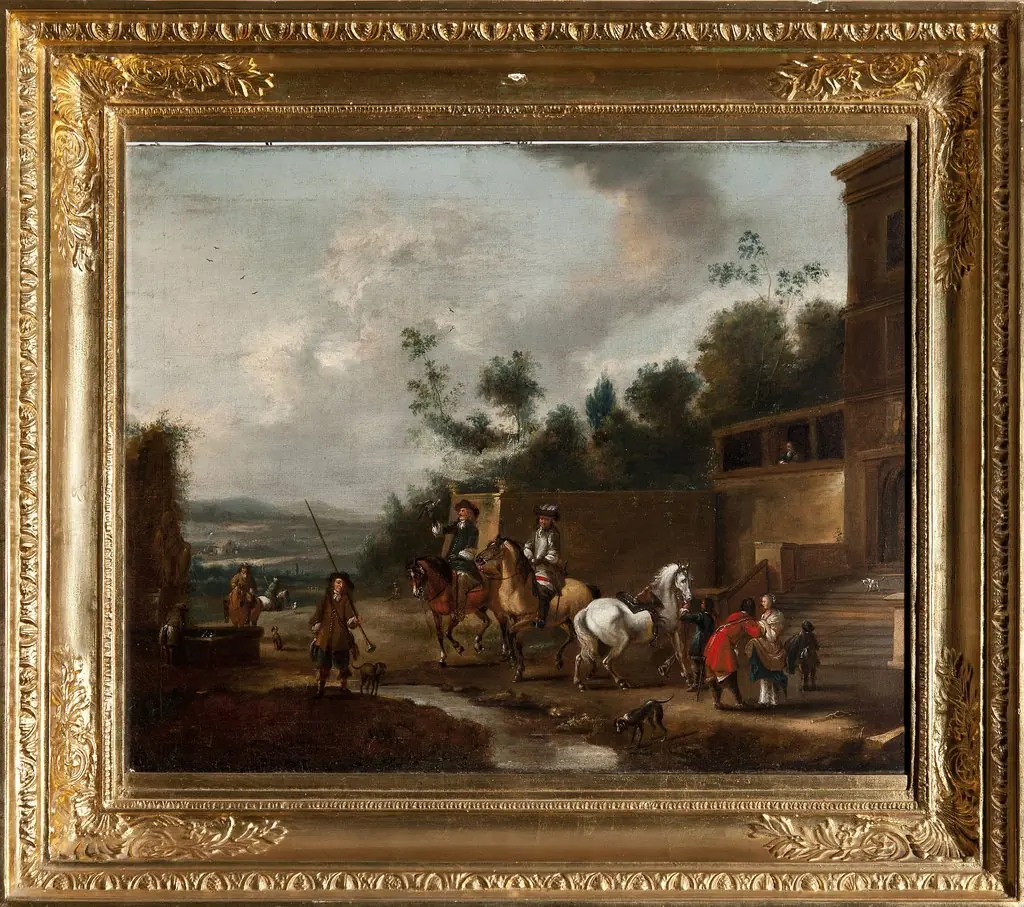
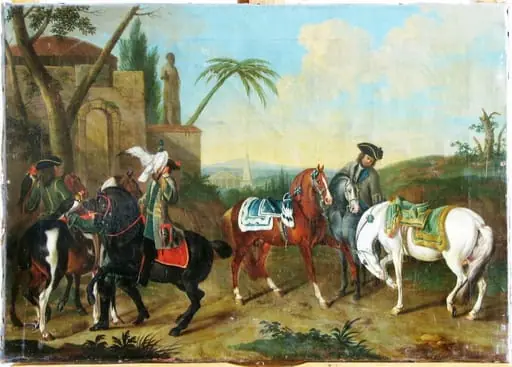
Pregătirea de vânătoare is an unspecified painting by Hugo Kołłątaj. It is held in the collection of the National Museum of Art of Romania. This painting depicts a pre-hunt gathering in a dense woodland, capturing a moment of quiet preparation among a group of hunters.
About this work
Overview
This painting depicts a pre-hunt gathering in a dense woodland, capturing a moment of quiet preparation among a group of hunters.
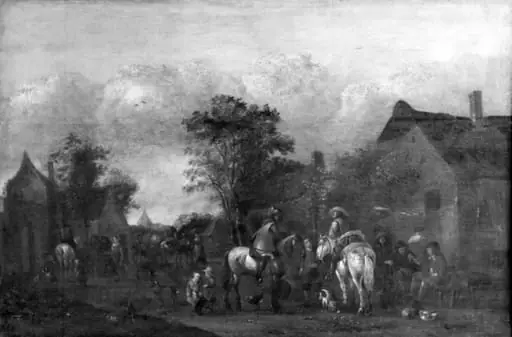
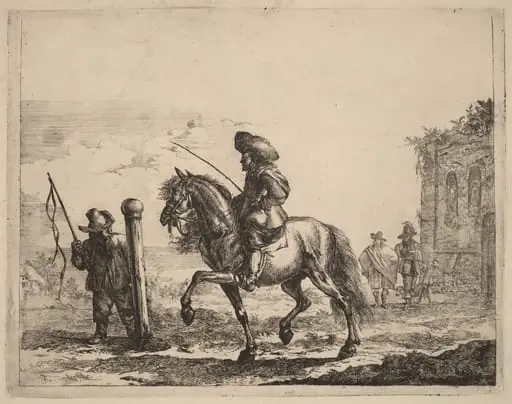
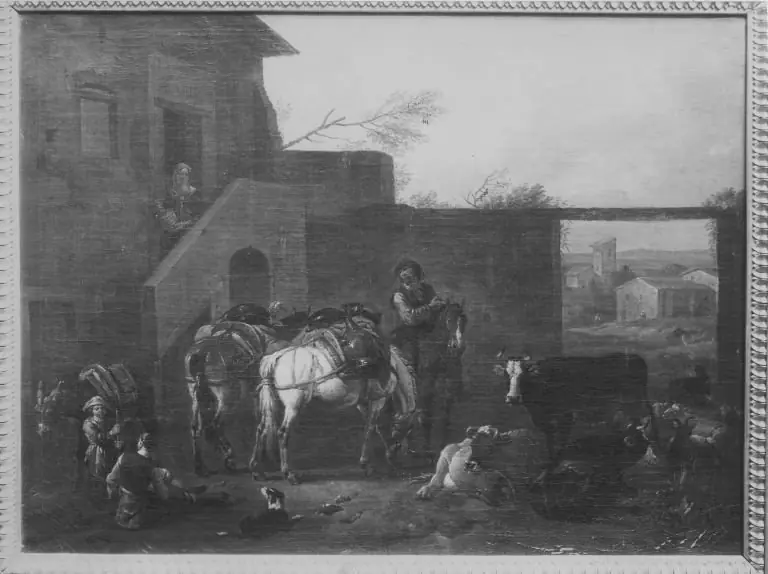
This painting depicts a pre-hunt gathering in a dense woodland, capturing a moment of quiet preparation among a group of hunters. Figures are arranged around a central mounted figure, with dogs and weapons scattered through the scene. The palette is dominated by earth tones—browns and deep greens—broken by small accents of red and yellow. The brushwork is deliberately textured, suggesting a focus on material presence over idealized form.
Subject & Meaning
The scene portrays a ritualized moment before a hunt, emphasizing readiness rather than action. The central figure on horseback may signify leadership or status, while the surrounding figures and animals suggest a collective effort. The absence of movement or violence implies a contemplative tone, perhaps reflecting the gravity or tradition of the hunt rather than its outcome.
Technique & Style
The artist employs thick, tactile brushstrokes—known as impasto—to render fur, fabric, and foliage with physical weight. This technique creates a sense of depth and surface variation, especially in the animals and clothing. Lighting is directional and uneven, casting shadows that enhance the three-dimensionality of forms without fully illuminating the scene, reinforcing its somber, enclosed atmosphere.
History & Provenance
The painting’s origin and early ownership remain undocumented in available records. It has been consistently attributed to a regional painter active in the late 16th or early 17th century, though no definitive archival links to collectors or institutions have been established. Its survival suggests it was preserved within a private or local context rather than a major royal or ecclesiastical collection.
Context
Depictions of hunting preparations were common in Northern European art during this period, often commissioned by nobility to affirm social rank and connection to land. Yet this work lacks overt symbols of wealth or grandeur, hinting at a more modest, possibly regional tradition. Its focus on texture and atmosphere aligns with emerging naturalist tendencies, distancing it from idealized courtly scenes.
Legacy
Though not widely exhibited or reproduced, the painting contributes to an understudied body of work that values tactile realism over narrative drama. Its emphasis on materiality and subdued lighting influenced later regional artists who favored observational detail over theatricality. It remains a quiet example of how everyday rituals were rendered with quiet dignity in pre-modern European painting.
Artist & collection
Artist
This Polish folk painter worked in the late eighteenth and early nineteenth centuries, creating religious scenes with bold colors and simple shapes.

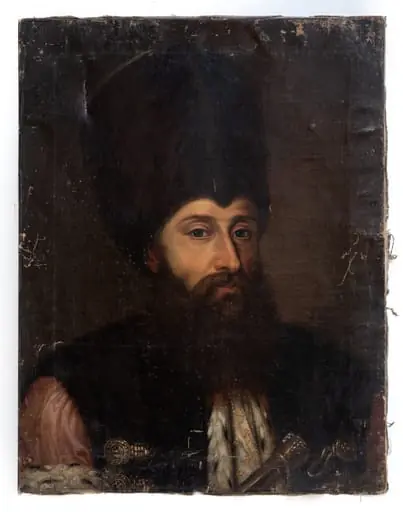 Alexandru Ipsilanti
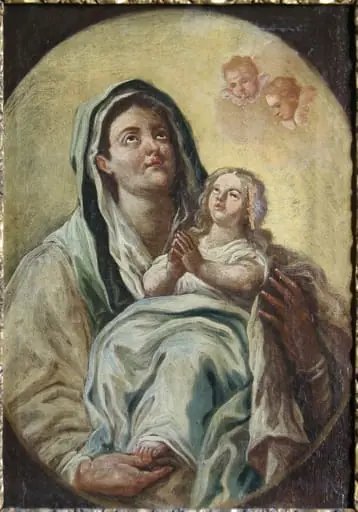 Fecioara Maria cu Pruncul Isus (în Reg. Inv.: Maria cu copilul Isus)
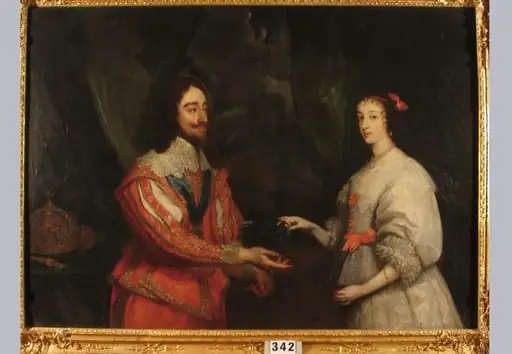 Regele Charles I Stuart al Angliei și soția sa Henrietta Maria de Franța (în Reg. Inv.: Carol I al Angliei și soția sa Henriette din Franța)
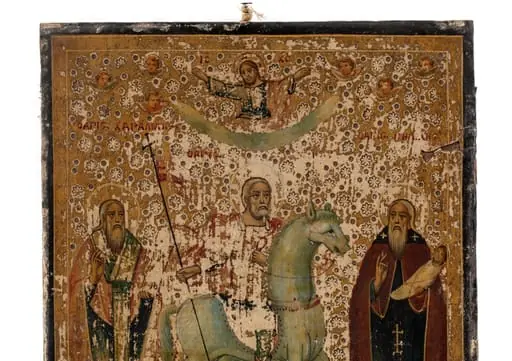 Sfântul Haralambie cu alți doi sfinți
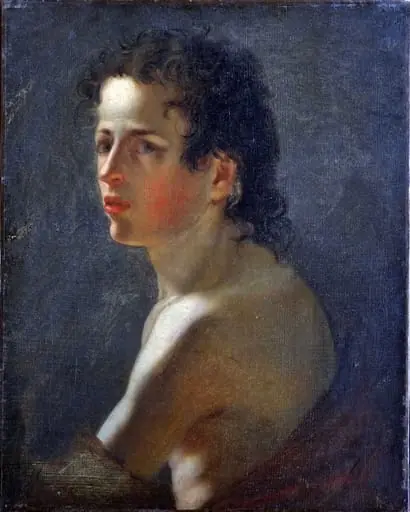 Portret de bărbat
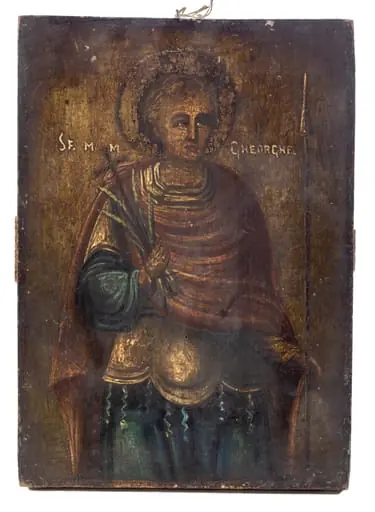 Sfântul Gheorghe
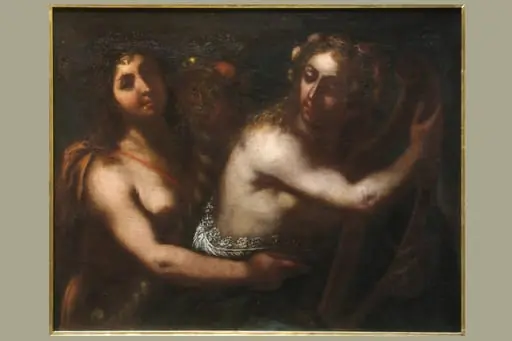 Vertumnus și Pomona (în Reg. Inv.: Vertumnus și Flora)
 Iarnă
Iarnă