Artwork
Sud-Express
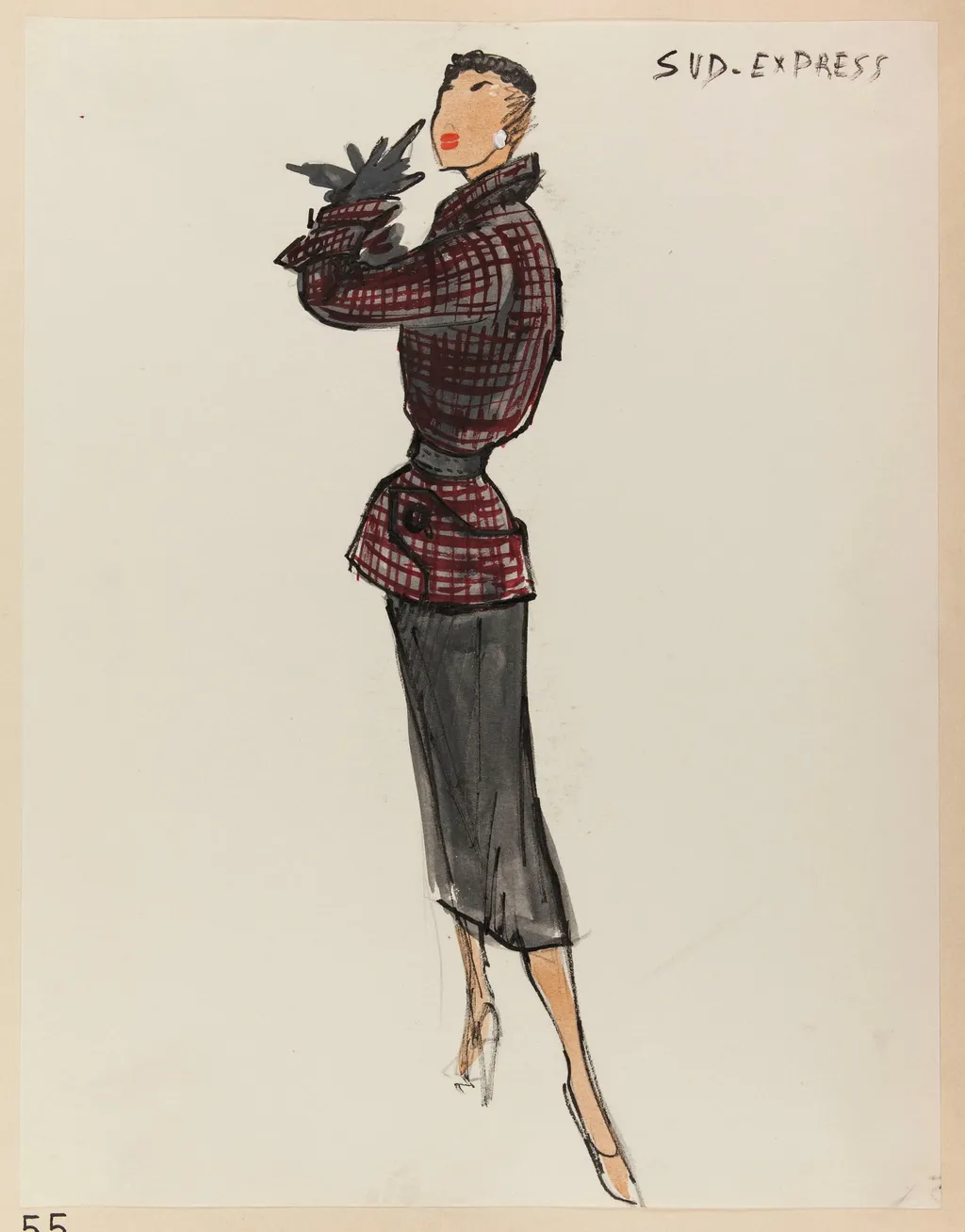
Sud-Express is a drawing by Marie-Louise Carven. It dates from 1952 and is held in the collection of the Palais Galliera - Musée de la Mode de la Ville de Paris.
About this work
Overview
The sketch bears her signature and may represent a garment from a named collection, aligning with her focus on wearable, modern silhouettes.
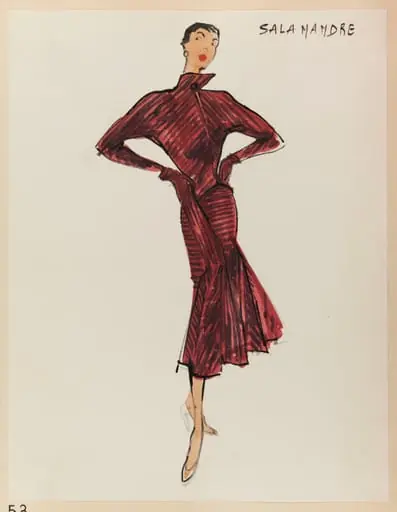
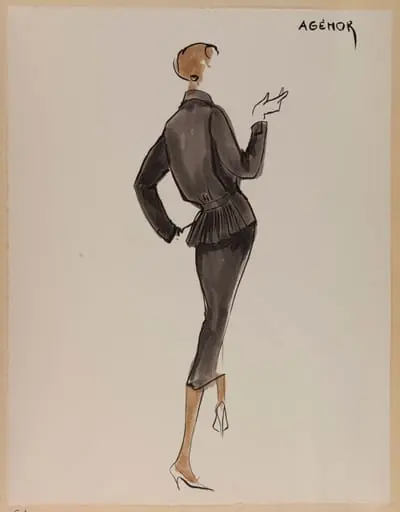
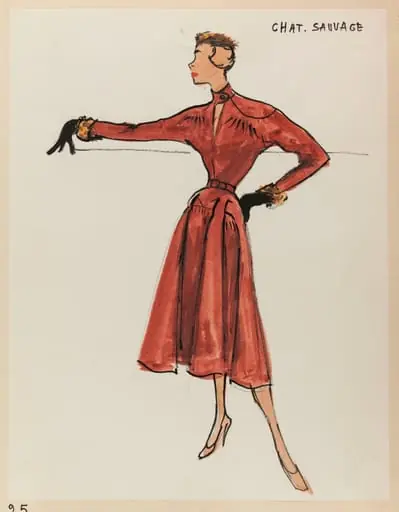
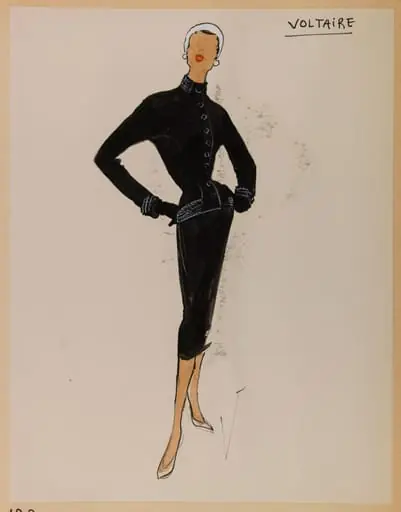
Sud-Express is a pencil sketch attributed to Marie-Louise Carven, created circa 1952. It captures a figure in motion, dressed in a red-and-black plaid shirt and a long dark skirt, holding a small dark object near her face. Executed with swift, minimal lines and subtle shading, the drawing reflects Carven’s approach to design as a fluid, immediate process. The sketch bears her signature and may represent a garment from a named collection, aligning with her focus on wearable, modern silhouettes.
Subject & Meaning
The figure in Sud-Express appears engaged in a quiet, intimate gesture—holding an ambiguous object to her face, possibly a purse or a bird. This moment suggests movement and narrative, evoking travel or personal ritual. The lack of facial detail universalizes the figure, emphasizing posture and clothing over identity. The sketch’s focus on everyday action aligns with Carven’s philosophy of fashion as functional, lived-in expression rather than theatrical display.
Technique & Style
Carven rendered Sud-Express with loose, confident pencil strokes, using minimal shading to suggest volume under the arms and along the legs. The absence of fine detail and the raw, unpolished quality indicate a working drawing, not a finished presentation piece. The simplified forms and rhythmic line work reflect a modernist sensibility, prioritizing movement and silhouette over ornamentation. This approach mirrors her design ethos: clarity, ease, and practicality.
History & Provenance
Sud-Express dates from the early years of Carven’s fashion house, founded in 1945. As one of the first Parisian designers to embrace prêt-à-porter, Carven produced numerous sketches to guide production, many of which were retained in her personal archive. This drawing likely originated from her studio during the development of a seasonal line. Its survival offers rare insight into her design workflow, though its specific provenance beyond the Carven estate remains undocumented.
Context
In early 1950s Paris, haute couture dominated, but Carven challenged norms by designing for smaller frames and everyday life. Sud-Express embodies this shift—its casual attire and dynamic pose contrast with the rigid formality of contemporary couture sketches. The use of plaid and lightweight fabrics reflects postwar material availability and a growing preference for accessible, relatable fashion. The sketch situates Carven within a broader movement toward democratizing style.
Legacy
Sud-Express stands as a testament to Carven’s role in redefining fashion design as a process rooted in real life. Her sketches, like this one, reveal how she translated practical needs into aesthetic form. Though not widely exhibited, such drawings contribute to understanding the evolution of ready-to-wear in France. They affirm that innovation in fashion often emerges not from grand statements, but from quiet, repeated acts of thoughtful observation.
Artist & collection
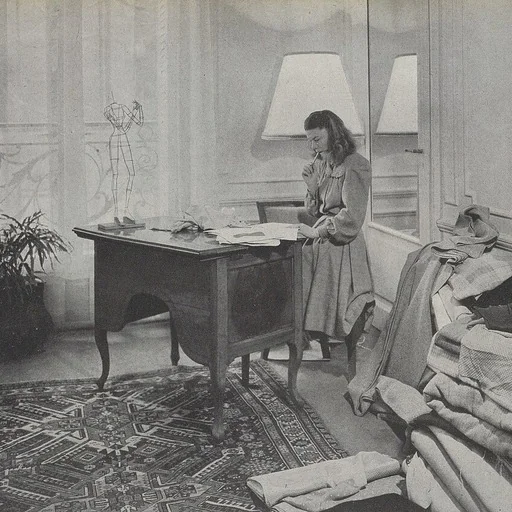
Artist
Marie-Louise Carven (31 August 1909 – 8 June 2015), born Carmen de Tommaso, was a French fashion designer who founded the house of Carven in 1945.
Museum
Palais Galliera - Musée de la Mode de la Ville de Paris
Continue through works from the same source collection.
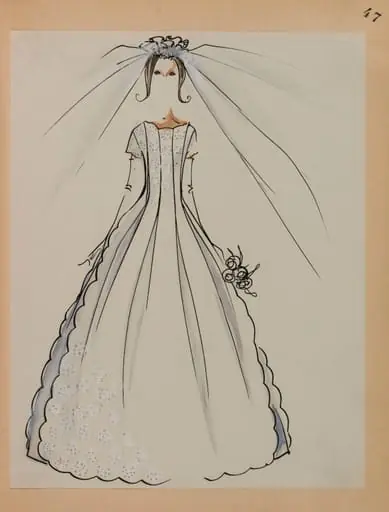 Robe de mariée festonnée et son voile
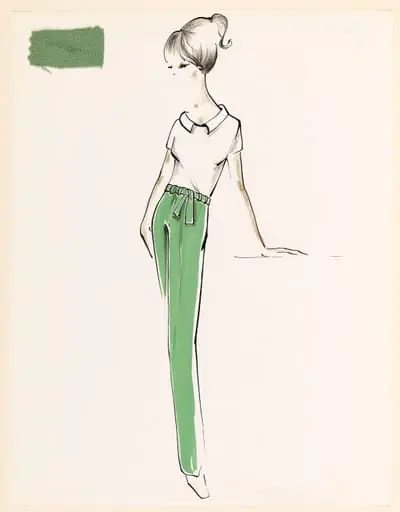 Haut blanc à manches courtes et pantalon vert à ceinture nouée
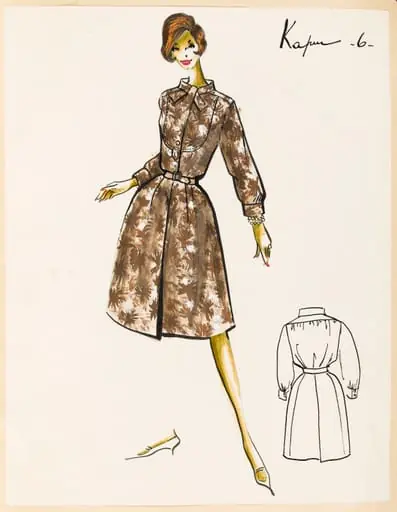 Kapur
Kapur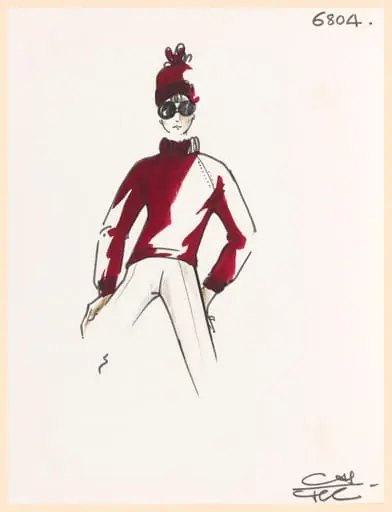 Pull-over à manches longues pourpre, bonnet assorti, pantalon et lunettes de soleil
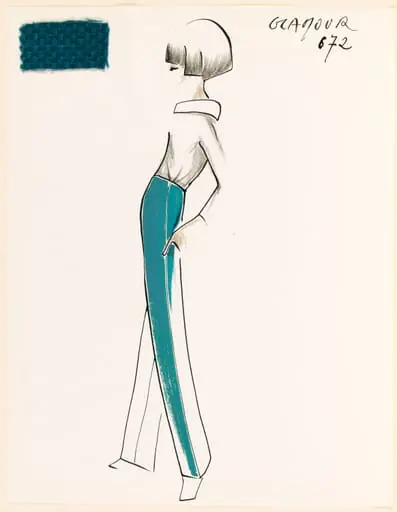 GLAMOUR
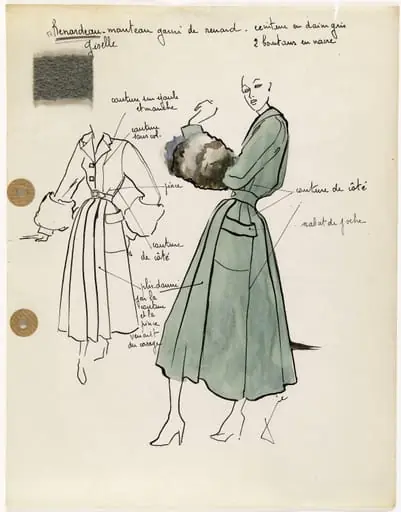 'Renardeau'
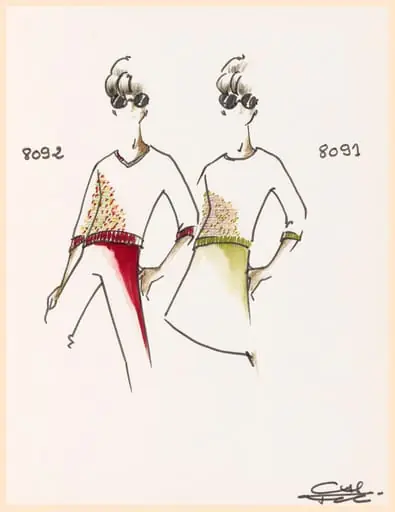 Pull-over à manches trois quarts et à encolure V à motifs multicolores, pantalon cerise et lunettes de soleil
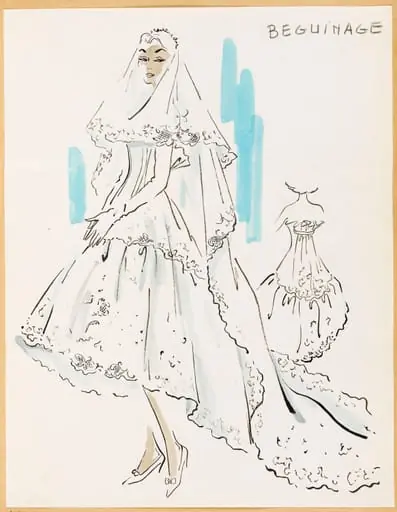 Béguinage