Artwork
The Virgin and child
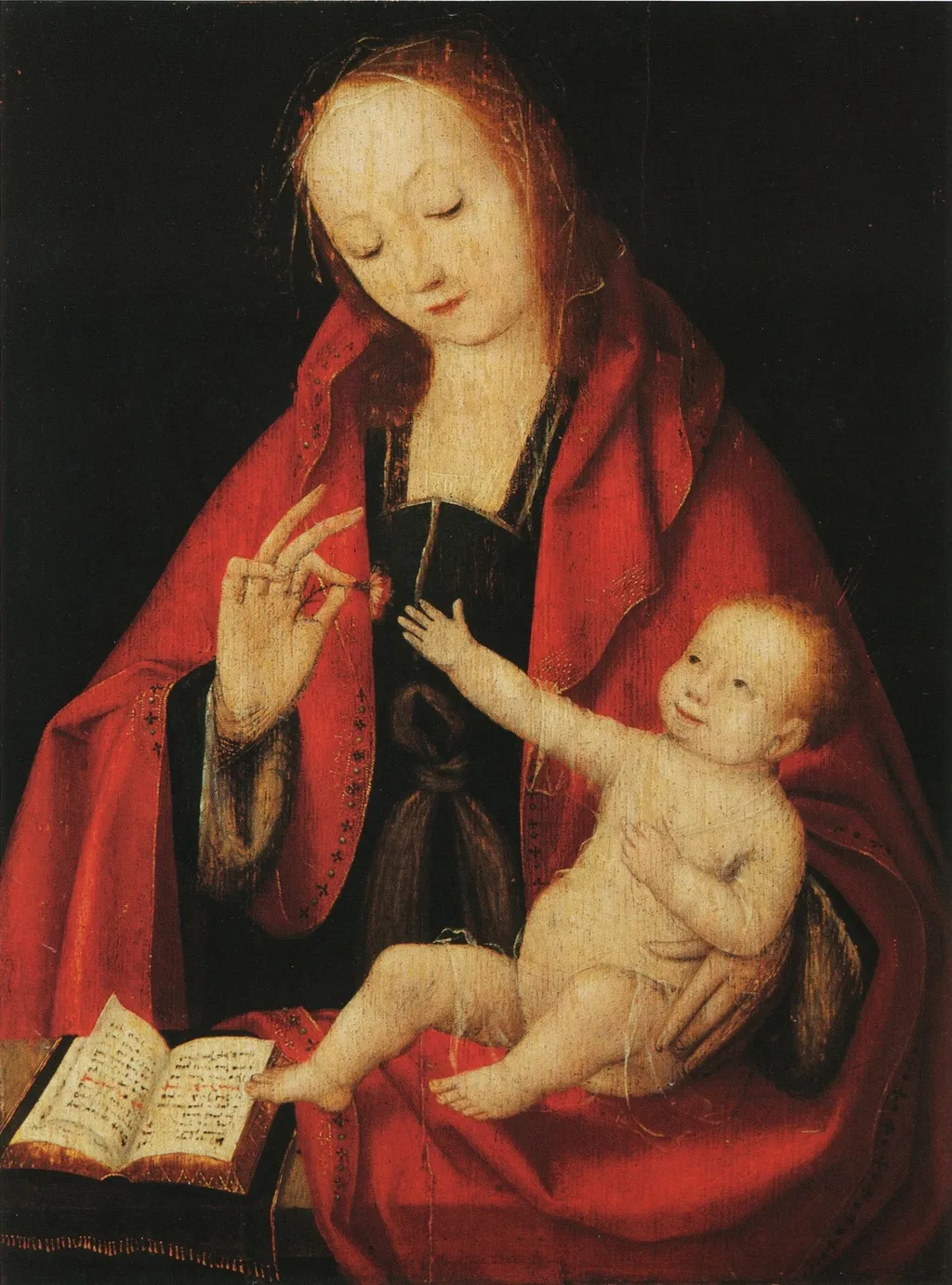
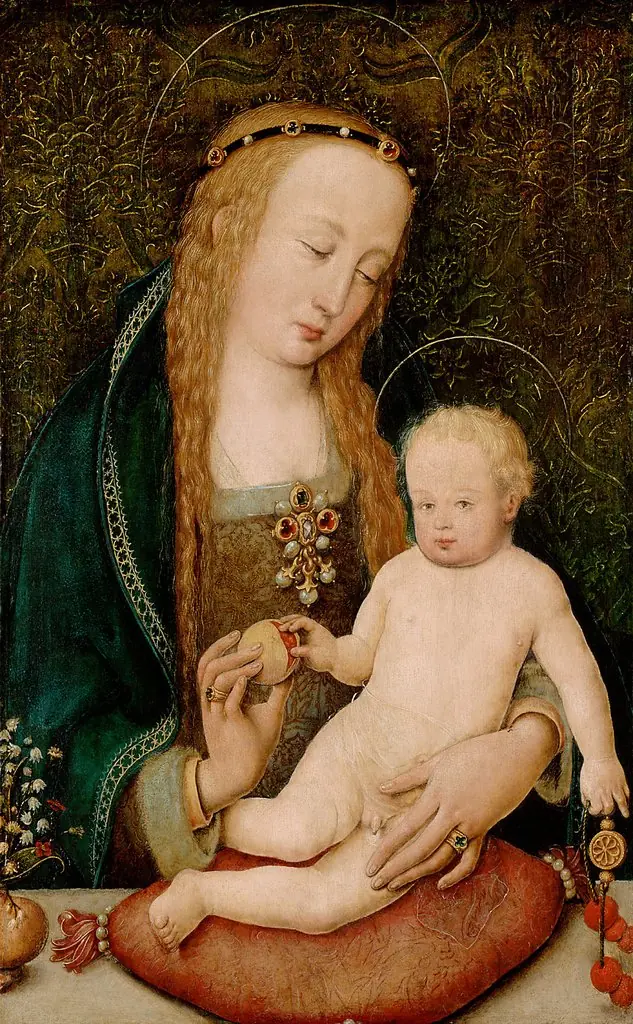
The Virgin and child is an unspecified painting by Unknown. It is held in the collection of the National Museum of Fine Arts, Argentina. This painting presents the Virgin Mary seated with the Christ Child on her lap, rendered in a quiet, intimate composition.
About this work
Overview
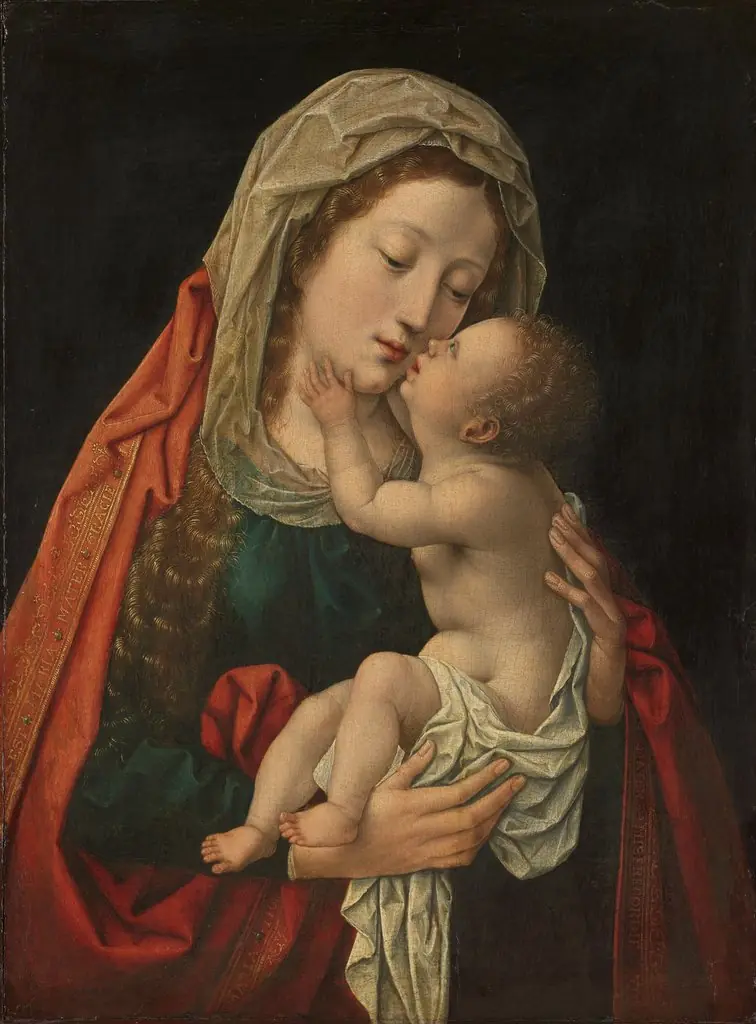
This painting presents the Virgin Mary seated with the Christ Child on her lap, rendered in a quiet, intimate composition. The figures are set against a deep, unbroken background that isolates them from any earthly context. The Virgin’s closed eyes and raised hand suggest contemplation, while the Child’s outstretched gesture introduces a subtle sense of movement and connection beyond the frame.
Subject & Meaning
The red cloth draped over his shoulder may allude to his future sacrifice, while the Virgin’s raised fingers echo a gesture of blessing or invocation.
The Virgin is depicted not as a regal queen but as a meditative mother, her prayerful demeanor emphasizing spiritual devotion. The Christ Child, shown nude and vulnerable, reaches toward the viewer, hinting at his future role as a mediator between humanity and the divine. The red cloth draped over his shoulder may allude to his future sacrifice, while the Virgin’s raised fingers echo a gesture of blessing or invocation.
Technique & Style
The artist employs chiaroscuro to model the figures with soft transitions between light and shadow, lending volume and presence without harsh outlines. Sfumato is evident in the delicate blending of tones across the Child’s skin and the folds of the Virgin’s garments. The contrast between the vivid red of her cloak and the dark background enhances the figures’ luminosity, drawing focus to their forms through atmospheric depth rather than detail.
History & Provenance
The painting’s origins are tied to a devotional tradition common in late medieval and early Renaissance religious art. While its exact commission and early ownership remain undocumented, its style aligns with workshop practices of the period, likely produced for private prayer or a small chapel. Its preservation suggests it was valued within a religious household or institution over centuries.
Context
Created during a time when Marian devotion was central to Christian piety, this image reflects a shift toward more humanized, emotionally resonant portrayals of sacred figures. Unlike earlier rigid icons, it invites personal contemplation, mirroring broader trends in devotional art that emphasized intimacy and inner spirituality over hierarchical grandeur.
Legacy
Though not widely known today, the painting exemplifies the quiet evolution of sacred imagery in the transition from Gothic to Renaissance sensibilities. Its restrained composition and psychological depth influenced later devotional works that prioritized emotional authenticity over symbolic ornamentation, contributing to a broader tradition of intimate religious portraiture.
Artist & collection

Museum
National Museum of Fine Arts, Argentina
Continue through works from the same source collection.
 Domestic Scene
 Giacomo and Cardinal Marco, investing Andrea, Abbot of San Zeno, with his Benefice
 The Nymph of Fontainebleau
 Portrait of a Woman
 Madonna and Child with Saints in the Enclosed Garden
 Venus and Minerva
 Family Group of Four on Sofa
 Wall painting from Room H of the Villa of P. Fannius Synistor at Boscoreale
 The Virgin and Child
 The Virgin and Child
 The Virgin and Child
 The Virgin and Child
 The Virgin and Child
 The Virgin and Child
 Madonna and Child
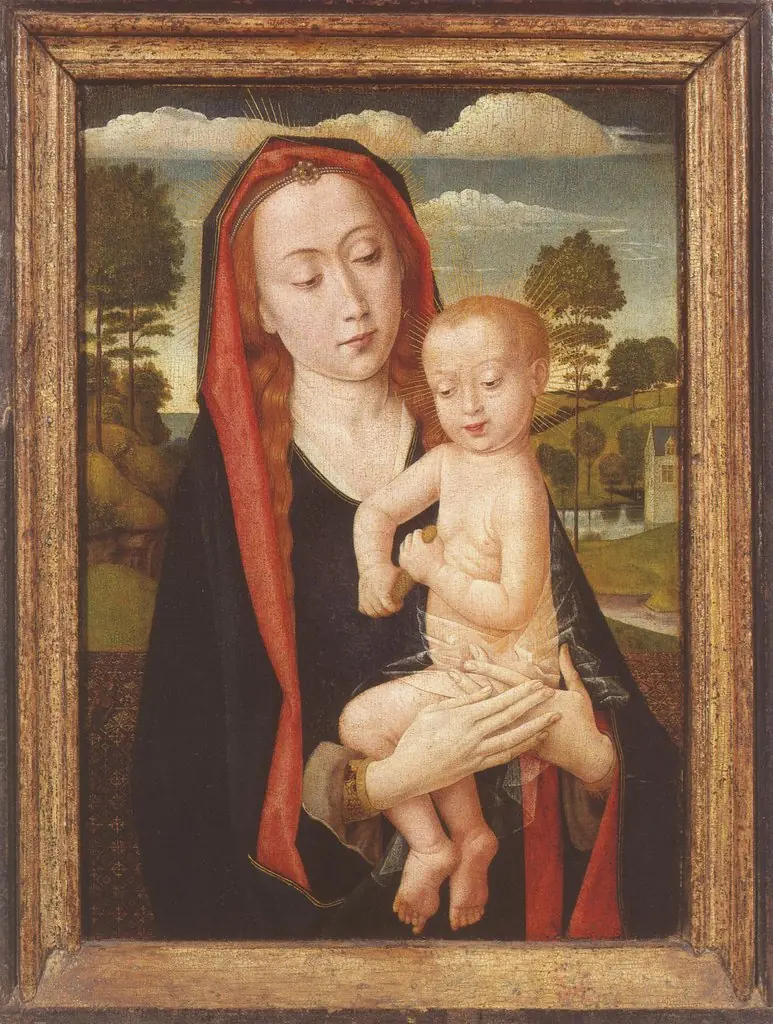 Maria met kind voor een borstwering met doorzicht naar een heuvellandschap
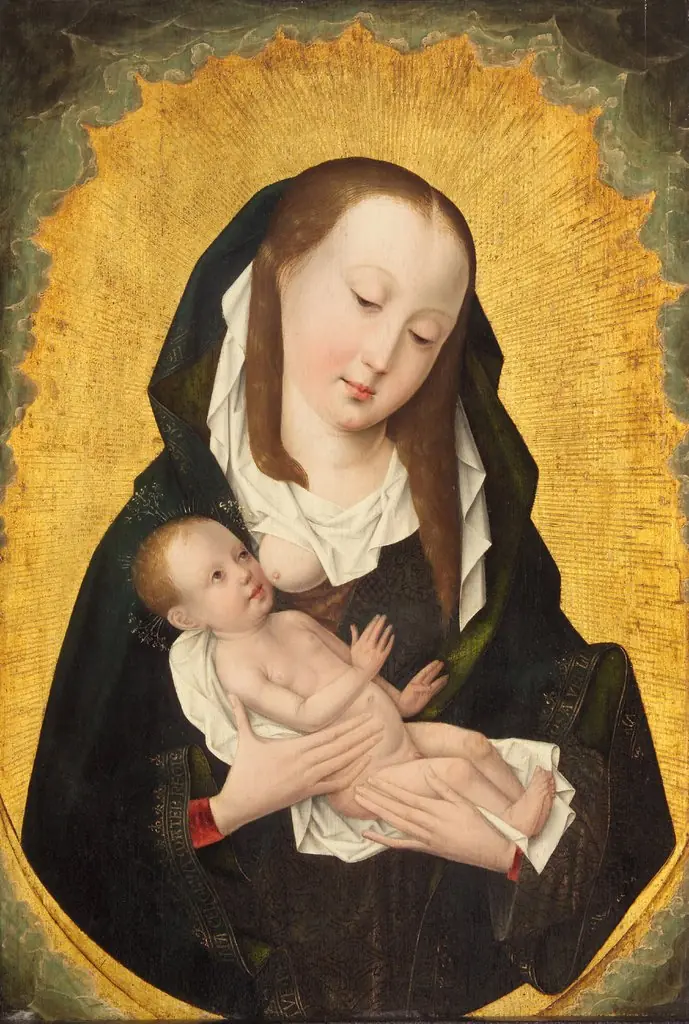 Maria mit Kind in der Mondsichel
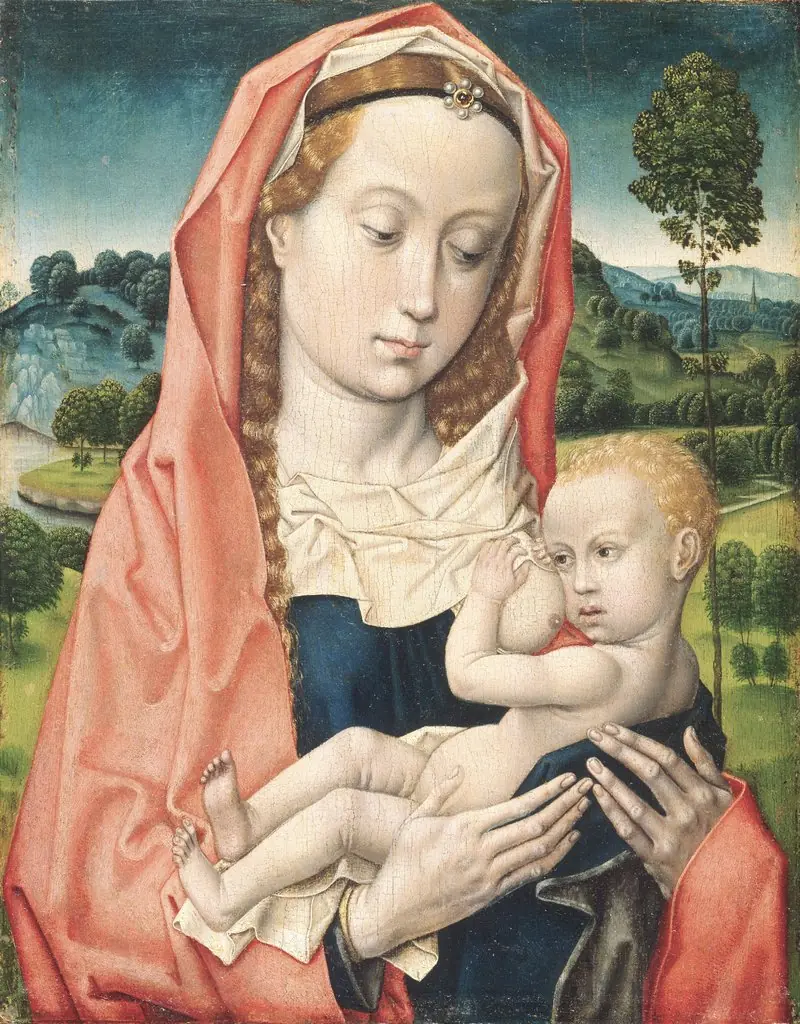 Virgin and Child
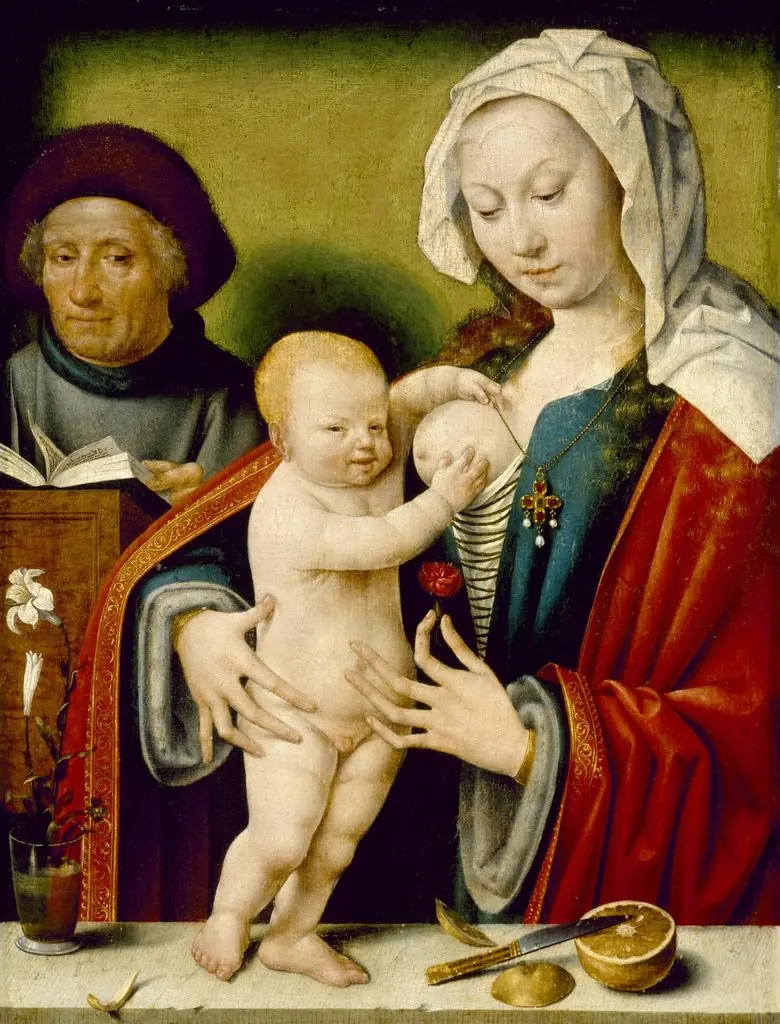 The Holy Family
 Maria, dem Kind einen Granatapfel reichend