Artwork
The cat attacks the mice which disturb the lion, from a Tuti-nama (Tales of a Parrot): Fifteenth Night
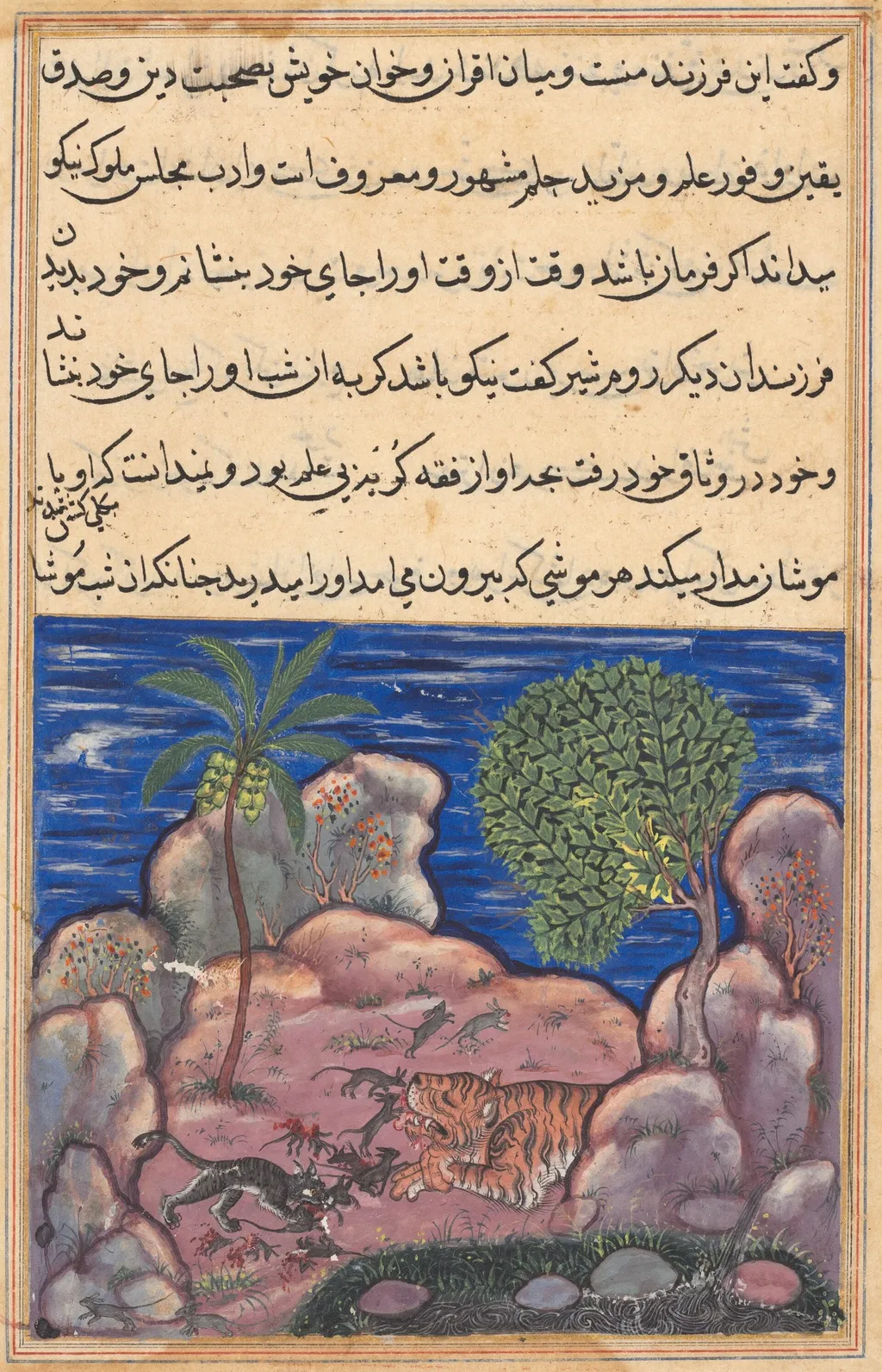
The cat attacks the mice which disturb the lion, from a Tuti-nama (Tales of a Parrot): Fifteenth Night is an unspecified painting by Unknown. It dates from 1560 and is held in the collection of the Cleveland Museum of Art.
About this work
Overview
The work, titled *The cat attacks the mice which disturb the lion, from a Tuti‑nama (Tales of a Parrot): Fifteenth Night*, is a painted illustration that combines narrative text with a dynamic animal scene. Rendered on a rocky hillside under a deep‑blue sky, the composition features a lion, a tiger‑like cat, and several mice entangled among stones and foliage.
Subject & Meaning
The image visualizes a moment from the fifteenth episode of the Persian *Tuti‑nama*, a moral tale in which a cat confronts mice that have been bothering a lion. The juxtaposition of predator and prey underscores themes of hierarchy and intervention, while the accompanying flowing Persian script narrates the episode above the action.
Technique & Style
Executed in a miniature painting tradition, the piece employs fine brushwork to delineate the animals, rocks, and vegetation. The palette balances deep blues of the sky with earthy greens and ochres of the terrain, and the delicate line work of the script mirrors the fluidity of the visual narrative.
History & Provenance
The illustration originates from a fifteenth‑century Persian manuscript of the *Tuti‑nama*. Though the precise origin of this particular leaf is not recorded, similar folios have circulated among collections of Islamic art, eventually entering the holdings of the Cleveland Museum of Art.
Context
The *Tuti‑nama* was a popular didactic text in the Islamic world, using animal stories to convey ethical lessons. Miniature paintings such as this one served both decorative and instructional purposes, integrating calligraphic text with vivid scenes to engage viewers.
Legacy
Miniature illustrations from the *Tuti‑nama* continue to inform scholars about Persian narrative art, manuscript production, and the transmission of moral literature across cultures. The work exemplifies the interplay of text and image that characterizes medieval Islamic storytelling.
Artist & collection

 Domestic Scene
 Giacomo and Cardinal Marco, investing Andrea, Abbot of San Zeno, with his Benefice
 The Nymph of Fontainebleau
 Portrait of a Woman
 Madonna and Child with Saints in the Enclosed Garden
 Venus and Minerva
 Family Group of Four on Sofa
 Wall painting from Room H of the Villa of P. Fannius Synistor at Boscoreale
 The cat attacks the mice which disturb the lion, from a Tuti-nama (Tales of a Parrot): Fifteenth Night
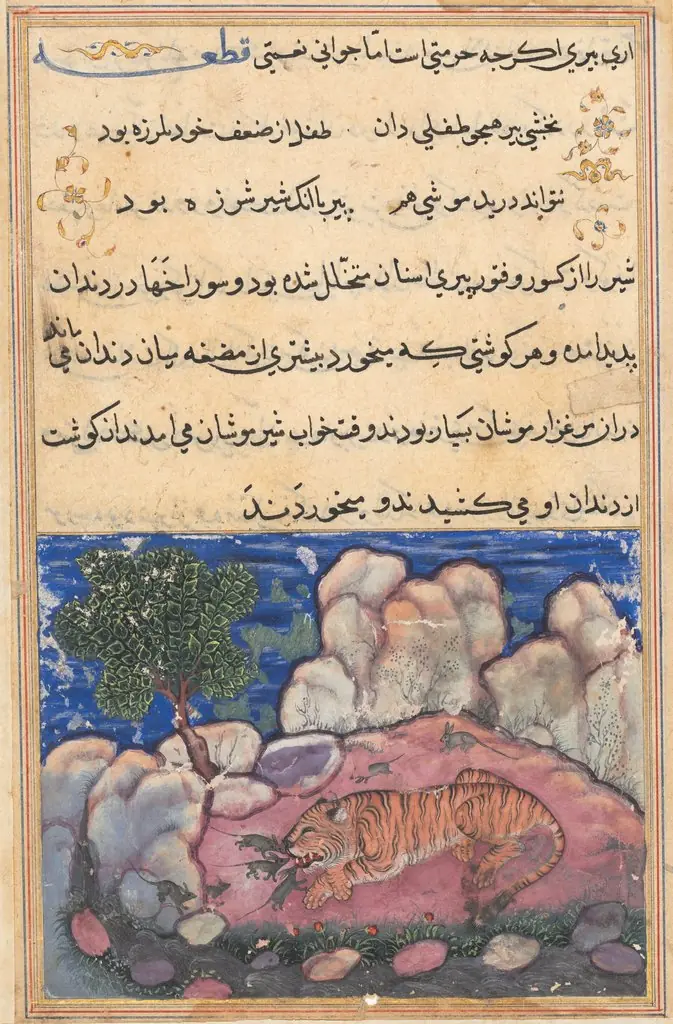 The lion disturbed by mice who eat the food trapped in his aging teeth, from a Tuti-nama (Tales of a Parrot): Fifteenth Night
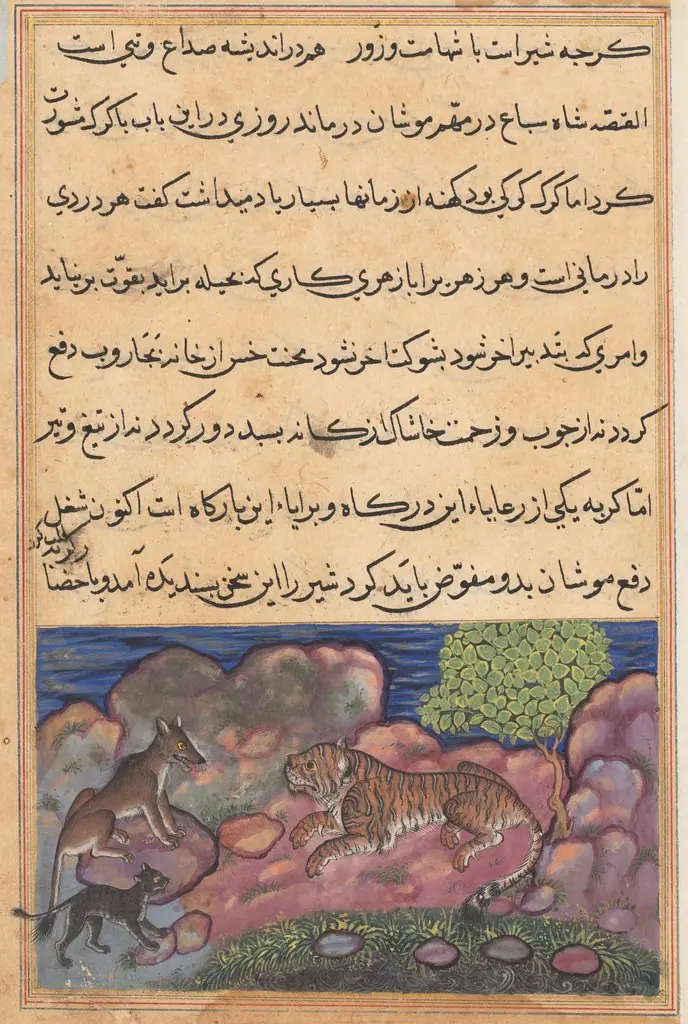 The wolf advises the lion to consult the cat, from a Tuti-nama (Tales of a Parrot): Fifteenth Night
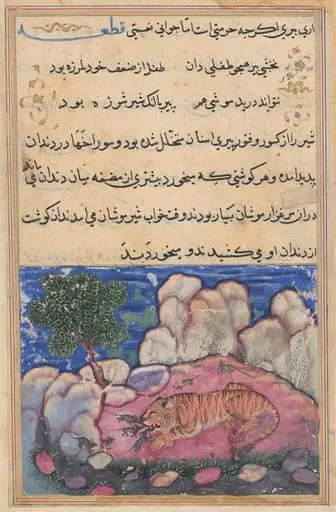 The lion disturbed by mice who eat the food trapped in his aging teeth, from a Tuti-nama (Tales of a Parrot): Fifteenth Night
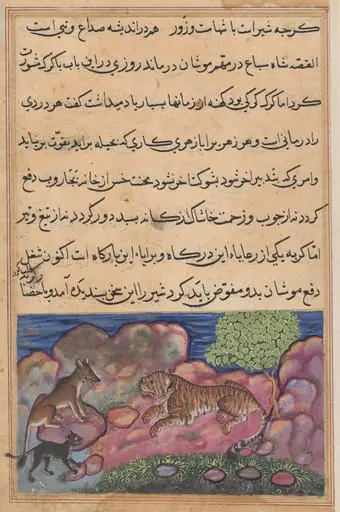 The wolf advises the lion to consult the cat, from a Tuti-nama (Tales of a Parrot): Fifteenth Night
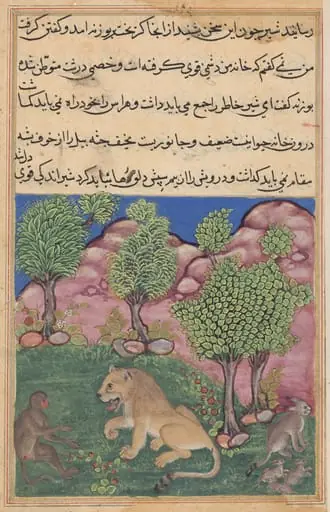 The monkey advises the suspicious lion to cast off fear and take possession of his territory, from a Tuti-nama (Tales of a Parrot): Twenty-ninth Night
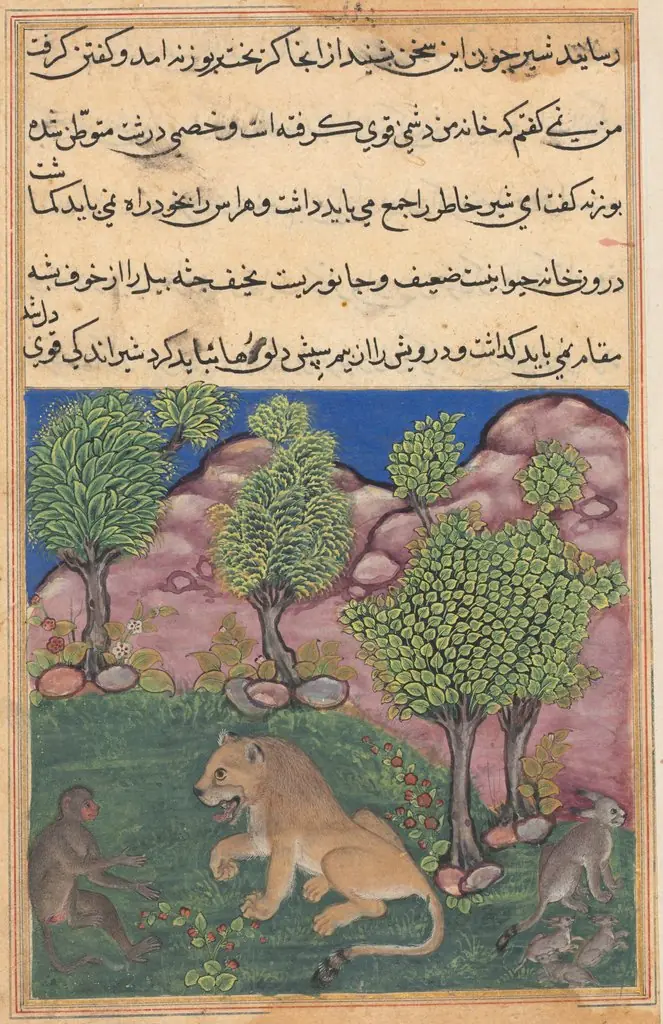 The monkey advises the suspicious lion to cast off fear and take possession of his territory, from a Tuti-nama (Tales of a Parrot): Twenty-ninth Night
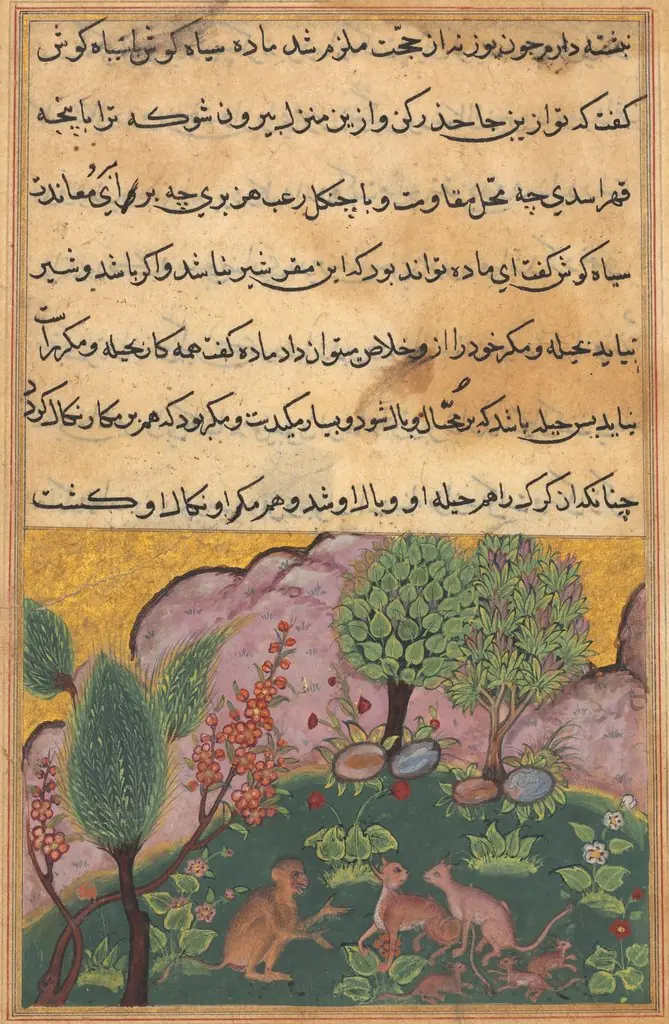 The monkey, serving as the lion’s chamberlain, converses with the lynx and its mate who have arrived with their cubs to settle in the lion’s domain, from a Tuti-nama (Tales of a Parrot): Twenty-ninth Night
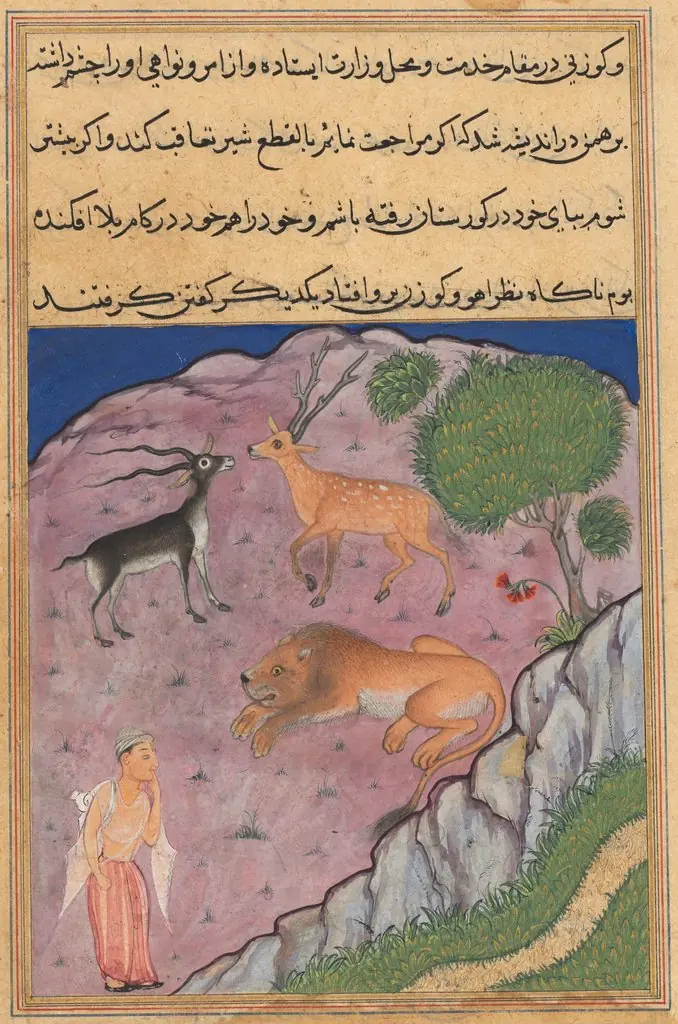 The Brahman comes upon a lion who has a deer and a gazelle as his viziers, from a Tuti-nama (Tales of a Parrot): Twenty-first Night
 The monkey, serving as the lion’s chamberlain, converses with the lynx and its mate who have arrived with their cubs to settle in the lion’s domain, from a Tuti-nama (Tales of a Parrot): Twenty-ninth Night