Artwork
The wolf advises the lion to consult the cat, from a Tuti-nama (Tales of a Parrot): Fifteenth Night
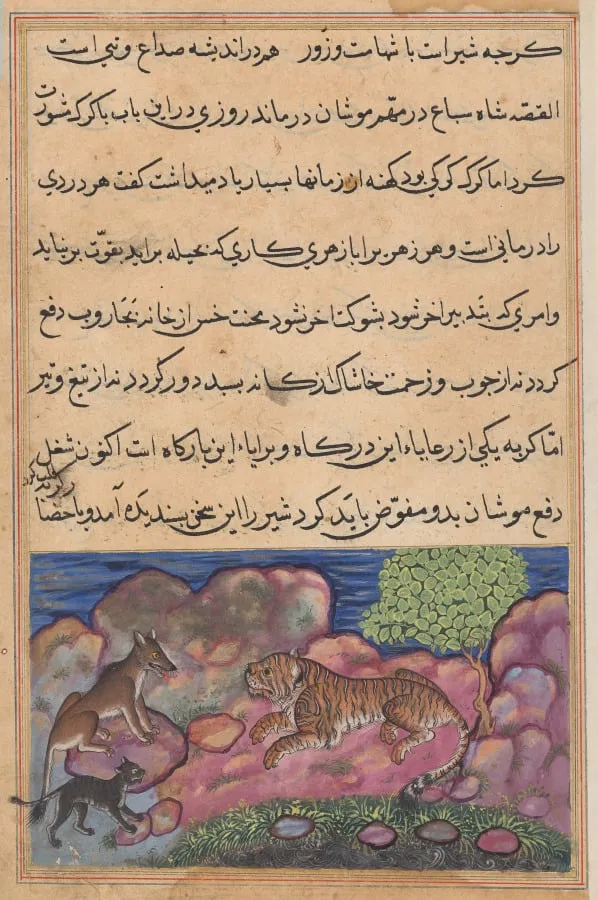
The wolf advises the lion to consult the cat, from a Tuti-nama (Tales of a Parrot): Fifteenth Night is an unspecified painting by the Renaissance artist Unknown. It dates from 1560 and is held in the collection of the Cleveland Museum of Art.
About this work
The bright colors and fine details show how artists worked for Mughal rulers, blending Persian and Indian styles.
A tiger crouches under a tree, talking to a wolf by a stream. A cat stands nearby, listening. The animals look almost human—dressed in robes, making serious faces.
This painting comes from a book of parrot tales made for Emperor Akbar’s court. The story is about solving problems with cleverness, not force. The bright colors and fine details show how artists worked for Mughal rulers, blending Persian and Indian styles.
To see more art like this, look up *Mughal India, court of Akbar (reigned 1556–1605)*.
Overview
This painting is one of fifty-two illustrations from the Tuti-nama, a manuscript commissioned by the Mughal emperor Akbar in the late 16th century. It depicts a fable told by a parrot to a queen, meant to counsel patience and wit over violence. The scene captures a moment of strategic dialogue among animals dressed as courtiers, reflecting the manuscript’s purpose as both entertainment and moral instruction for the imperial court.
Subject & Meaning
The narrative shows a tiger recounting his troubles with mice to a wolf, who advises summoning the cat. The cat arrives not as a predator but as a negotiator, securing a position of authority in exchange for controlling the mice. The tale underscores the value of calculated influence: the cat preserves the mice to maintain his relevance, illustrating how power depends on sustained utility rather than destruction.
Technique & Style
The composition employs fine brushwork and luminous pigments, with gold outlining leaves and fabric details. Despite the rich coloration, the absence of consistent directional lighting flattens the space, creating a stylized, timeless atmosphere. Figures are rendered with human-like expressions and posture, blending naturalism with symbolic form, characteristic of Mughal miniatures that fused Persian elegance with Indian sensibility.
History & Provenance
Commissioned around 1560 for Emperor Akbar’s imperial atelier, the Tuti-nama was produced by a team of artists from diverse regional backgrounds. The manuscript was likely assembled over several years, with each folio attributed to different hands. It remained in royal collections until the 19th century, when it was dispersed; surviving folios are now held in institutions across Europe and South Asia.
Context
The Tuti-nama drew from a 14th-century Persian collection of animal fables, adapted into Persian verse and then illustrated in the Mughal style. Akbar’s court favored stories that emphasized diplomacy and intelligence, aligning with his broader efforts to synthesize cultural traditions. This painting reflects a courtly interest in moral allegory, where animal characters served as proxies for human political behavior.
Legacy
The Tuti-nama set a precedent for narrative illustration in Mughal painting, influencing later imperial manuscripts like the Akbarnama. Its blend of literary depth and visual refinement helped define the aesthetic standards of the period. Though the original manuscript is fragmented, its surviving pages remain key references for understanding the intellectual and artistic priorities of Akbar’s reign.
Artist & collection

 Domestic Scene
 Giacomo and Cardinal Marco, investing Andrea, Abbot of San Zeno, with his Benefice
 The Nymph of Fontainebleau
 Portrait of a Woman
 Madonna and Child with Saints in the Enclosed Garden
 Venus and Minerva
 Family Group of Four on Sofa
 Wall painting from Room H of the Villa of P. Fannius Synistor at Boscoreale
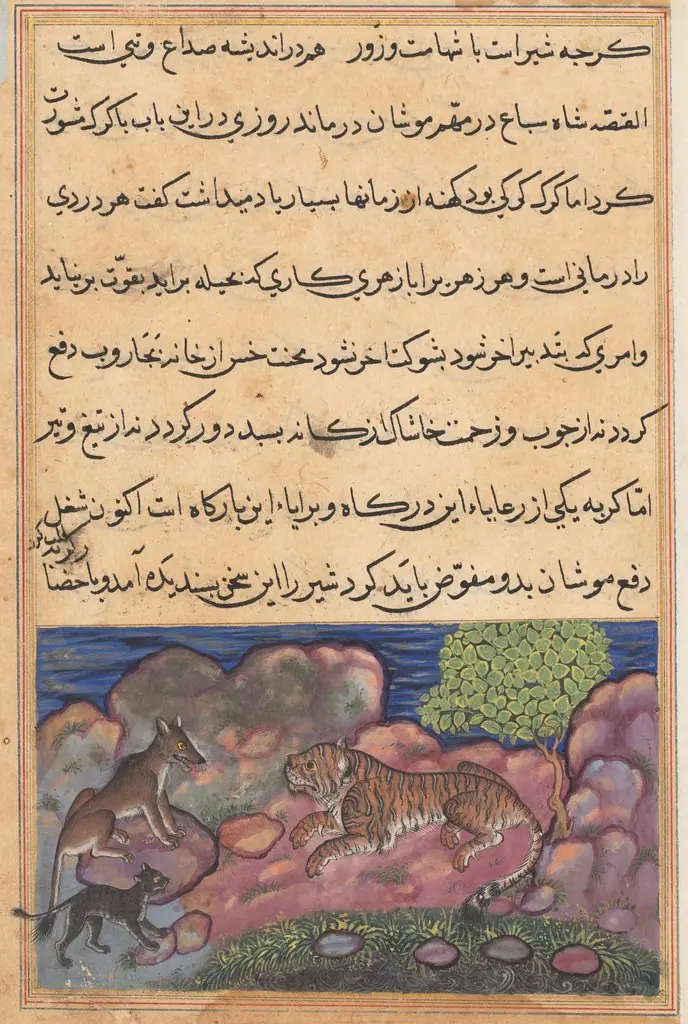 The wolf advises the lion to consult the cat, from a Tuti-nama (Tales of a Parrot): Fifteenth Night
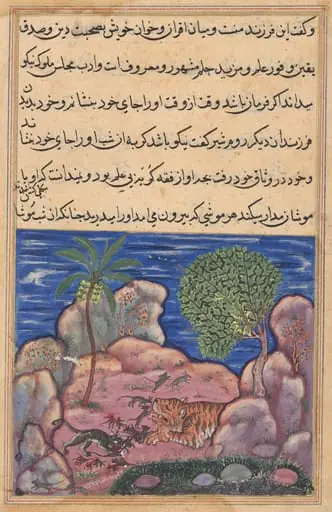 The cat attacks the mice which disturb the lion, from a Tuti-nama (Tales of a Parrot): Fifteenth Night
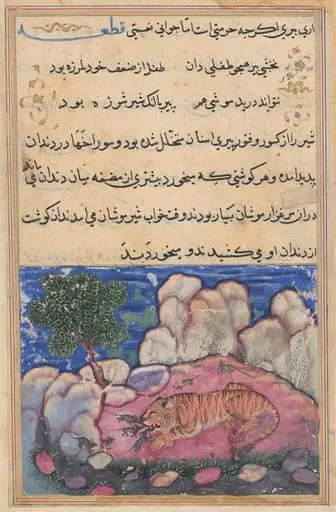 The lion disturbed by mice who eat the food trapped in his aging teeth, from a Tuti-nama (Tales of a Parrot): Fifteenth Night
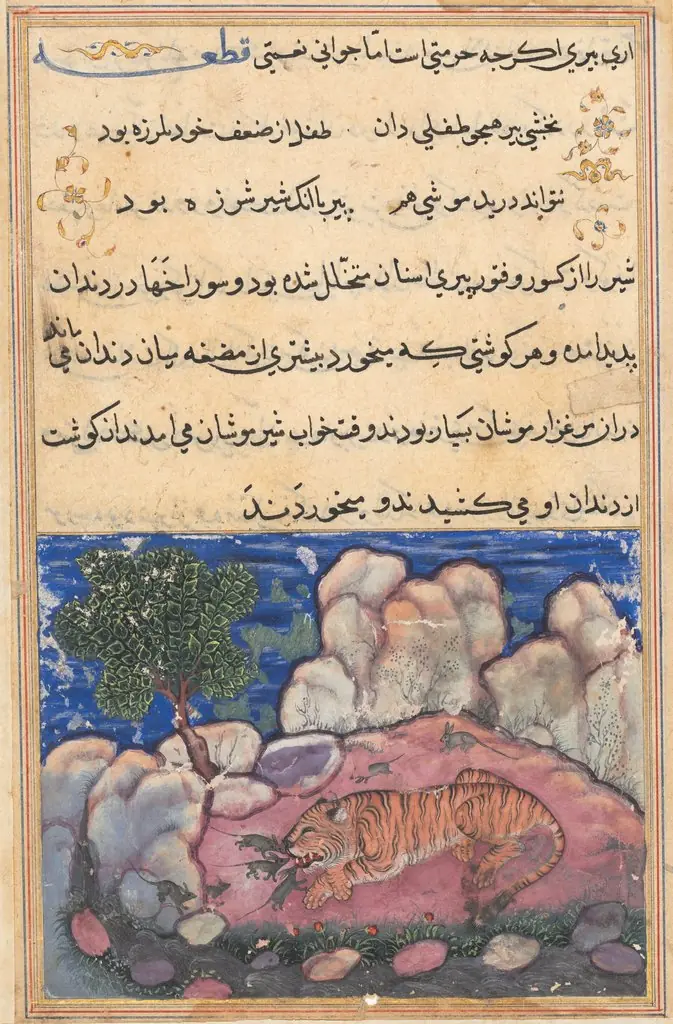 The lion disturbed by mice who eat the food trapped in his aging teeth, from a Tuti-nama (Tales of a Parrot): Fifteenth Night
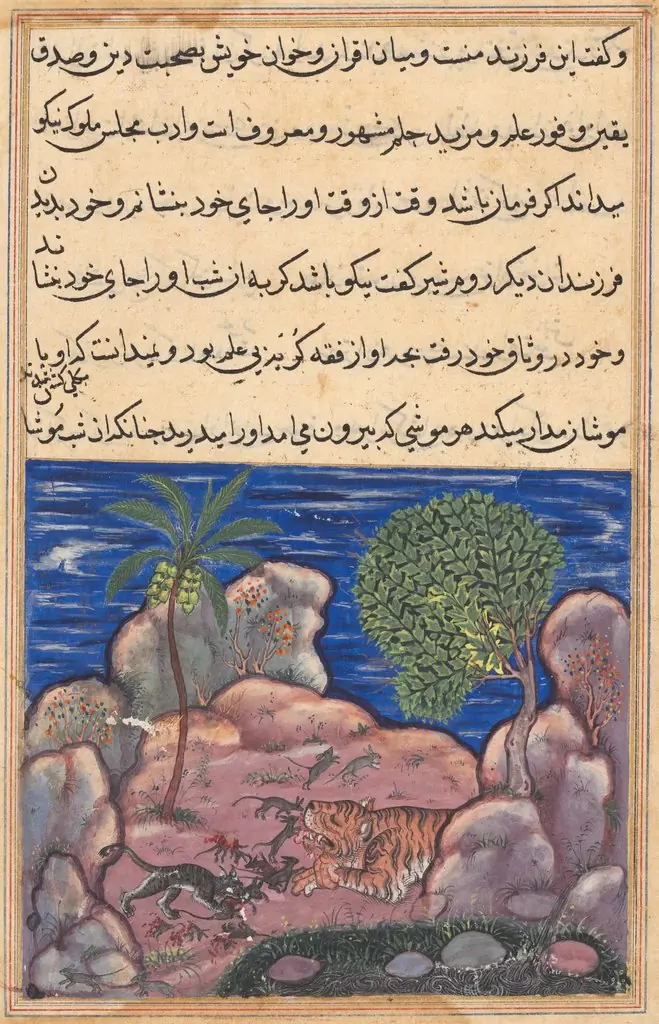 The cat attacks the mice which disturb the lion, from a Tuti-nama (Tales of a Parrot): Fifteenth Night
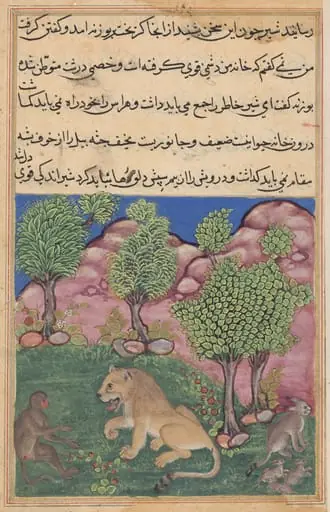 The monkey advises the suspicious lion to cast off fear and take possession of his territory, from a Tuti-nama (Tales of a Parrot): Twenty-ninth Night
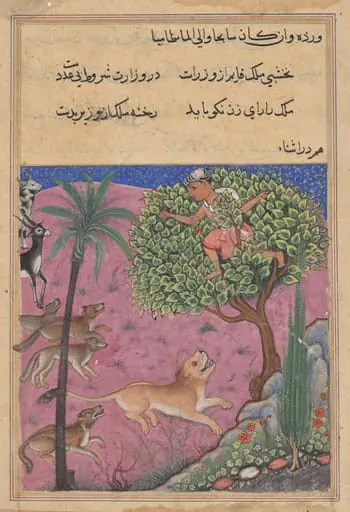 The wolf and the jackal, serving as viziers, instigate the lion who pursues the Brahman up a tree, from a Tuti-nama (Tales of a Parrot): Twenty-first Night
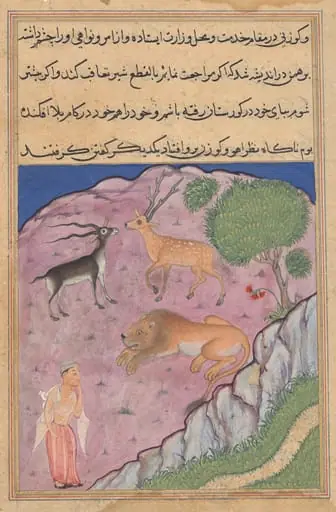 The Brahman comes upon a lion who has a deer and a gazelle as his viziers, from a Tuti-nama (Tales of a Parrot): Twenty-first Night
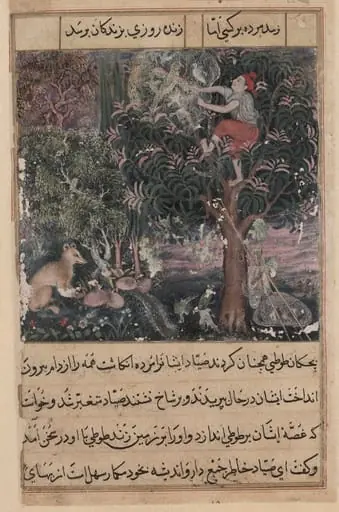 The hunter throws away the baby parrots, who pretend to be dead, and captures the mother, from a Tuti-nama (Tales of a Parrot): Fifth Night
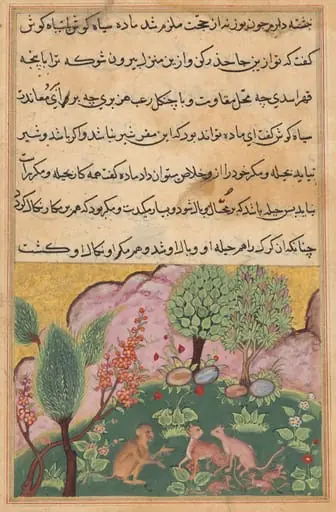 The monkey, serving as the lion’s chamberlain, converses with the lynx and its mate who have arrived with their cubs to settle in the lion’s domain, from a Tuti-nama (Tales of a Parrot): Twenty-ninth Night
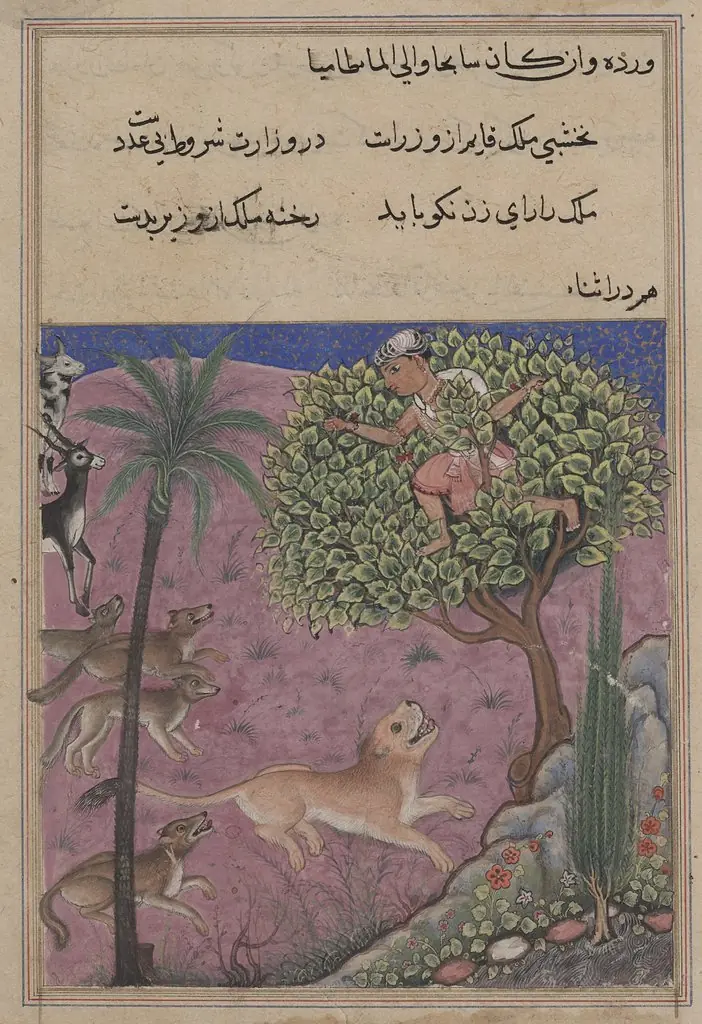 The wolf and the jackal, serving as viziers, instigate the lion who pursues the Brahman up a tree, from a Tuti-nama (Tales of a Parrot): Twenty-first Night
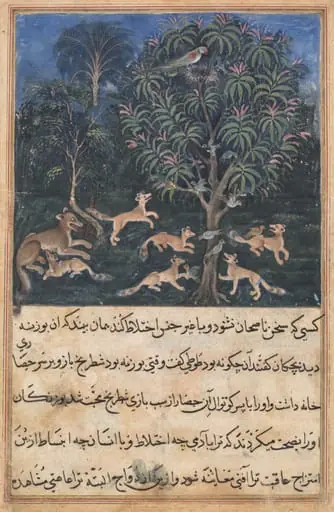 The parrot mother cautions her young on the danger of playing with foxes, from a Tuti-nama (Tales of a Parrot): Fifth Night