Artwork
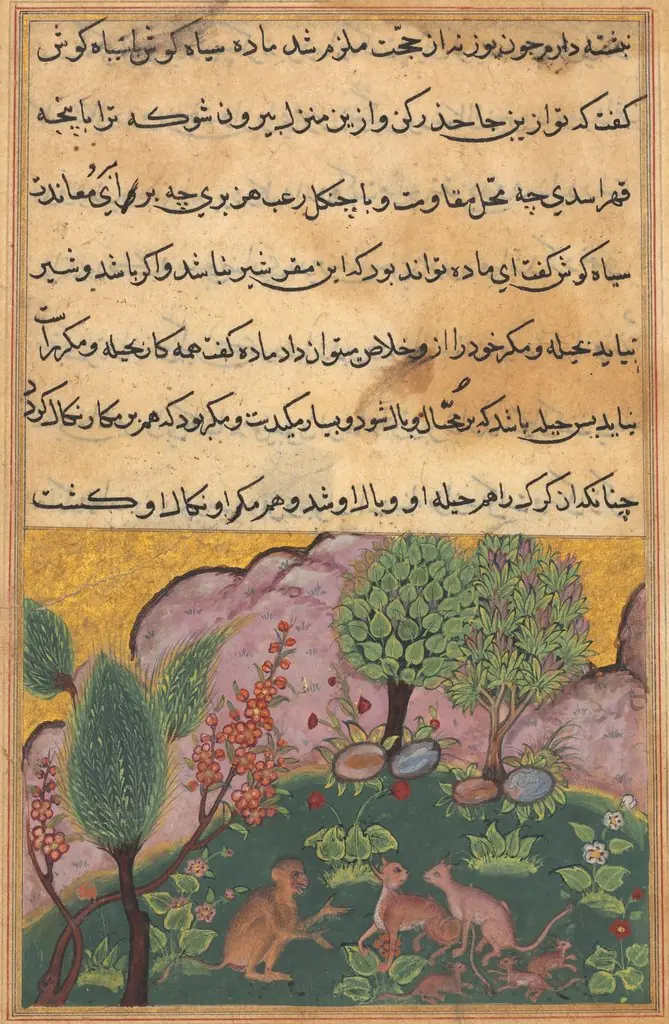
The monkey advises the suspicious lion to cast off fear and take possession of his territory, from a Tuti-nama (Tales of a Parrot): Twenty-ninth Night
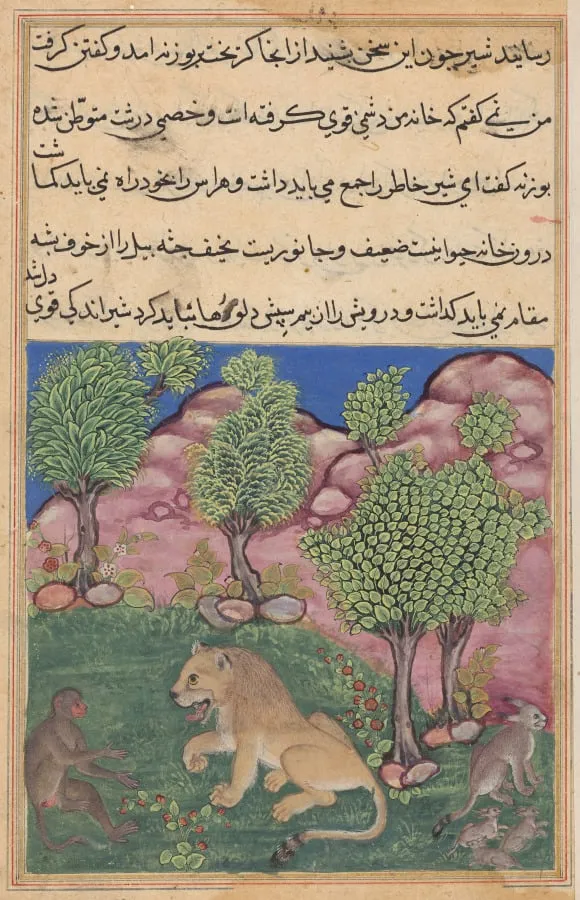
The monkey advises the suspicious lion to cast off fear and take possession of his territory, from a Tuti-nama (Tales of a Parrot): Twenty-ninth Night is an unspecified painting by the Mughal Painting artist Unknown. It dates from 1560 and is held in the collection of the Cleveland Museum of Art.
About this work
The story warns about fear and trickery—here, the monkey tries to help the lion reclaim his land, but the lion is too scared to act.
You see a monkey whispering to a nervous lion while a family of lynx lurks in the background. The monkey holds a scroll, pointing toward the cave where the lynx have taken over the lion’s home.
This painting comes from a book of parrot tales made for Emperor Akbar’s court. The story warns about fear and trickery—here, the monkey tries to help the lion reclaim his land, but the lion is too scared to act.
To see more art like this, look up the subject *Mughal India, court of Akbar (reigned 1556–1605)*.
Overview
The work illustrates a scene from the twenty‑ninth night of the *Tuti‑nama* (Tales of a Parrot), a Mughal manuscript created for Emperor Akbar’s court. A monkey, serving as the lion’s chamberlain, leans toward a visibly anxious lion, gesturing with a scroll toward a cave where a lynx family has taken up residence. The composition captures a moment of counsel and hesitation.
Subject & Meaning
The narrative depicts the monkey urging the lion to overcome his fear and reclaim the territory usurped by the lynx. The lion’s terror stems from a deception that the hidden lynx are ferocious predators. The episode functions as a moral illustration warning against allowing false anxieties to impede decisive action.
Technique & Style
Rendered in the refined miniature style of Mughal court painting, the scene combines delicate brushwork with vibrant pigments. Figures are delineated with fine outlines, while the background features subtle gradations of color to suggest depth. The scroll held by the monkey is detailed with miniature script, integrating text and image in a typical manuscript fashion.
History & Provenance
The painting originates from a deluxe illustrated copy of the *Tuti‑nama* commissioned during the reign of Akbar (1556–1605). It remained within the imperial workshop before entering private collections in the 19th century, eventually being acquired by a museum specializing in South Asian art.
Context
Mughal artists frequently illustrated moral tales drawn from Persian and Indian literature for royal patrons, using allegorical animal characters to convey ethical lessons. This work reflects the court’s interest in didactic storytelling and the synthesis of Persian narrative traditions with Indian artistic conventions under Akbar’s patronage.
Artist & collection

 Domestic Scene
 Giacomo and Cardinal Marco, investing Andrea, Abbot of San Zeno, with his Benefice
 The Nymph of Fontainebleau
 Portrait of a Woman
 Madonna and Child with Saints in the Enclosed Garden
 Venus and Minerva
 Family Group of Four on Sofa
 Wall painting from Room H of the Villa of P. Fannius Synistor at Boscoreale
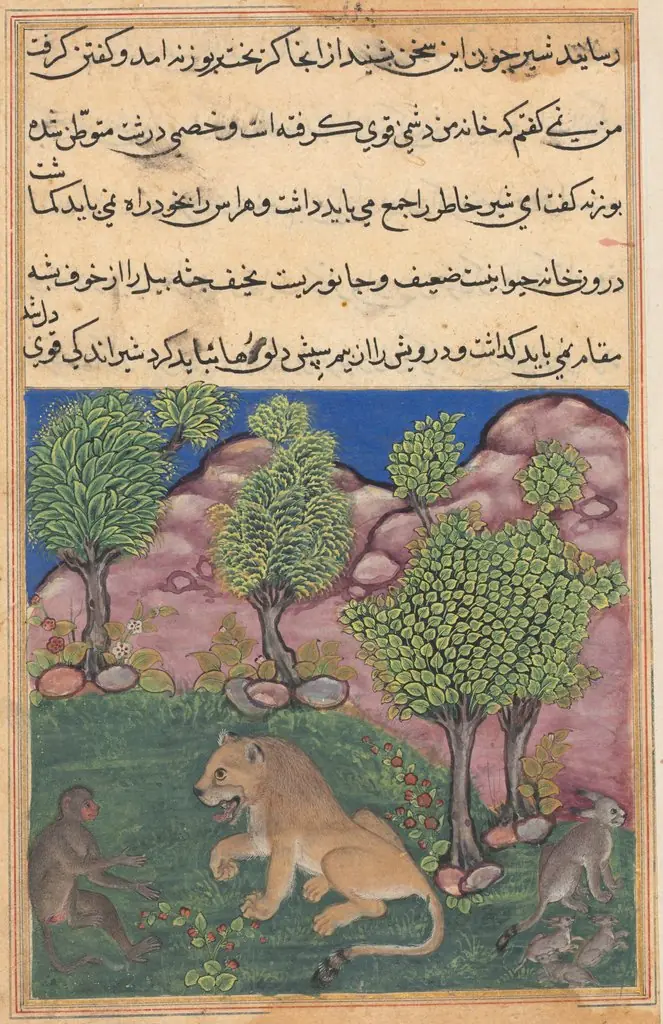 The monkey advises the suspicious lion to cast off fear and take possession of his territory, from a Tuti-nama (Tales of a Parrot): Twenty-ninth Night
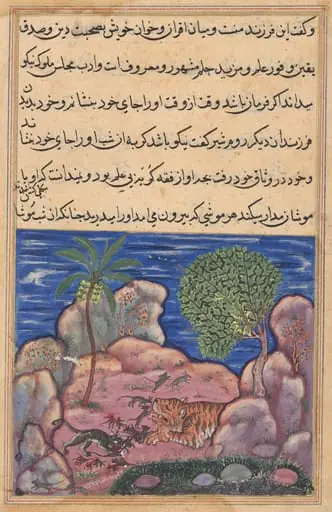 The cat attacks the mice which disturb the lion, from a Tuti-nama (Tales of a Parrot): Fifteenth Night
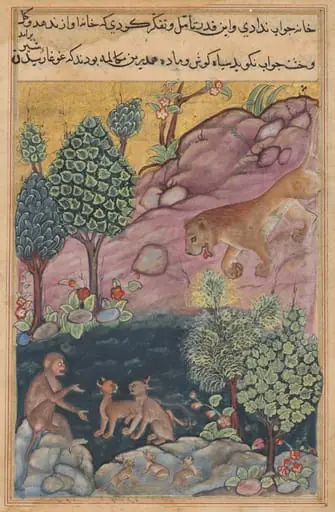 The lion returns to his territory and sees the monkey conversing with the lynx, from a Tuti-nama (Tales of a Parrot): Twenty-ninth Night
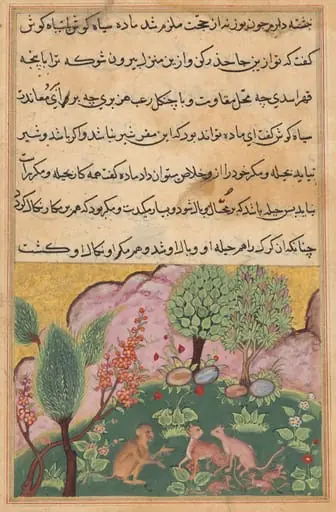 The monkey, serving as the lion’s chamberlain, converses with the lynx and its mate who have arrived with their cubs to settle in the lion’s domain, from a Tuti-nama (Tales of a Parrot): Twenty-ninth Night
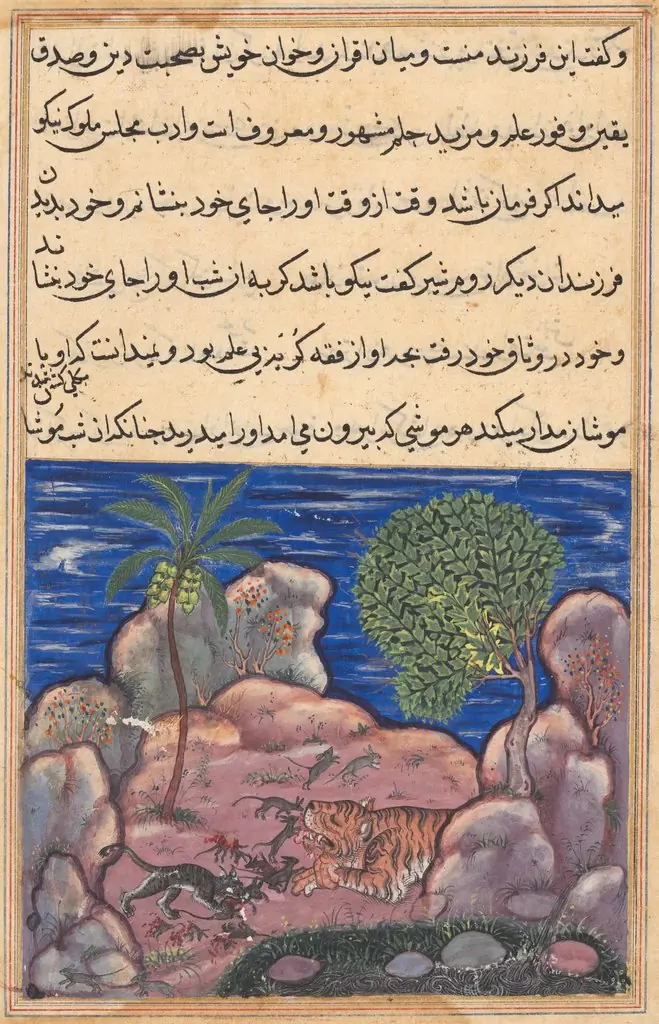 The cat attacks the mice which disturb the lion, from a Tuti-nama (Tales of a Parrot): Fifteenth Night
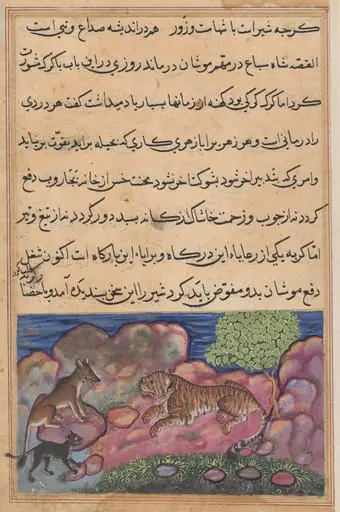 The wolf advises the lion to consult the cat, from a Tuti-nama (Tales of a Parrot): Fifteenth Night
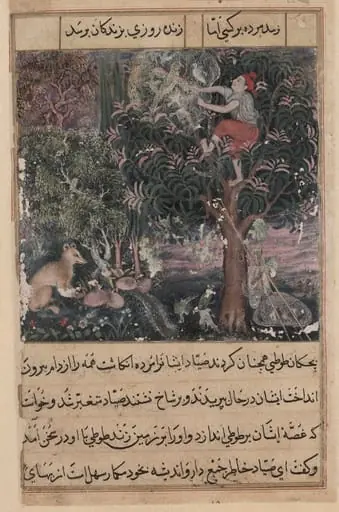 The hunter throws away the baby parrots, who pretend to be dead, and captures the mother, from a Tuti-nama (Tales of a Parrot): Fifth Night
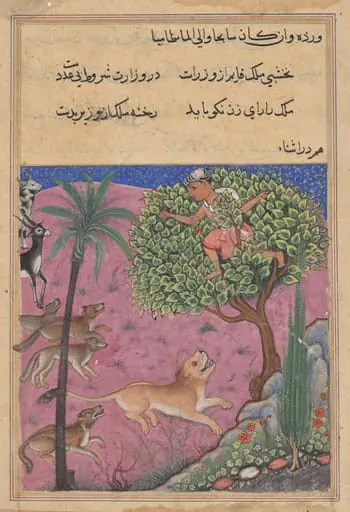 The wolf and the jackal, serving as viziers, instigate the lion who pursues the Brahman up a tree, from a Tuti-nama (Tales of a Parrot): Twenty-first Night
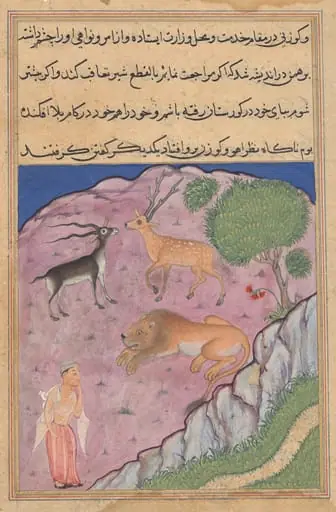 The Brahman comes upon a lion who has a deer and a gazelle as his viziers, from a Tuti-nama (Tales of a Parrot): Twenty-first Night
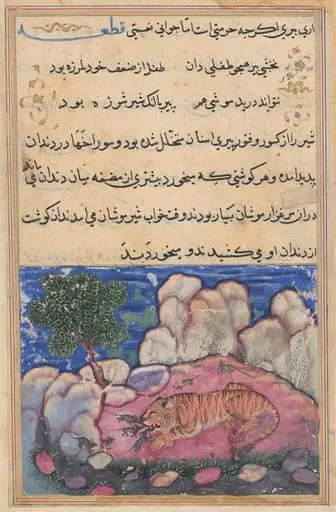 The lion disturbed by mice who eat the food trapped in his aging teeth, from a Tuti-nama (Tales of a Parrot): Fifteenth Night
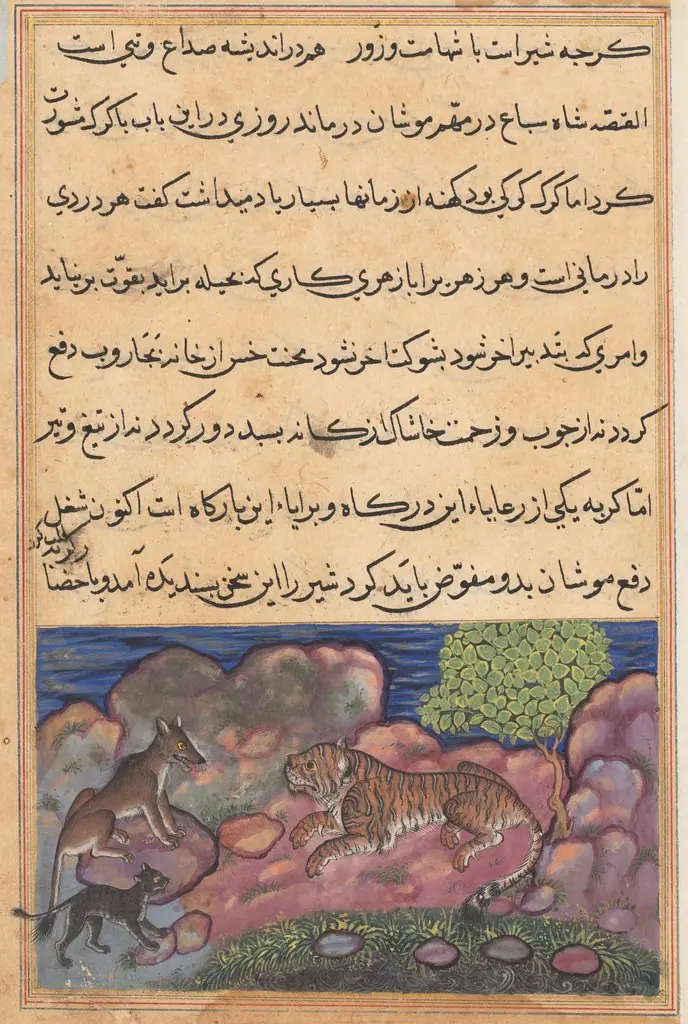 The wolf advises the lion to consult the cat, from a Tuti-nama (Tales of a Parrot): Fifteenth Night
 The monkey, serving as the lion’s chamberlain, converses with the lynx and its mate who have arrived with their cubs to settle in the lion’s domain, from a Tuti-nama (Tales of a Parrot): Twenty-ninth Night