Artwork
Portrait Jewel of Emperor Jahangir
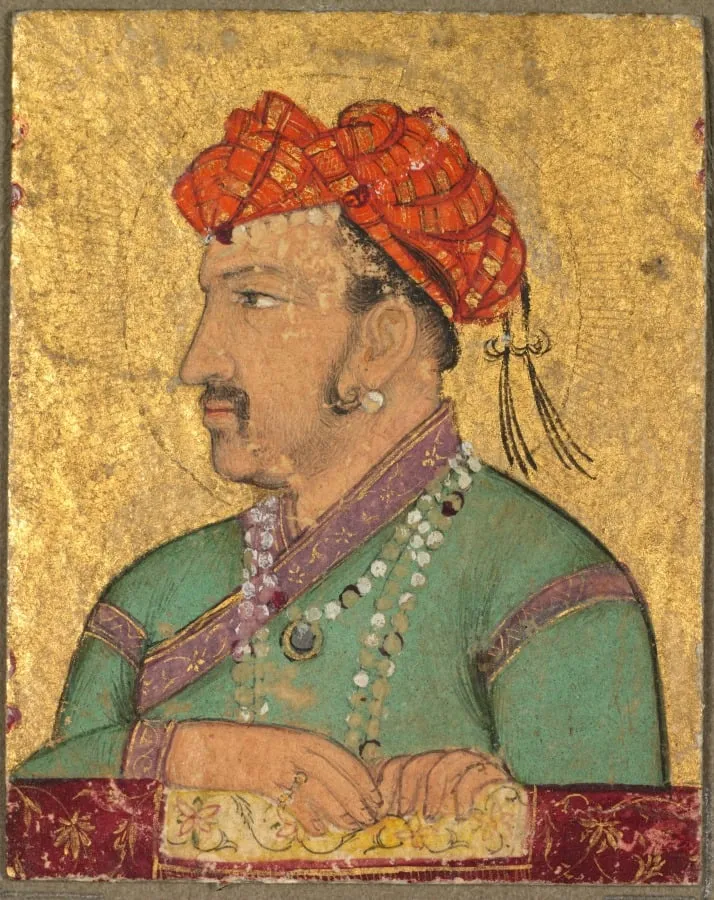
Portrait Jewel of Emperor Jahangir is an unspecified painting by the Baroque artist Unknown. It dates from 1604 and is held in the collection of the Cleveland Museum of Art. This miniature portrait depicts the Mughal emperor Jahangir seated on a gold‑encrusted throne.
About this work
To see more of these royal miniatures, look up mughal india, court of jahangir (reigned 1605–27).
A tiny man in a red robe sits on a gold throne, holding a book and a flower. His face is calm, his beard neat, and his turban sparkles with jewels.
This portrait was small enough to wear—like a locket or brooch. Jahangir gave these as gifts to show favor. The carpet under his hands hints at a balcony where he listened to his people every day.
To see more of these royal miniatures, look up mughal india, court of jahangir (reigned 1605–27).
Overview
This miniature portrait depicts the Mughal emperor Jahangir seated on a gold‑encrusted throne. He is shown in a red robe, holding a book in one hand and a flower in the other, his expression composed and his neatly trimmed beard visible beneath a jeweled turban. The work is small enough to be worn as a personal ornament.
Subject & Meaning
The image presents Jahangir as a cultured ruler, emphasizing his literary interests through the book and his appreciation of nature with the flower. The calm demeanor and regal attire convey the authority and benevolence expected of a sovereign who addressed his subjects publicly each day.
Technique & Style
Executed in the refined Mughal miniature tradition, the painting employs delicate brushwork and a luminous palette. Gold leaf highlights the throne and turban, while fine detailing renders the textile pattern beneath the emperor’s hands, suggesting a carpeted balcony surface.
History & Provenance
Jahangir commissioned a series of such diminutive portraits to distribute among courtiers, relatives, and allies as tokens of royal favor. These portable images were mounted in jeweled settings and worn as pendants or brooches, functioning both as personal adornment and as a reminder of the emperor’s patronage.
Context
During Jahangir’s reign (1605–1627), the Mughal court placed great emphasis on artistic patronage and the visual representation of imperial power. The miniature’s reference to a balcony carpet alludes to the daily audience the emperor held, where petitioners presented grievances and requests before the sovereign.
Artist & collection

 Domestic Scene
 Giacomo and Cardinal Marco, investing Andrea, Abbot of San Zeno, with his Benefice
 The Nymph of Fontainebleau
 Portrait of a Woman
 Madonna and Child with Saints in the Enclosed Garden
 Venus and Minerva
 Family Group of Four on Sofa
 Wall painting from Room H of the Villa of P. Fannius Synistor at Boscoreale
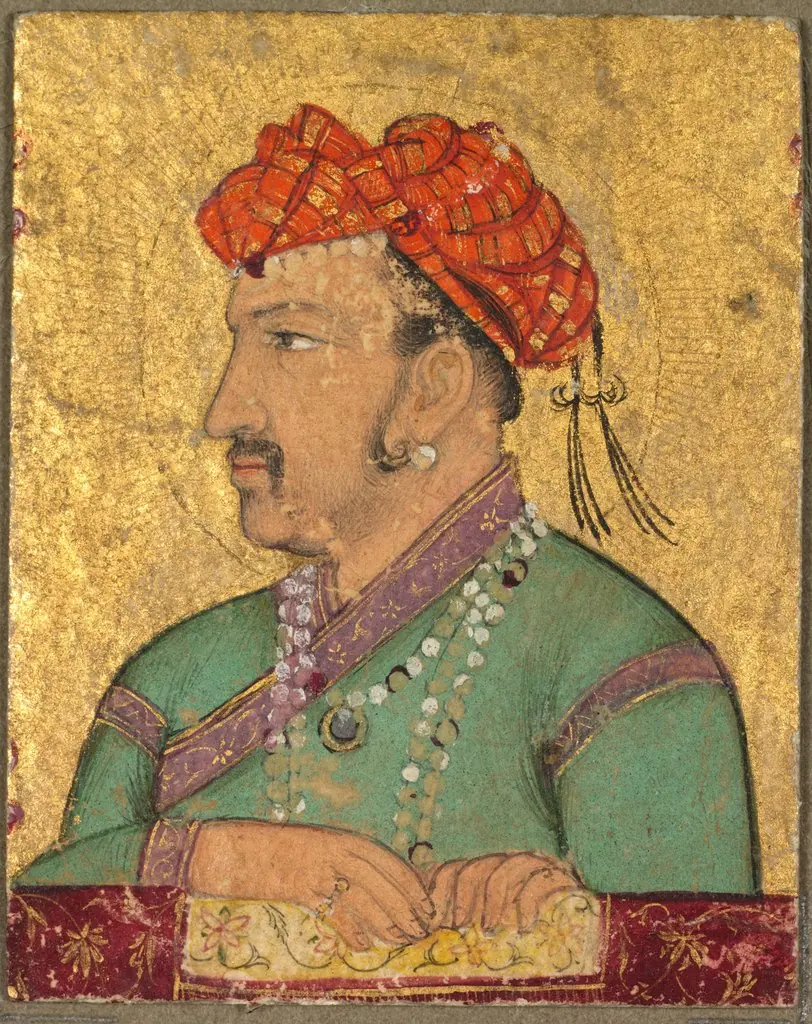 Portrait Jewel of Emperor Jahangir
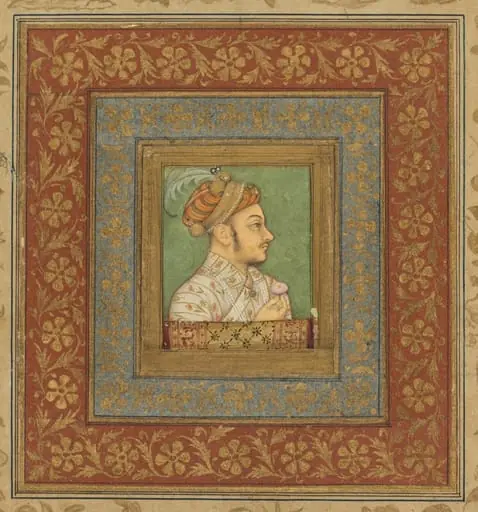 Portrait of Murad Bakhsh (1624–61)
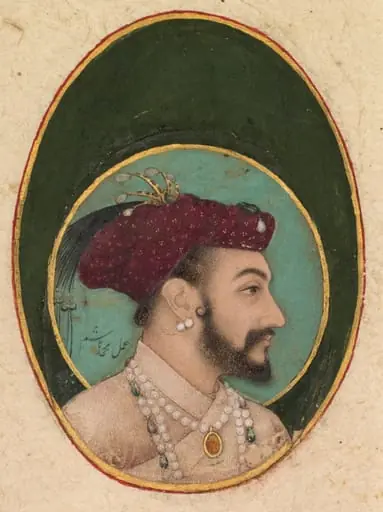 Shah Jahan
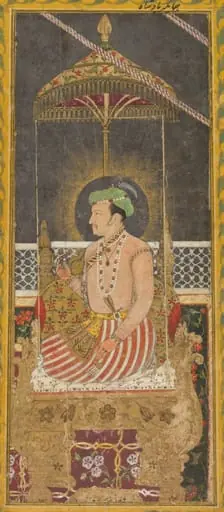 Posthumous portrait of Emperor Jahangir under a canopy (recto)
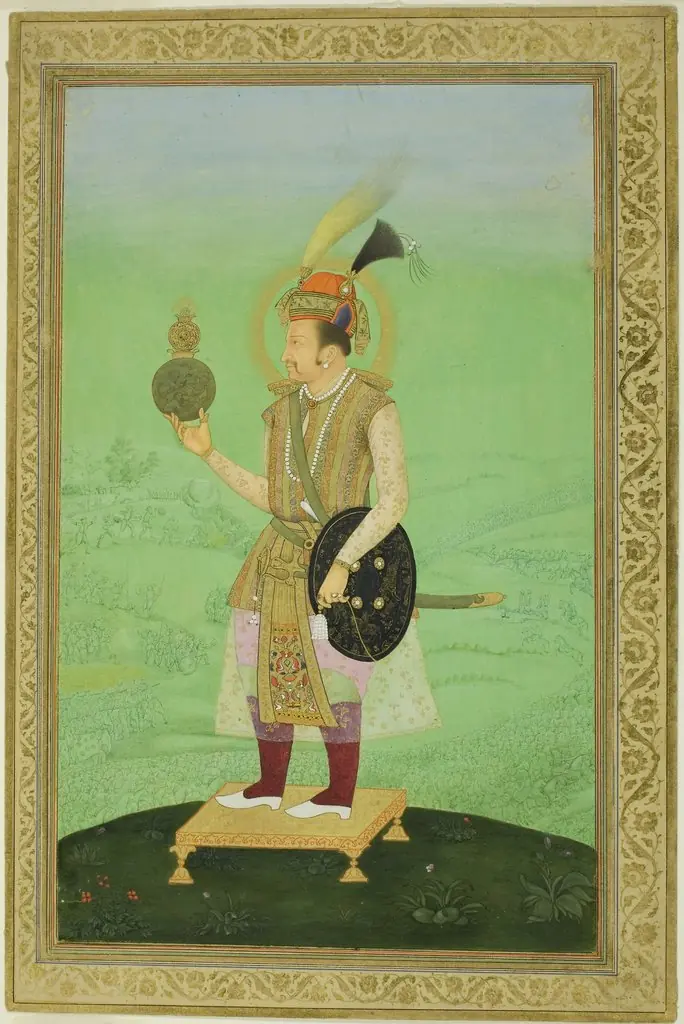 Portrait of Emperor Jahangir
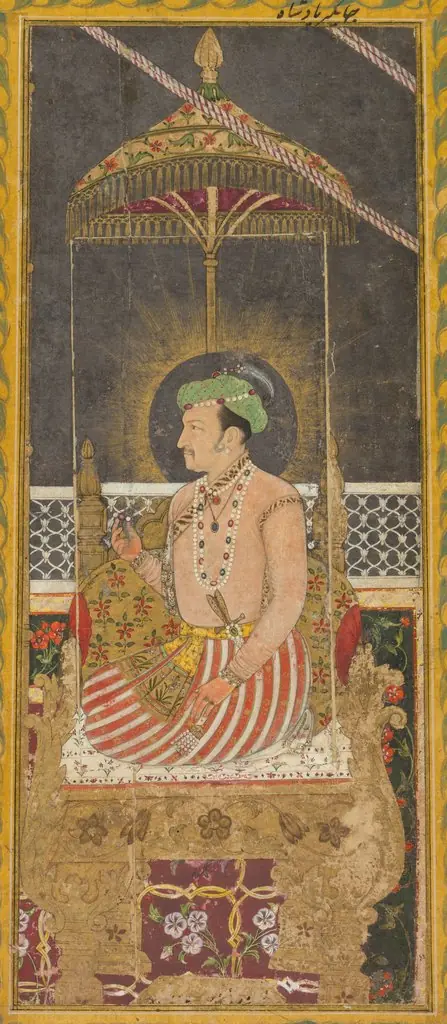 Posthumous portrait of Emperor Jahangir under a canopy (recto)
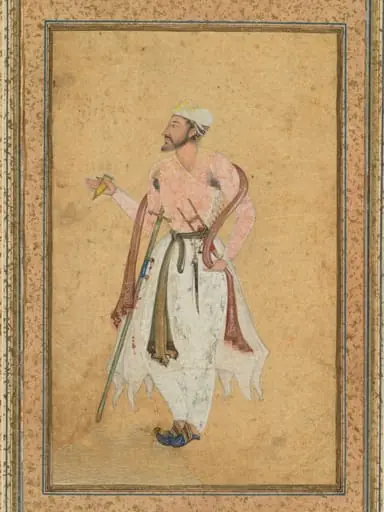 A Mughal courtier
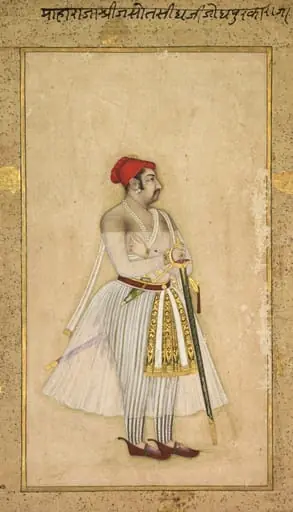 Jaswant Singh of Jodhpur (reigned 1635–1678)
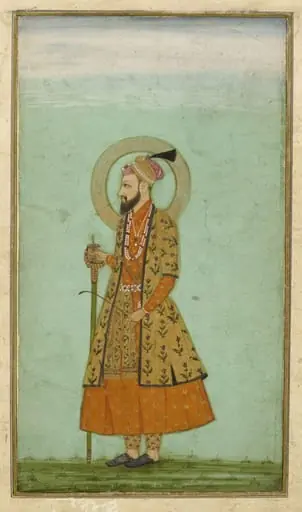 The emperor 'Alamgir (Aurangzeb)