Artwork
The young man, who has magically taken on the appearance of Mansur the merchant, arrives at his home, from a Tuti-nama (Tales of a Parrot): Seventeenth Night
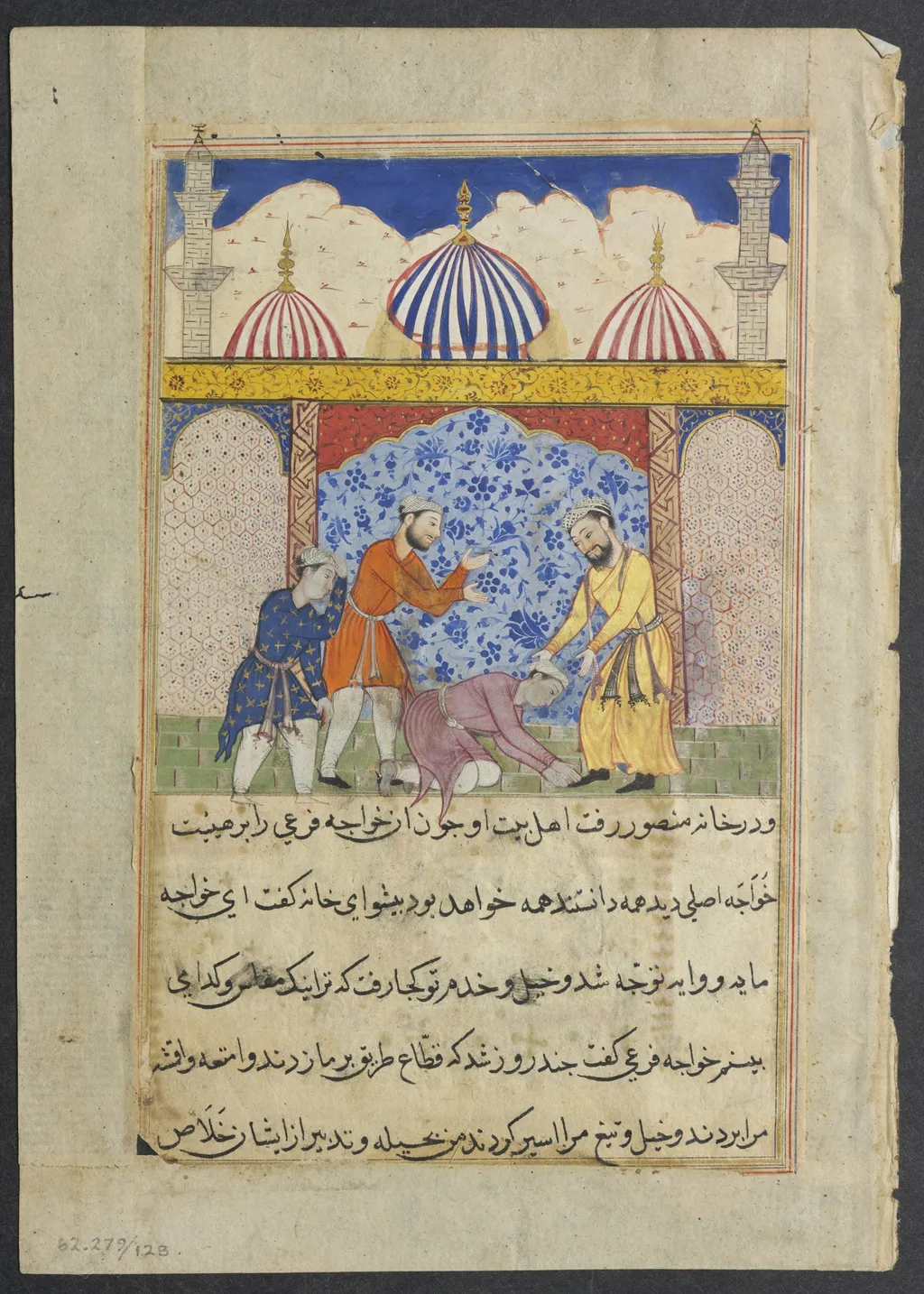
The young man, who has magically taken on the appearance of Mansur the merchant, arrives at his home, from a Tuti-nama (Tales of a Parrot): Seventeenth Night is an unspecified painting. It dates from 1560 and is held in the collection of the Cleveland Museum of Art.
About this work
Overview
The work illustrates a narrative episode from the seventeenth night of the Persian illustrated manuscript known as the Tuti‑nama, or "Tales of a Parrot." It depicts three figures in vivid, patterned garments gathered beneath an ornate arch, with a backdrop of striped tents and towering structures set against a clear blue sky.
Subject & Meaning
The scene portrays a young man who has assumed the guise of the merchant Mansur, arriving at his residence. One figure kneels beside a pink‑robed individual, while another points toward them, suggesting a moment of recognition or revelation within the story.
Technique & Style
Executed with bold, saturated colors and precise line work, the painting employs a decorative, storybook aesthetic typical of Persian miniature tradition. The composition balances flat patterned surfaces with a shallow sense of depth, and an elegant Persian script runs beneath the image, narrating the episode.
History & Provenance
Created as part of the Tuti‑nama manuscript, the piece originates from the Persian courtly illustration tradition of the late medieval period. The manuscript was compiled for a patron interested in moral tales, and individual folios such as this have been separated for display in museum collections.
Context
The Tuti‑nama combines moral instruction with entertaining anecdotes, using vivid visual storytelling to complement its verses. This illustration reflects the broader cultural practice of embedding ethical lessons within engaging narratives, a hallmark of Persian literary art.
Artist & collection

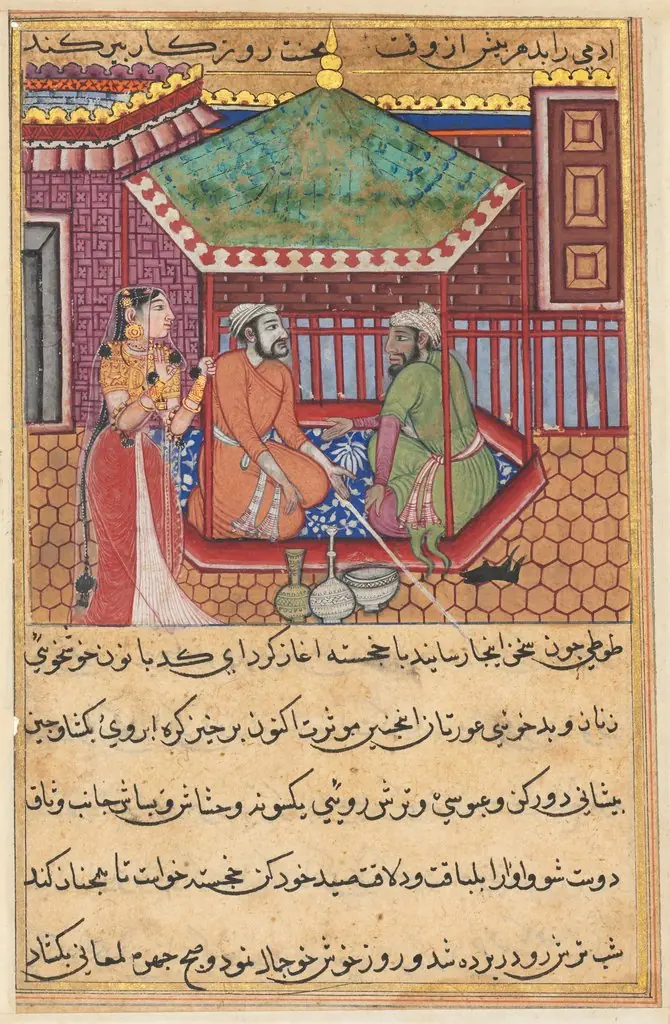 The eldest brother explains the reason for his youthful appearance, from a Tuti-nama (Tales of a Parrot): Forty-ninth Night
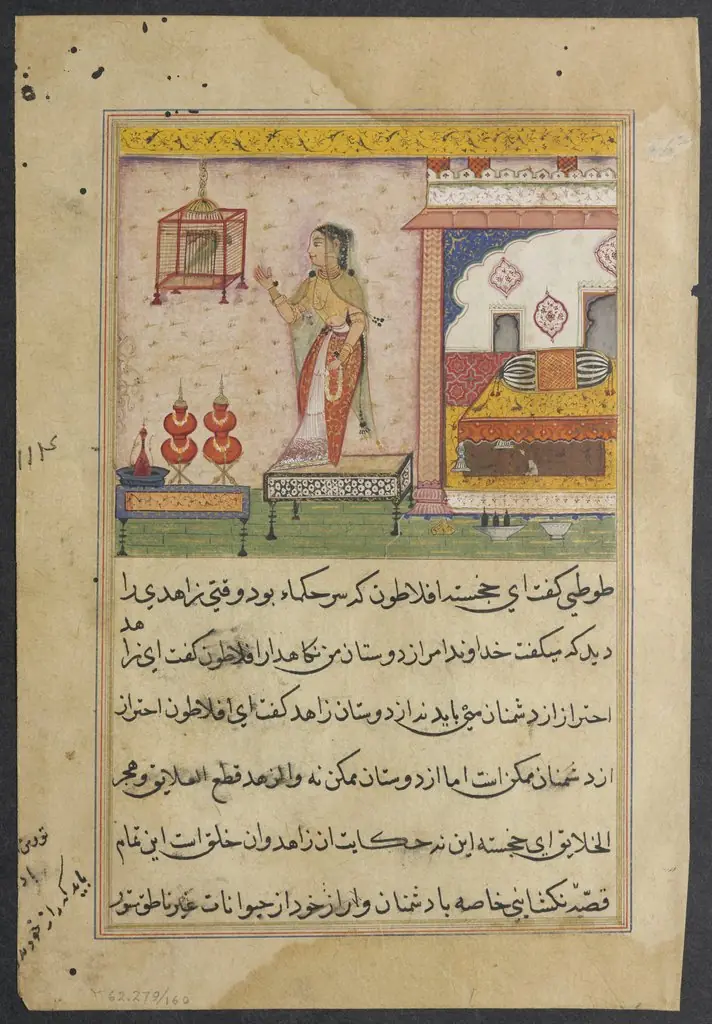 The Parrot Addresses Khujasta at the Beginning of the Twenty-third Night, from a Tuti-nama (Tales of a Parrot)
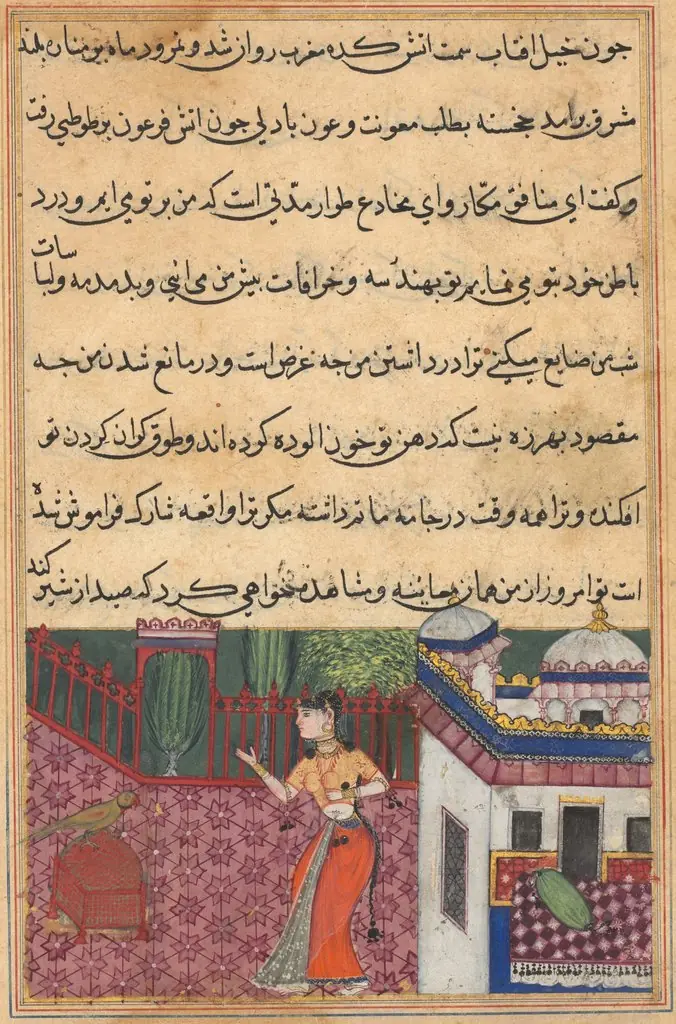 The parrot addresses Khujasta at the beginning of the thirty-third night, from a Tuti-nama (Tales of a Parrot)
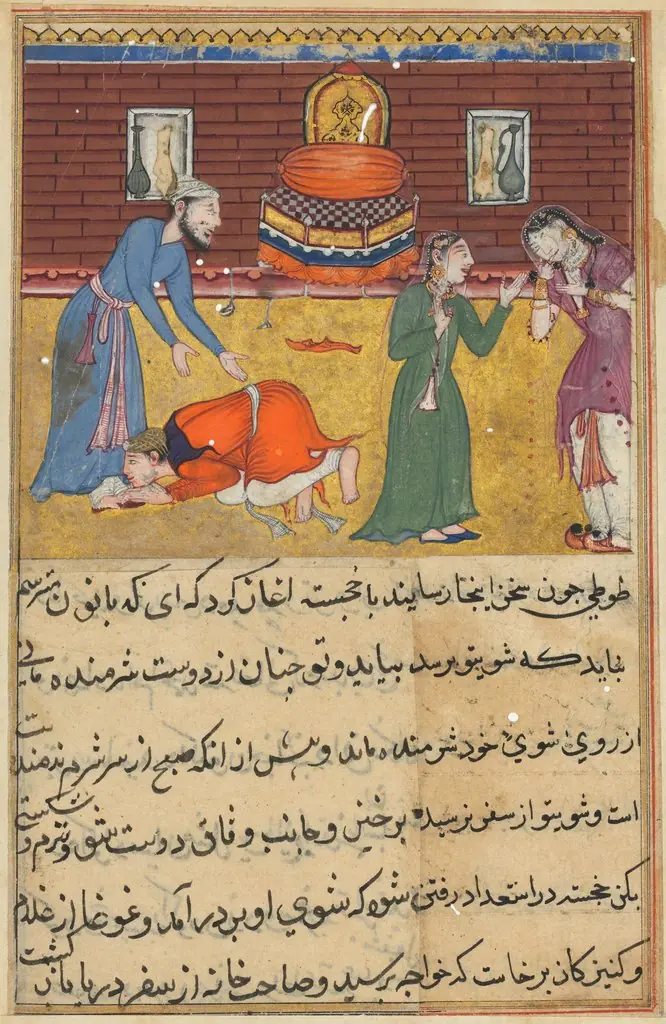 The pious man’s son, now a king, reveals himself to his father; his nurse upbraids his unfaithful mother, from a Tuti-nama (Tales of a Parrot): Fifty-second Night
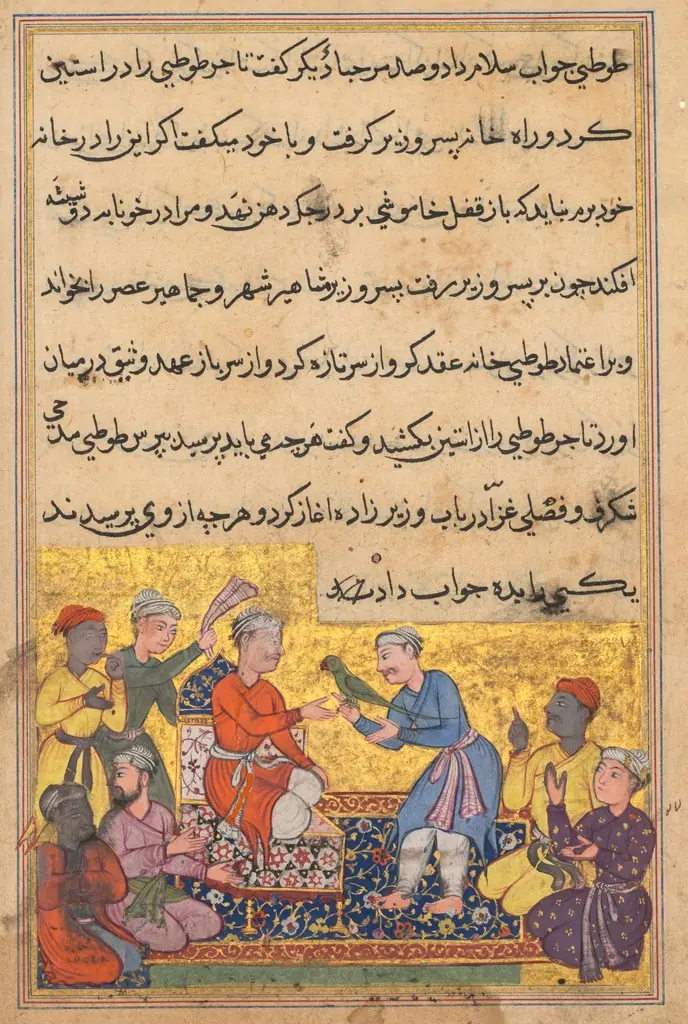 The magic parrot of the merchant talks to the vizier’s son, from a Tuti-nama (Tales of a Parrot): Tenth Night
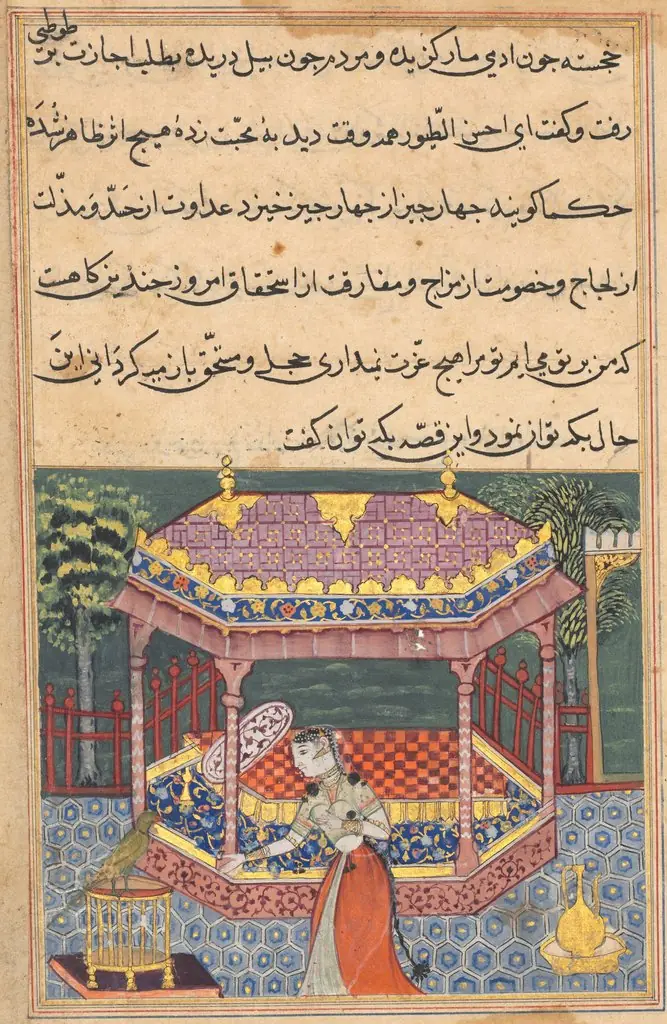 The parrot addresses Khujasta at the beginning of the thirty-seventh night, from a Tuti-nama (Tales of a Parrot)
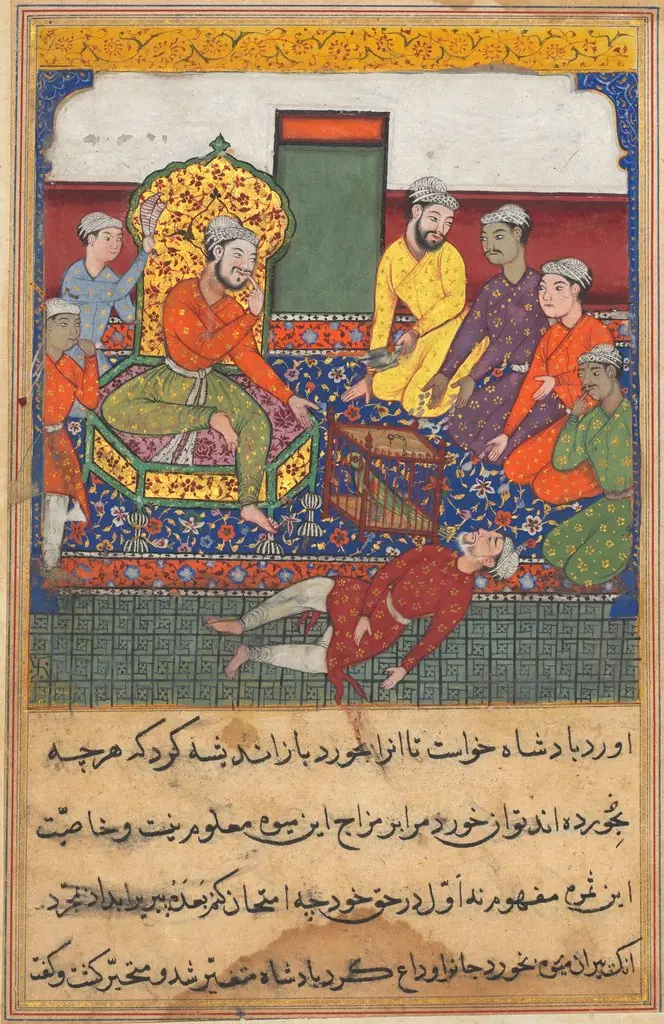 The old man eats of the fruit of the Tree of Life, but drops dead, from a Tuti-nama (Tales of a Parrot): Ninth Night
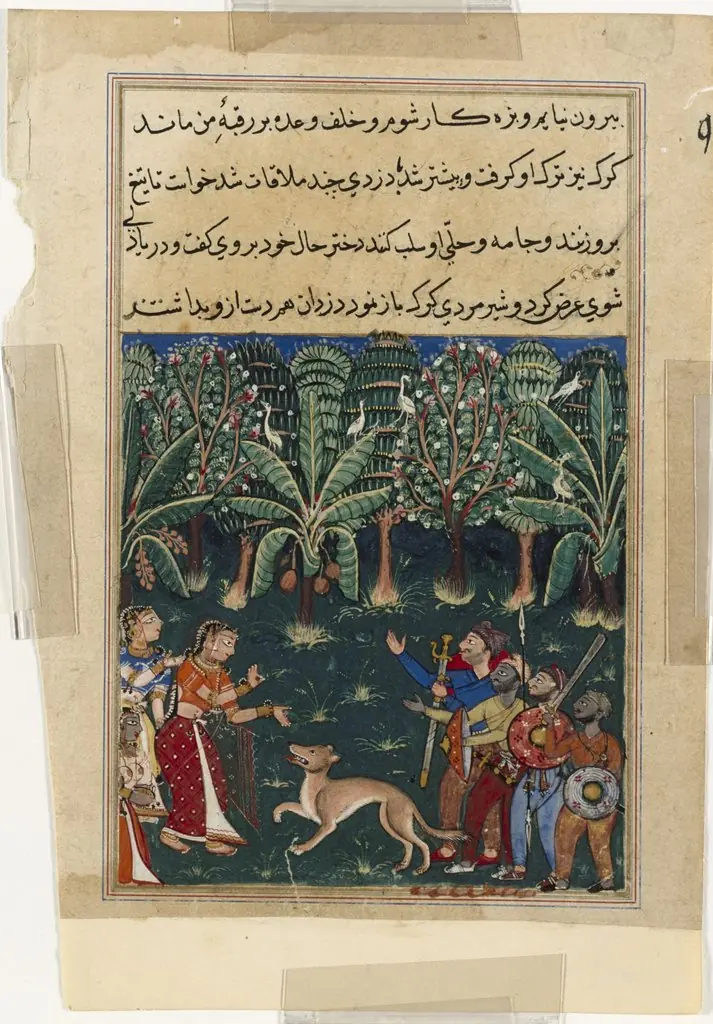 The merchant’s daughter encounters a wolf and bandits on her way to meet the gardener in order to keep her promise, from a Tuti-nama (Tales of a Parrot): Twelfth Night
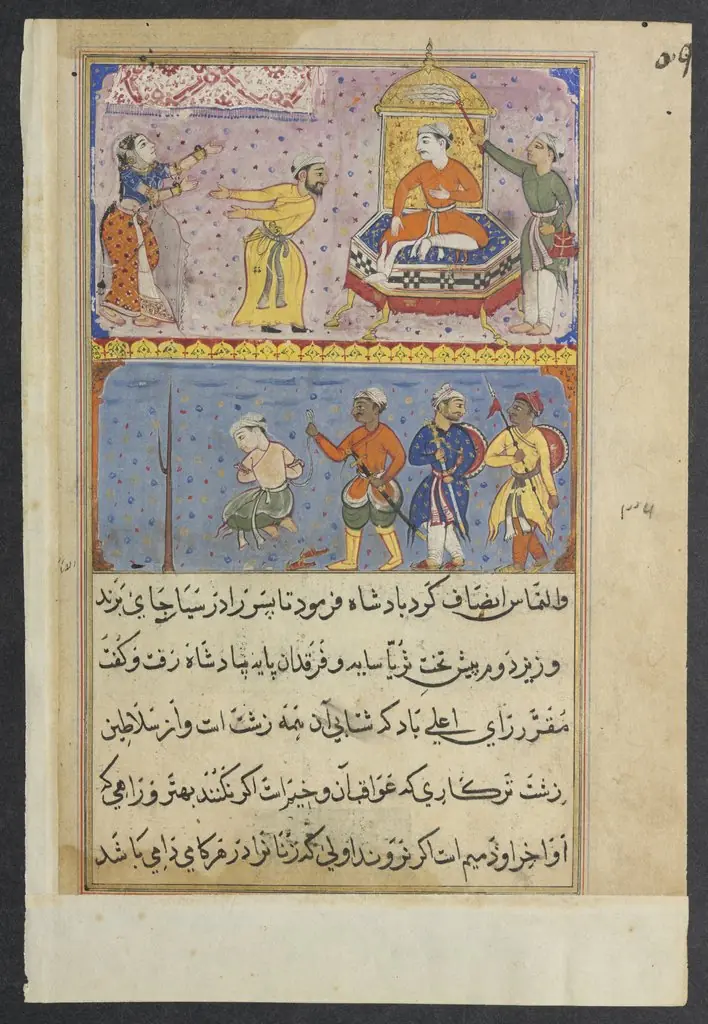 The prince, once reprieved, is returned to the palace of execution a second time on the plea of the king’s handmaiden, from a Tuti-nama (Tales of a Parrot): Eighth Night