Artwork
Jean-Louis Guez de Balzac
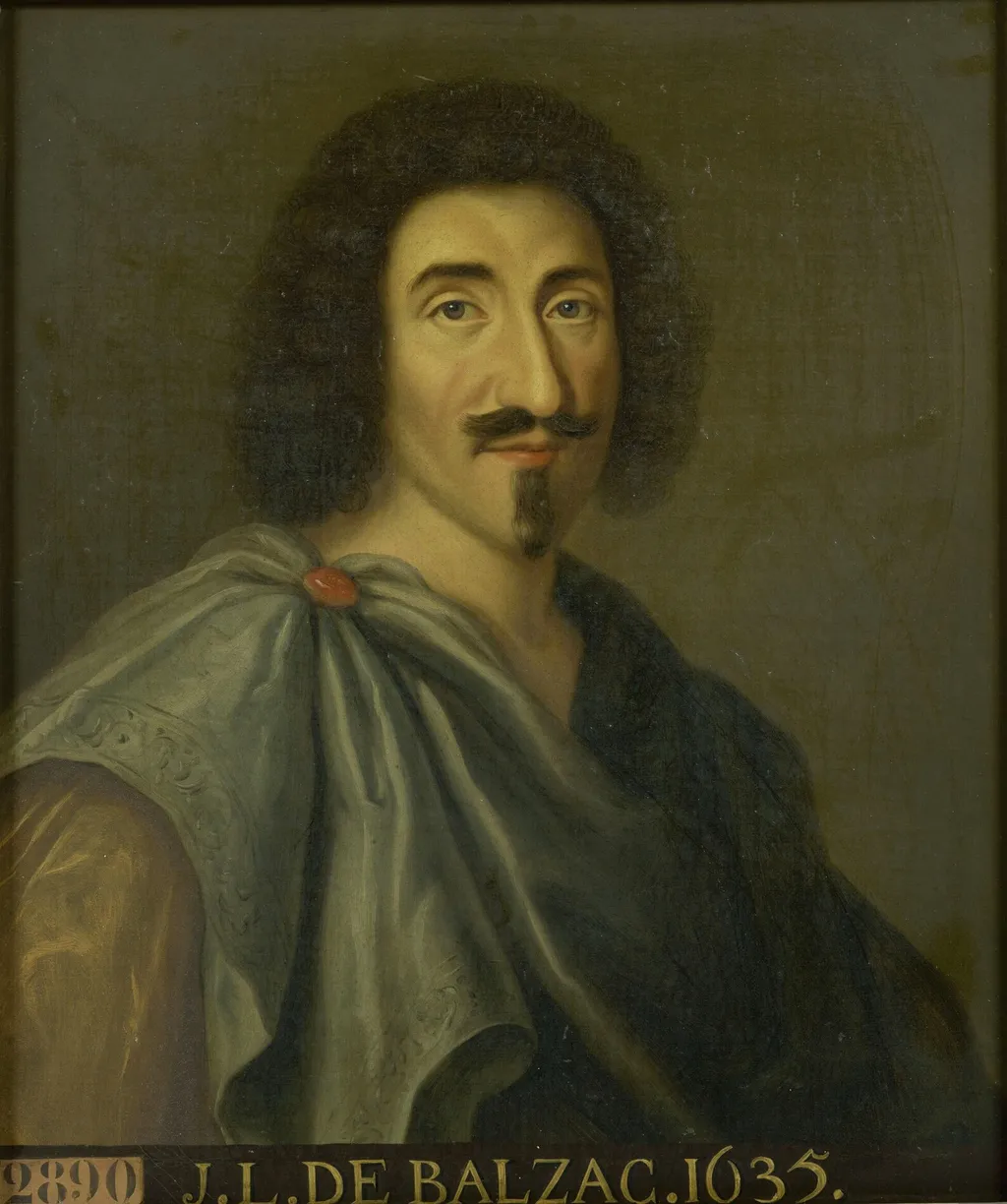
Jean-Louis Guez de Balzac is an oil painting by Unknown. It is held in the collection of the Palace of Versailles.
About this work
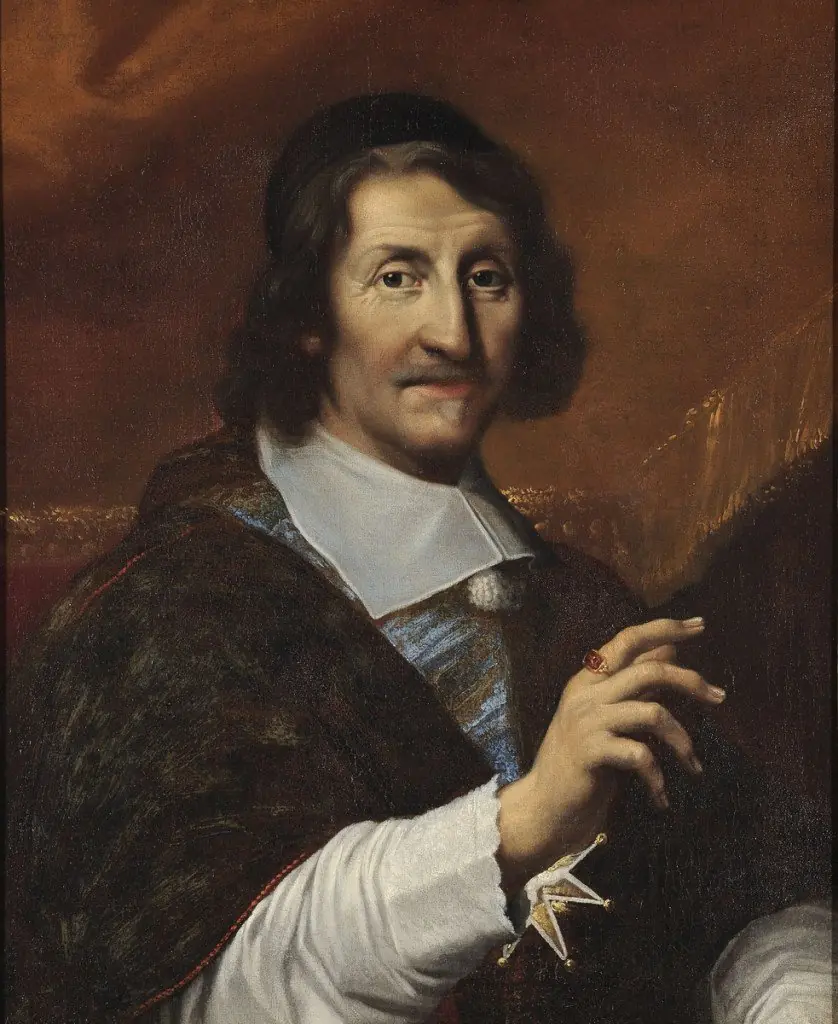
The painting depicts a man with dark, curly hair and a mustache, wearing a dark robe over a lighter-colored garment.
The painting depicts a man with dark, curly hair and a mustache, wearing a dark robe over a lighter-colored garment. A red oval-shaped object is visible on his shoulder. The background of the painting is a muted, earthy tone. The man's attire and hairstyle suggest a formal or dignified setting, possibly from the 17th or 18th century. The use of earthy tones in the background adds a sense of warmth and depth to the overall composition.
Overview
This oil painting portrays Jean-Louis Guez de Balzac, a French writer and diplomat of the 17th century. Rendered in muted earth tones, the composition emphasizes his dignified bearing through subtle contrasts of light and fabric. His dark robe and curled hair reflect formal attire of the period, while the red oval on his shoulder may indicate a decorative element or insignia. The background’s soft neutrality focuses attention on the figure’s presence.
Subject & Meaning
The subject is Jean-Louis Guez de Balzac, known for his refined prose and influence on French literary style. His portrayal here conveys intellectual authority rather than grandeur. The restrained palette and composed posture suggest a man of letters, valued for his wit and rhetorical skill. The red oval may reference a heraldic detail or sartorial ornament, hinting at his social standing without overt symbolism.
Technique & Style
The artist employs soft modeling and layered glazes to define the texture of fabric and the contours of the face. Brushwork is controlled, avoiding dramatic contrasts in favor of quiet realism. The earthy background, rendered with minimal detail, enhances the figure’s three-dimensionality. Light falls gently across the shoulders and face, creating a sense of intimacy without theatricality.
History & Provenance
The painting likely originated in France during the mid-17th century, commissioned to honor Balzac’s literary contributions. Its early ownership may have been among his patrons or members of the French intellectual circle. The work remained in private collections until entering institutional care, though its exact provenance before the 20th century is not fully documented.
Context
Balzac lived during a period when French prose was being refined into a model of clarity and elegance. Portraits of writers from this era often emphasized intellectual gravitas over aristocratic display. This painting aligns with contemporary trends in French portraiture, where dignity was conveyed through restraint, careful attention to attire, and subdued color harmonies.
Legacy
The portrait endures as a visual record of a key figure in the development of French literary language. It reflects how writers of the time were increasingly depicted not as nobles, but as cultural arbiters. Its quiet composition contrasts with more flamboyant contemporary portraits, underscoring the value placed on intellectual authority in 17th-century France.
Artist & collection

 Domestic Scene
 Giacomo and Cardinal Marco, investing Andrea, Abbot of San Zeno, with his Benefice
 The Nymph of Fontainebleau
 Portrait of a Woman
 Madonna and Child with Saints in the Enclosed Garden
 Venus and Minerva
 Family Group of Four on Sofa
 Wall painting from Room H of the Villa of P. Fannius Synistor at Boscoreale