Artwork
Latif, who has murdered his brother, falsely accuses Khurshid of the deed, from a Tuti-nama (Tales of a Parrot): Thirty-second Night
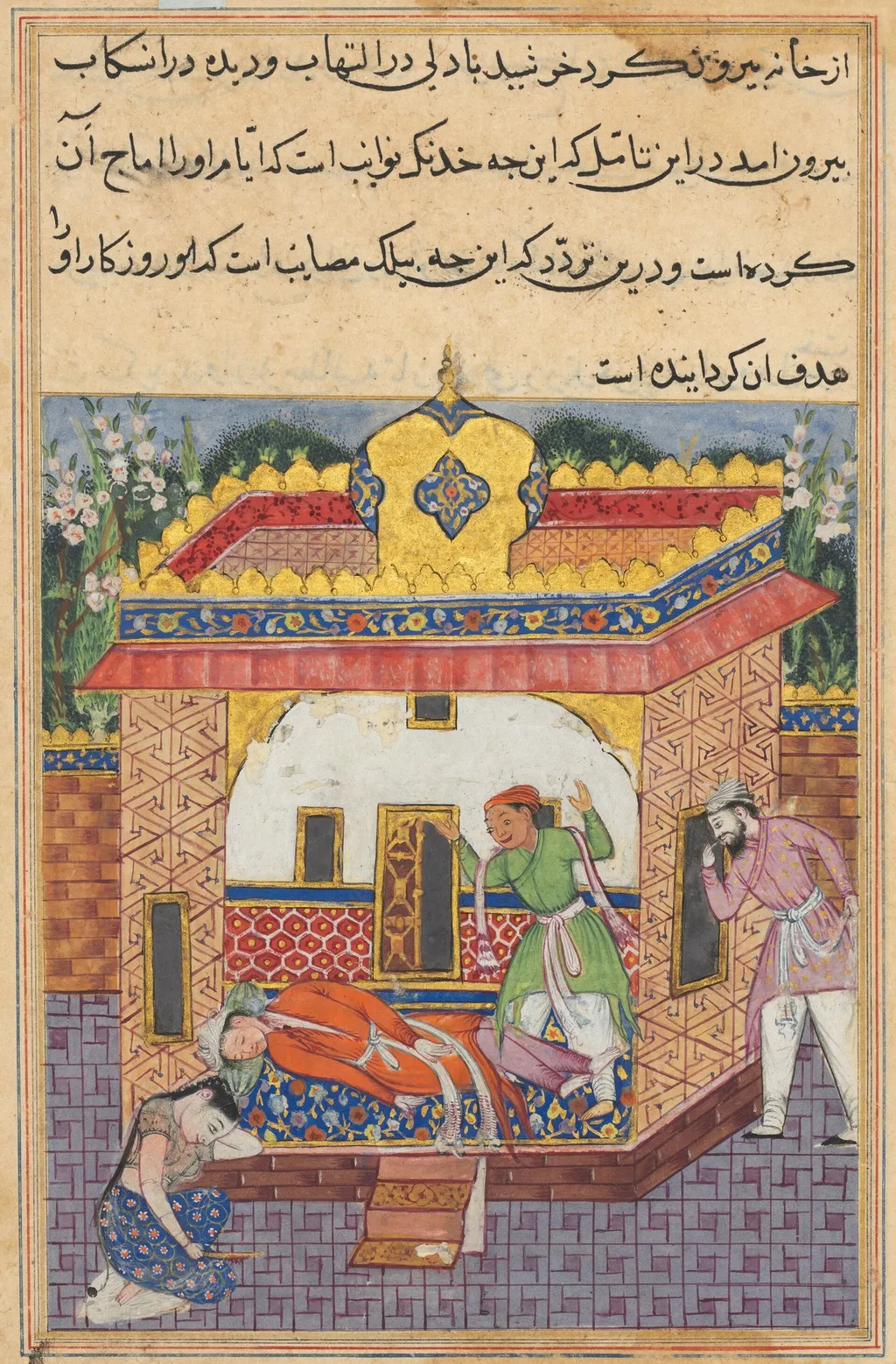
Latif, who has murdered his brother, falsely accuses Khurshid of the deed, from a Tuti-nama (Tales of a Parrot): Thirty-second Night is an unspecified painting by Unknown. It dates from 1560 and is held in the collection of the Cleveland Museum of Art.
About this work
Overview
The surrounding garden, rendered with stylised flora, frames the action.
The work depicts a domestic interior scene from a Persian illustrated manuscript, showing a confrontation between four figures in front of a red‑tiled building with a white, patterned wall and a single window. A man in a green shirt and white trousers stands in the doorway, gesturing toward a prone figure in orange and blue, while a kneeling woman and another standing man complete the tense grouping. The surrounding garden, rendered with stylised flora, frames the action.
Subject & Meaning
The narrative derives from the thirty‑second night of the Tuti‑nama, a collection of moral tales. In this episode, Latif, who has killed his brother, falsely blames Khurshid for the murder. The composition captures the moment of accusation, with the standing figure representing the accuser and the fallen figure embodying the unjustly blamed victim, while the kneeling woman may symbolize pleading or sorrow.
Technique & Style
Executed in vivid pigments, the painting employs intricate geometric motifs on the architecture and elaborate textile patterns on the costumes, characteristic of Persian miniature art. The use of bold, contrasting colours—greens, oranges, blues, and reds—creates a dynamic visual rhythm, while the fine linear detailing conveys both decorative richness and narrative clarity.
History & Provenance
The image originates from a hand‑illuminated copy of the Tuti‑nama, a manuscript tradition that flourished in the Safavid period. Such illustrated pages were typically produced for elite patrons and circulated among literary circles, though the specific copy’s later ownership and current location are not documented in the provided information.
Context
Within the broader tradition of Persian storytelling, the Tuti‑nama blends moral instruction with entertainment, often illustrated with scenes that emphasize ethical dilemmas. This particular vignette reflects themes of fraternal betrayal and false testimony, common motifs in medieval Islamic literature, and the visual treatment aligns with contemporary artistic conventions of narrative illustration.
Artist & collection

 Domestic Scene
 Giacomo and Cardinal Marco, investing Andrea, Abbot of San Zeno, with his Benefice
 The Nymph of Fontainebleau
 Portrait of a Woman
 Madonna and Child with Saints in the Enclosed Garden
 Venus and Minerva
 Family Group of Four on Sofa
 Wall painting from Room H of the Villa of P. Fannius Synistor at Boscoreale
 Latif, who has murdered his brother, falsely accuses Khurshid of the deed, from a Tuti-nama (Tales of a Parrot): Thirty-second Night
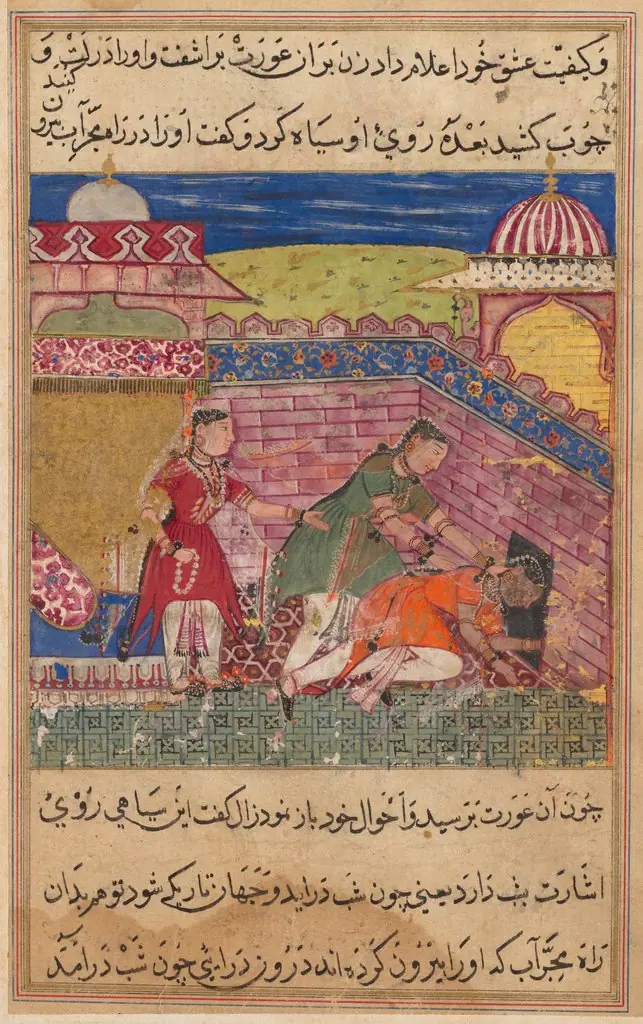 The deceitful wife ejects the procuress after blackening her face, from a Tuti-nama (Tales of a Parrot): Eighth Night
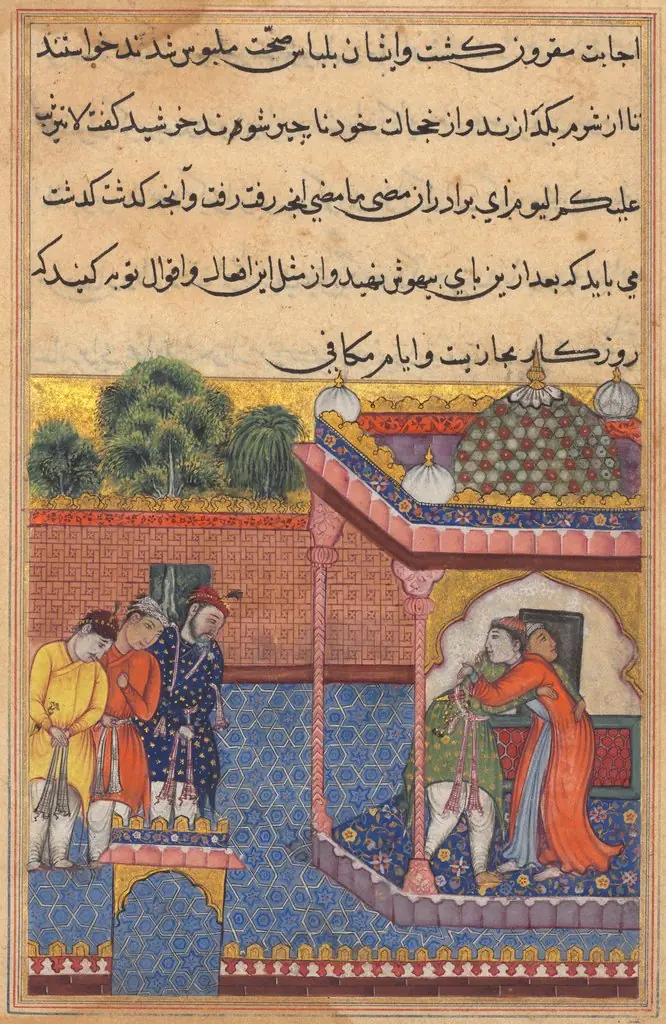 Khurshid reunited with her husband Utarid, from a Tuti-nama (Tales of a Parrot): Thirty-second Night
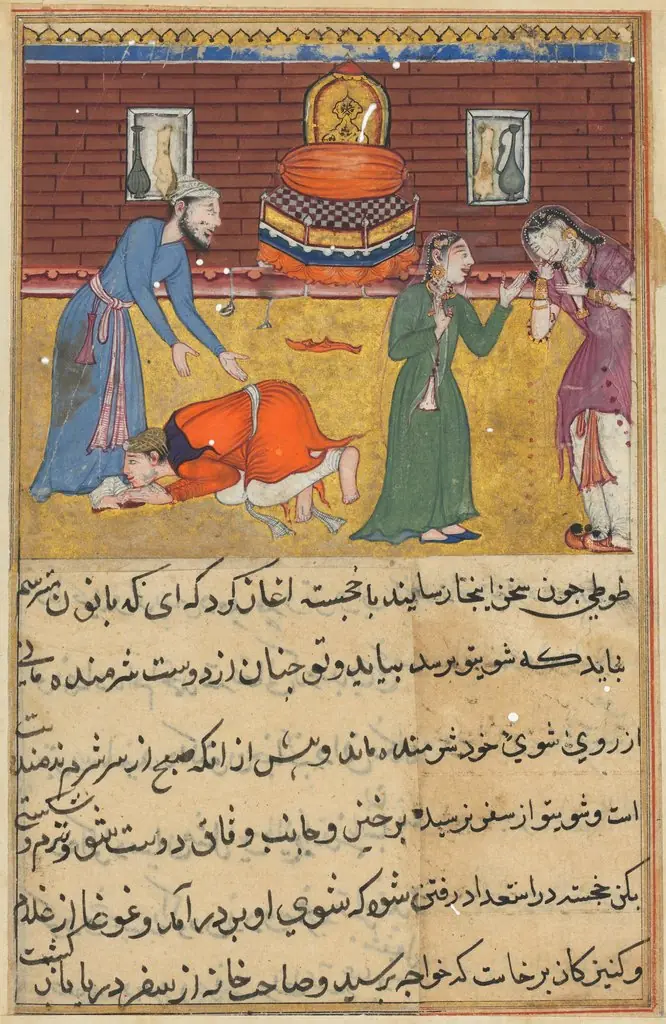 The pious man’s son, now a king, reveals himself to his father; his nurse upbraids his unfaithful mother, from a Tuti-nama (Tales of a Parrot): Fifty-second Night
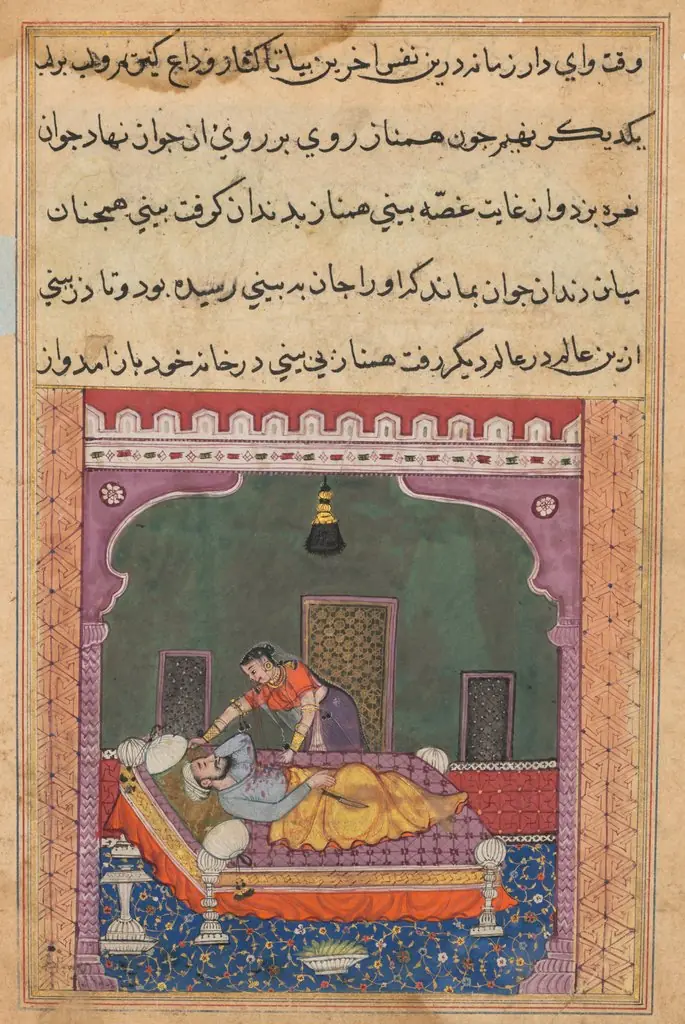 In order to falsely implicate her husband, Hamnaz places a knife by his side and lets the blood dripping from her nose stain his clothes, from a Tuti-nama (Tales of a Parrot): Twenty-fifth Night
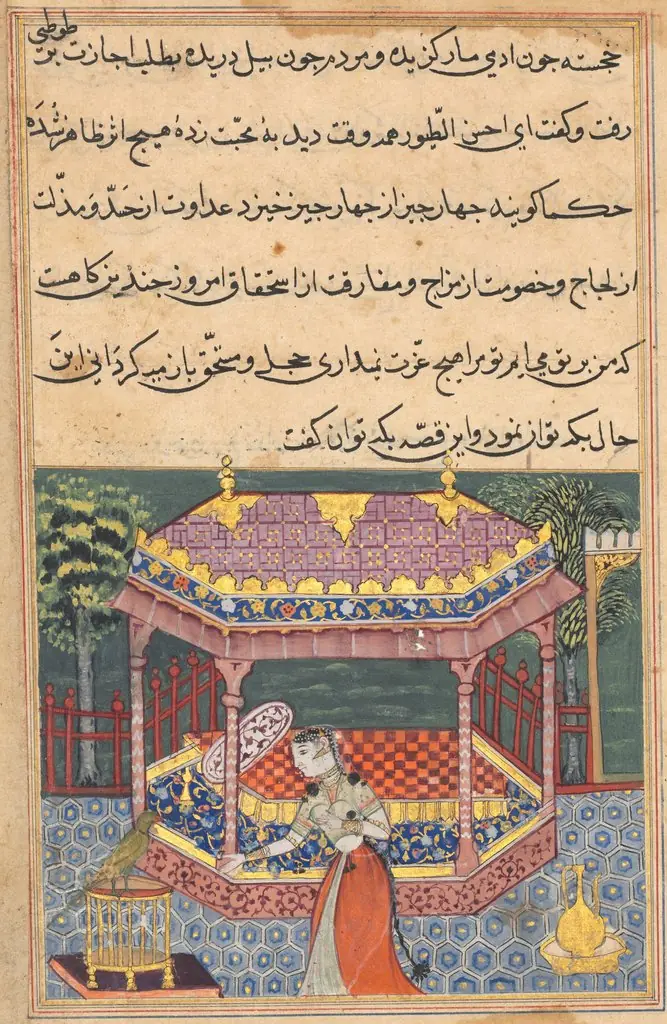 The parrot addresses Khujasta at the beginning of the thirty-seventh night, from a Tuti-nama (Tales of a Parrot)
 The parrot addresses Khujasta at the beginning of the thirty-seventh night, from a Tuti-nama (Tales of a Parrot)