Artwork
The parrot addresses Khujasta at the beginning of the thirty-seventh night, from a Tuti-nama (Tales of a Parrot)
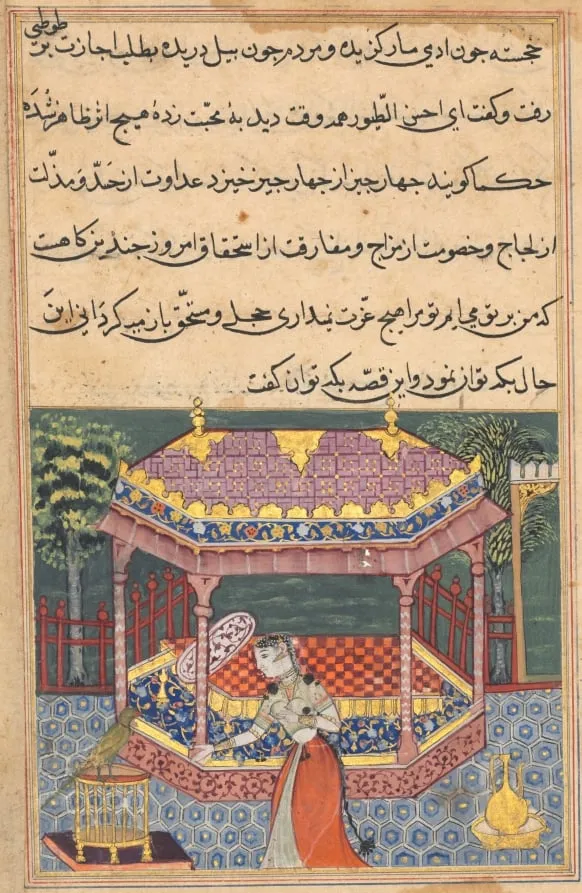
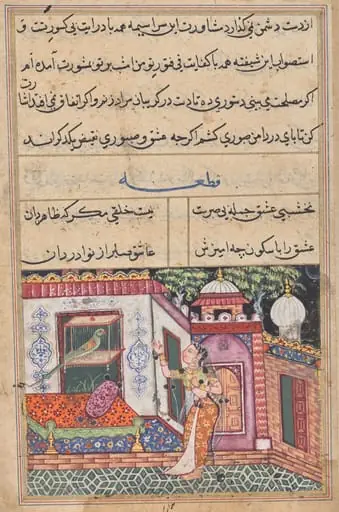
The parrot addresses Khujasta at the beginning of the thirty-seventh night, from a Tuti-nama (Tales of a Parrot) is an unspecified painting by the Mughal Painting artist Unknown. It dates from 1560 and is held in the collection of the Cleveland Museum of Art. This painting illustrates a scene from the Tuti-nama, a collection of fifty-two frame stories told over consecutive nights.
About this work
Each night, the parrot distracts Khujasta with a new tale so she won’t sneak out to meet her lover.
A woman in a red robe sits on the floor, listening to a green parrot perched on a stand. Behind them, a servant holds a lantern as night falls outside.
This painting comes from a book of stories told over fifty-two nights. Each night, the parrot distracts Khujasta with a new tale so she won’t sneak out to meet her lover. The bright colors and fine details show how artists worked in the court of Emperor Akbar.
To see more art from this time, look up *Mughal India, court of Akbar (reigned 1556–1605)*.
Overview
This painting illustrates a scene from the Tuti-nama, a collection of fifty-two frame stories told over consecutive nights. Khujasta, a royal woman, listens intently as a talking parrot recounts a tale to divert her from clandestine meetings. The scene captures the thirty-seventh night, with twilight settling outside, and a servant holding a lantern to illuminate the intimate moment. The work originates from a Mughal manuscript commissioned during Emperor Akbar’s reign.
Subject & Meaning
The parrot’s narrative centers on the son of the Emir of Sistan, who becomes enslaved to a serpent—a tale meant to illustrate the value of loyalty and companionship. By weaving moral fables each night, the parrot delays Khujasta’s departure, subtly reinforcing the idea that emotional bonds outweigh impulsive desire. The story functions as both entertainment and counsel, aligning with the manuscript’s purpose: to dissuade the listener from reckless action through layered allegory.
Technique & Style
Rendered in fine brushwork and vivid mineral pigments, the painting reflects the refined aesthetics of the Mughal atelier. The woman’s crimson robe contrasts with the parrot’s emerald plumage, while delicate patterns on textiles and architecture demonstrate meticulous attention to detail. The use of soft chiaroscuro and atmospheric perspective enhances the transition from day to night, grounding the fantastical tale in a tangible, intimate space.
History & Provenance
Created in the imperial workshop of Emperor Akbar around 1560, this painting belonged to a lavishly illustrated manuscript of the Tuti-nama, translated from Persian into Hindavi. The project involved multiple artists and calligraphers, reflecting Akbar’s interest in cross-cultural storytelling. The manuscript was later dispersed; this folio is now held in a major public collection, one of the few surviving illustrations from the original set.
Context
The Tuti-nama was adapted for Akbar’s court as part of a broader effort to synthesize Persian, Indian, and Islamic literary traditions. Its structure—narratives within narratives—mirrored courtly ideals of patience and wisdom. The parrot’s role as both storyteller and moral guide resonated with Mughal notions of governance, where counsel and restraint were valued over impulse, making the text both a literary and political tool.
Legacy
This painting exemplifies the early Mughal synthesis of Persian narrative traditions with Indian artistic conventions. Its detailed compositions influenced later manuscript illustration across the empire. Though the full manuscript is fragmented, surviving folios like this one remain key references for understanding how storytelling, visual art, and courtly ethics converged in 16th-century India.
Artist & collection

 Domestic Scene
 Giacomo and Cardinal Marco, investing Andrea, Abbot of San Zeno, with his Benefice
 The Nymph of Fontainebleau
 Portrait of a Woman
 Madonna and Child with Saints in the Enclosed Garden
 Venus and Minerva
 Family Group of Four on Sofa
 Wall painting from Room H of the Villa of P. Fannius Synistor at Boscoreale
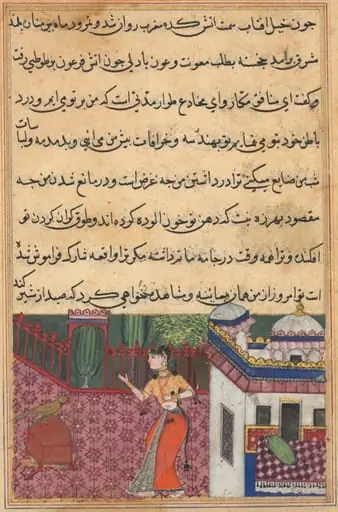 The parrot addresses Khujasta at the beginning of the thirty-third night, from a Tuti-nama (Tales of a Parrot)
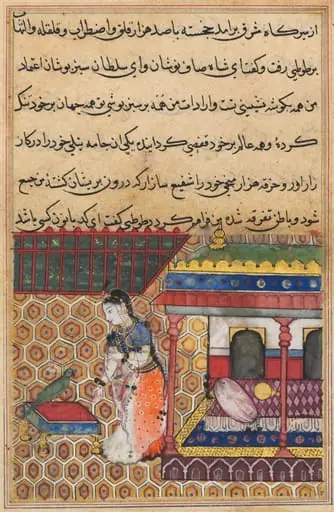 The parrot addresses Khujasta at the beginning of the thirty-eighth night, from a Tuti-nama (Tales of a Parrot)
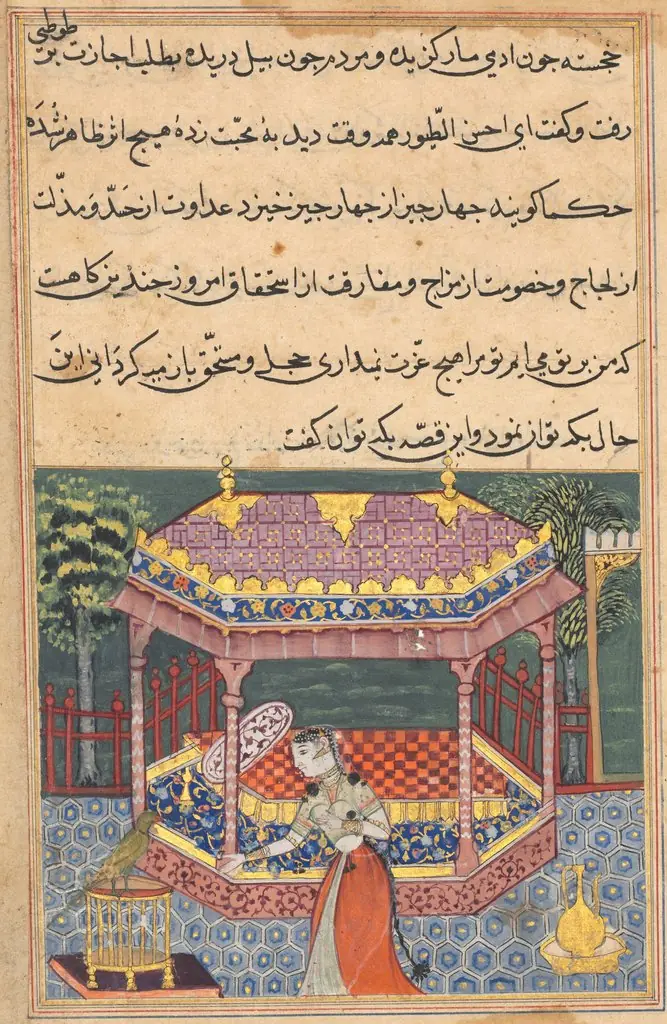 The parrot addresses Khujasta at the beginning of the thirty-seventh night, from a Tuti-nama (Tales of a Parrot)
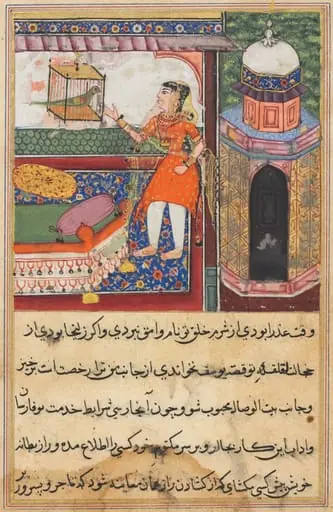 The Parrot Addresses Khujasta at the Beginning of the Tenth Night, from a Tuti-nama (Tales of a Parrot)
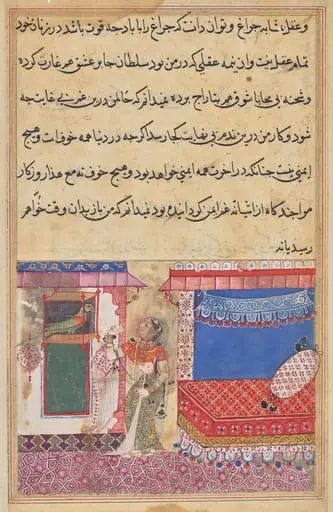 The Parrot Addresses Khujasta at the Beginning of the Eighteenth Night, from a Tuti-nama (Tales of a Parrot)
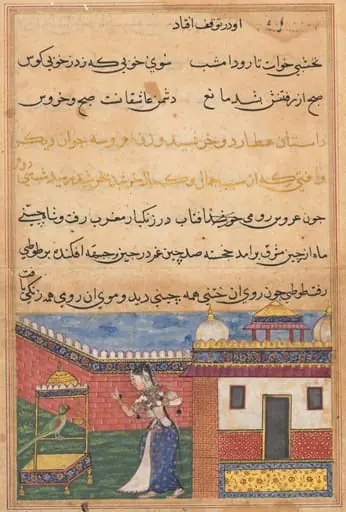 The parrot addresses Khujasta at the beginning of the thirty-second night, from a Tuti-nama (Tales of a Parrot)
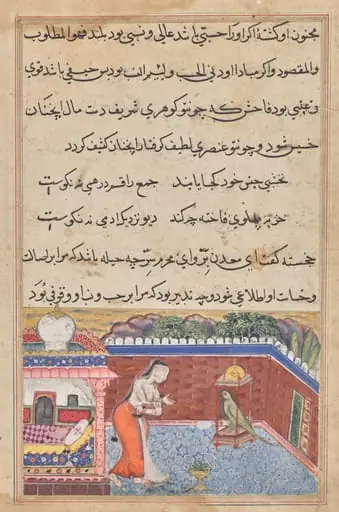 The parrot addresses Khujasta at the beginning of the thirty-first night, from a Tuti-nama (Tales of a Parrot)
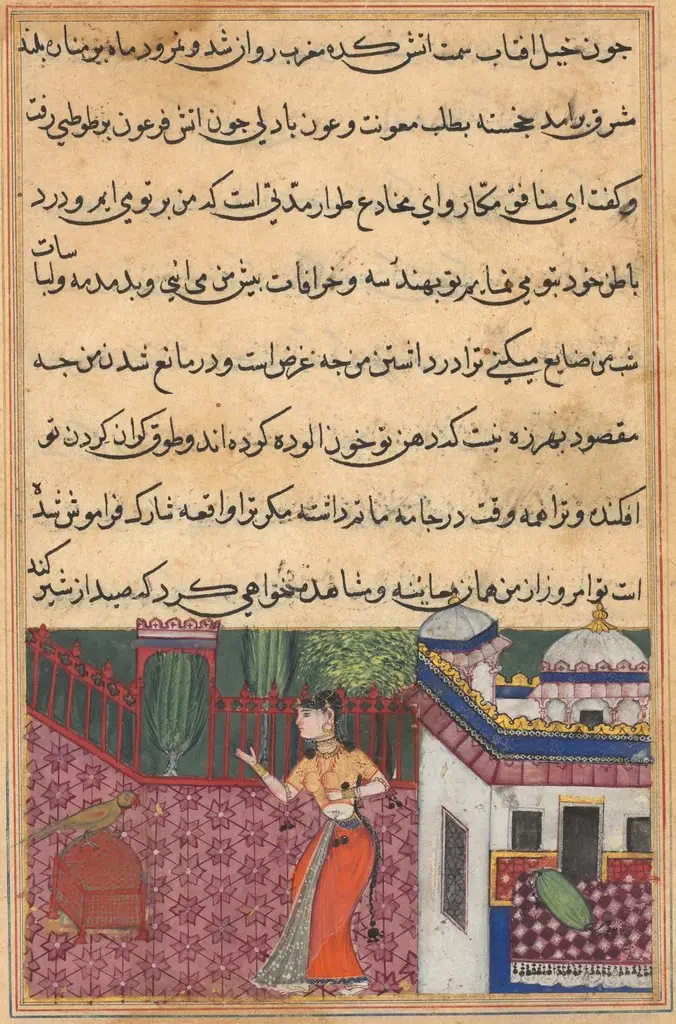 The parrot addresses Khujasta at the beginning of the thirty-third night, from a Tuti-nama (Tales of a Parrot)
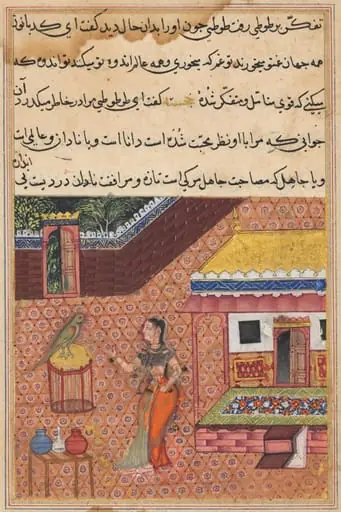 The parrot addresses Khujasta at the beginning of the thirty-fourth night, from a Tuti-nama (Tales of a Parrot)
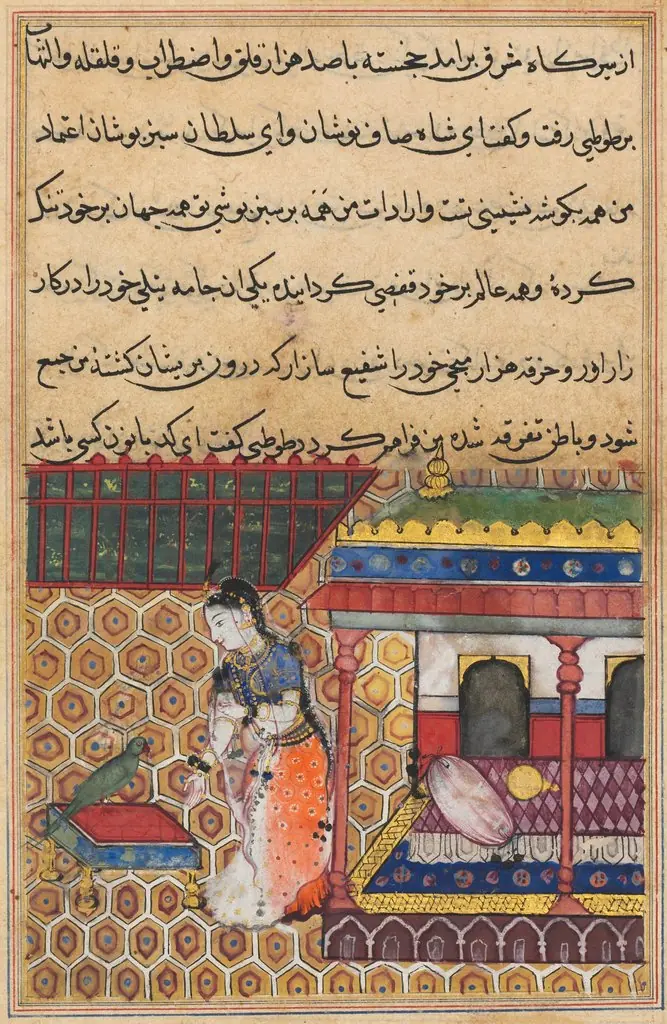 The parrot addresses Khujasta at the beginning of the thirty-eighth night, from a Tuti-nama (Tales of a Parrot)
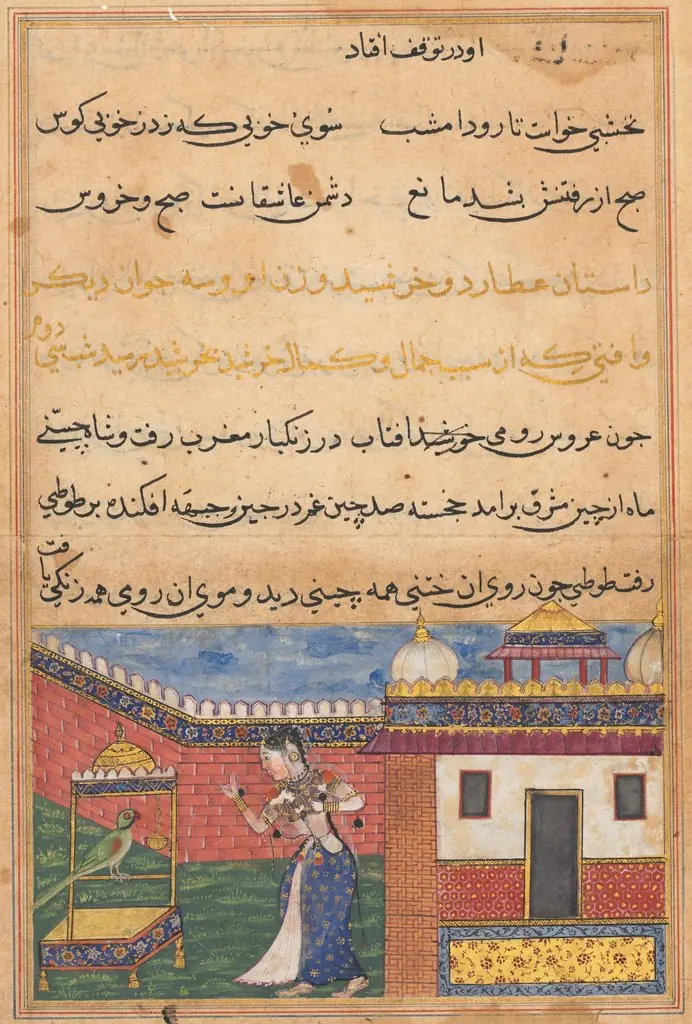 The parrot addresses Khujasta at the beginning of the thirty-second night, from a Tuti-nama (Tales of a Parrot)
 The Parrot Addresses Khujasta at the Beginning of the Eleventh Night, from a Tuti-nama (Tales of a Parrot)