Artwork
In order to falsely implicate her husband, Hamnaz places a knife by his side and lets the blood dripping from her nose stain his clothes, from a Tuti-nama (Tales of a Parrot): Twenty-fifth Night
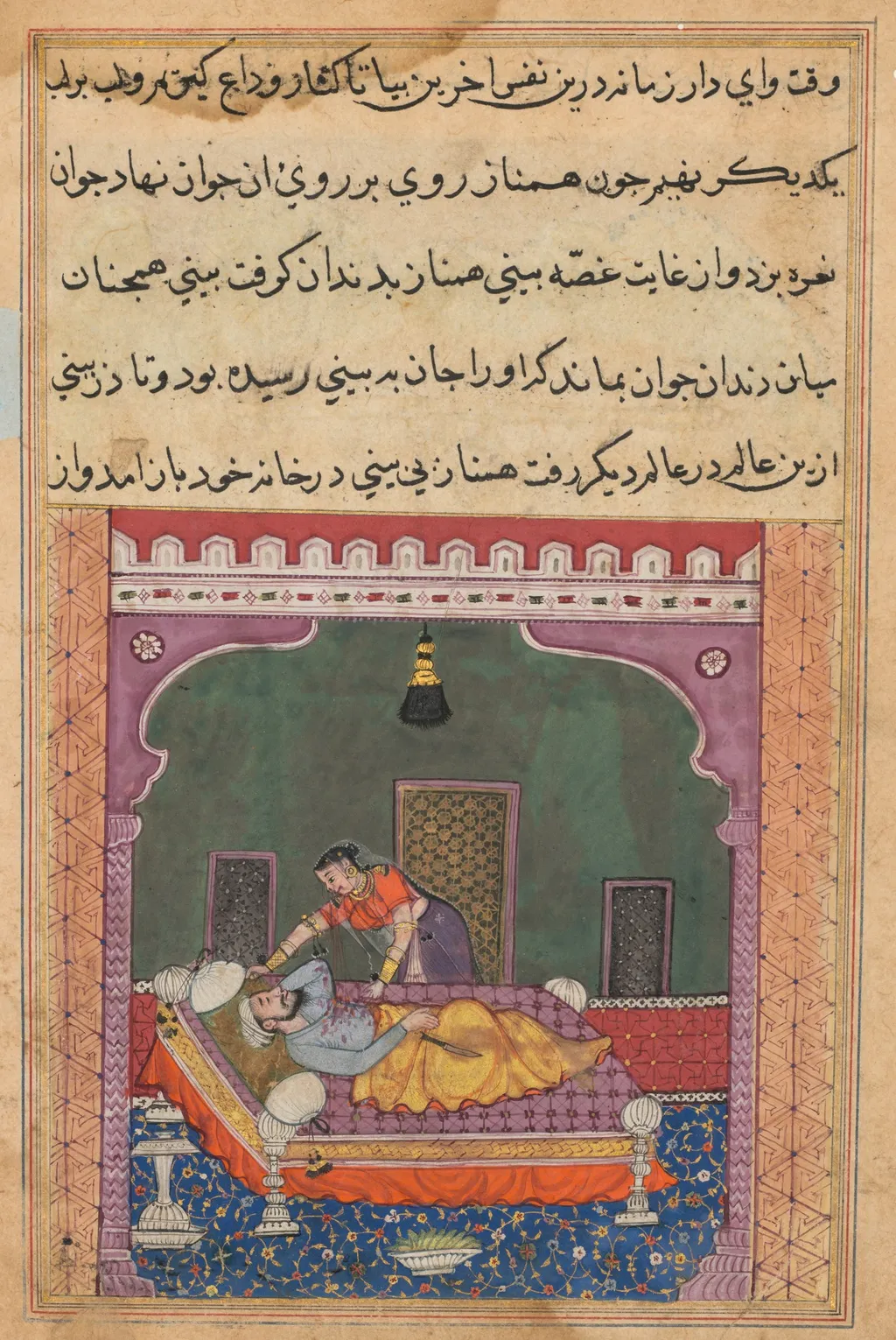
In order to falsely implicate her husband, Hamnaz places a knife by his side and lets the blood dripping from her nose stain his clothes, from a Tuti-nama (Tales of a Parrot): Twenty-fifth Night is an unspecified painting. It dates from 1560 and is held in the collection of the Cleveland Museum of Art. The canvas captures a tense episode from the Persian collection of stories known as the Tuti‑nama.
About this work
Overview
The canvas captures a tense episode from the Persian collection of stories known as the Tuti‑nama. A woman in a vivid orange gown leans over a reclining male figure, clutching a knife while blood drips from her nose onto his garments. The setting is an interior with richly patterned furnishings, emphasizing the dramatic narrative moment.
Subject & Meaning
The scene illustrates a deceitful plot: the woman deliberately places the knife beside the man and allows her blood to stain his clothing, aiming to frame him for a crime he did not commit. The tableau reflects themes of betrayal and manipulation that recur throughout the Tuti‑nama’s moral tales.
Technique & Style
Rendered in a detailed, illustrative manner, the painting employs a bright palette—orange, blue, green, and gold—to delineate figures and décor. Intricate patterned surfaces, such as the purple‑gold headboard and the blue‑gold rug, demonstrate a careful attention to ornamental design typical of manuscript‑inspired narrative art.
Context
The work belongs to a visual tradition that translates literary episodes from the Tuti‑nama into painted form, a practice common in Persian and South Asian courts where storytelling and visual culture intersected. The composition’s focus on a single, climactic moment mirrors the episodic structure of the source text.
Artist & collection

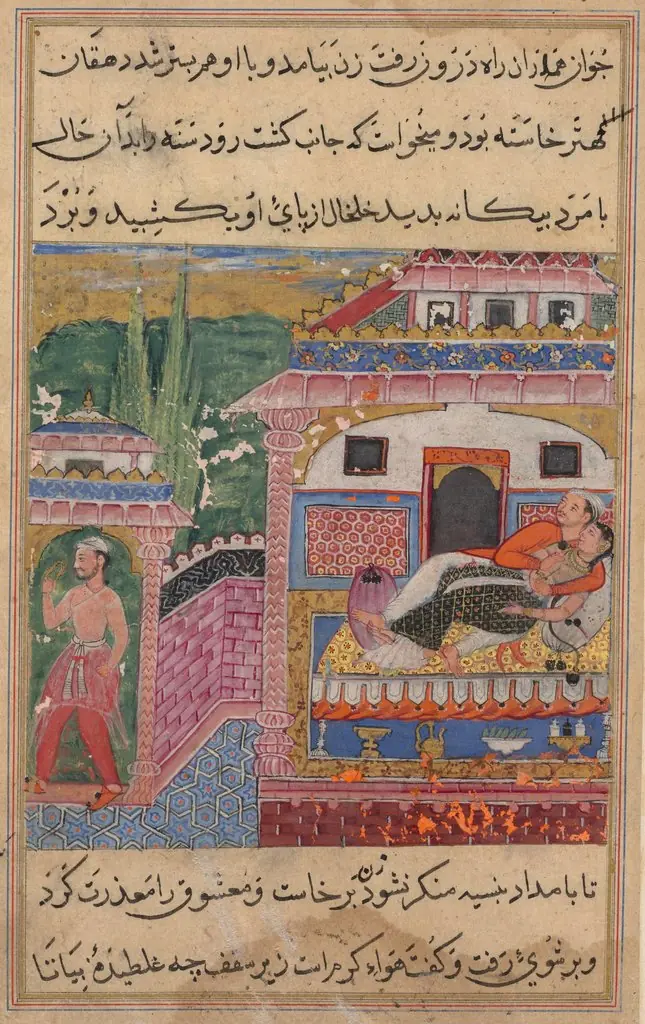 The deceitful wife persuades her husband to sleep in the same place where she had previously slept with her lover, from a Tuti-nama (Tales of a Parrot): Eighth Night
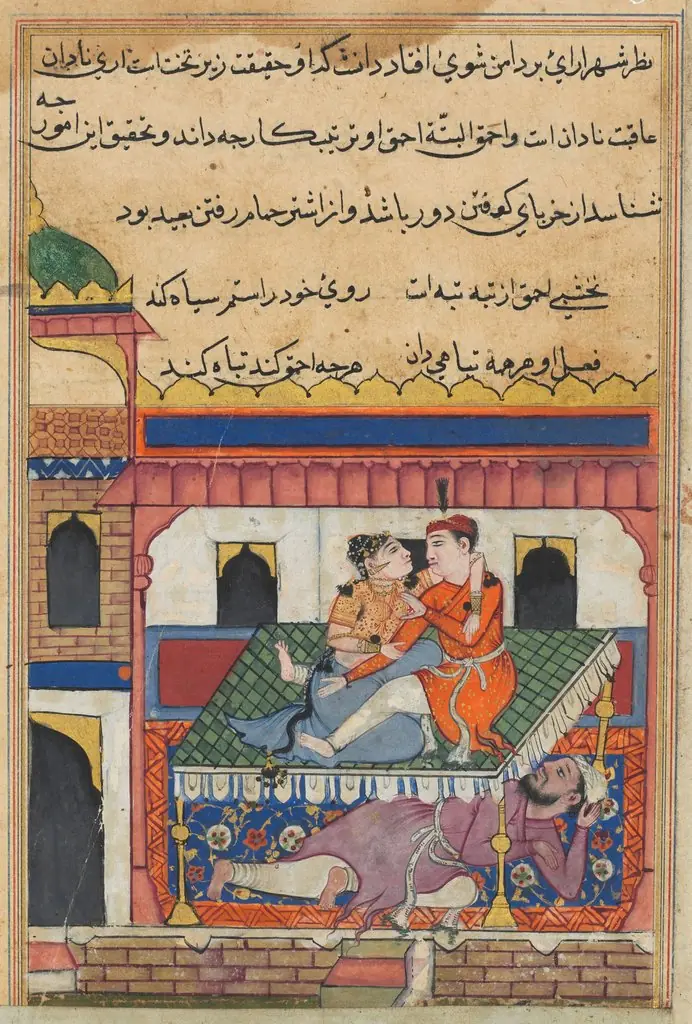 Shahr-Arai and her lover dallying on a bed beneath which is concealed her husband, from a Tuti-nama (Tales of a Parrot): Fortieth Night
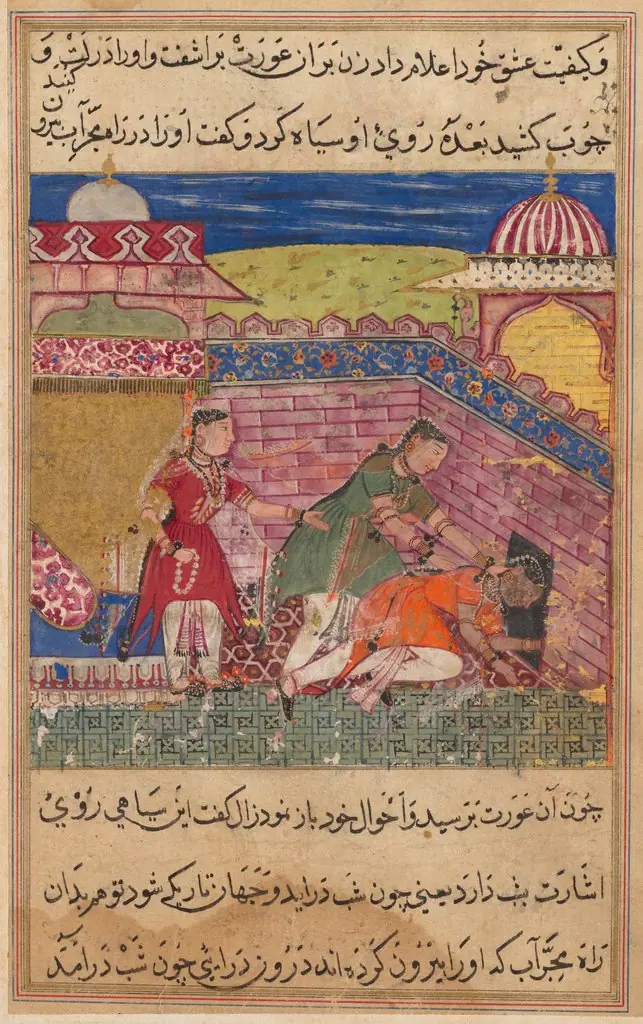 The deceitful wife ejects the procuress after blackening her face, from a Tuti-nama (Tales of a Parrot): Eighth Night
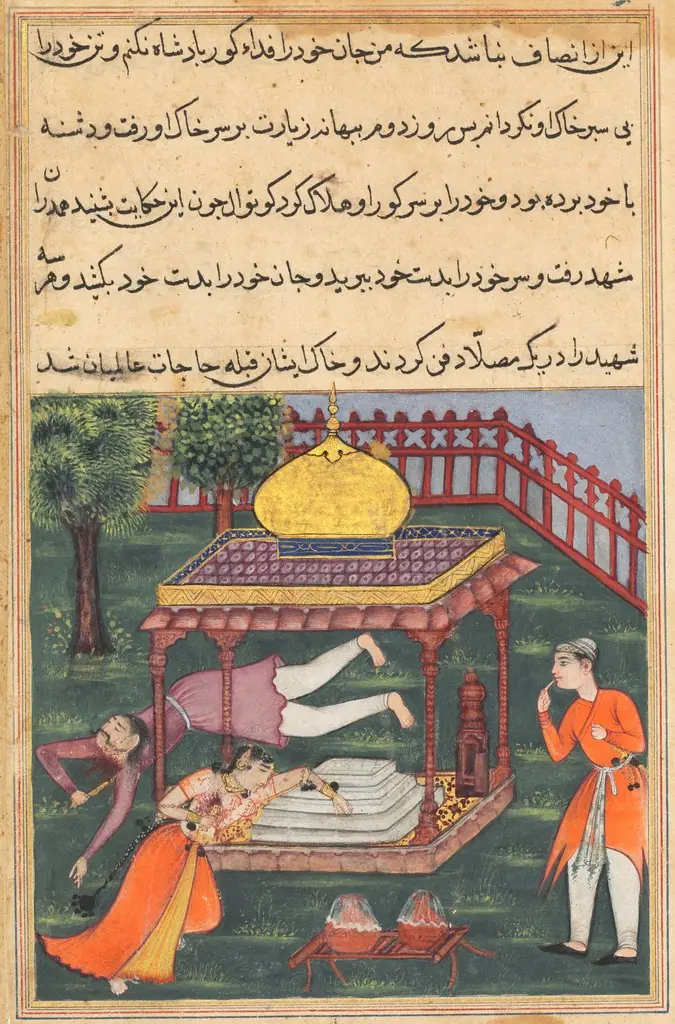 Mahrusa kills herself at the tomb of the king of Zabul, and her husband does likewise, from a Tuti-nama (Tales of a Parrot): Thirty-sixth Night
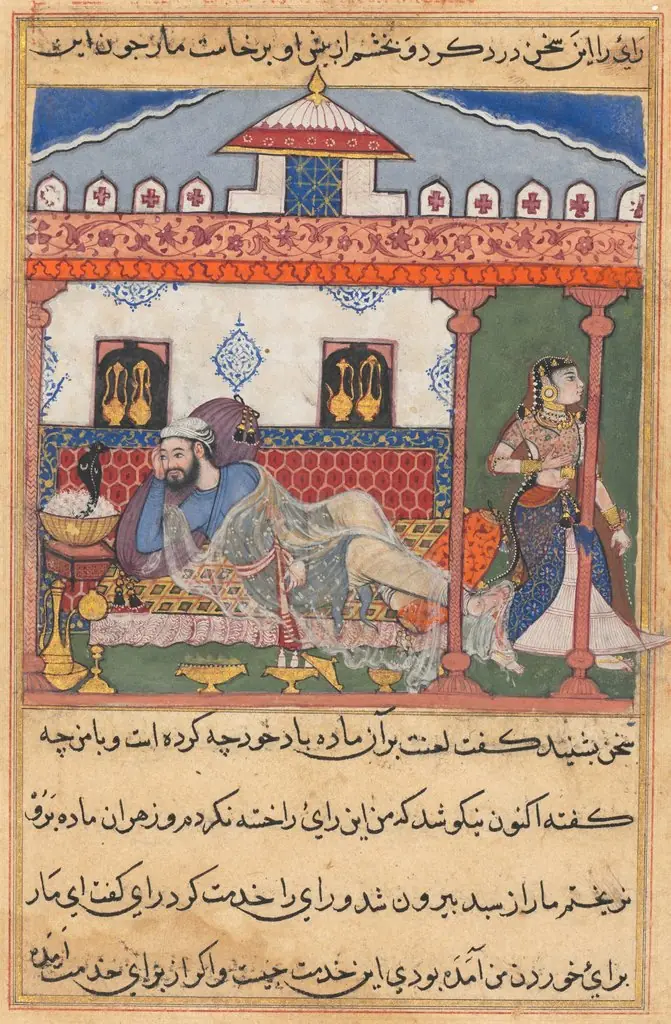 The snake, hidden in a basket of flowers, reveals himself to the Raja who has just sent away his wife, from a Tuti-nama (Tales of a Parrot): Forty-third Night
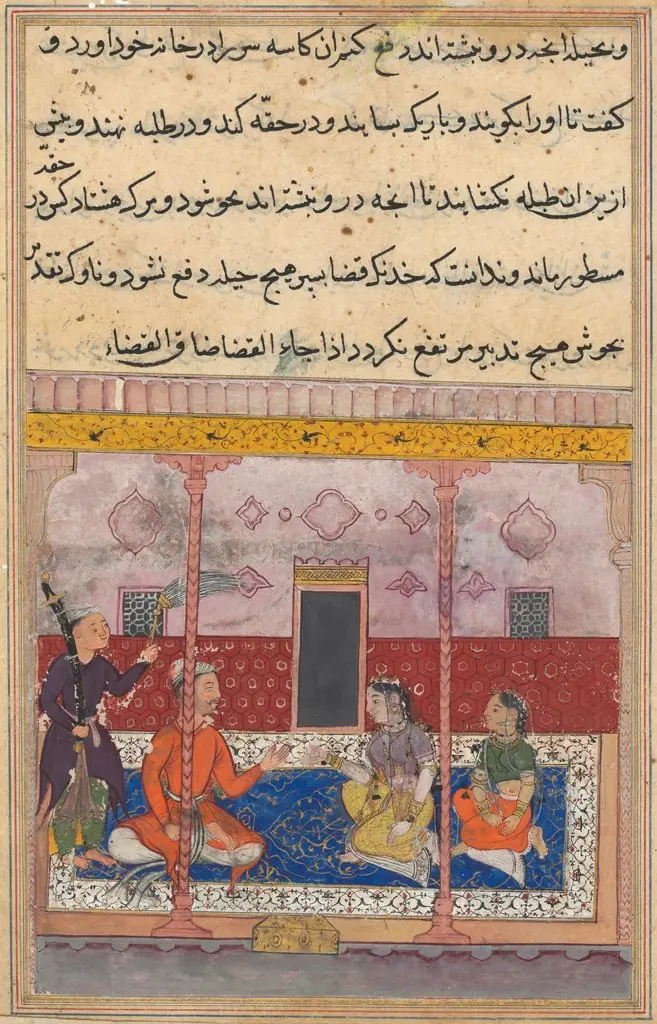 The merchant has the hateful skull ground and put into a box, from a Tuti-nama (Tales of a Parrot): Twenty-third Night
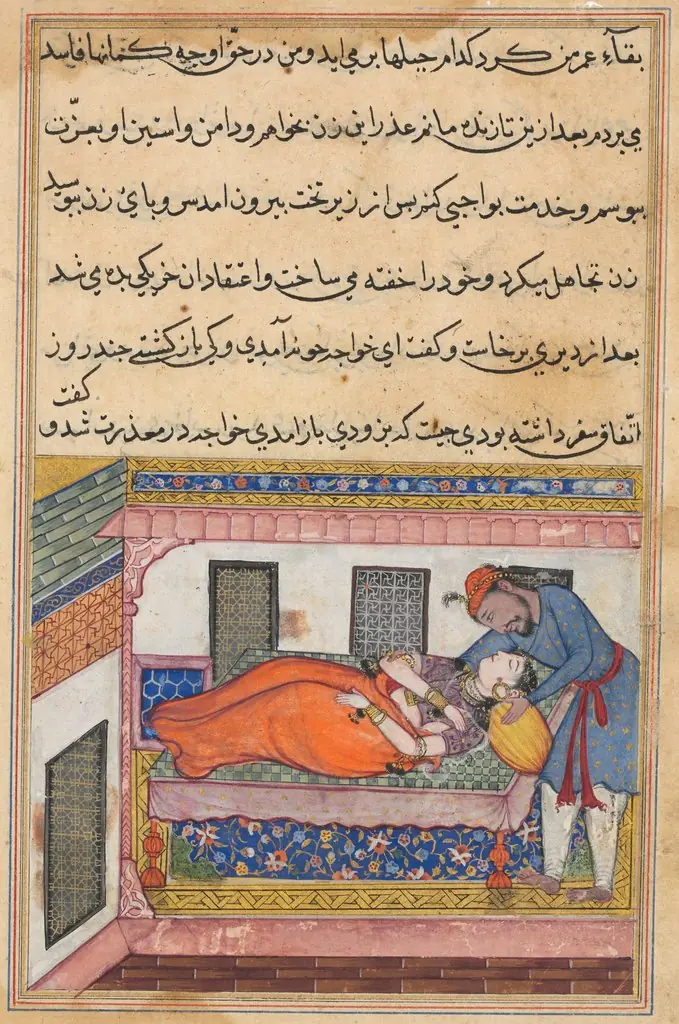 Shahr-Arai’s husband bends to kiss his wife who feigns sleep, from a Tuti-nama (Tales of a Parrot): Fortieth Night
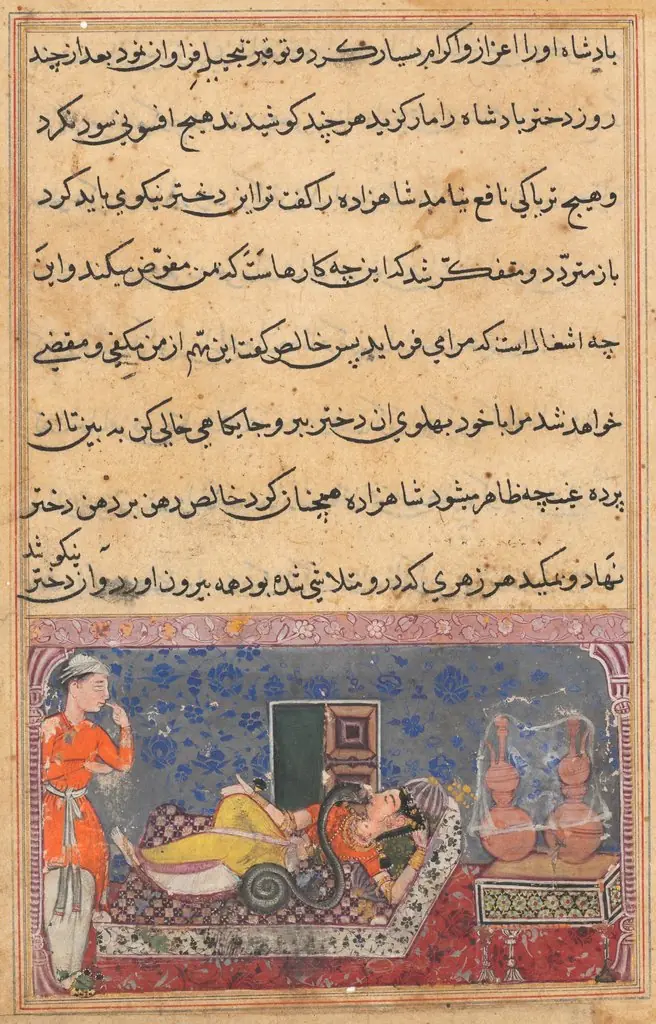 Khalis repays the prince for his kindness by changing into a snake and sucking the poison from the king’s daughter, from a Tuti-nama (Tales of a Parrot): Eighteenth Night
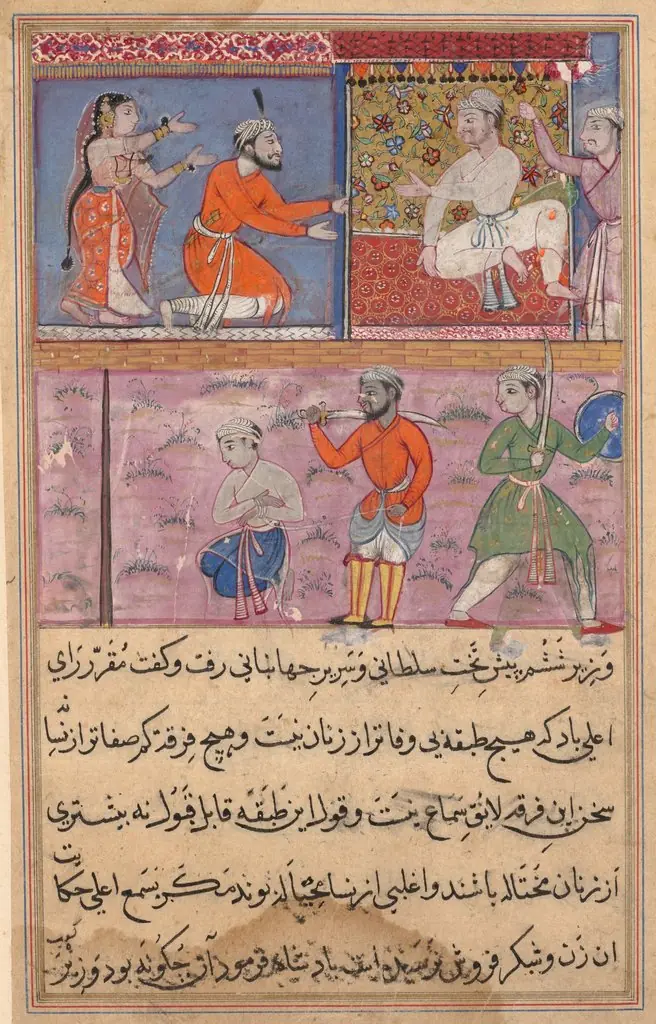 Page from Tales of a Parrot (Tuti-nama): text page
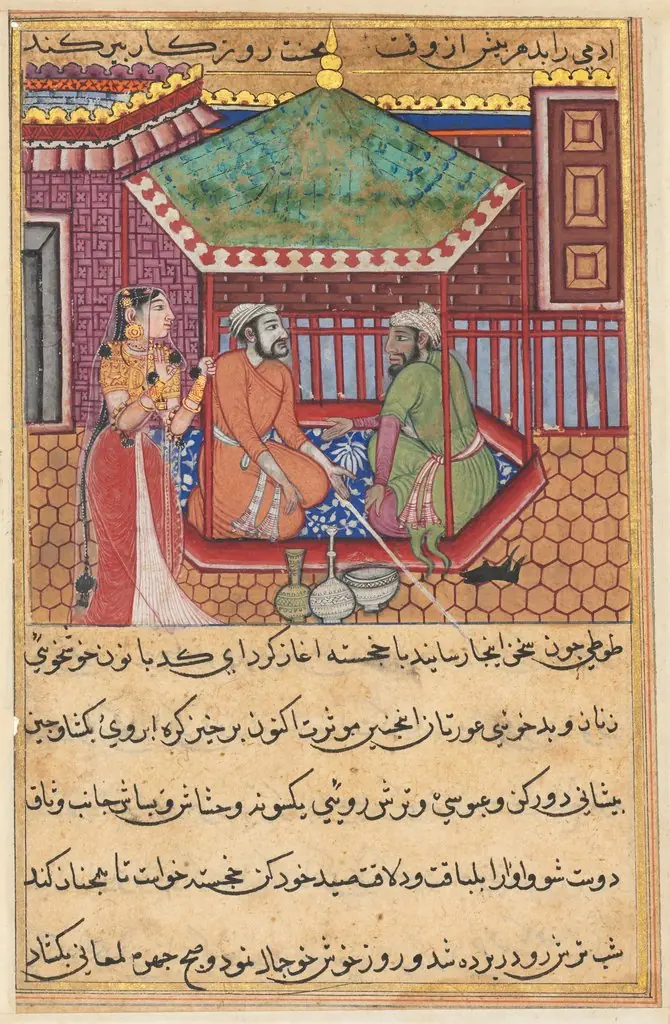 The eldest brother explains the reason for his youthful appearance, from a Tuti-nama (Tales of a Parrot): Forty-ninth Night
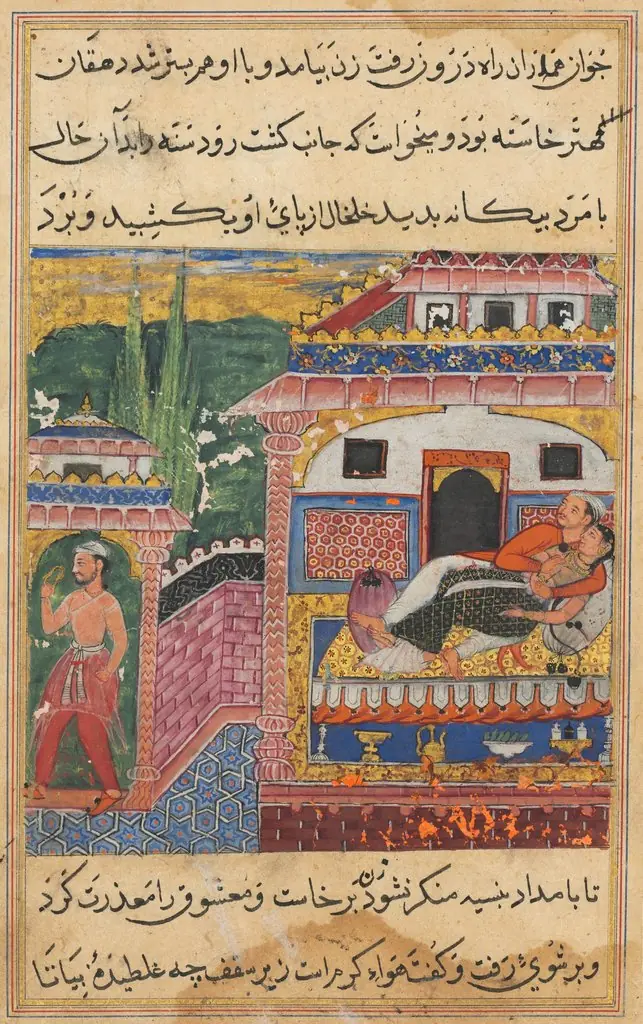 The farmer, father of the son with the deceitful wife, steals away with her anklet while she is in bed with her lover, from a Tuti-nama (Tales of a Parrot): Eighth Night