Artwork
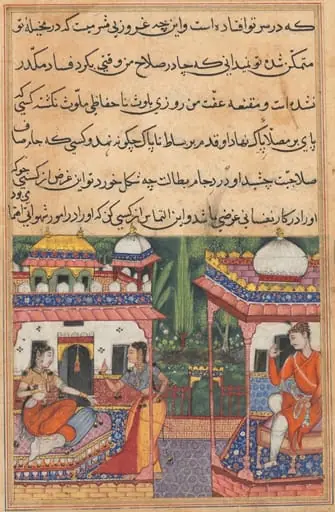
Latif, who has murdered his brother, falsely accuses Khurshid of the deed, from a Tuti-nama (Tales of a Parrot): Thirty-second Night
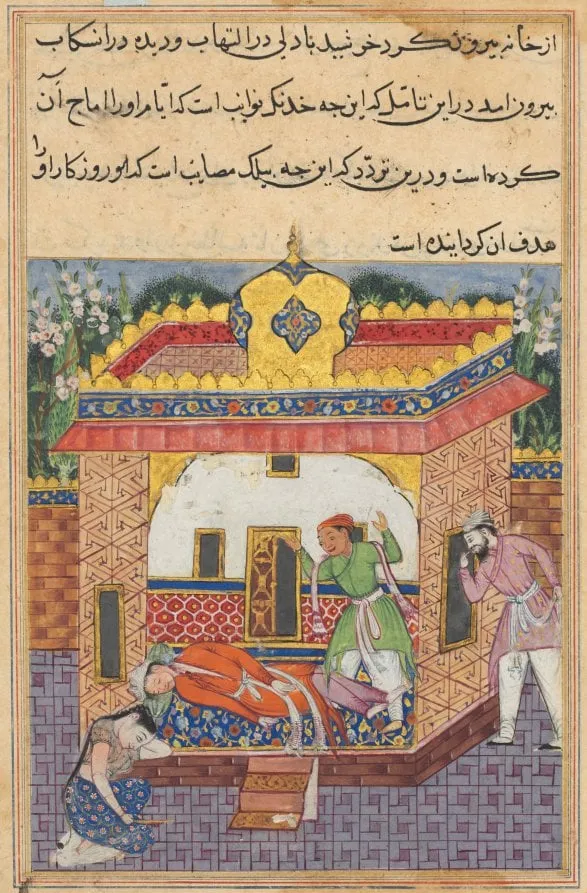
Latif, who has murdered his brother, falsely accuses Khurshid of the deed, from a Tuti-nama (Tales of a Parrot): Thirty-second Night is an unspecified painting by the Mughal Painting artist Unknown. It dates from 1560 and is held in the collection of the Cleveland Museum of Art. This painting illustrates a dramatic scene from the *Tuti-nama* (Tales of a Parrot), a narrative book read at the Mughal court.
About this work
The artist shows guilt and innocence in one scene—Latif accuses Khurshid, but the knife in her hand gives him away.
A man stands over a dead body, hands raised in shock. A woman kneels beside him, holding a bloody knife. Outside, another man watches through a window.
This painting tells a story from the *Tuti-nama*, a book of parrot tales read aloud at the Mughal court. The artist shows guilt and innocence in one scene—Latif accuses Khurshid, but the knife in her hand gives him away. The bright colors and fine details were meant to impress Emperor Akbar.
To see more art like this, look up Mughal India, court of Akbar (reigned 1556–1605).
Overview
This painting illustrates a dramatic scene from the *Tuti-nama* (Tales of a Parrot), a narrative book read at the Mughal court. The composition captures a moment of accusation and deception following a murder.
Subject & Meaning
Latif, standing over his brother's corpse with raised hands, falsely accuses Khurshid, who kneels beside the body holding a bloody knife planted on her. The scene juxtaposes guilt (Latif) and innocence (Khurshid), with the knife serving as a visual clue to the truth.
Technique & Style
Characterized by bright colors and meticulous details, the painting reflects the opulent aesthetic of Mughal art under Emperor Akbar, intended to impress the imperial patronage.
History & Provenance
Created during the reign of Emperor Akbar (1556–1605), this work was part of a *Tuti-nama* manuscript, suggesting its production within the Mughal court's artistic workshops.
Context
The painting's context is the Mughal court, where illustrated manuscripts like the *Tuti-nama* were valued for entertainment and their artistic merit, often reflecting the court's literary and visual sophistication.
Legacy
This work contributes to the legacy of Mughal miniature painting, influencing subsequent Indian and Islamic art forms with its blend of narrative depth and intricate, colorful design.
Artist & collection

 Domestic Scene
 Giacomo and Cardinal Marco, investing Andrea, Abbot of San Zeno, with his Benefice
 The Nymph of Fontainebleau
 Portrait of a Woman
 Madonna and Child with Saints in the Enclosed Garden
 Venus and Minerva
 Family Group of Four on Sofa
 Wall painting from Room H of the Villa of P. Fannius Synistor at Boscoreale
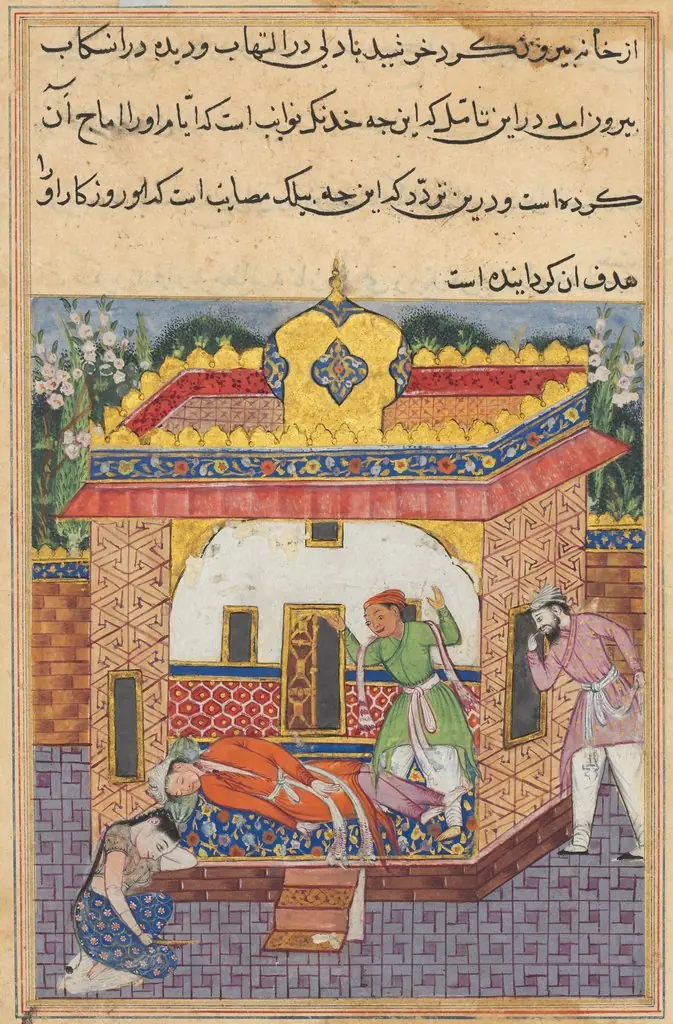 Latif, who has murdered his brother, falsely accuses Khurshid of the deed, from a Tuti-nama (Tales of a Parrot): Thirty-second Night
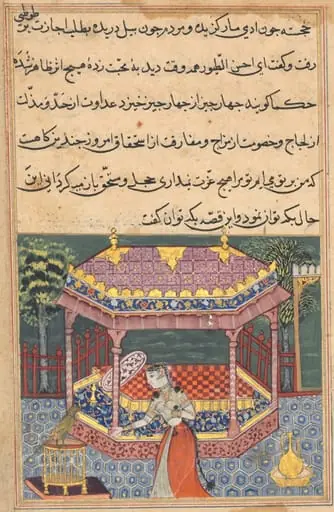 The parrot addresses Khujasta at the beginning of the thirty-seventh night, from a Tuti-nama (Tales of a Parrot)
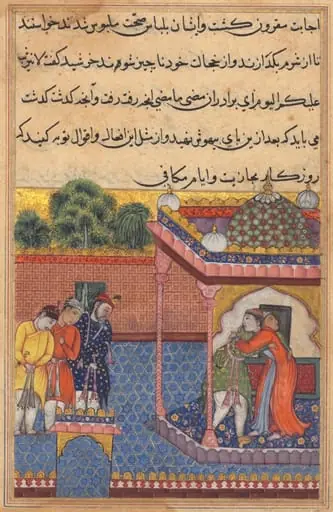 Khurshid reunited with her husband Utarid, from a Tuti-nama (Tales of a Parrot): Thirty-second Night
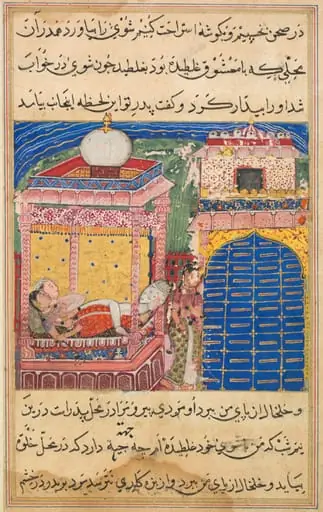 The deceitful wife persuades her husband to sleep in the same place where she had previously slept with her lover, from a Tuti-nama (Tales of a Parrot): Eighth Night
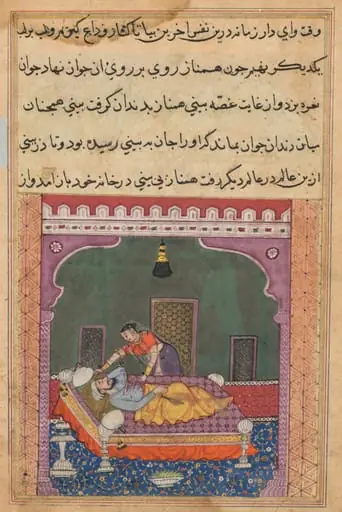 In order to falsely implicate her husband, Hamnaz places a knife by his side and lets the blood dripping from her nose stain his clothes, from a Tuti-nama (Tales of a Parrot): Twenty-fifth Night
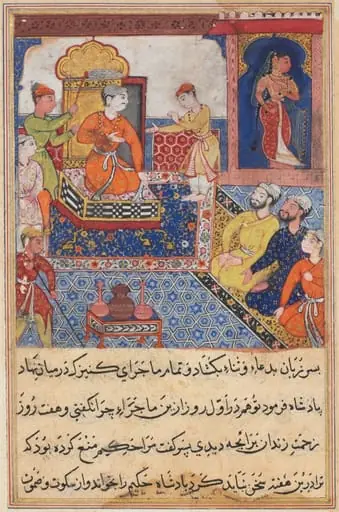 The young prince recounts his experiences to his father, the king, from a Tuti-nama (Tales of a Parrot): Eighth Night
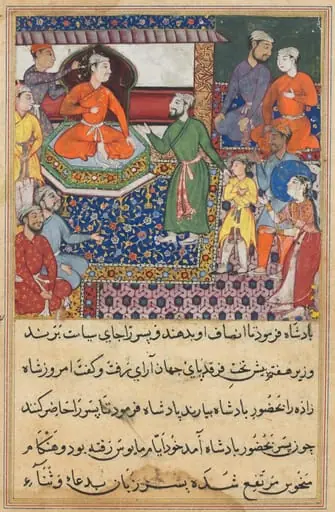 The handmaiden again pleads for the death of the prince, from a Tuti-nama (Tales of a Parrot): Eighth Night
 Kaiwan sends a message of love to Khurshid, wife of his brother Utarid who is away on a journey, from a Tuti-nama (Tales of a Parrot): Thirty-second Night