Artwork
Tuti-Nama (Tales of a Parrot)
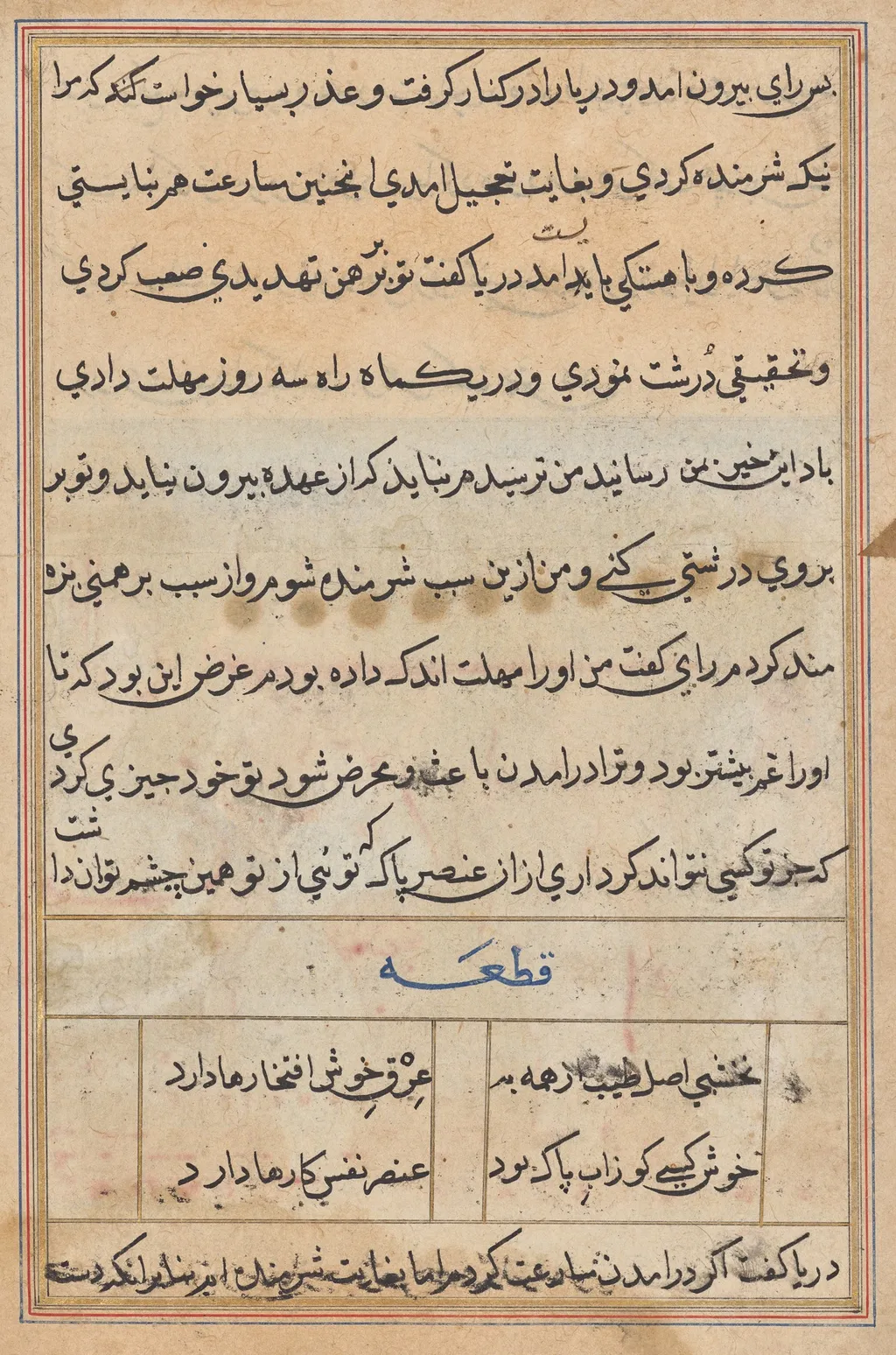
Tuti-Nama (Tales of a Parrot) is an unspecified painting. It dates from 1560 and is held in the collection of the Cleveland Museum of Art. Tuti‑Nama, translated as “Tales of a Parrot,” is a painted page that functions as a visual manuscript.
About this work
Overview
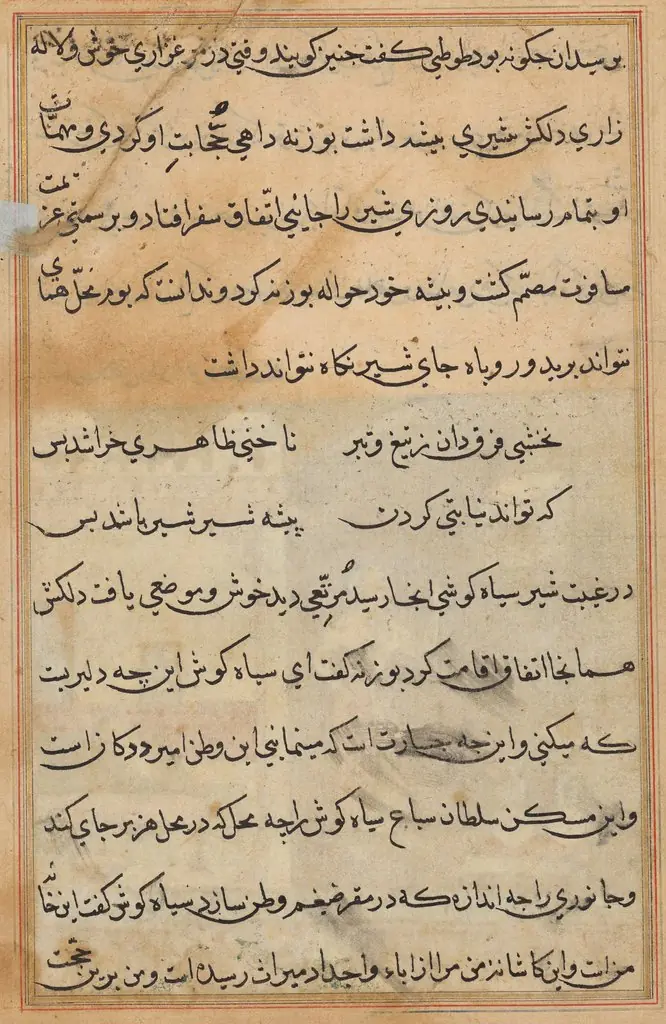
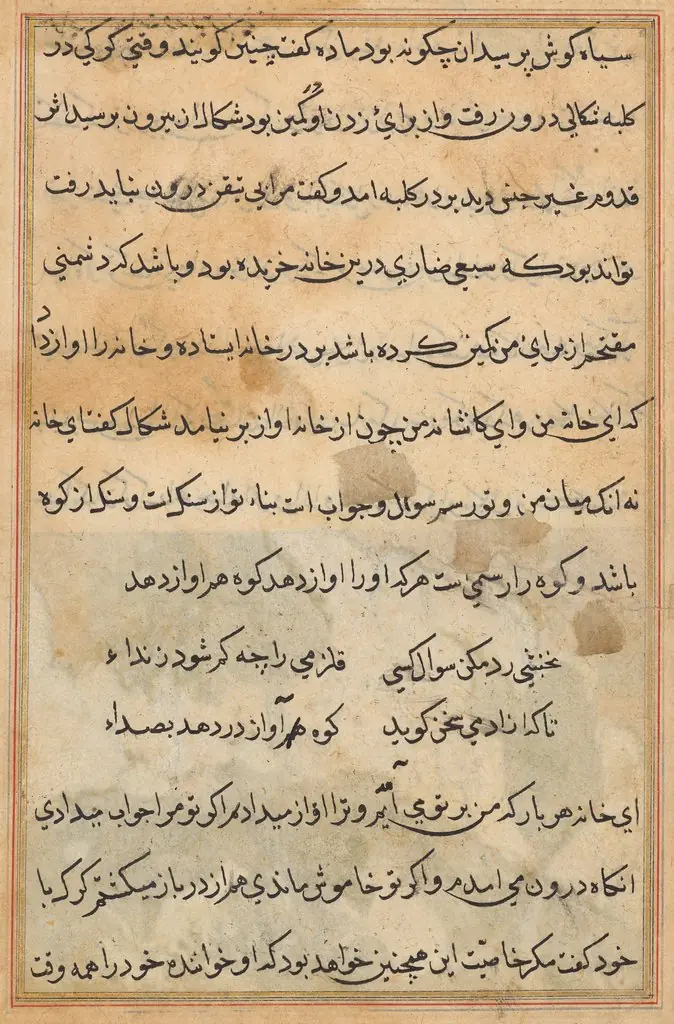
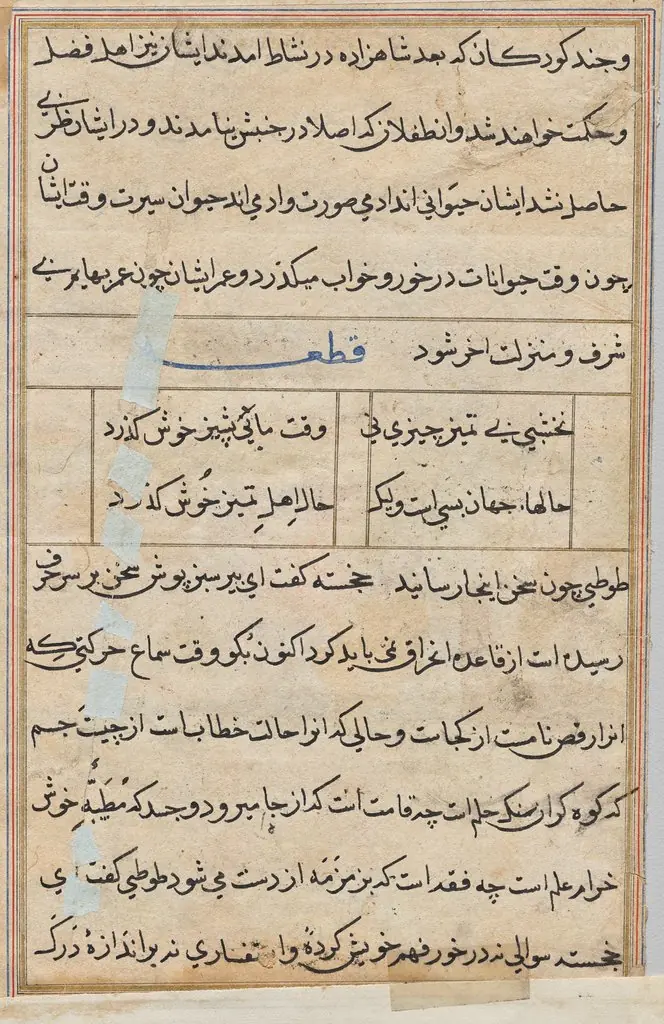
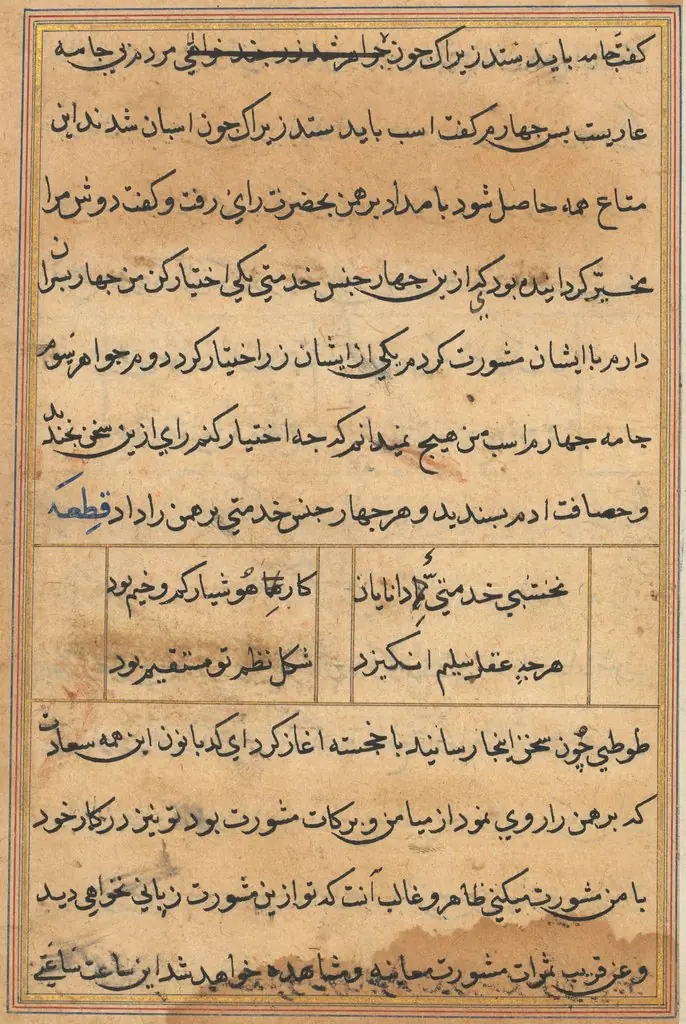
Tuti‑Nama, translated as “Tales of a Parrot,” is a painted page that functions as a visual manuscript. The surface is a light, slightly yellowed paper on which dense black ink script fills the space, bordered by thin red and blue lines. Small red flecks and a solitary blue stripe at the bottom provide modest accentuation, while marginal boxes contain additional handwritten notes.
Subject & Meaning
The page’s title suggests a narrative centered on a parrot, a motif often associated with storytelling and the transmission of knowledge in South Asian visual culture. Though the script itself is not reproduced here, the dense lettering implies a literary or instructional text, likely recounting episodes or moral lessons linked to the bird’s symbolic role.
Technique & Style
Executed in ink, the calligraphy displays a balance of flowing curves and precise angles, indicating a skilled hand familiar with both decorative and legible script. The tight packing of words demonstrates careful composition, while the thin colored borders—red and blue—are applied with fine brushwork, offering subtle visual framing without overwhelming the monochrome text.
History & Provenance
The painted page is part of the collection of the Cleveland Museum of Art, where it is displayed for public viewing. Its acquisition details are not specified, but its presence in a major U.S. institution points to a history of collection and preservation beyond its original cultural context.
Context
Manuscript pages like this one belong to a broader tradition of illustrated texts in which narrative, calligraphy, and decorative borders coexist. The use of red and blue framing lines aligns with regional aesthetic conventions that employ limited color palettes to highlight textual boundaries while maintaining the primacy of the written word.
Artist & collection

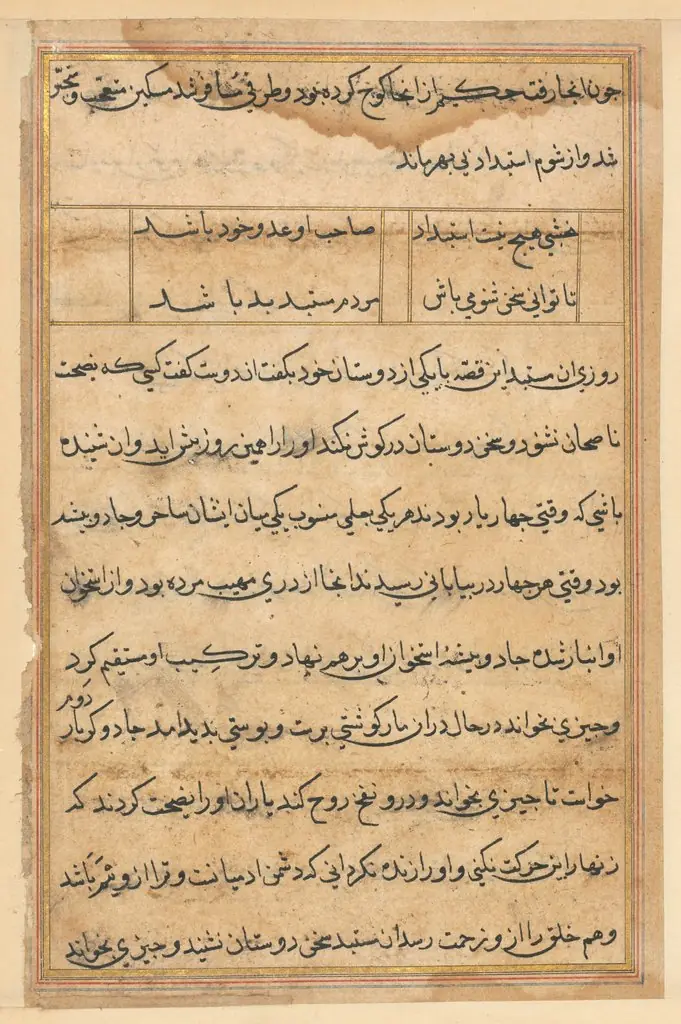 Page from Tales of a Parrot (Tuti-nama): text page
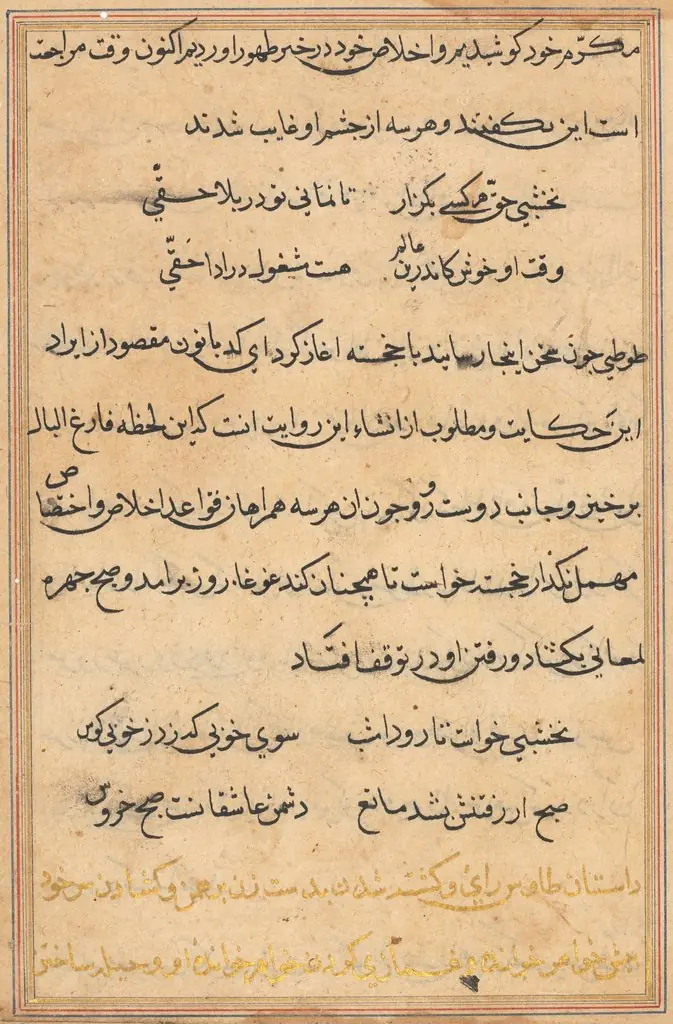 Page from Tales of a Parrot (Tuti-nama): text page
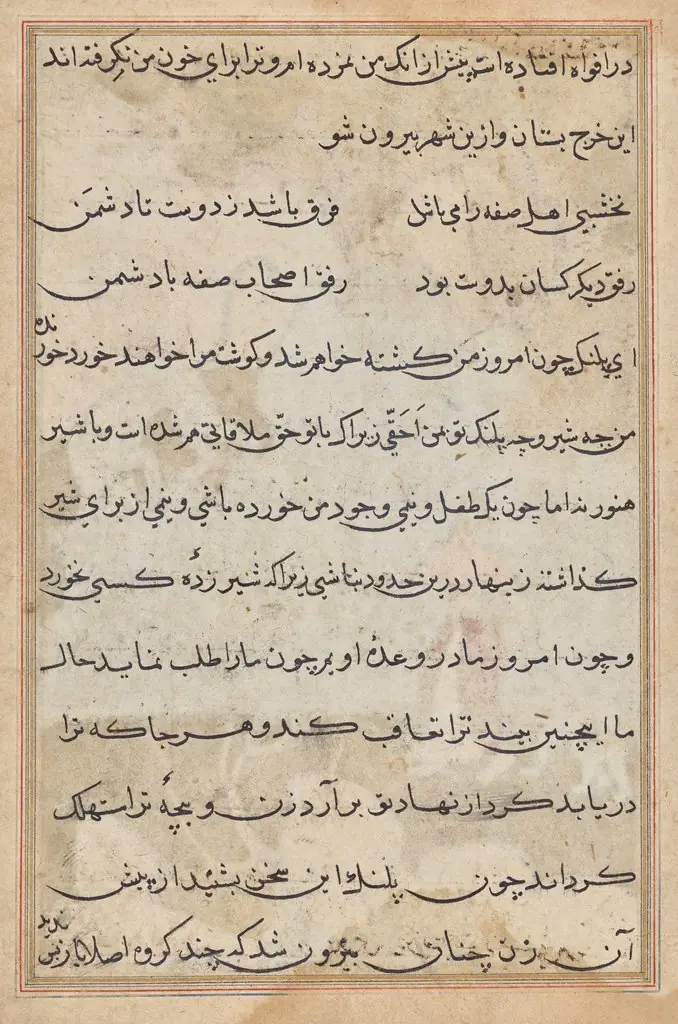 Page from Tales of a Parrot (Tuti-nama): text page
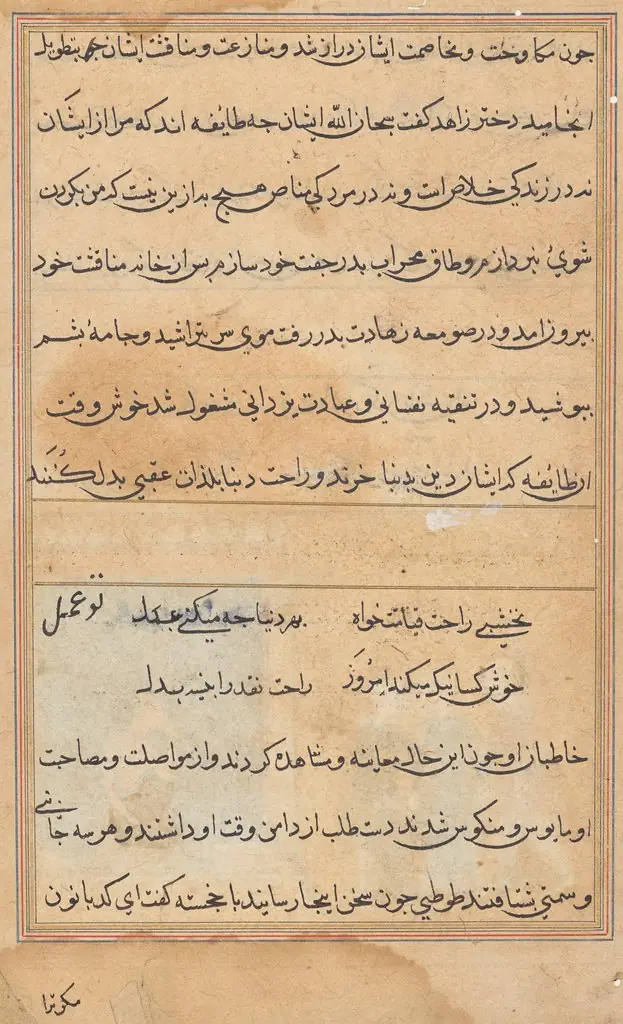 Page from Tales of a Parrot (Tuti-nama): text page
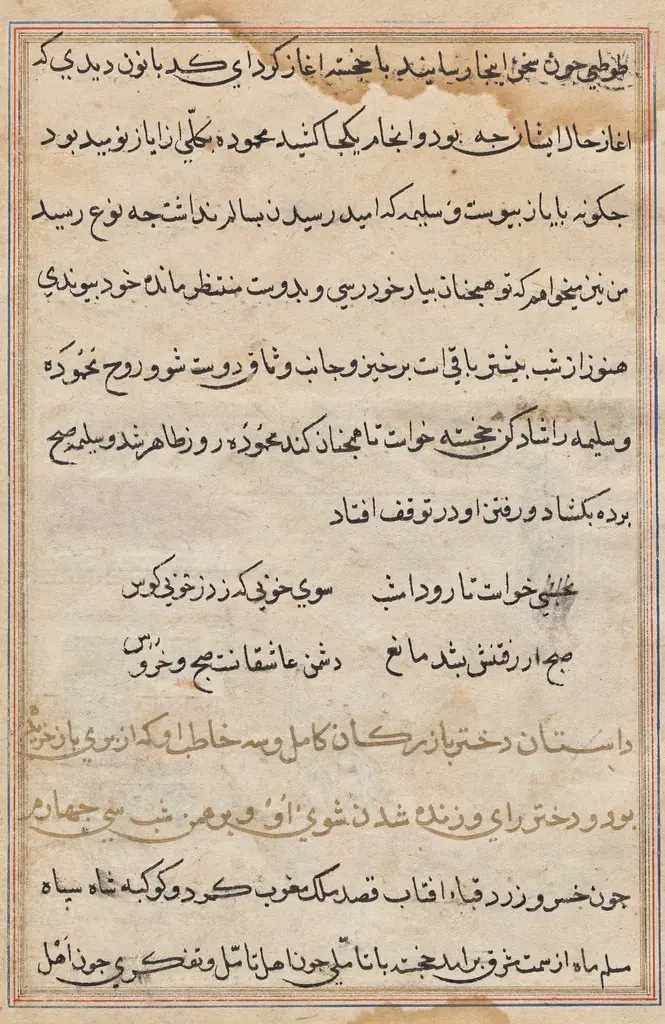 Page from Tales of a Parrot (Tuti-nama): text page
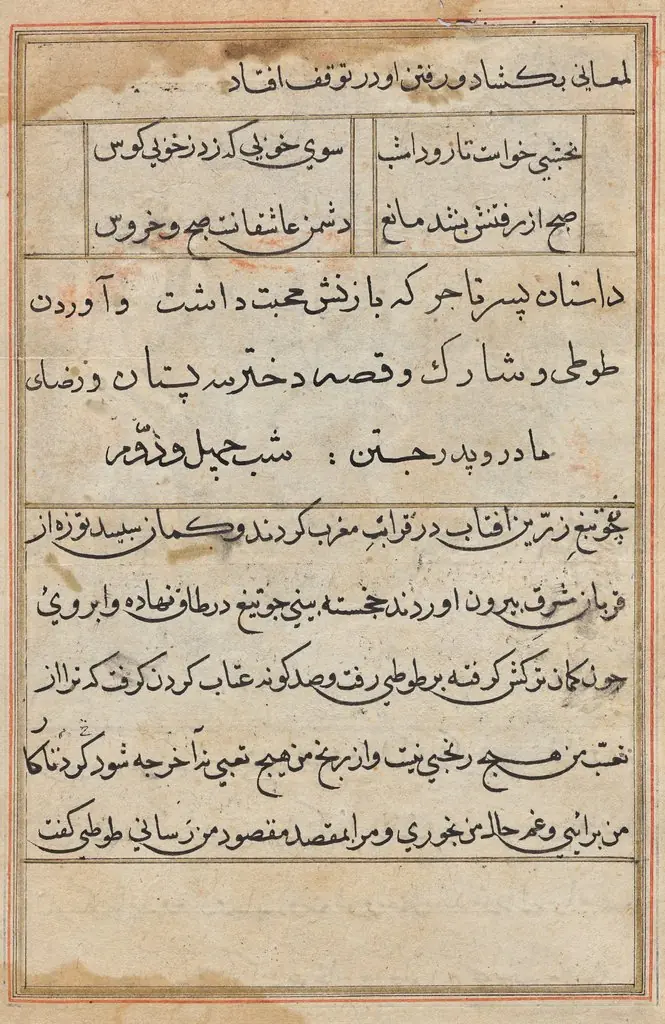 Page from Tales of a Parrot (Tuti-nama): text page
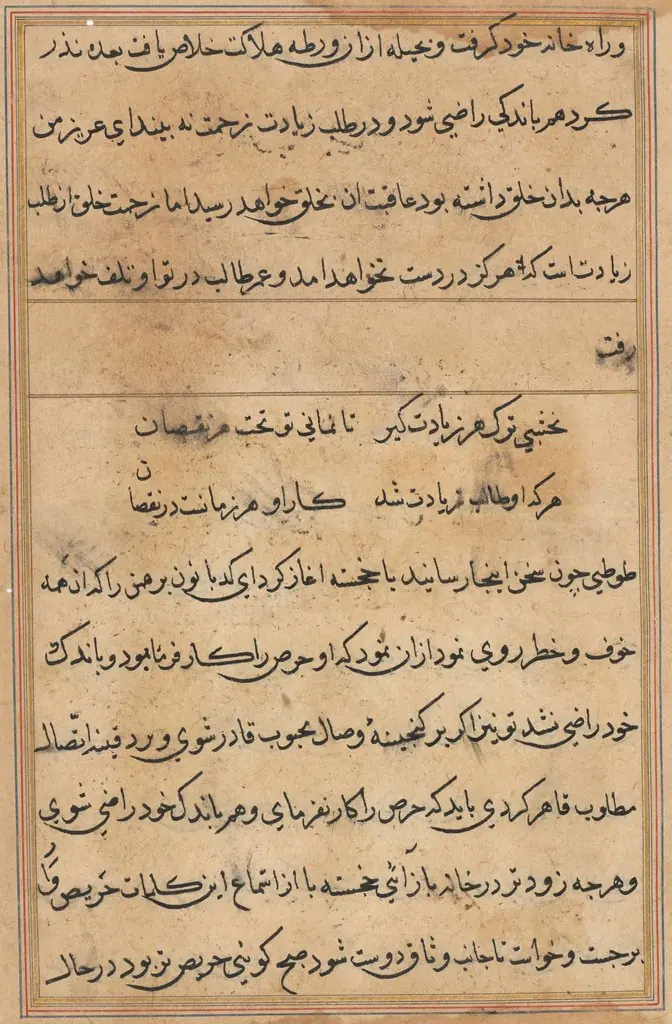 Page from Tales of a Parrot (Tuti-nama): text page