Artwork
Tantric Manuscript, "Sangrahani Sutra"
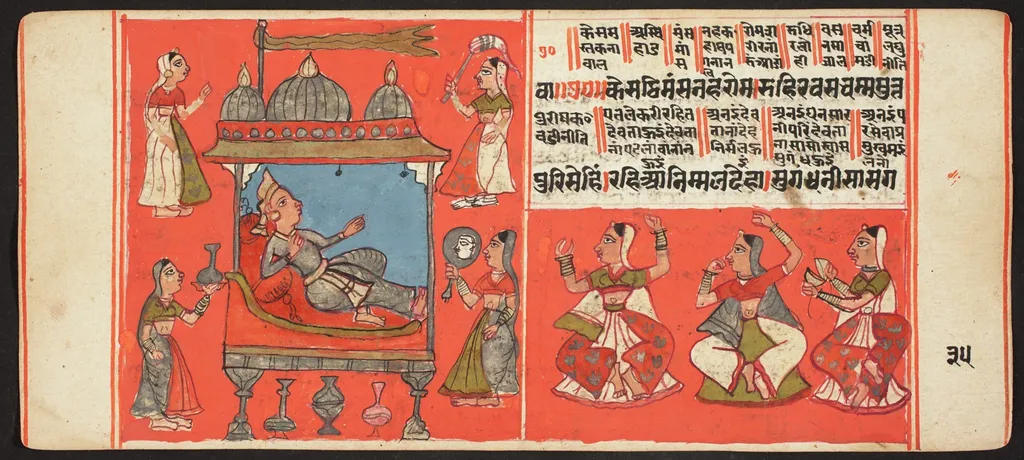
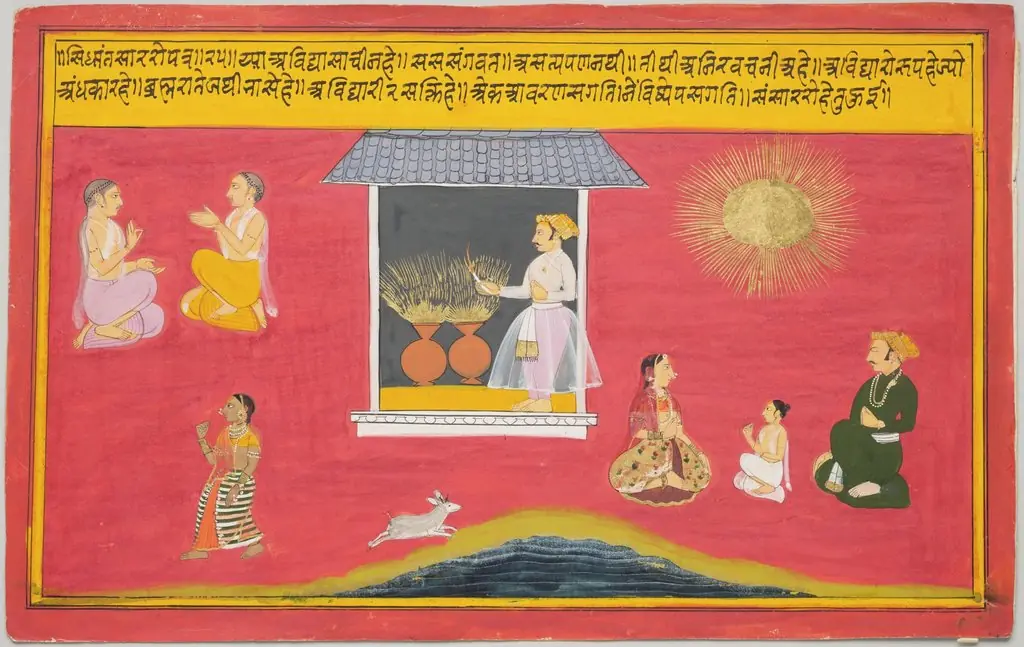
Tantric Manuscript, "Sangrahani Sutra" is an unspecified painting by Unknown. It is held in the collection of the Detroit Institute of Arts. This page originates from a handwritten Buddhist manuscript known as the Sangrahani Sutra, produced in medieval India.
About this work
Overview
The use of bold red and blue pigments, alongside fine black ink, reflects a deliberate aesthetic meant to support ritual contemplation.
This page originates from a handwritten Buddhist manuscript known as the Sangrahani Sutra, produced in medieval India. It combines devotional imagery with sacred text, typical of tantric textual traditions. The composition centers on a reclining male figure surrounded by attendants, framed by a vertical column of script. The use of bold red and blue pigments, alongside fine black ink, reflects a deliberate aesthetic meant to support ritual contemplation.
Subject & Meaning
The central figure, likely a teacher or deity in repose, is attended by four women holding offerings—a tray and a jug—suggesting ritual service or symbolic devotion. The scene may depict a moment of spiritual instruction or divine rest, common in tantric narratives where the guru’s presence embodies enlightened stillness. The arrangement emphasizes serenity and hierarchy, reinforcing the text’s doctrinal focus on meditative absorption and sacred reciprocity.
Technique & Style
The painting employs mineral pigments on palm leaf or paper, with precise brushwork defining forms and garments. The red background creates visual depth, while the blue panel behind the reclining figure adds spatial contrast. Text is rendered in black ink, with key terms marked in red for emphasis, indicating a scribe’s attention to liturgical precision. The balance between image and script reflects a unified design philosophy where visual and verbal elements serve complementary spiritual functions.
History & Provenance
The manuscript likely originated in eastern India, possibly Bengal or Bihar, during the late medieval period, between the 10th and 14th centuries. Such tantric texts were copied and preserved in monastic communities for ritual use. The script remains unidentified, suggesting a regional or esoteric variant of Brahmic writing. Its survival indicates careful handling and transmission within religious lineages, though its exact provenance before modern collection is undocumented.
Context
This page belongs to a tradition of illustrated tantric sutras used in esoteric Buddhist practice, where visual imagery aided meditation and doctrinal recall. The integration of figure and text aligns with broader South Asian manuscript culture, where sacred writing and iconography were inseparable. The scene’s quiet intimacy contrasts with more dynamic tantric depictions, pointing to a contemplative, possibly monastic, context of use rather than public ritual.
Legacy
Though not widely known outside specialist circles, such manuscripts represent a quiet but vital strand of South Asian religious art. They preserve not only doctrinal content but also the material practices of medieval monastic life. Their survival offers insight into how spiritual teachings were transmitted through both visual and textual means, influencing later traditions of illustrated Buddhist literature in Tibet and Southeast Asia.
Artist & collection

 Domestic Scene
 Giacomo and Cardinal Marco, investing Andrea, Abbot of San Zeno, with his Benefice
 The Nymph of Fontainebleau
 Portrait of a Woman
 Madonna and Child with Saints in the Enclosed Garden
 Venus and Minerva
 Family Group of Four on Sofa
 Wall painting from Room H of the Villa of P. Fannius Synistor at Boscoreale
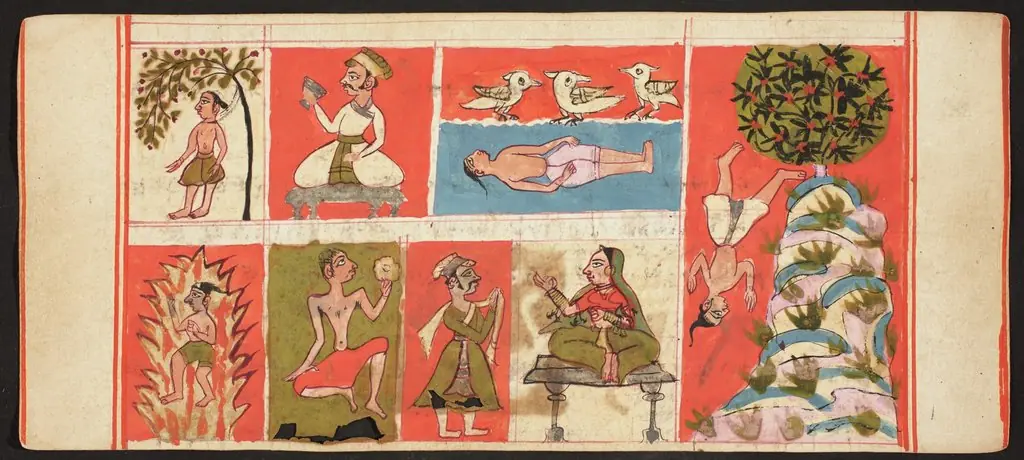 Tantric Manuscript, "Sangrahani Sutra"
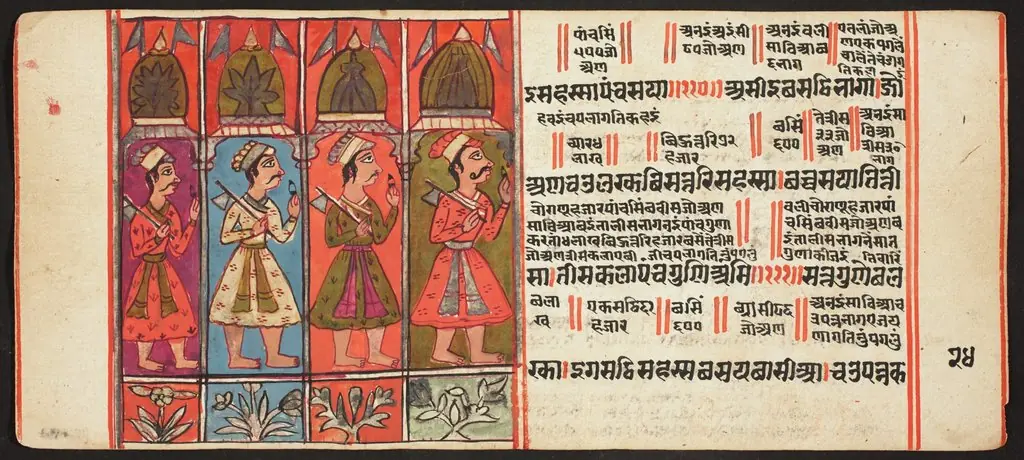 Tantric Manuscript, "Sangrahani Sutra"
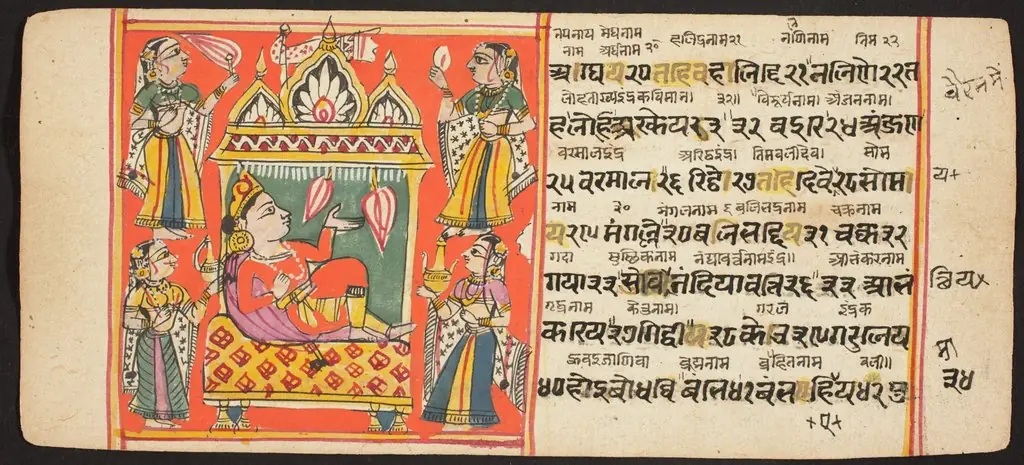 Tantric Manuscript "Sangrahani Sutra"
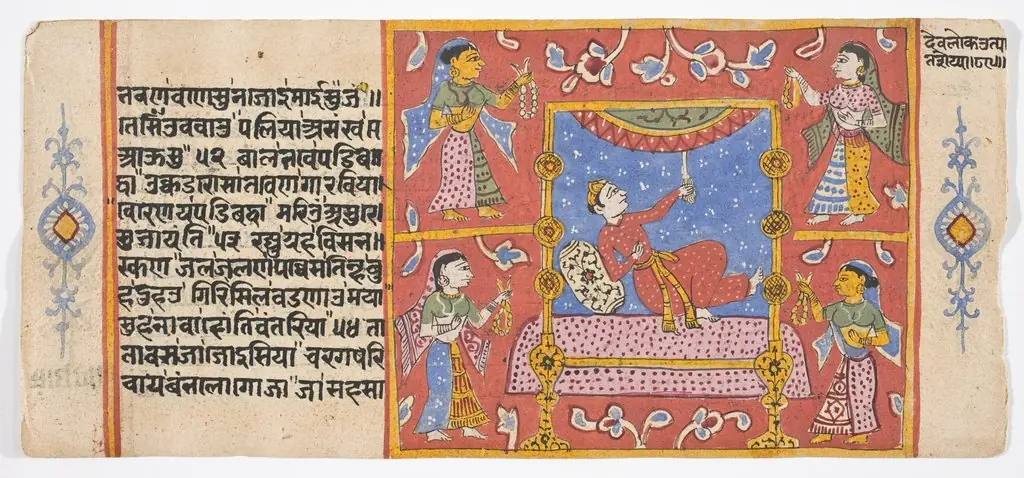 Tantric Manuscript "Sangrahani Sutra"
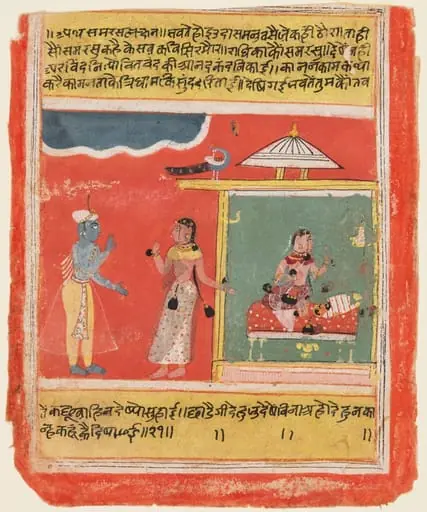 The Sentiment of Peace: Sama Rasa, from a Rasikapriya
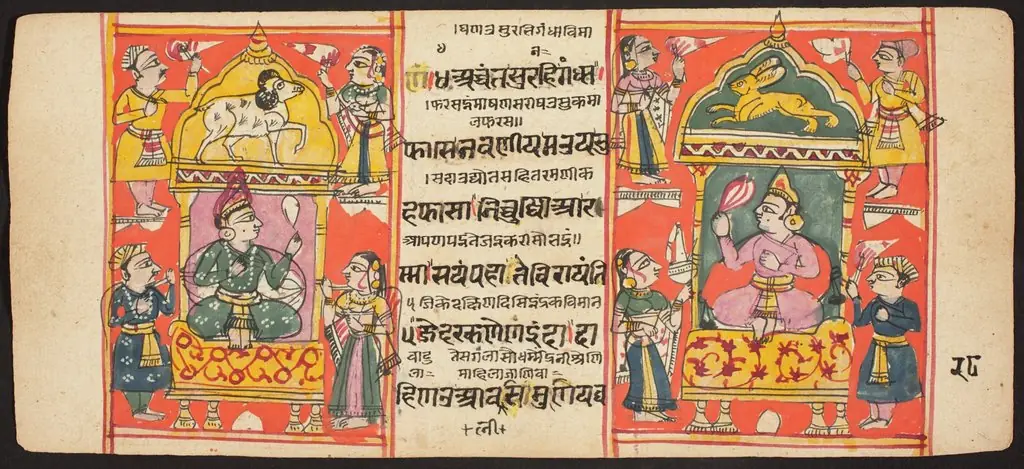 Tantric Manuscript "Sangrahani Sutra"
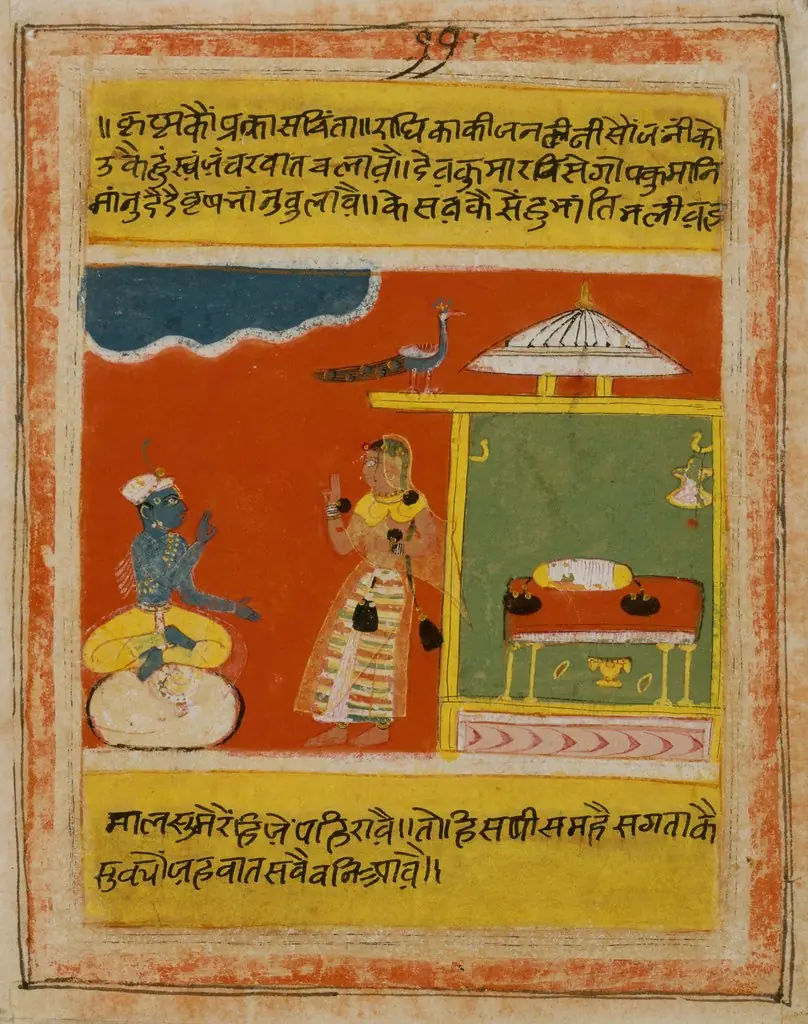 Krishna and Radha
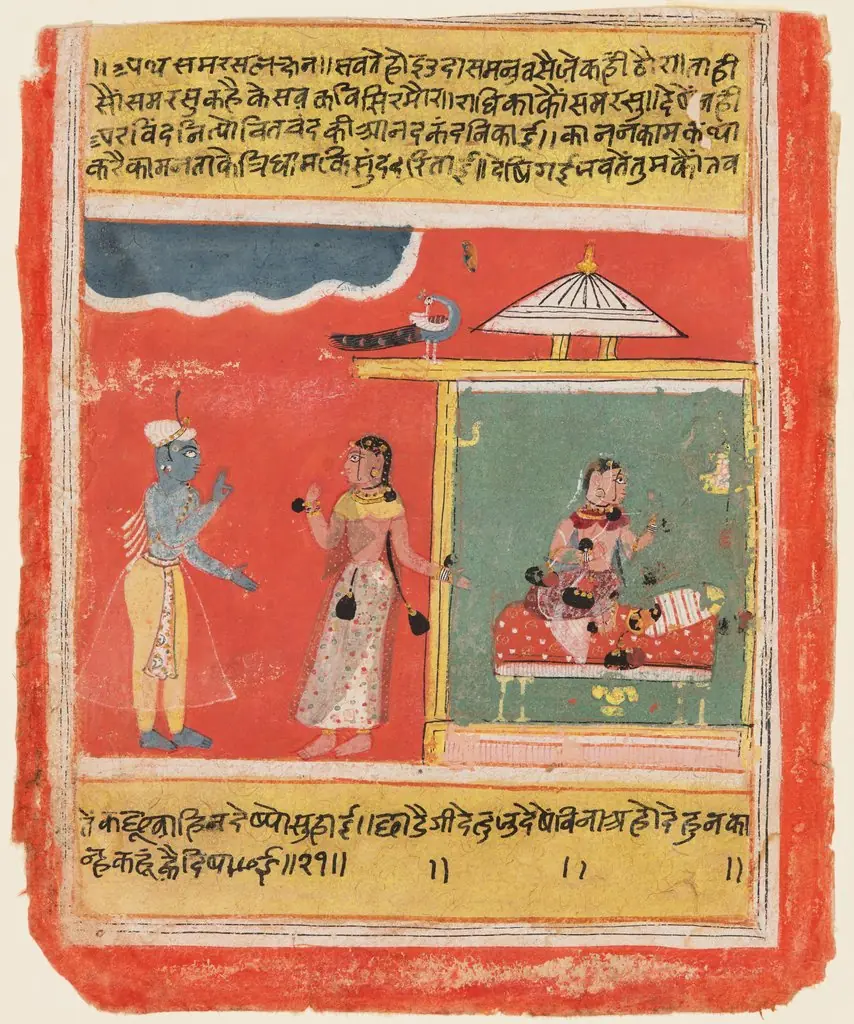 The Sentiment of Peace: Sama Rasa, from a Rasikapriya
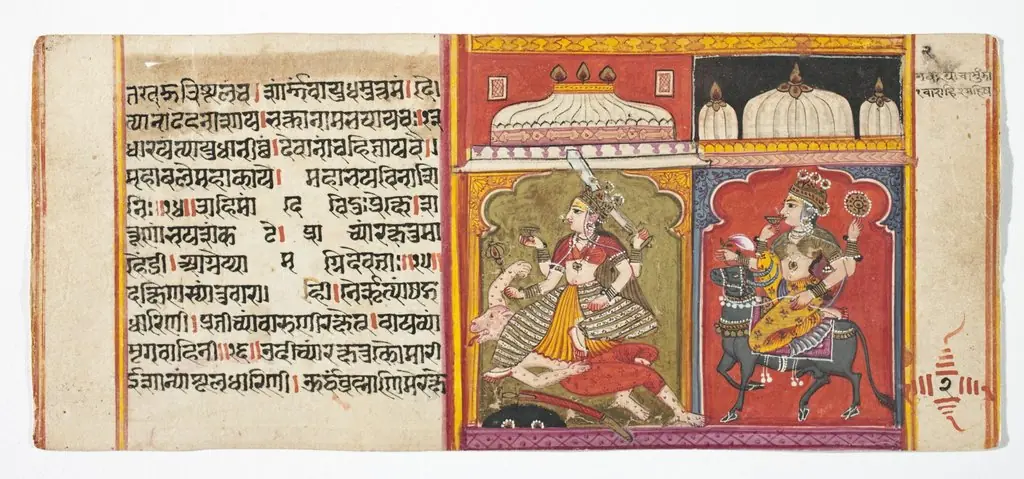 Legend of Durga
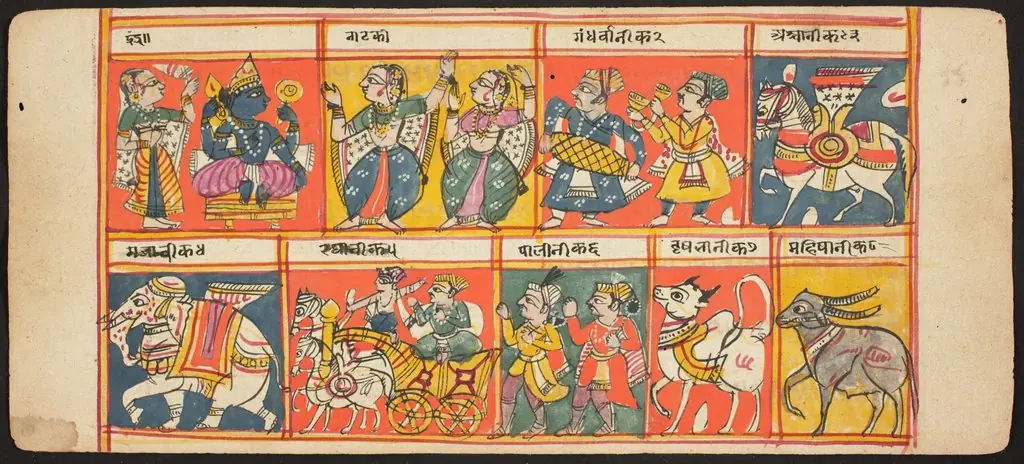 Tantric Manuscript "Sangrahani Sutra"
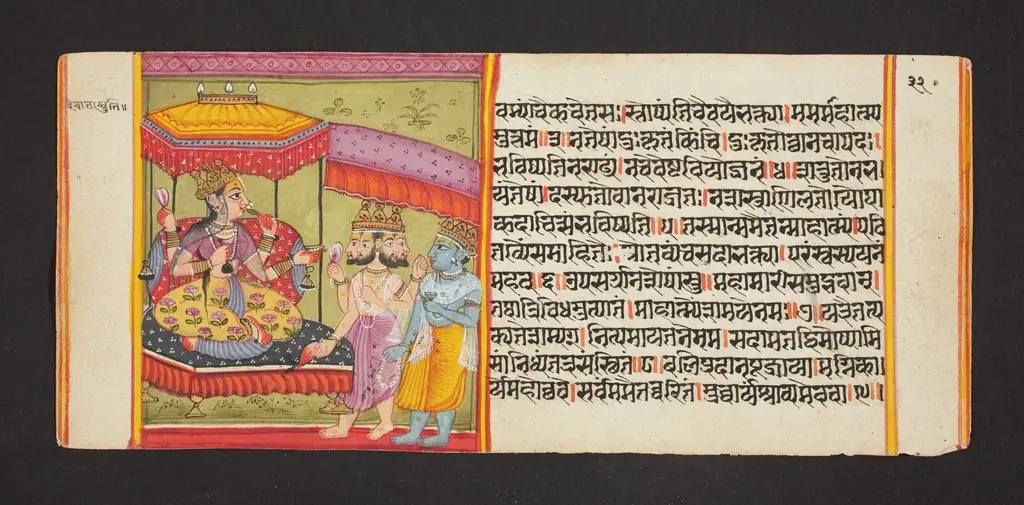 Legend of Durga
 Worship of the Gods (13 of 17)