Artwork
Page from Tales of a Parrot (Tuti-nama): text page
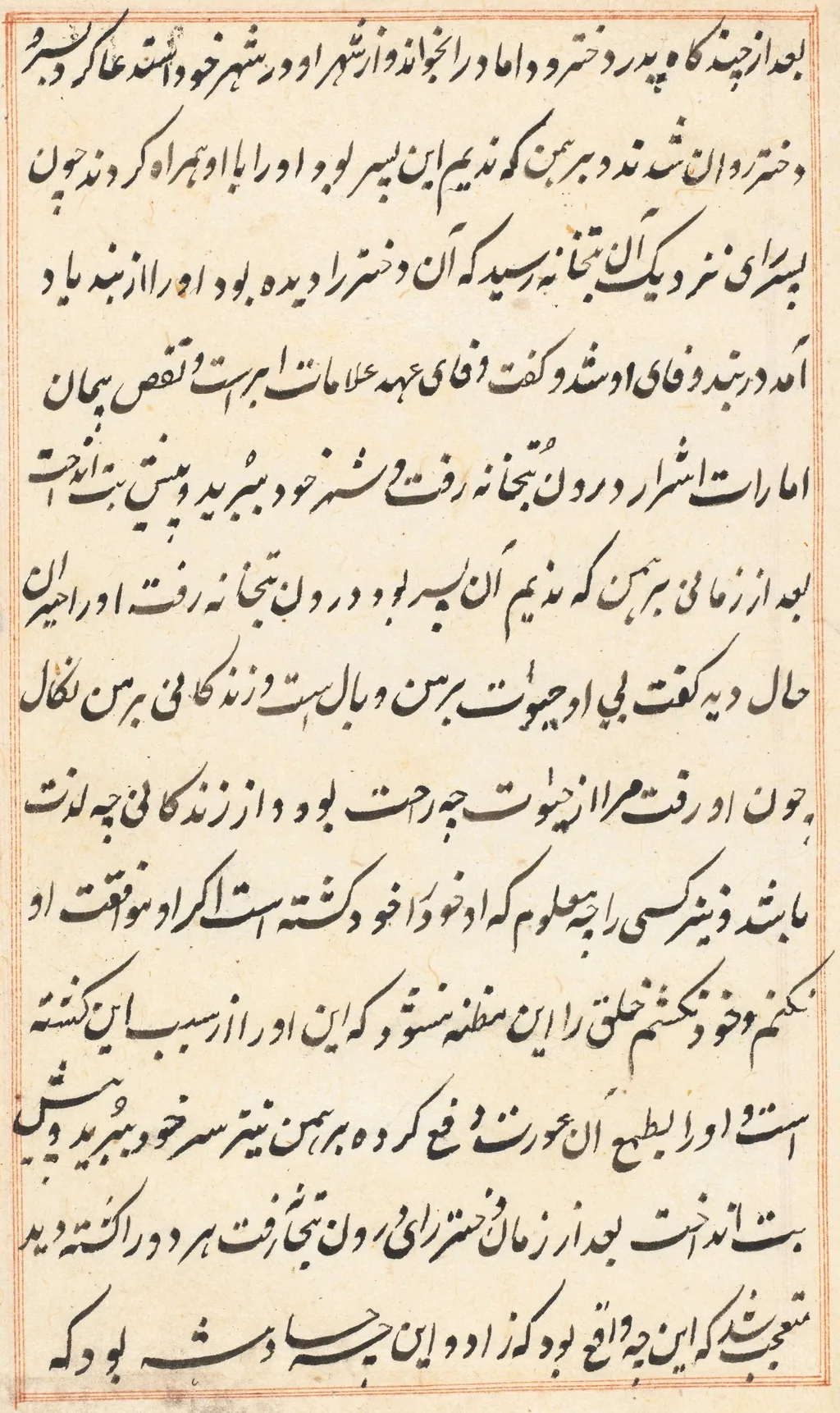
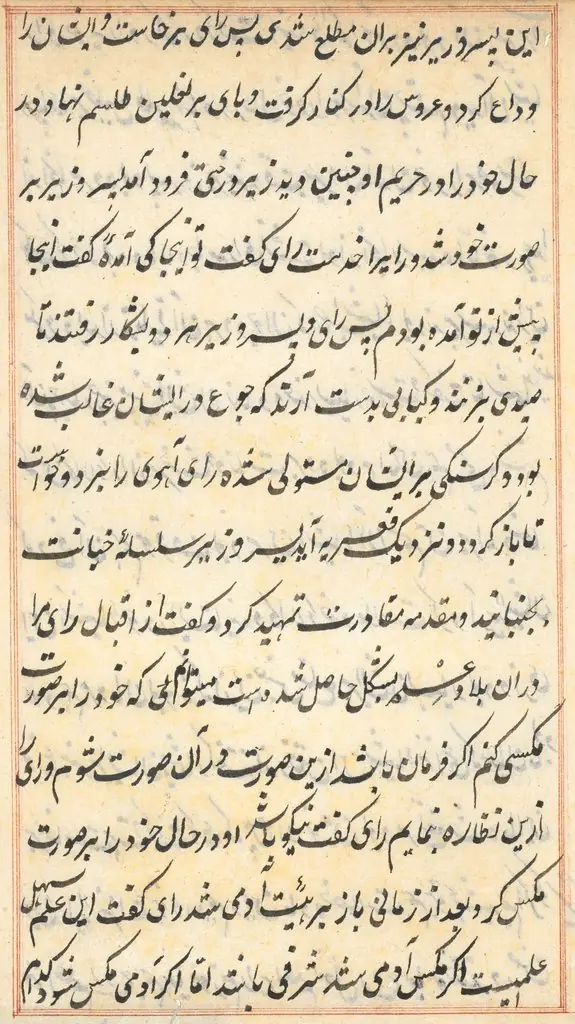
Page from Tales of a Parrot (Tuti-nama): text page is an unspecified painting. It dates from 1560 and is held in the collection of the Cleveland Museum of Art. This object is a single leaf from the Persian illustrated manuscript known as the Tales of a Parrot, or Tuti‑nama.
About this work
Overview
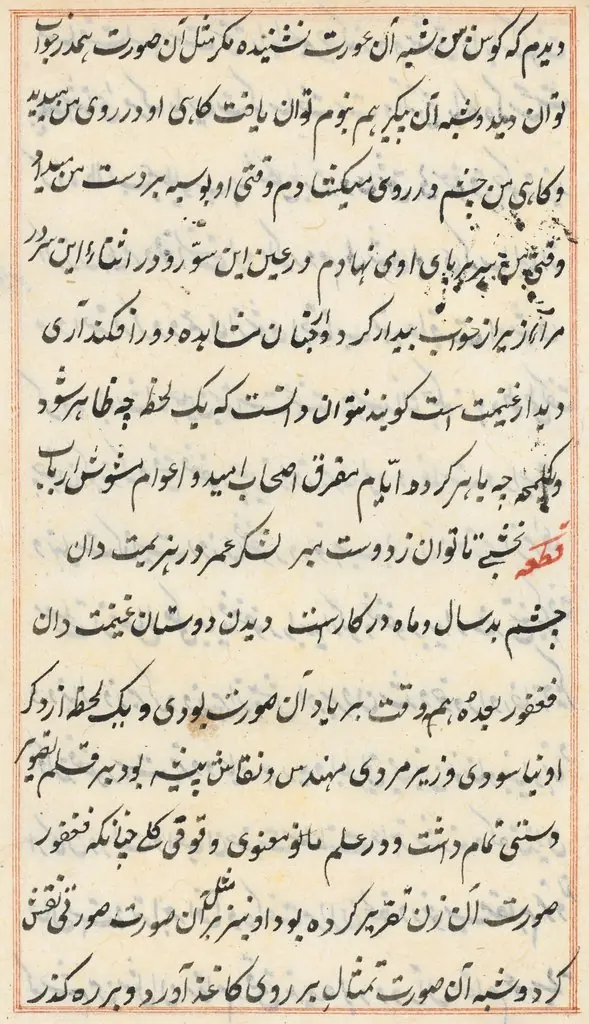
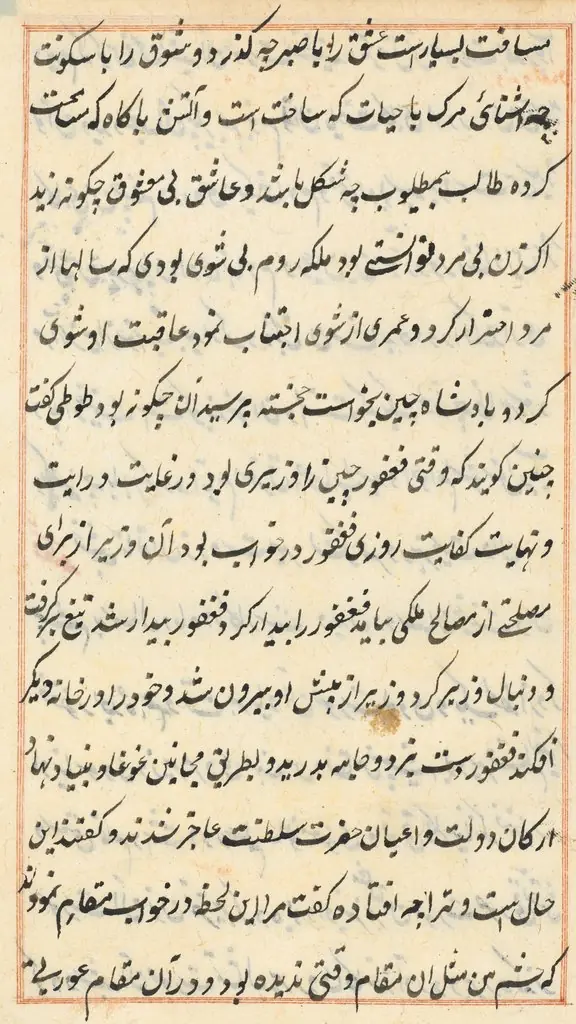
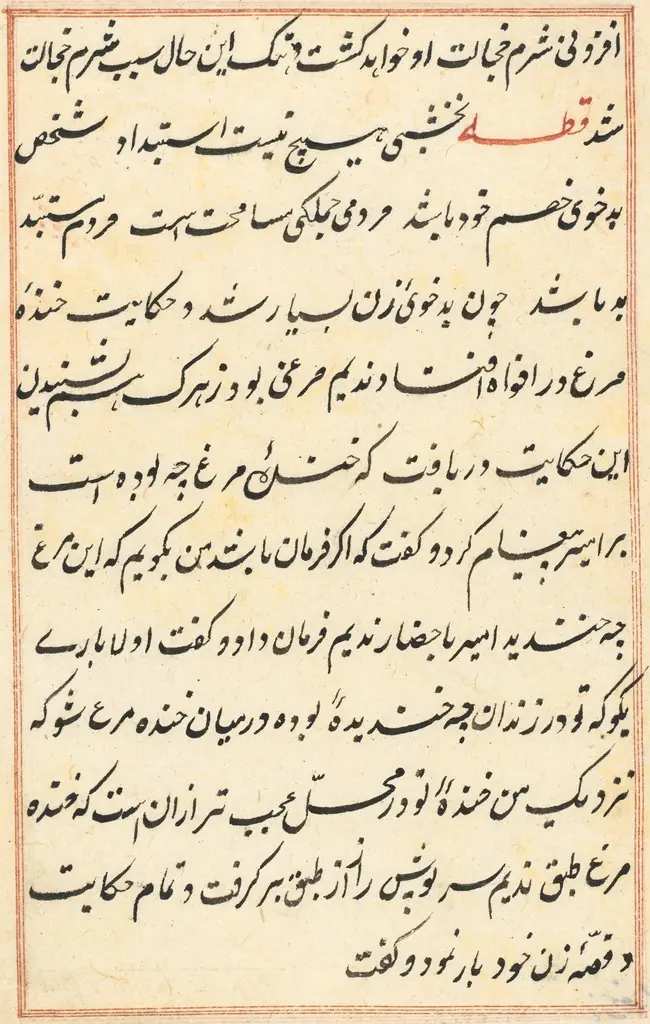
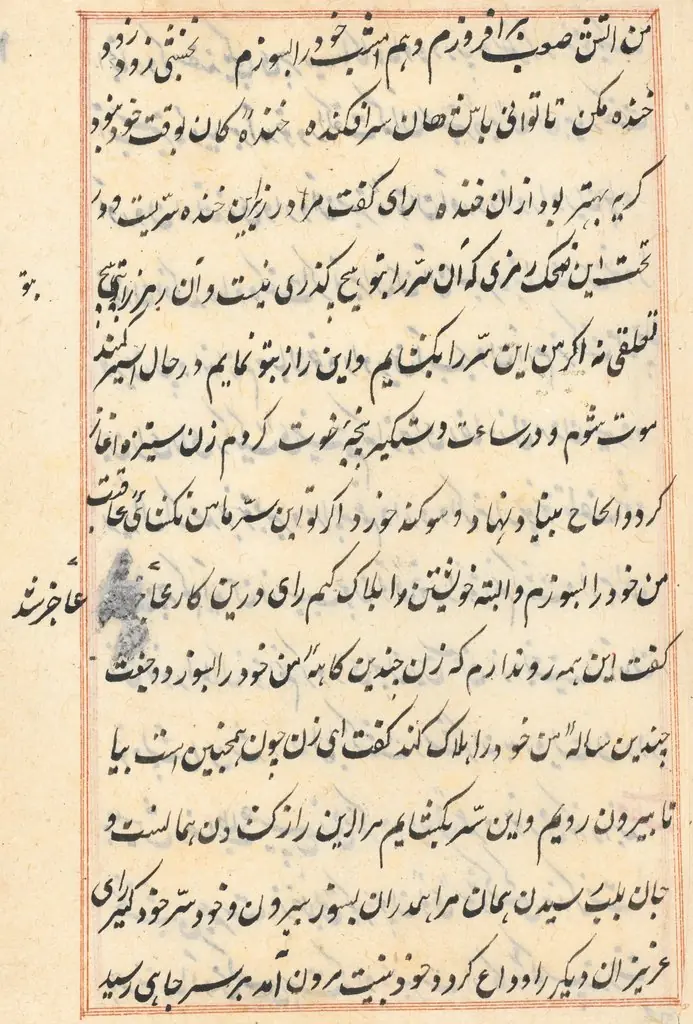
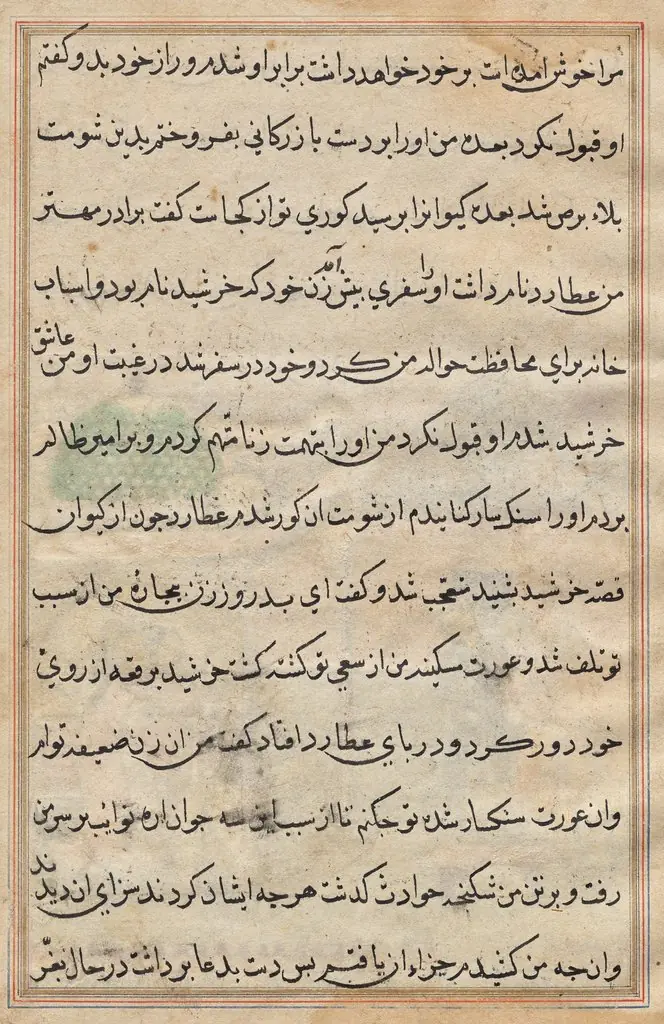
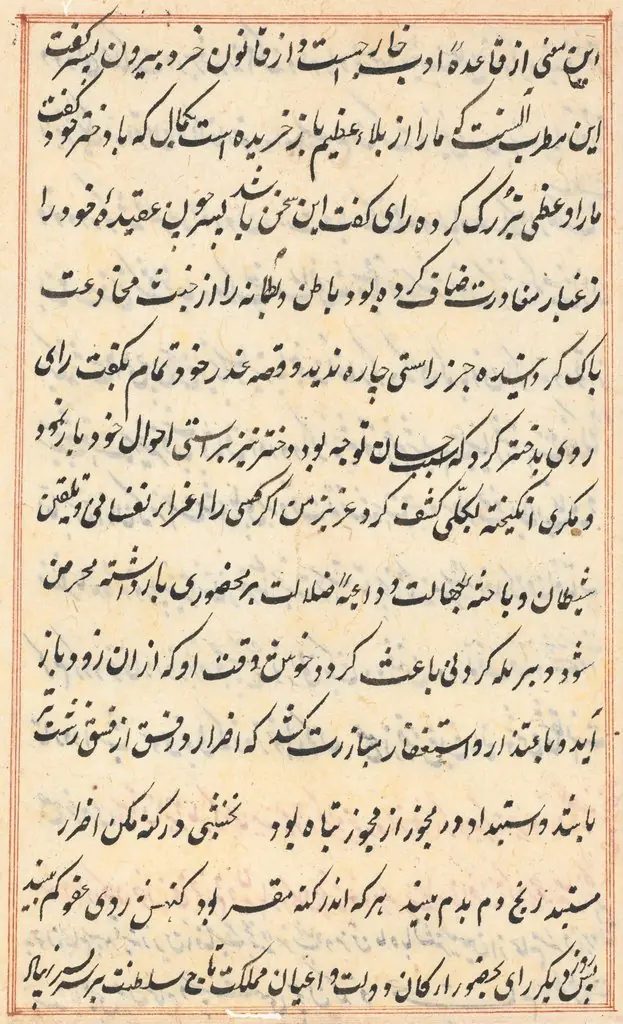
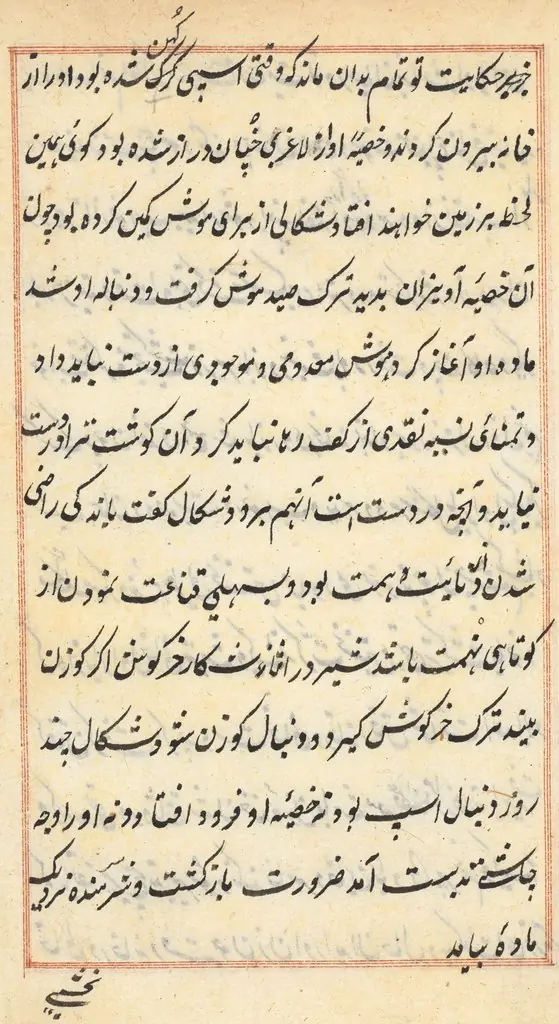
This object is a single leaf from the Persian illustrated manuscript known as the Tales of a Parrot, or Tuti‑nama. Executed on lightly yellowed paper, the page is entirely covered with black ink calligraphy, arranged in a dense, interlocking script that occupies the whole surface. A thin red line runs along the margin, framing the text and indicating careful preservation.
Subject & Meaning
The calligraphic content appears to be a narrative passage, likely extracted from the larger collection of moral and romantic stories that constitute the Tuti‑nama. Such texts were traditionally recited aloud or studied closely, serving both entertainment and didactic purposes within courtly and literary circles of the Safavid era.
Technique & Style
The script is rendered in flowing black ink, with variations in line weight that create a subtle visual rhythm. The handwriting combines angular and curvilinear forms, characteristic of Persian Nastaliq calligraphy, while the absence of illustrative miniatures emphasizes the primacy of the written word. The red border is applied with a fine brush, adding a decorative yet functional frame.
History & Provenance
The page originates from a manuscript produced in Iran during the 17th‑18th centuries, a period when illustrated books were commissioned by aristocratic patrons. It entered the collection of the Cleveland Museum of Art through acquisition in the late 20th century, where it has been conserved and displayed as part of the museum’s Islamic art holdings.
Context
The Tuti‑nama belongs to a tradition of Persian literary anthologies that blend poetry, prose, and moral tales, often illustrated by court painters. While many copies feature elaborate miniature paintings, this particular leaf reflects a variant focused solely on the textual narrative, offering insight into the diverse formats through which such stories were disseminated.
Artist & collection

 Page from Tales of a Parrot (Tuti-nama): text page
 Page from Tales of a Parrot (Tuti-nama): text page
 Page from Tales of a Parrot (Tuti-nama): text page
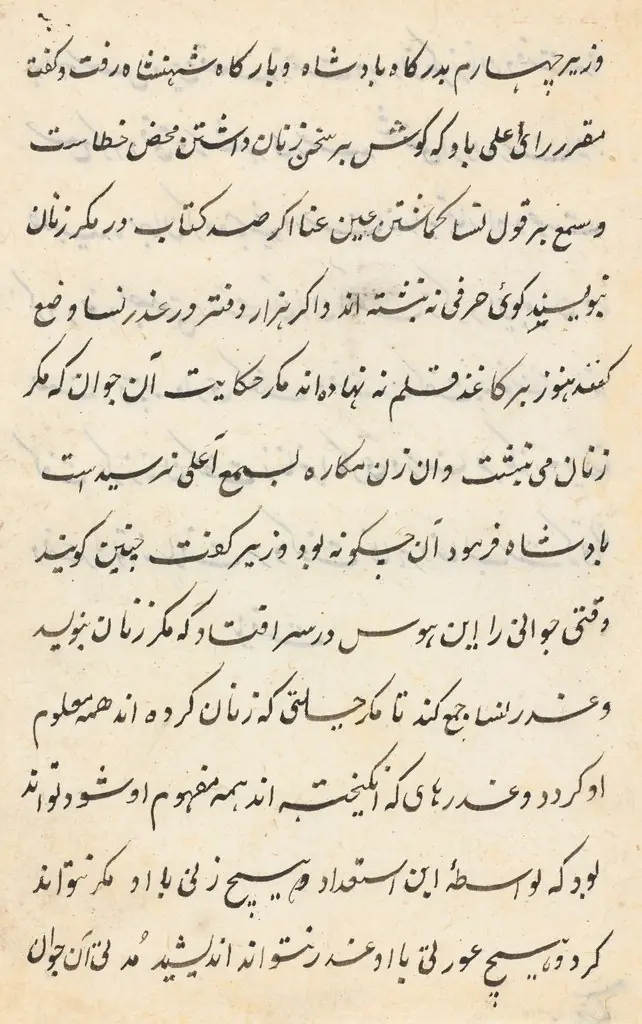 Page from Tales of a Parrot (Tuti-nama): text page
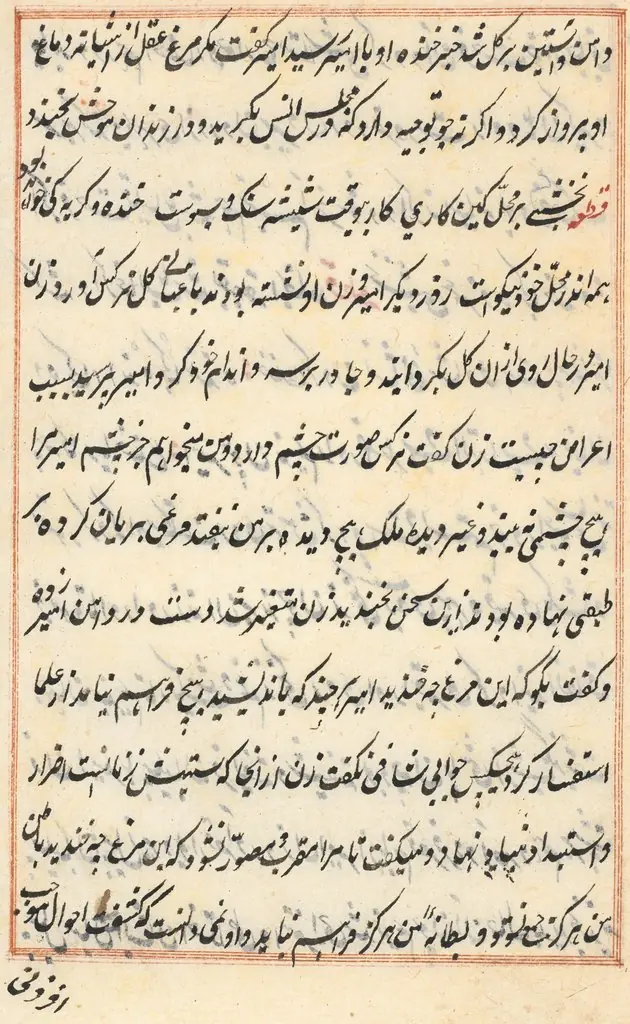 Page from Tales of a Parrot (Tuti-nama): text page
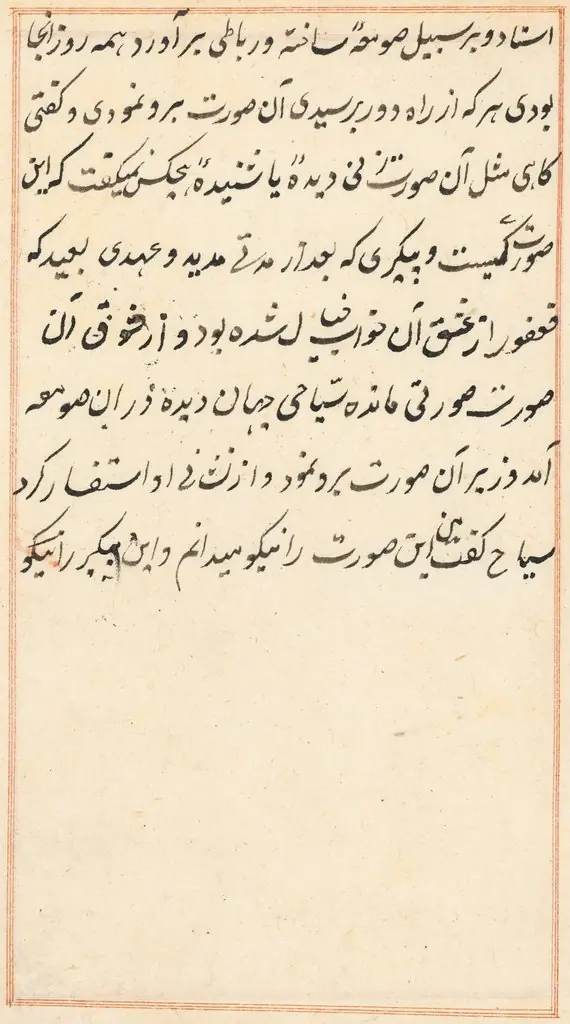 Page from Tales of a Parrot (Tuti-nama): text page
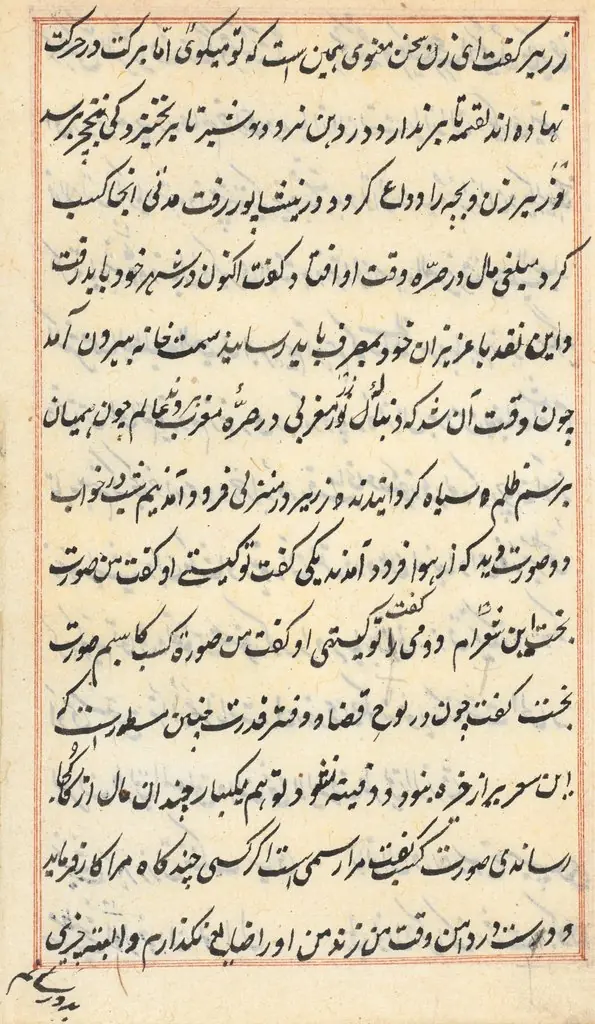 Page from Tales of a Parrot (Tuti-nama): text page
 Page from Tales of a Parrot (Tuti-nama): text page
 Page from Tales of a Parrot (Tuti-nama): text page
 Page from Tales of a Parrot (Tuti-nama): text page
 Page from Tales of a Parrot (Tuti-nama): text page
 Page from Tales of a Parrot (Tuti-nama): text page