Artwork
Shahr-Arai and her lover dallying on a bed beneath which is concealed her husband, from a Tuti-nama (Tales of a Parrot): Fortieth Night
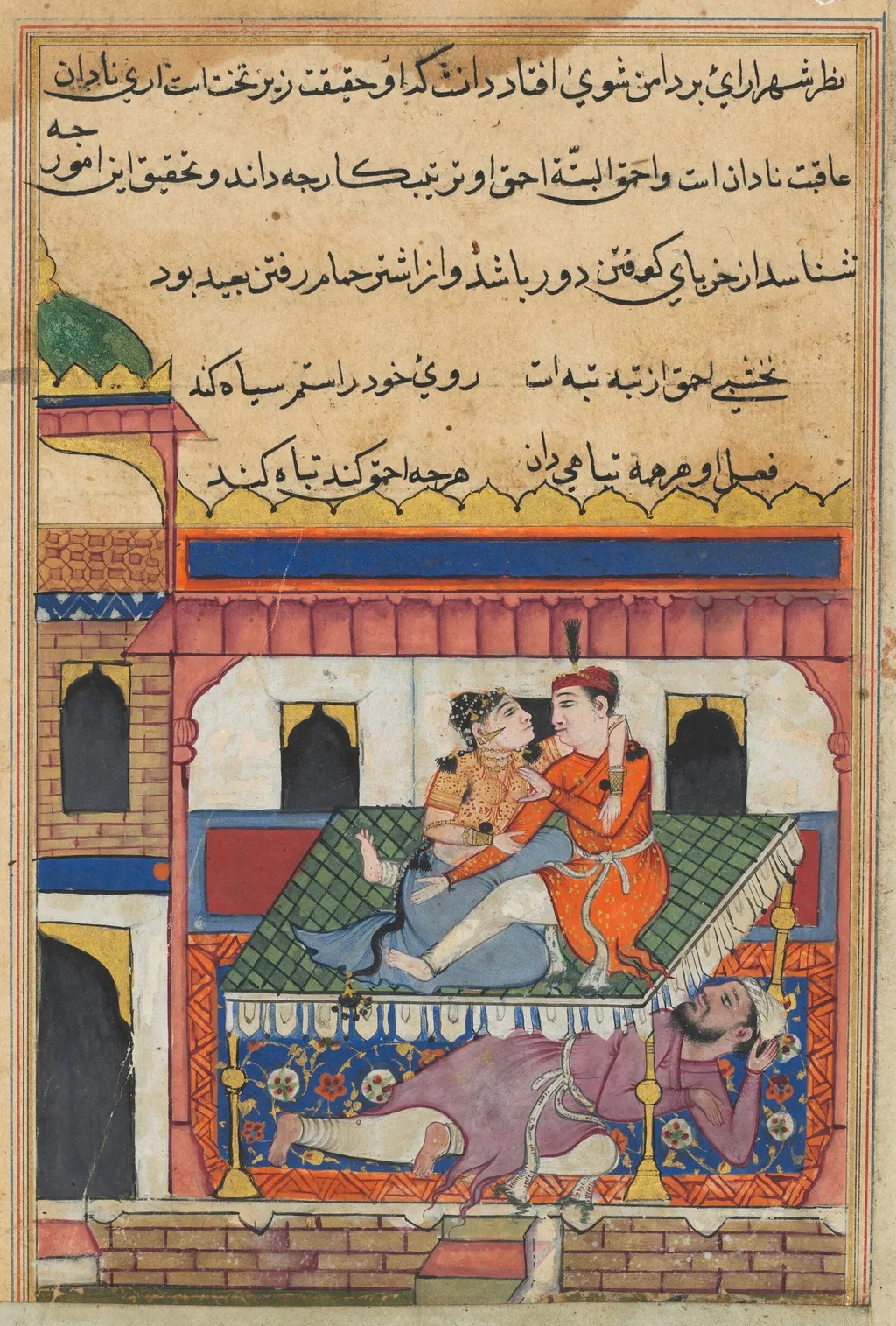
Shahr-Arai and her lover dallying on a bed beneath which is concealed her husband, from a Tuti-nama (Tales of a Parrot): Fortieth Night is an unspecified painting. It dates from 1560 and is held in the collection of the Cleveland Museum of Art. The miniature illustrates an intimate interior where a couple reclines on a richly patterned bed.
About this work
Overview
The miniature illustrates an intimate interior where a couple reclines on a richly patterned bed. Bright orange‑blue and white‑gold textiles drape the figures, while a concealed figure in purple peeks from beneath the mattress. Simple walls frame a window and a niche, and an elegant Persian inscription crowns the scene, indicating its narrative source.
Subject & Meaning
The composition depicts Shahr‑Arai and her lover in a clandestine embrace, with Shahr‑Arai’s husband hidden below the bed, suggesting themes of secrecy and intrigue. The visual surprise of the concealed husband reinforces the tale’s moral about deception and the complexities of marital relationships in the story from the Tuti‑nama.
Technique & Style
Executed in the Persian miniature tradition, the work employs flat, vivid colors and intricate decorative patterns on the fabrics and architectural elements. Fine brushwork renders the figures’ expressions, while the use of perspective is minimal, focusing attention on narrative detail rather than realistic space.
History & Provenance
The image originates from the Fortieth Night episode of the Tuti‑nama, a 16th‑century Persian manuscript of illustrated tales. Though specific ownership records are scarce, such miniatures were typically produced for elite patrons and later entered museum collections through acquisitions of Persian manuscript holdings.
Context
Miniature painting was a central art form in Safavid Iran, serving both literary and decorative purposes. Scenes like this one were designed to accompany poetic texts, enhancing storytelling through visual cues and elaborate ornamentation characteristic of courtly culture.
Artist & collection

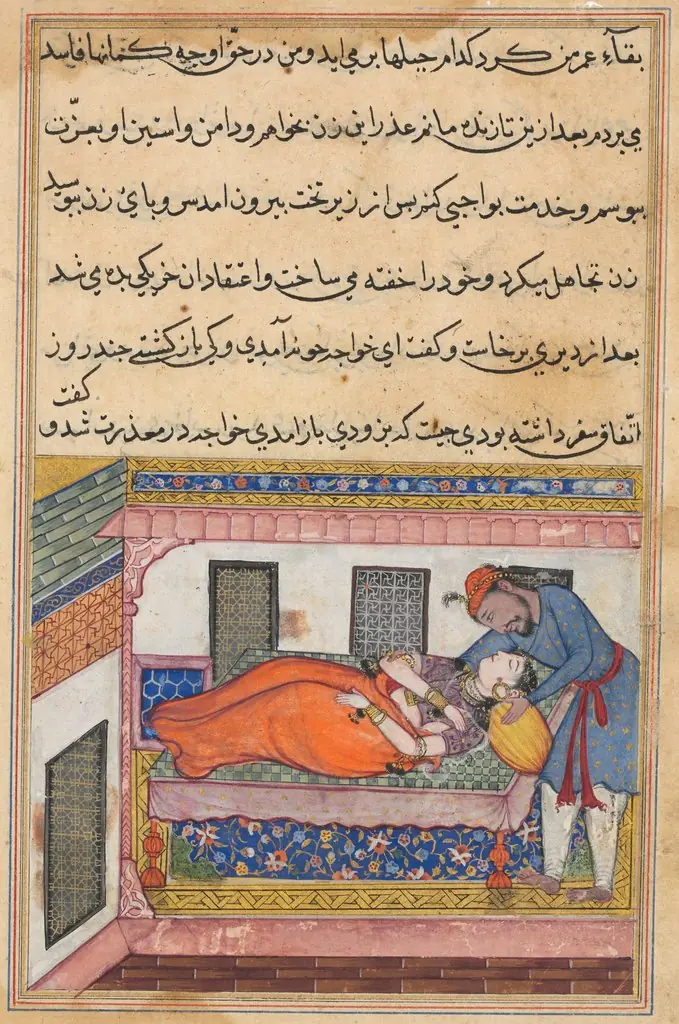 Shahr-Arai’s husband bends to kiss his wife who feigns sleep, from a Tuti-nama (Tales of a Parrot): Fortieth Night
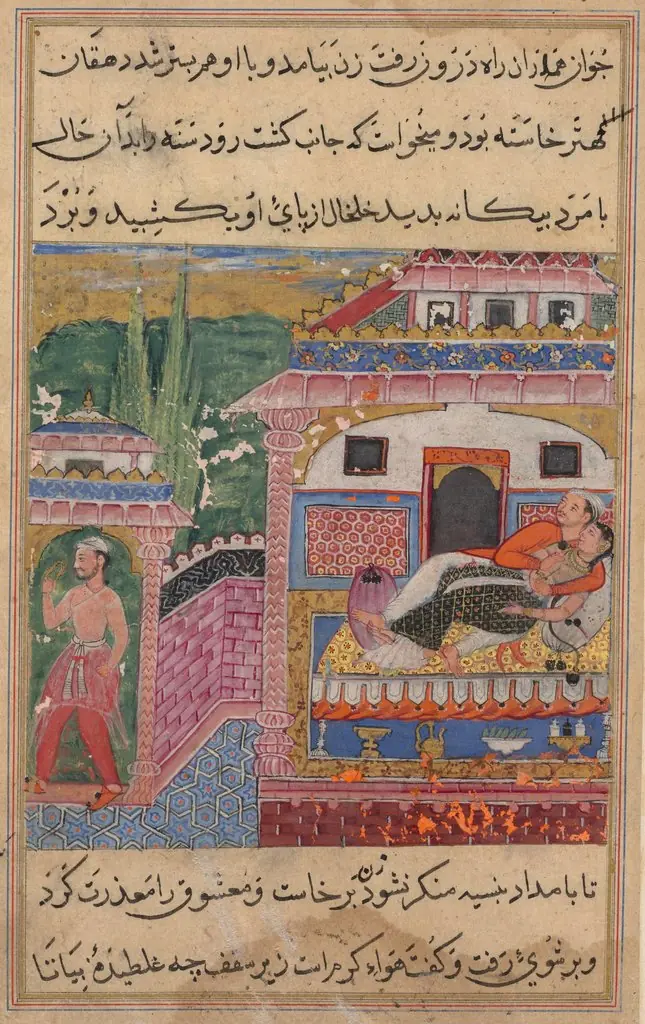 The deceitful wife persuades her husband to sleep in the same place where she had previously slept with her lover, from a Tuti-nama (Tales of a Parrot): Eighth Night
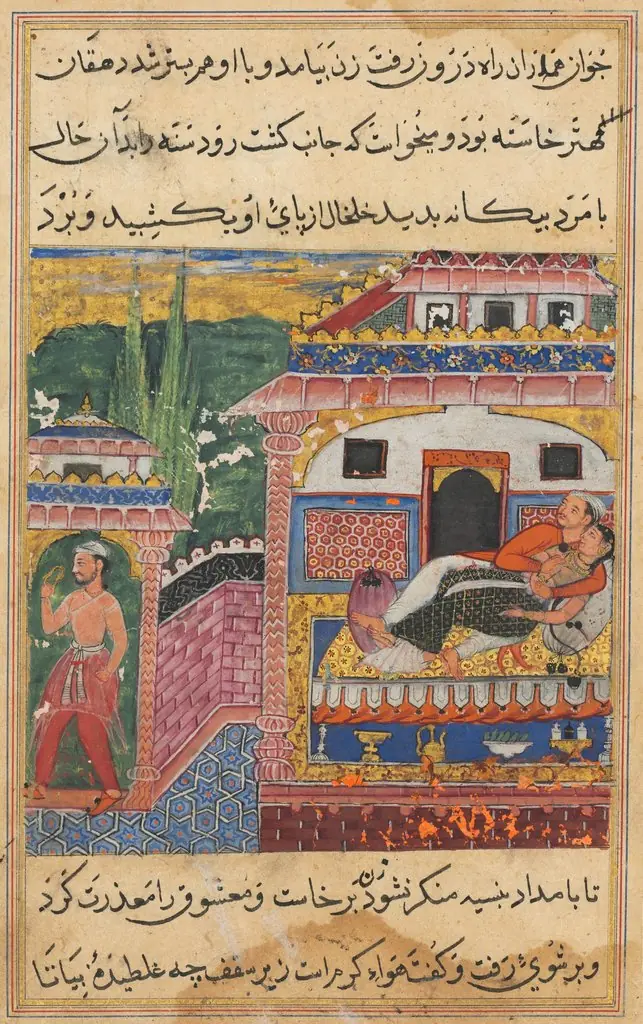 The farmer, father of the son with the deceitful wife, steals away with her anklet while she is in bed with her lover, from a Tuti-nama (Tales of a Parrot): Eighth Night
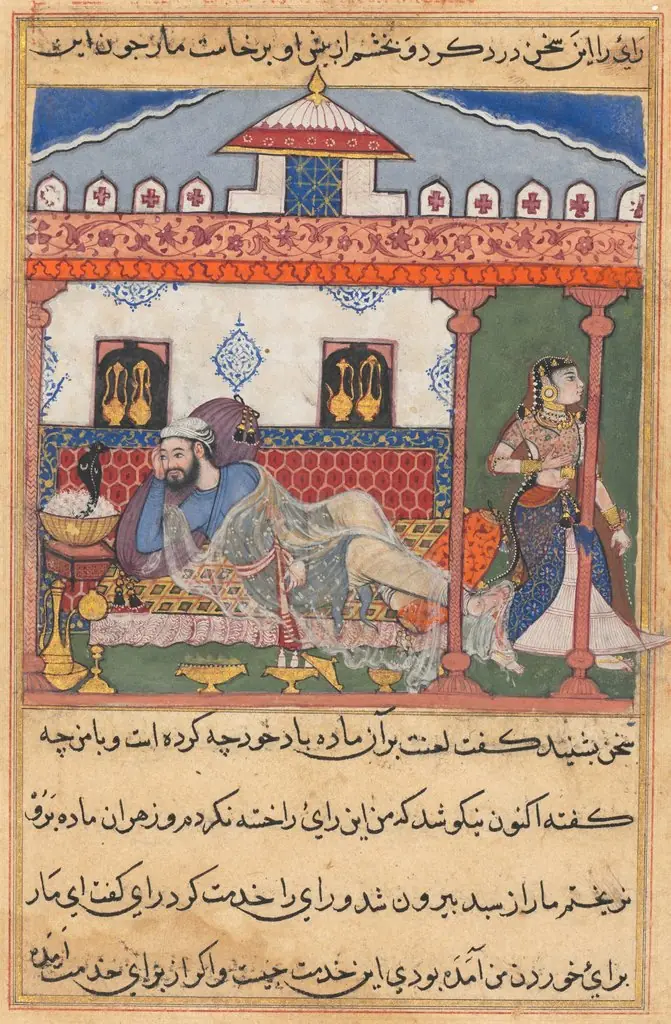 The snake, hidden in a basket of flowers, reveals himself to the Raja who has just sent away his wife, from a Tuti-nama (Tales of a Parrot): Forty-third Night
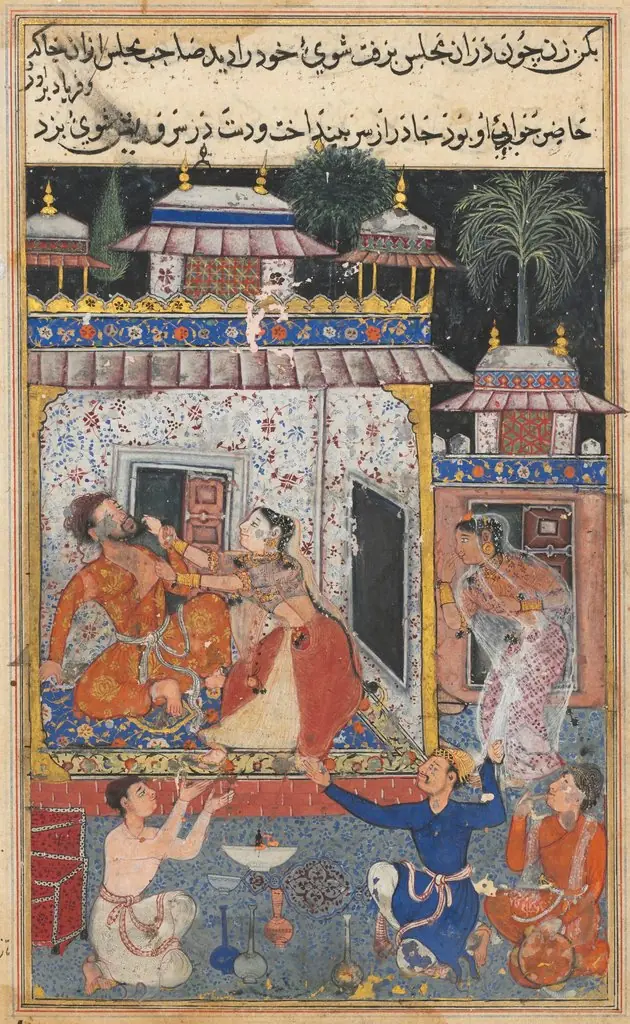 The deceitful wife assaults her erring husband, from a Tuti-nama (Tales of a Parrot): Eighth Night
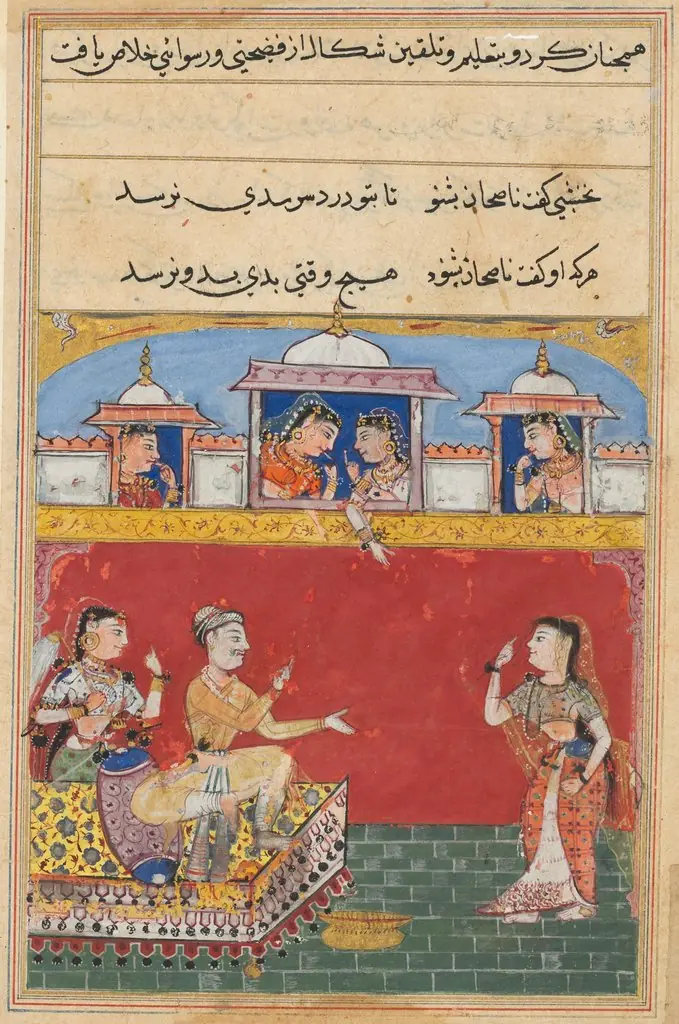 The daughter-in-law returns from her misadventure, feigning insanity, from a Tuti-nama (Tales of a Parrot): Sixteenth Night
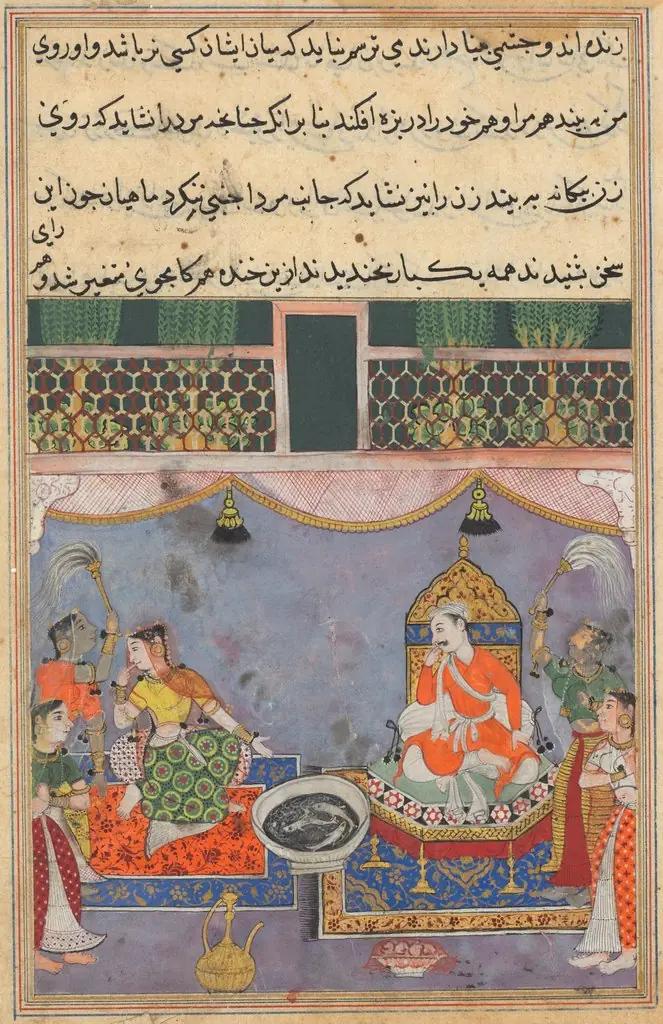 Kamjuy, the wife of the Raja, averts her face from the fishes, from a Tuti-nama (Tales of a Parrot): Twenty-third Night
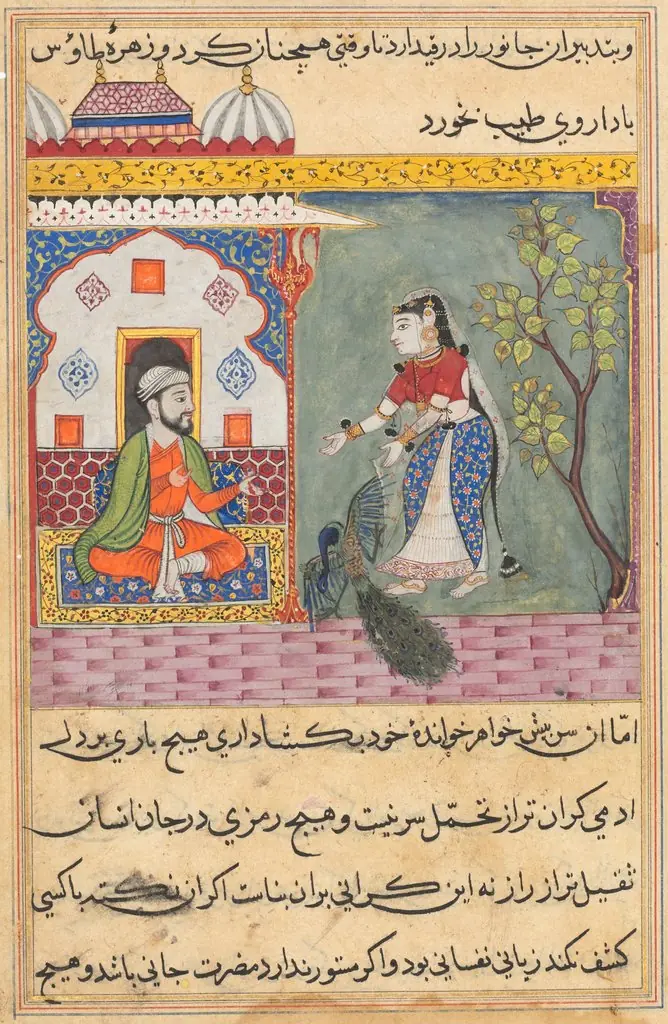 The Brahman’s wife who killed a peacock and ate its gallbladder on the physician’s advice, from a Tuti-nama (Tales of a Parrot): Nineteenth Night
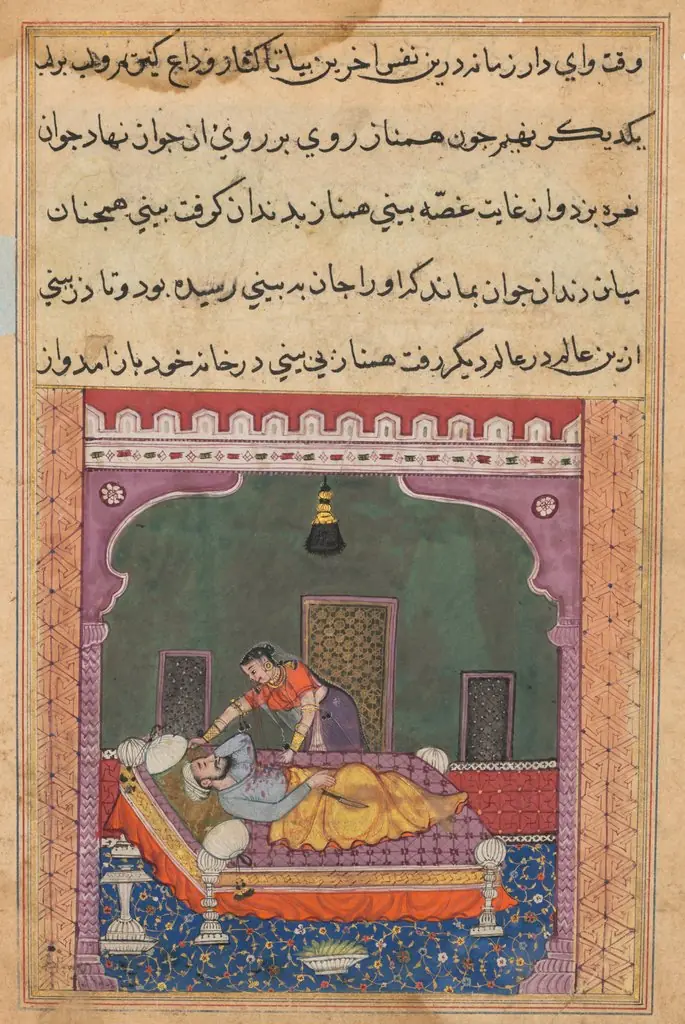 In order to falsely implicate her husband, Hamnaz places a knife by his side and lets the blood dripping from her nose stain his clothes, from a Tuti-nama (Tales of a Parrot): Twenty-fifth Night
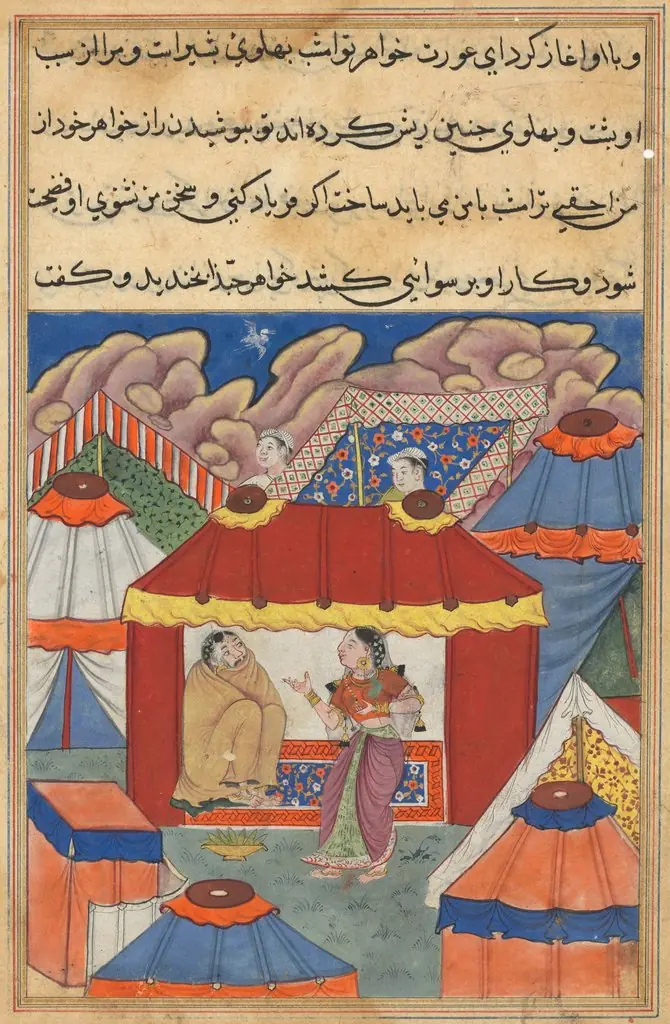 Habbaza’s sister, who is sent to console her, discovers the disguised Arab in her place, from a Tuti-nama (Tales of a Parrot): Twenty-fourth Night
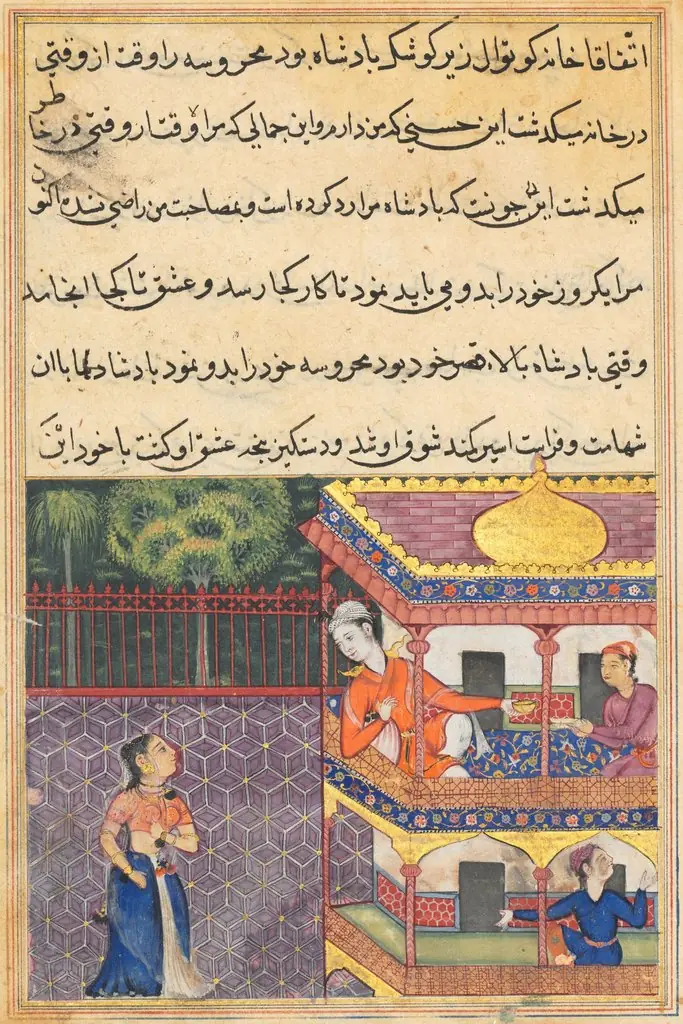 The king of Zabul sees Mahrusa from his palace balcony, from a Tuti-nama (Tales of a Parrot): Thirty-sixth Night