Artwork
Shahr-Arai’s husband bends to kiss his wife who feigns sleep, from a Tuti-nama (Tales of a Parrot): Fortieth Night
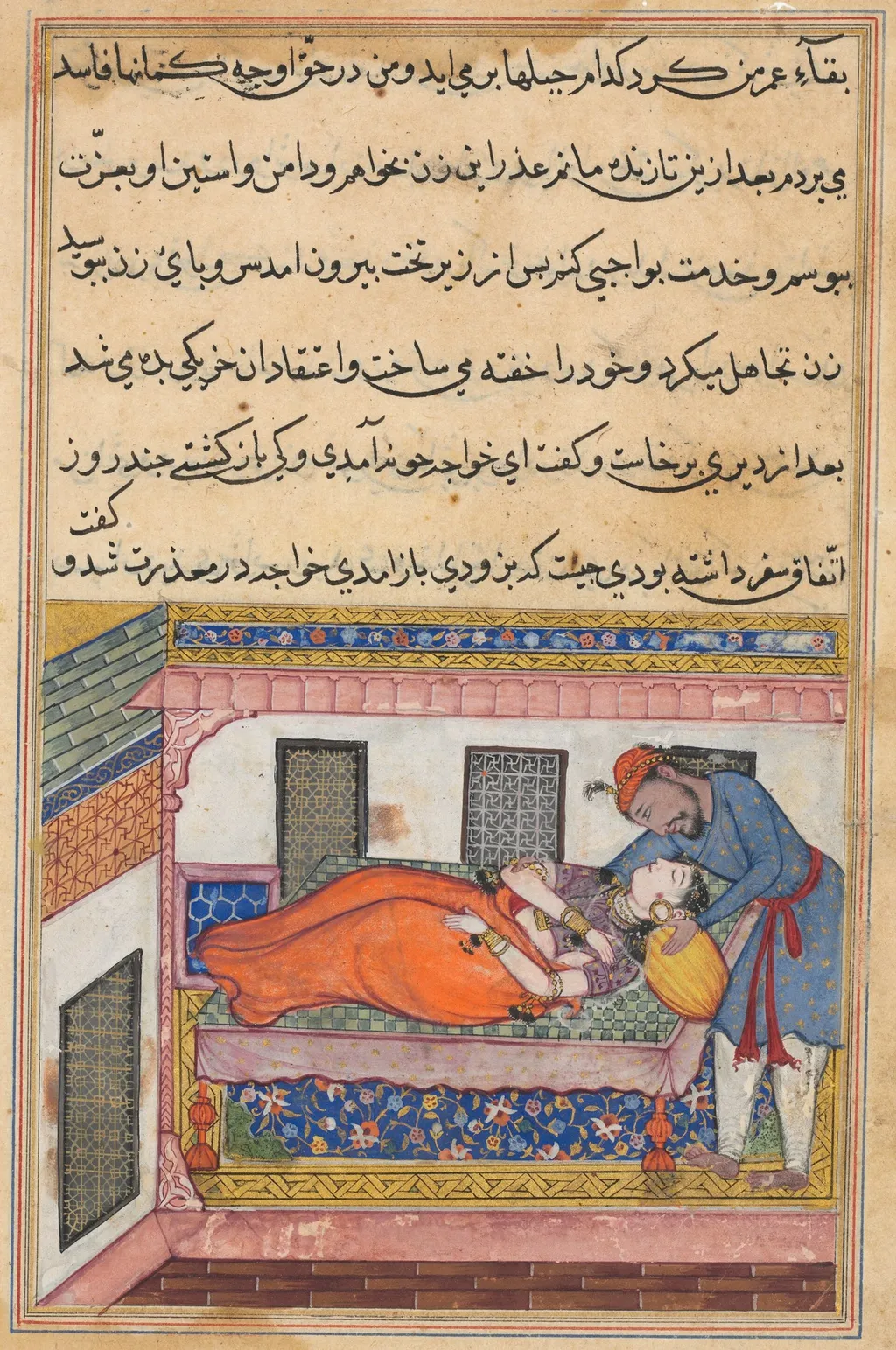
Shahr-Arai’s husband bends to kiss his wife who feigns sleep, from a Tuti-nama (Tales of a Parrot): Fortieth Night is an unspecified painting. It dates from 1560 and is held in the collection of the Cleveland Museum of Art.
About this work
Overview
The composition is framed by a patterned interior and a lattice‑type window, with Arabic calligraphy positioned above the figures.
The work is a miniature painting illustrating a scene from the Persian narrative collection Tuti‑nama (Tales of a Parrot), specifically the episode titled “Fortieth Night.” It depicts a husband leaning over his reclining wife, who pretends to be asleep, while he attempts a kiss. The composition is framed by a patterned interior and a lattice‑type window, with Arabic calligraphy positioned above the figures.
Subject & Meaning
The image captures a moment of intimate deception: the wife, dressed in a vivid red garment, feigns slumber, while her husband, in a blue robe and red hat, leans in to kiss her. The scene reflects themes of love, playfulness, and the literary motif of concealed affection common in Persian romantic tales.
Technique & Style
Executed in the traditional Persian miniature style, the painting employs bright, saturated pigments—red, blue, yellow, and gold—applied in fine, flat washes. Decorative patterns cover the walls and the lattice window, while the figures are rendered with delicate line work and precise detailing of jewelry and textiles, characteristic of courtly manuscript illumination.
History & Provenance
The piece originates from an illustrated manuscript of the Tuti‑nama, a popular 15th‑century collection of love stories. Such manuscripts were commissioned for elite patrons and often circulated among Persian literary circles. The specific copy containing this miniature is now part of a museum collection, having entered the public domain through acquisition in the early 20th century.
Artist & collection

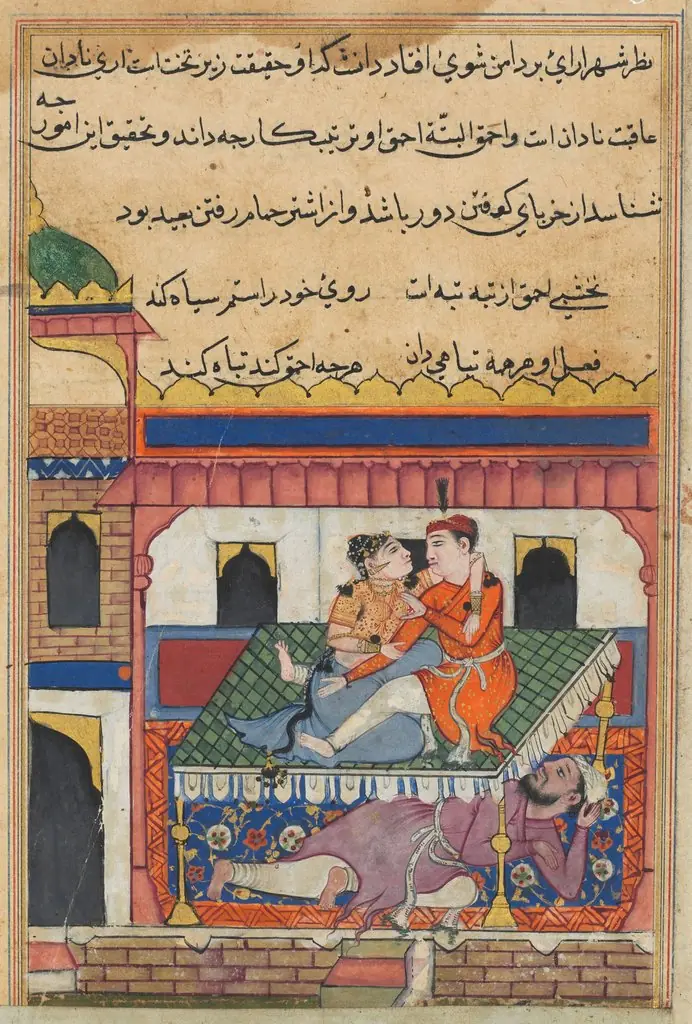 Shahr-Arai and her lover dallying on a bed beneath which is concealed her husband, from a Tuti-nama (Tales of a Parrot): Fortieth Night
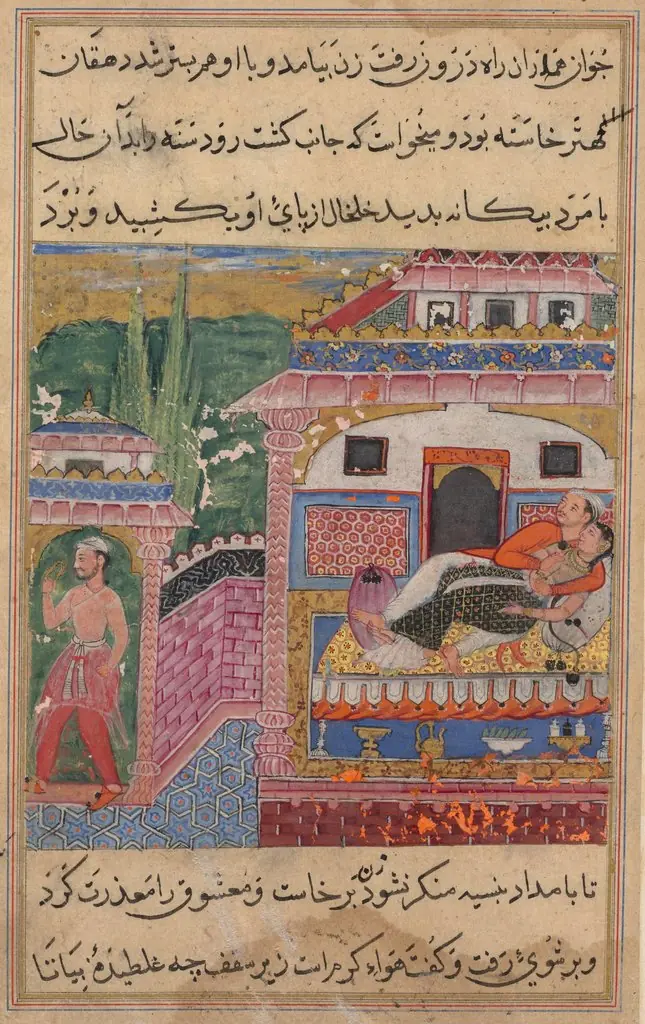 The deceitful wife persuades her husband to sleep in the same place where she had previously slept with her lover, from a Tuti-nama (Tales of a Parrot): Eighth Night
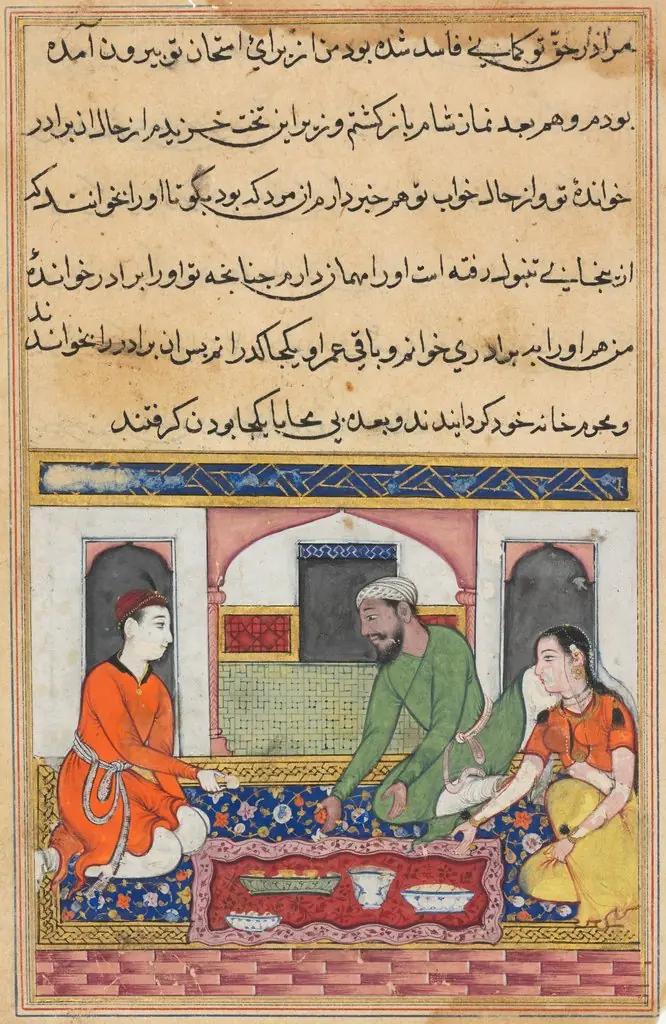 Shahr-Arai and her husband adopt her lover as a brother in the family, from a Tuti-nama (Tales of a Parrot): Fortieth Night
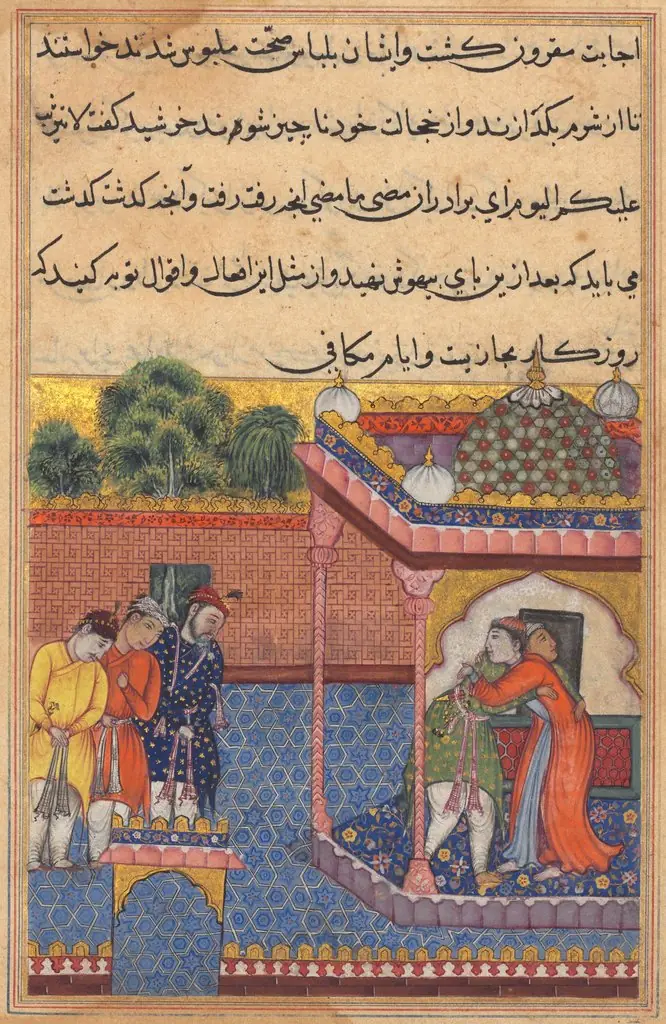 Khurshid reunited with her husband Utarid, from a Tuti-nama (Tales of a Parrot): Thirty-second Night
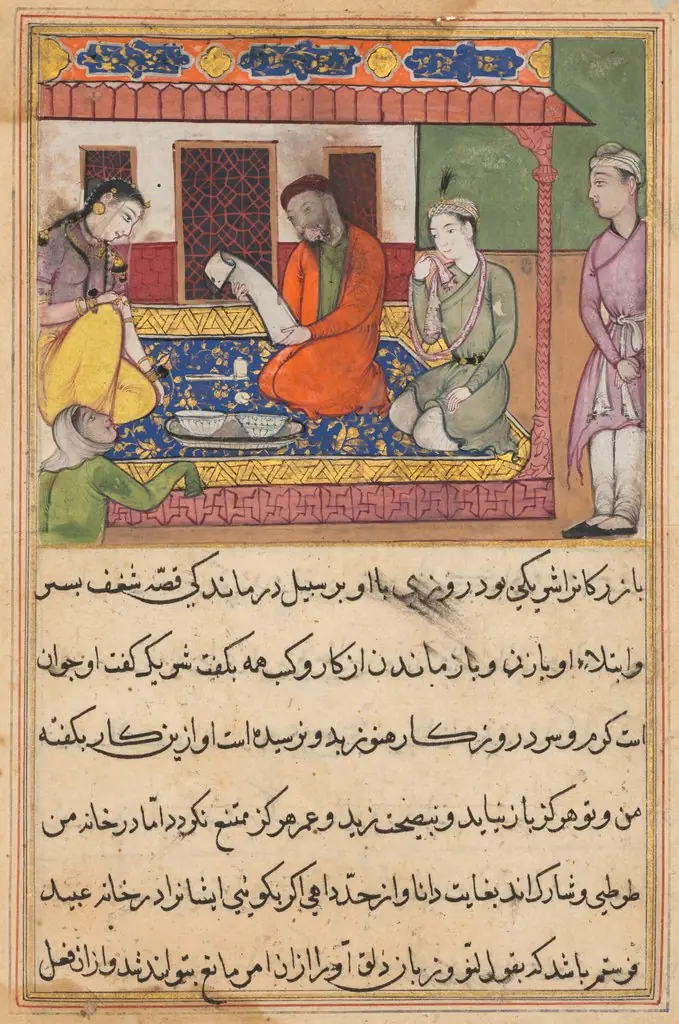 The marriage of ‘Ubaid, son of a merchant of Tirmiz, from a Tuti-nama (Tales of a Parrot): Forty-second Night
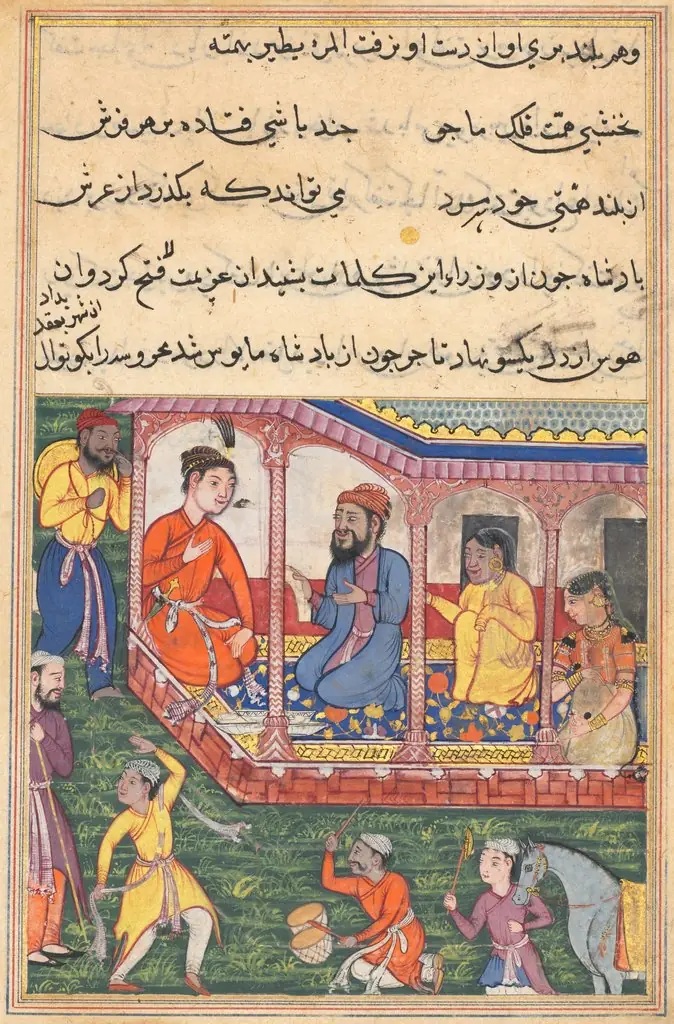 Mahrusa’s marriage to the prefect of the city, from a Tuti-nama (Tales of a Parrot): Thirty-sixth Night
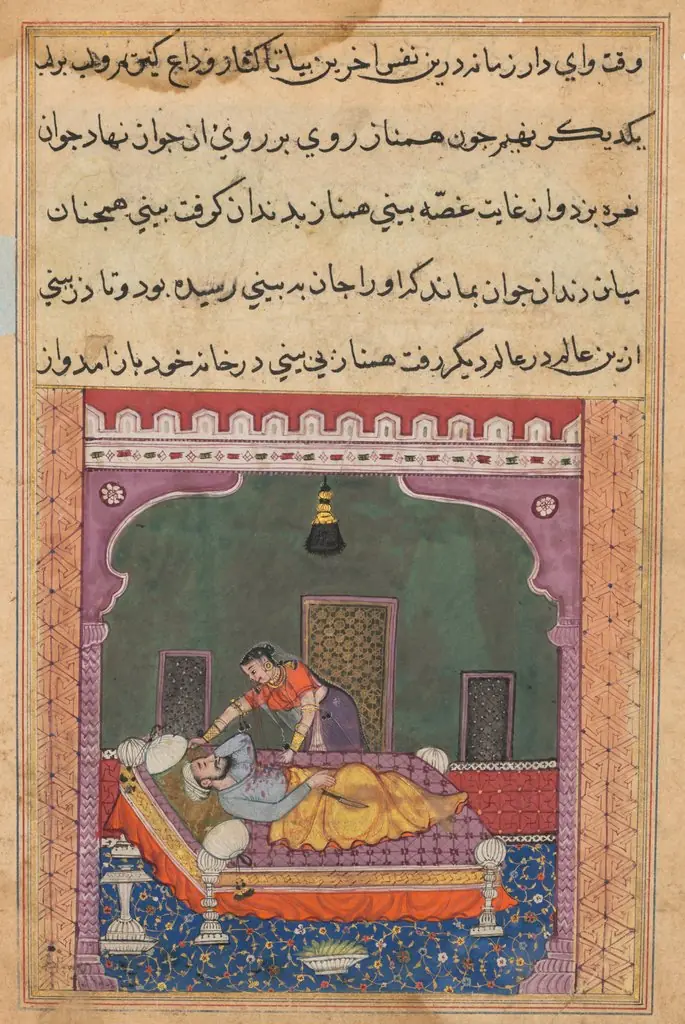 In order to falsely implicate her husband, Hamnaz places a knife by his side and lets the blood dripping from her nose stain his clothes, from a Tuti-nama (Tales of a Parrot): Twenty-fifth Night
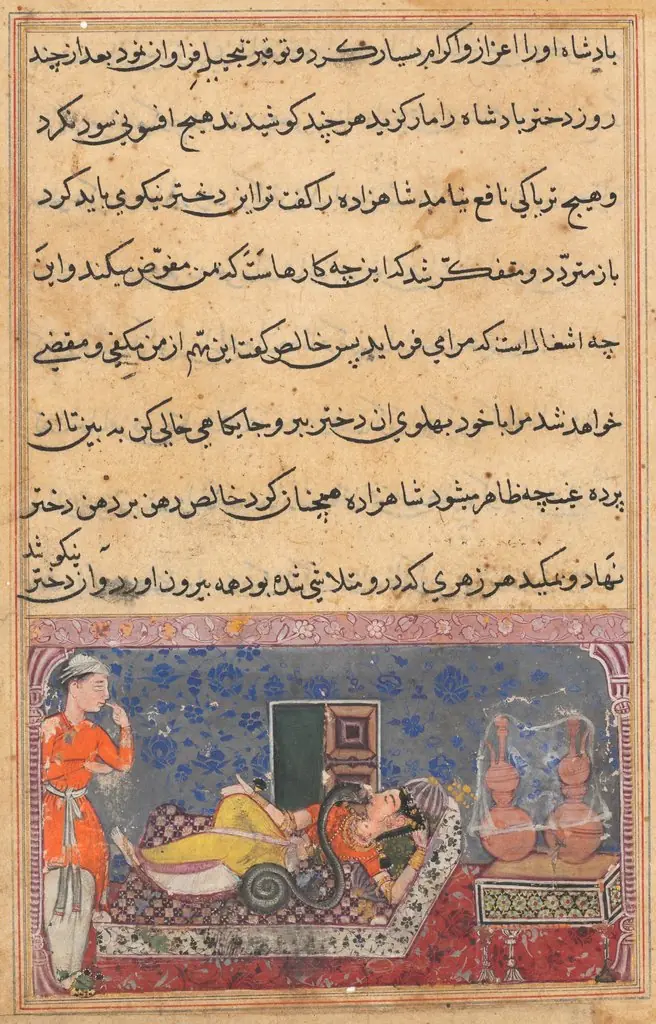 Khalis repays the prince for his kindness by changing into a snake and sucking the poison from the king’s daughter, from a Tuti-nama (Tales of a Parrot): Eighteenth Night
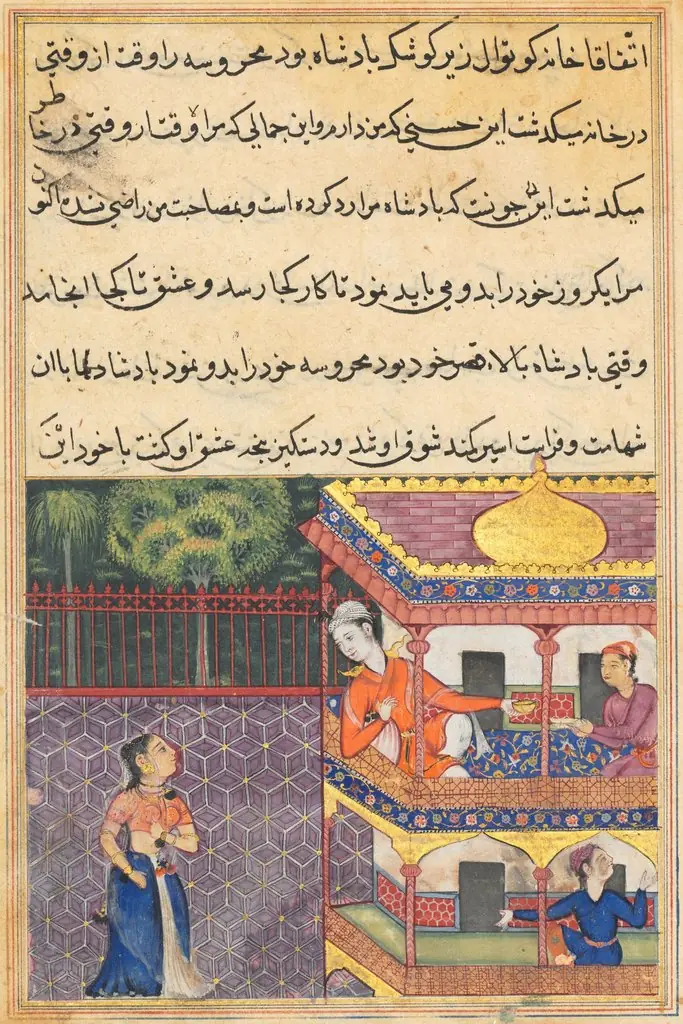 The king of Zabul sees Mahrusa from his palace balcony, from a Tuti-nama (Tales of a Parrot): Thirty-sixth Night
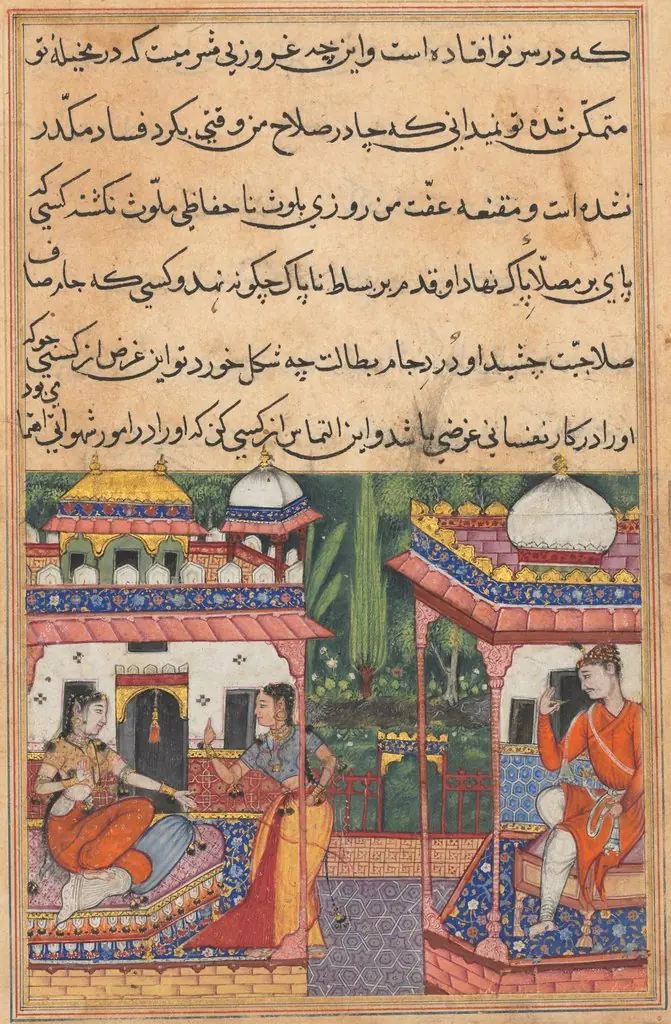 Kaiwan sends a message of love to Khurshid, wife of his brother Utarid who is away on a journey, from a Tuti-nama (Tales of a Parrot): Thirty-second Night