Artwork
The merchant has the hateful skull ground and put into a box, from a Tuti-nama (Tales of a Parrot): Twenty-third Night
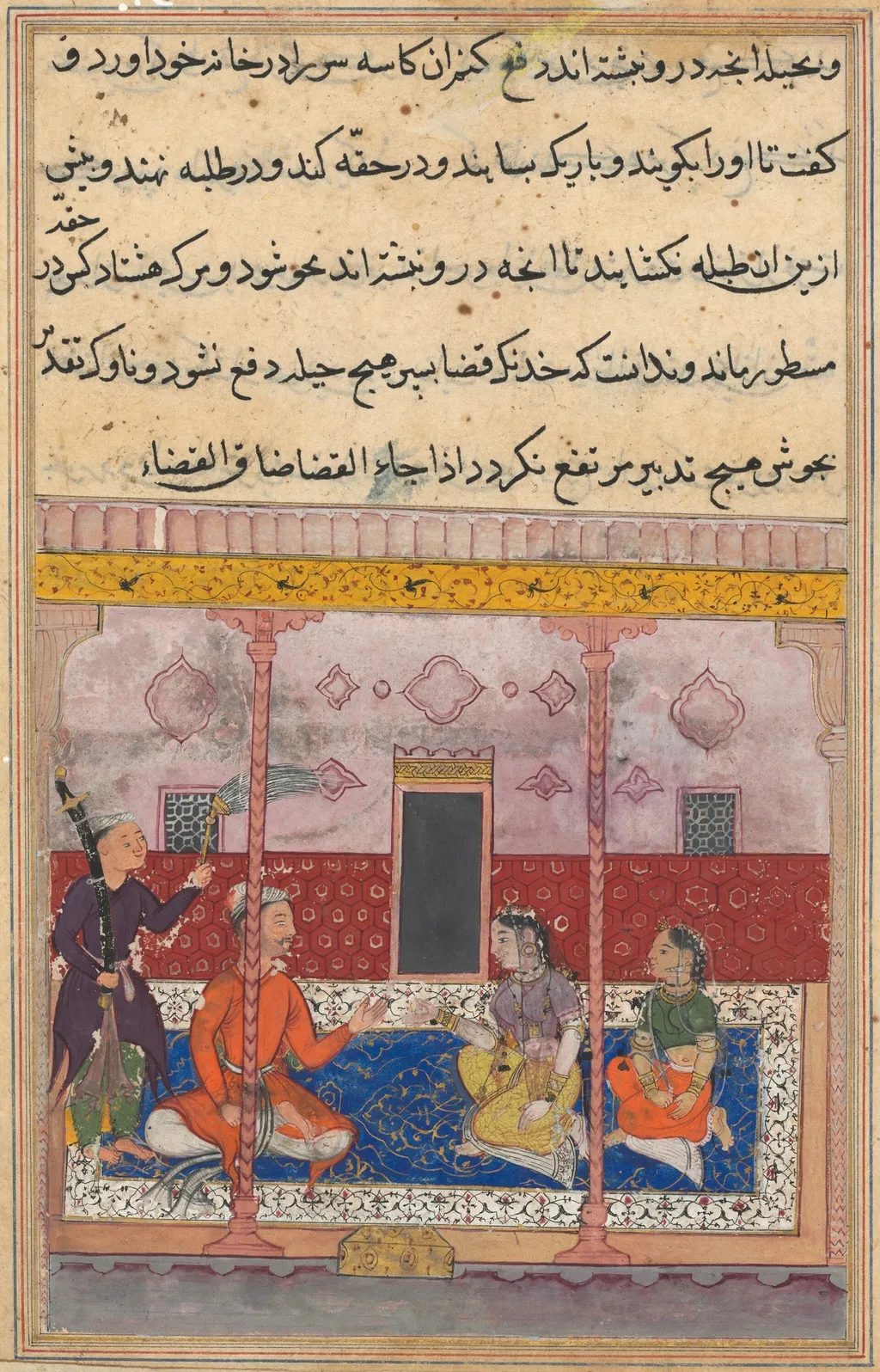
The merchant has the hateful skull ground and put into a box, from a Tuti-nama (Tales of a Parrot): Twenty-third Night is an unspecified painting. It dates from 1560 and is held in the collection of the Cleveland Museum of Art. The work is a painted panel from the illustrated manuscript known as the Tuti‑nama, or Tales of a Parrot, created for Prince Salim.
About this work
Overview
The work is a painted panel from the illustrated manuscript known as the Tuti‑nama, or Tales of a Parrot, created for Prince Salim. It portrays a domestic interior where four figures—two men and two women—are seated on a patterned floor of blue and white tiles, set against a red wall with a window and a yellow border at the top of the composition.
Subject & Meaning
The scene captures a moment of quiet activity: the two men, dressed in orange and purple robes, are engaged in gestures, one holding a sword, while the two women, in yellow and green garments, sit on the floor, possibly involved in a shared task. The composition suggests a narrative episode from the tale, emphasizing contemplation and interaction among the characters.
Technique & Style
Executed in miniature painting style, the panel employs fine brushwork and a limited yet vivid palette of reds, blues, oranges, purples, yellows and greens. The patterned floor and decorative border reflect the Persian manuscript tradition, while the careful rendering of clothing and gestures conveys a sense of intimacy within the confined space.
History & Provenance
Commissioned for Prince Salim, a Mughal royal patron, the illustration formed part of the larger Tuti‑nama manuscript, a collection of moral and romantic stories. The painting has survived as a separate panel, likely detached from the codex, and now resides in a museum collection where it is displayed as an example of courtly narrative art.
Context
The Tuti‑nama belongs to a genre of illustrated storybooks that flourished in the Mughal empire, blending Persian literary themes with Indian courtly aesthetics. Such works were used for both entertainment and moral instruction, and their lavish illustrations reflected the patron’s status and the sophisticated artistic workshops of the period.
Artist & collection

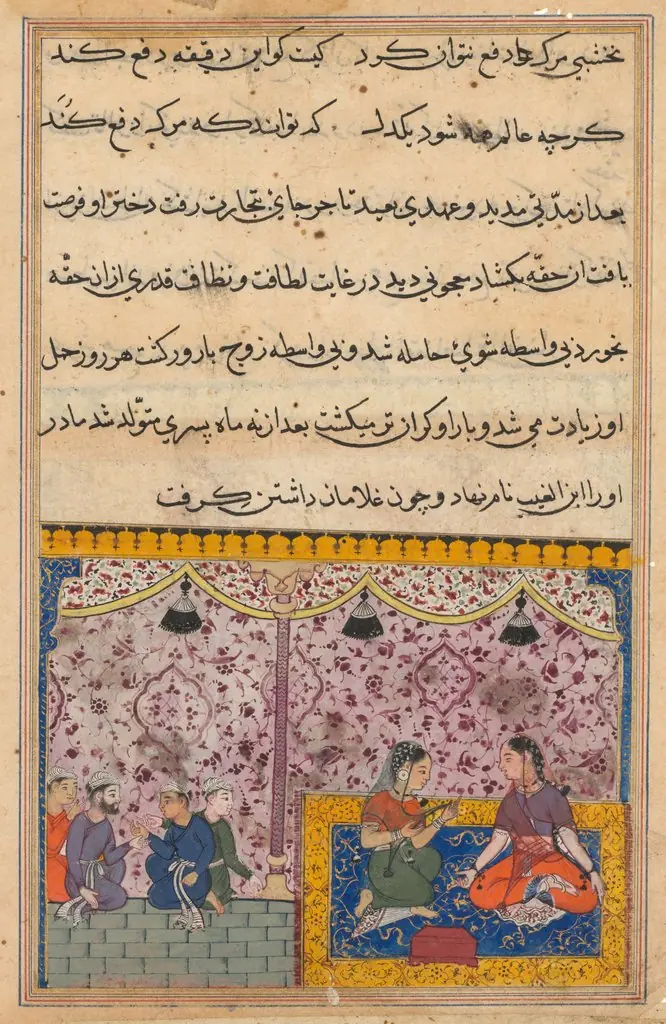 The merchant’s daughter gives birth to a son as a result of eating out of the box. The clever child recognizes the false gems from true, from a Tuti-nama (Tales of a Parrot): Twenty-third Night
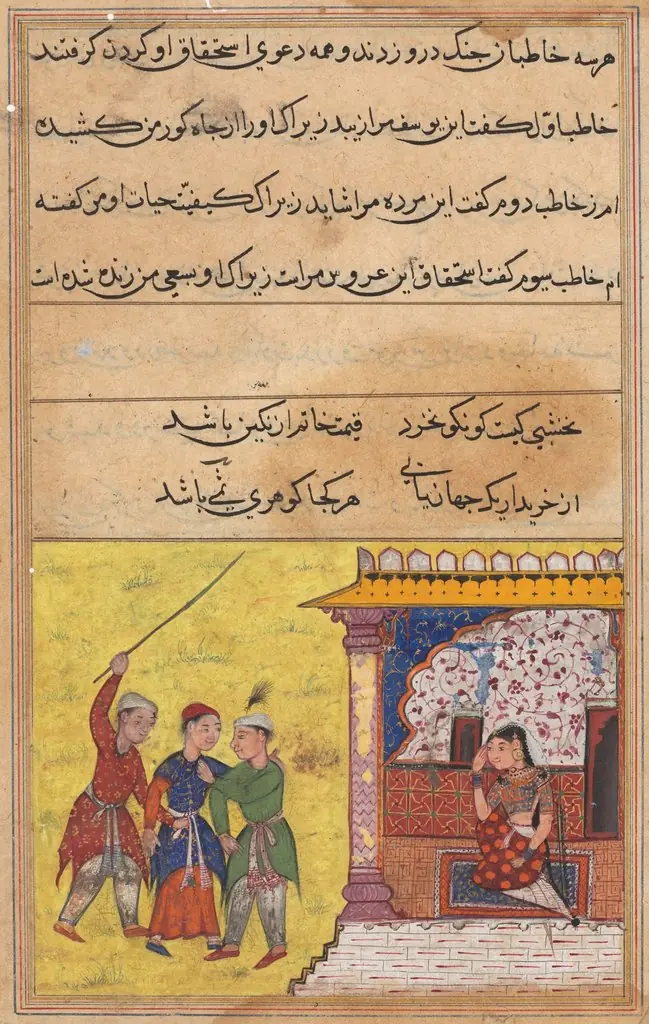 The three suitors again begin to quarrel among themselves for the hand of the devotee’s daughter, from a Tuti-nama (Tales of a Parrot): Twentieth Night
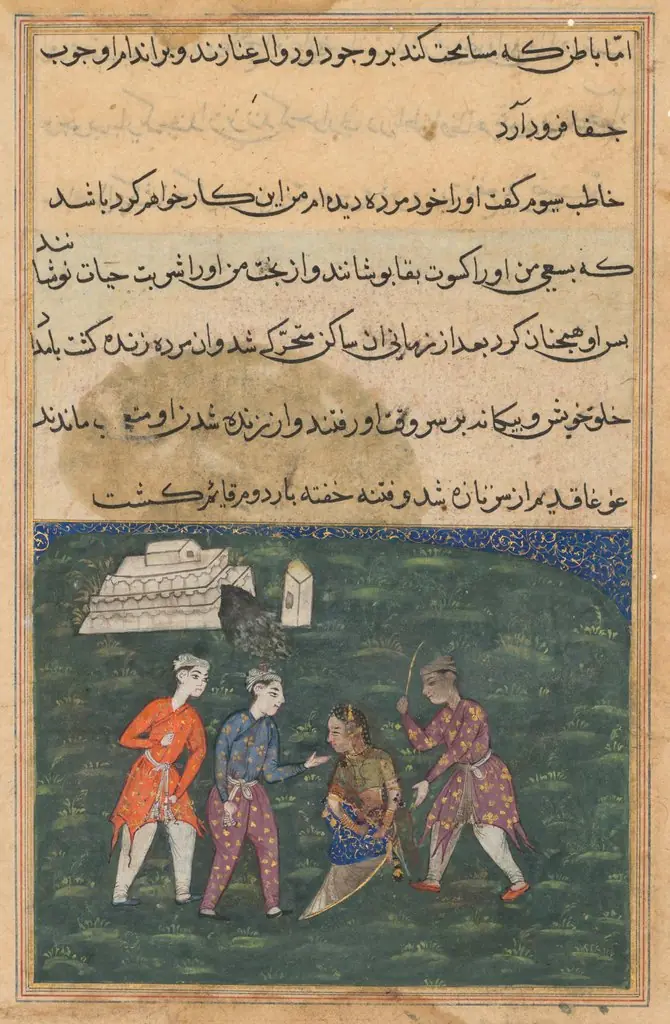 The third suitor strikes the devotee’s daughter and thus restores her to life, from a Tuti-nama (Tales of a Parrot): Twentieth Night
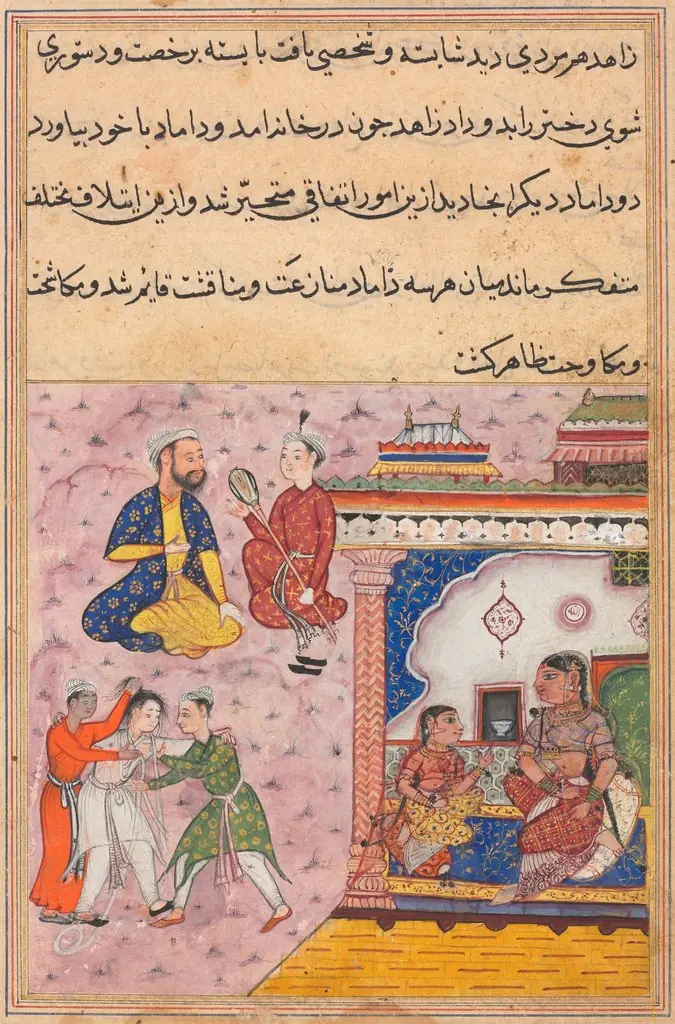 Three suitors fight amongst themselves for the hand of the devotee’s daughter, from a Tuti-nama (Tales of a Parrot): Twentieth Night
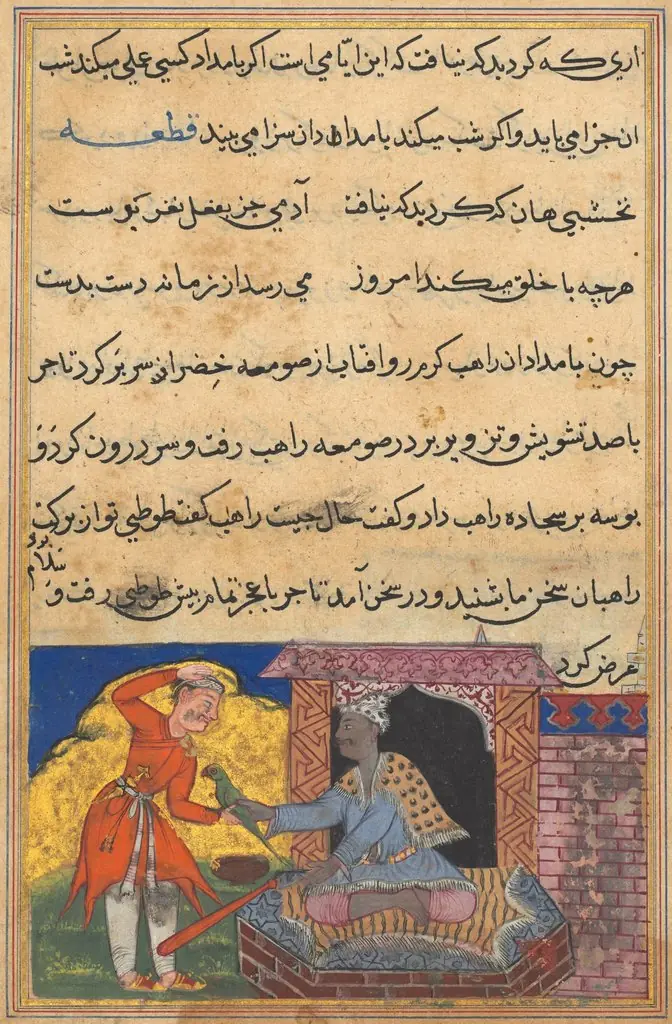 The monk returns the magic parrot to its rightful owner, the merchant, from a Tuti-nama (Tales of a Parrot): Tenth Night
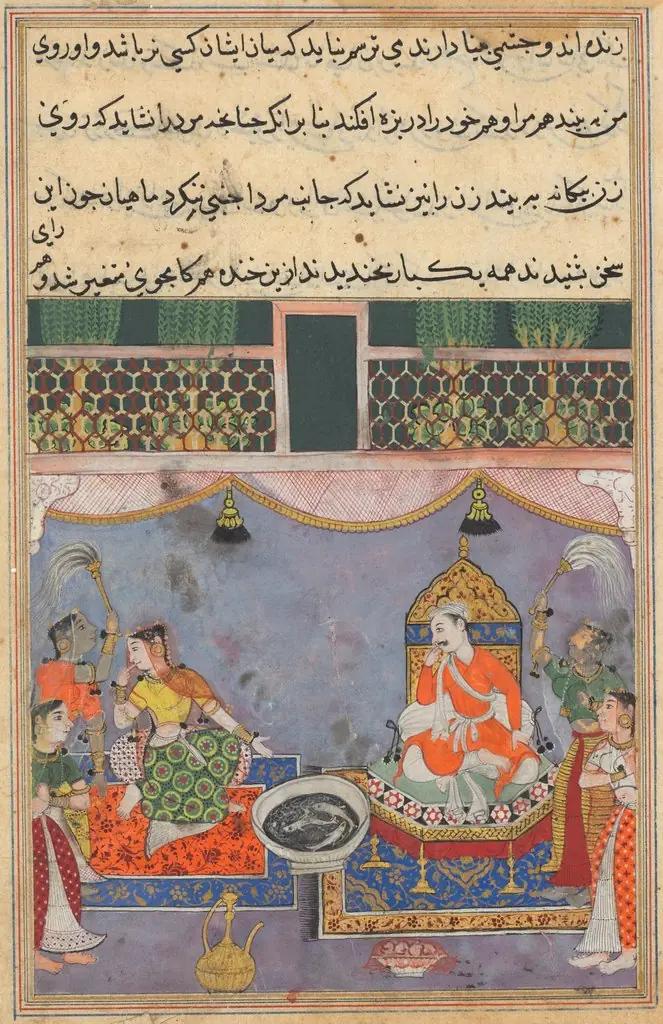 Kamjuy, the wife of the Raja, averts her face from the fishes, from a Tuti-nama (Tales of a Parrot): Twenty-third Night
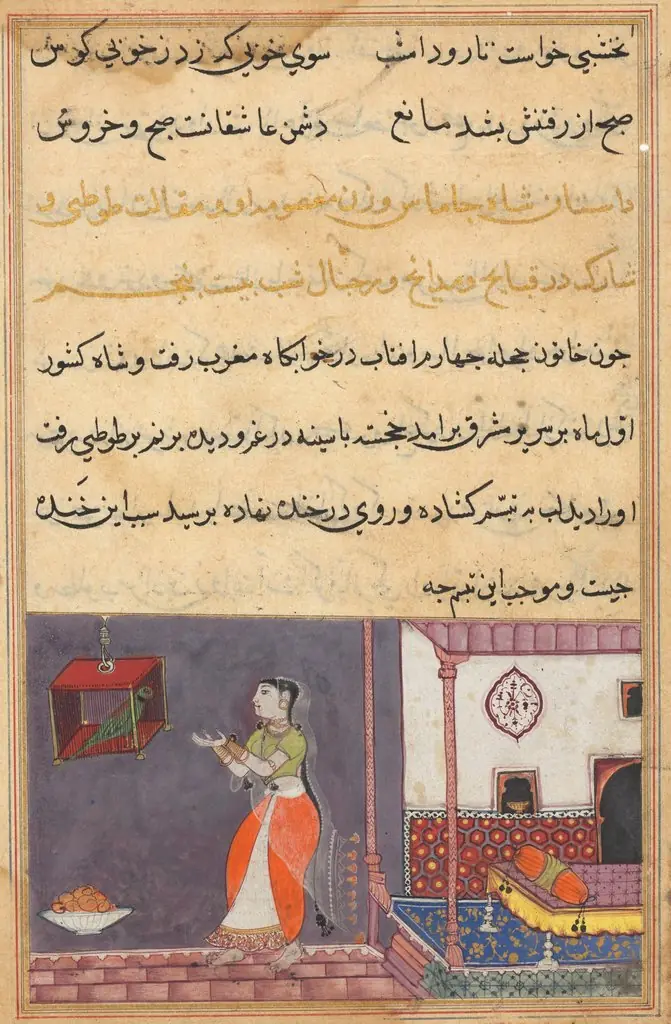 The Parrot Addresses Khujasta at the Beginning of the Twenty-fifth Night, from a Tuti-nama (Tales of a Parrot)
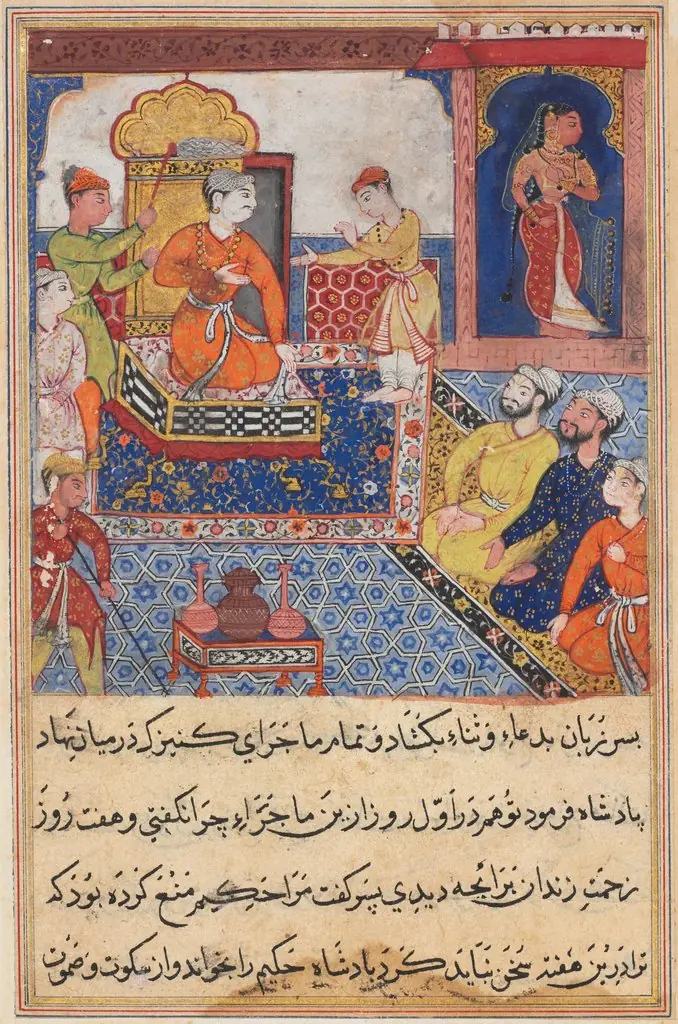 The young prince recounts his experiences to his father, the king, from a Tuti-nama (Tales of a Parrot): Eighth Night
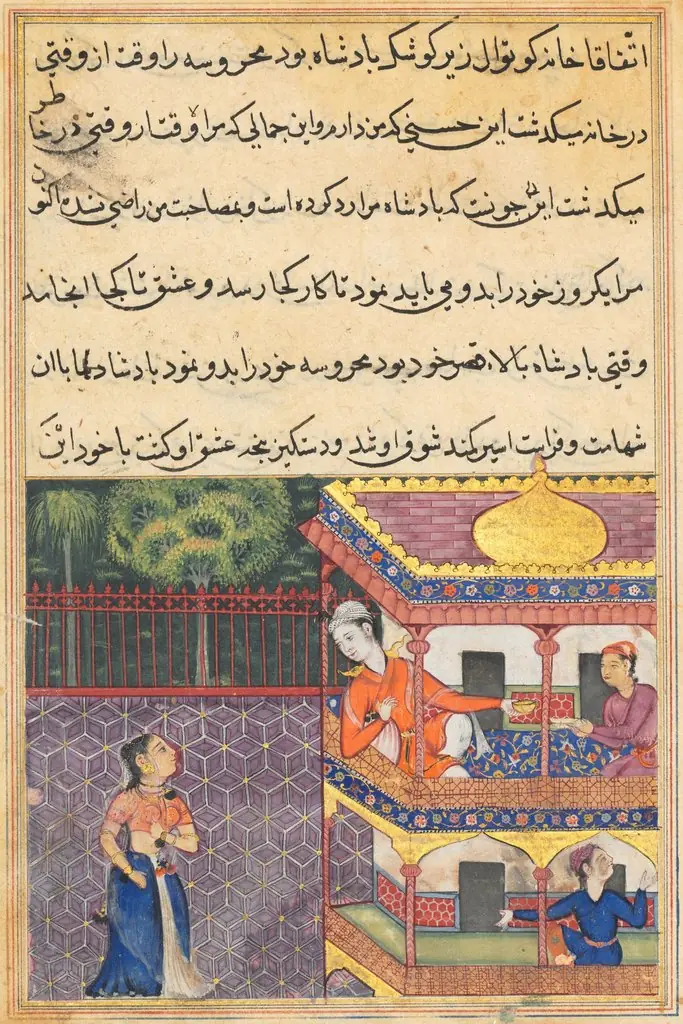 The king of Zabul sees Mahrusa from his palace balcony, from a Tuti-nama (Tales of a Parrot): Thirty-sixth Night
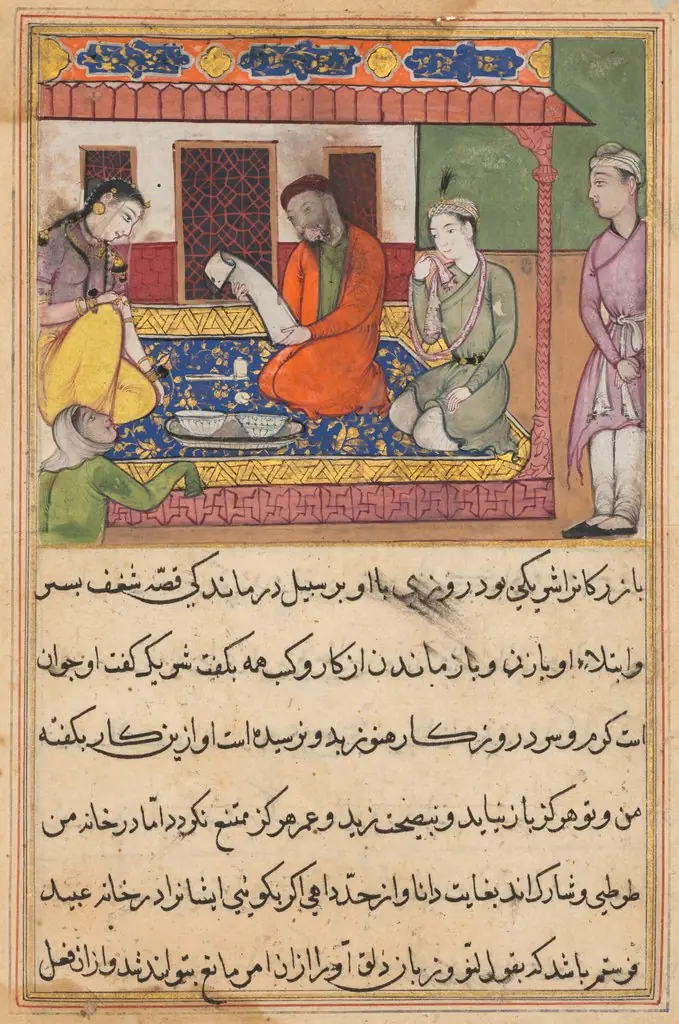 The marriage of ‘Ubaid, son of a merchant of Tirmiz, from a Tuti-nama (Tales of a Parrot): Forty-second Night
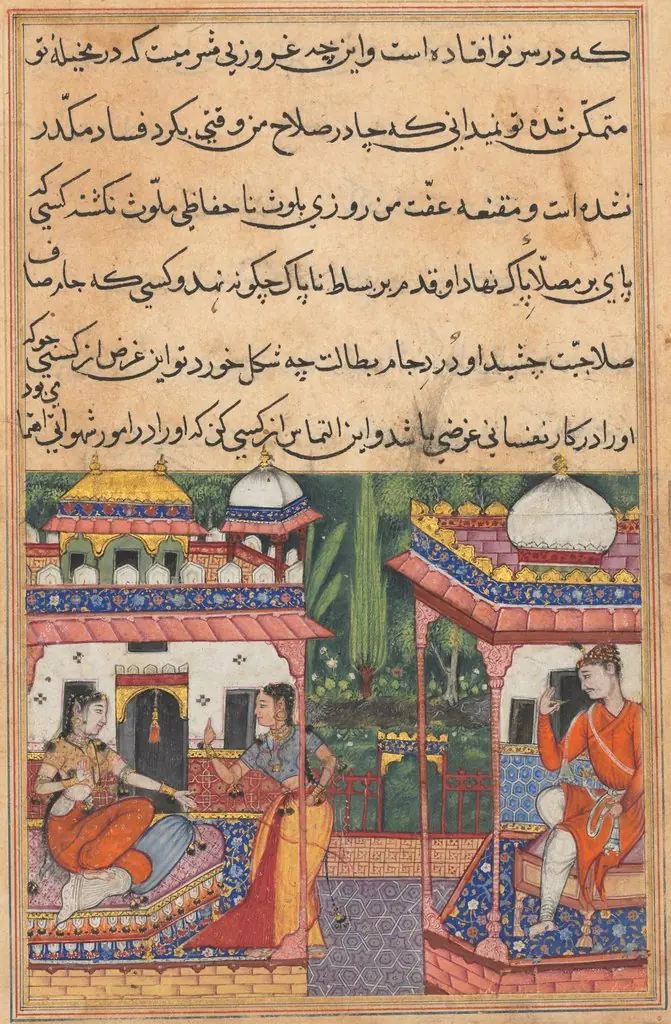 Kaiwan sends a message of love to Khurshid, wife of his brother Utarid who is away on a journey, from a Tuti-nama (Tales of a Parrot): Thirty-second Night
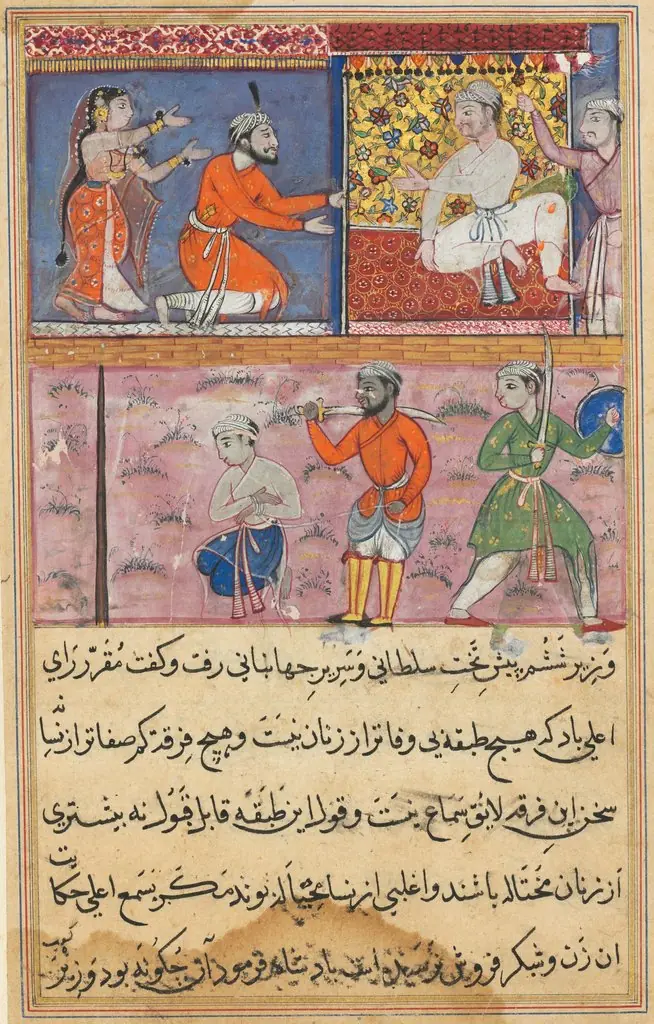 The prince sent back to the place of execution for the sixth time, from a Tuti-nama (Tales of a Parrot): Eighth Night
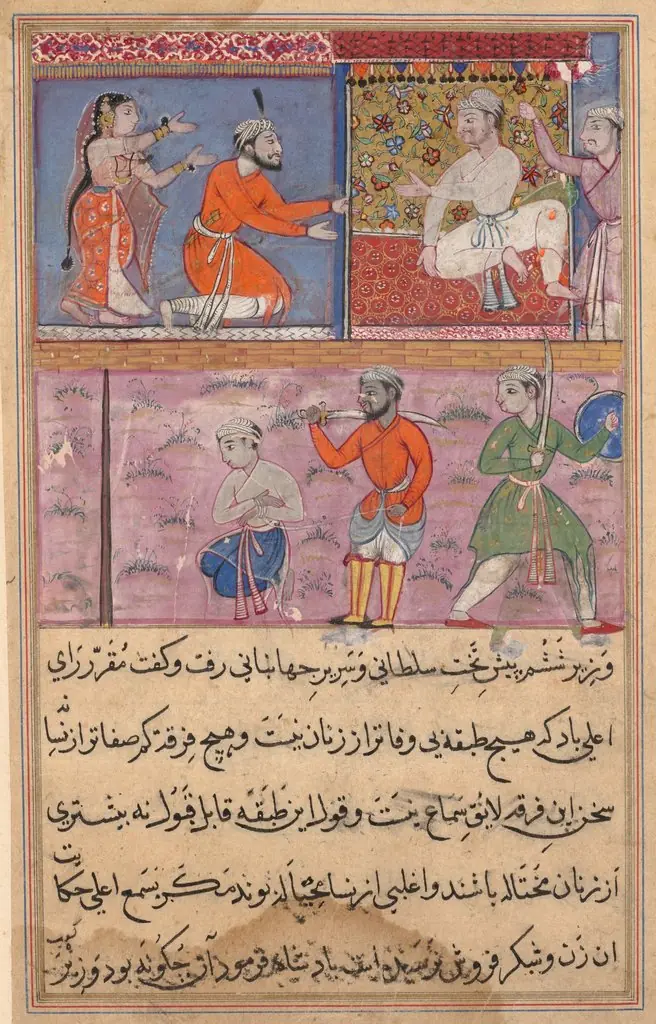 Page from Tales of a Parrot (Tuti-nama): text page
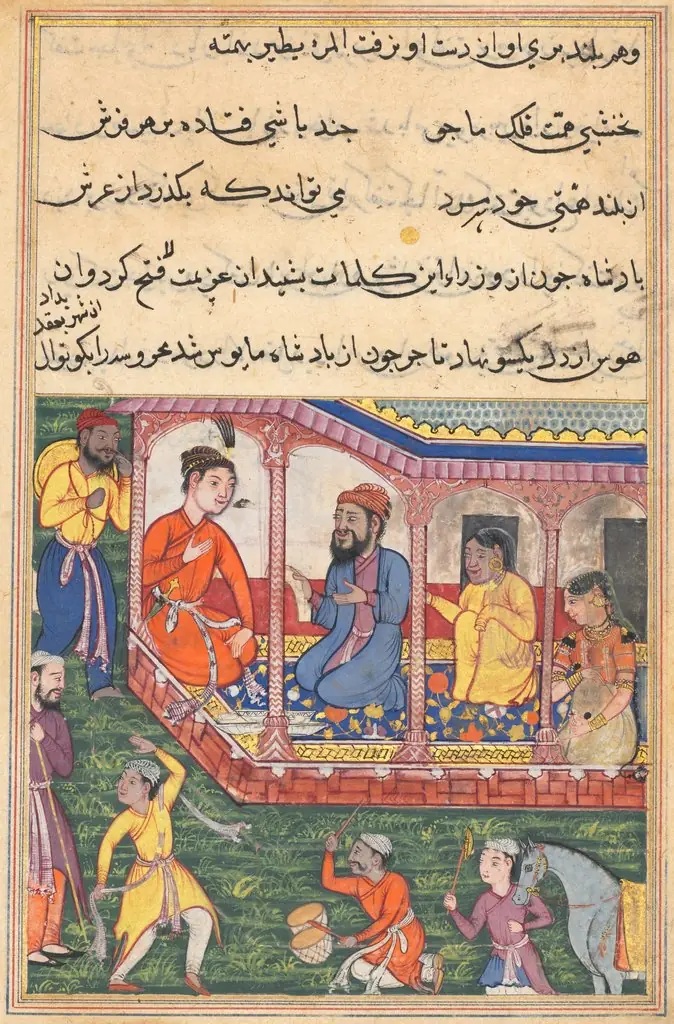 Mahrusa’s marriage to the prefect of the city, from a Tuti-nama (Tales of a Parrot): Thirty-sixth Night