Artwork
Page from Tales of a Parrot (Tuti-nama): text page
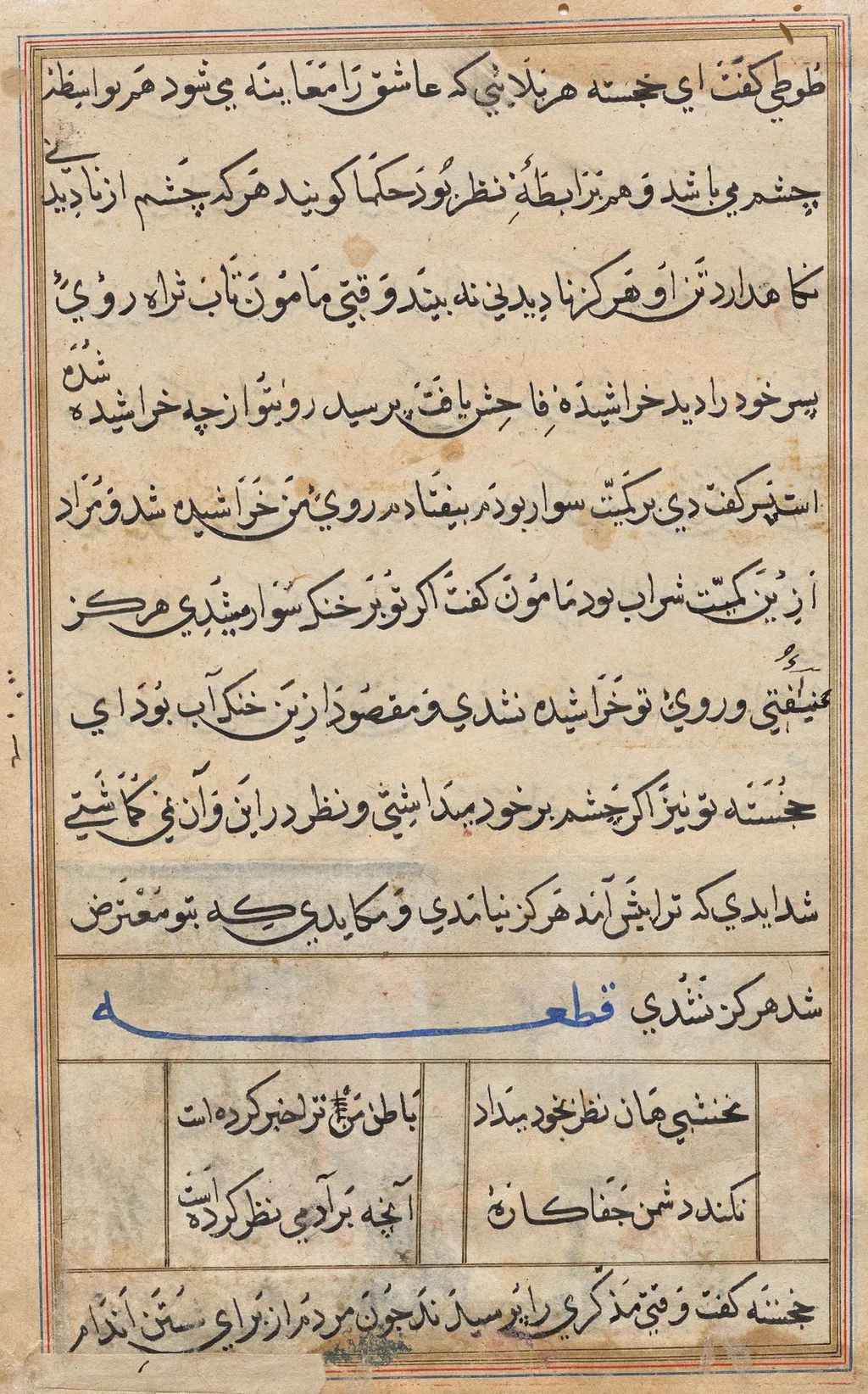
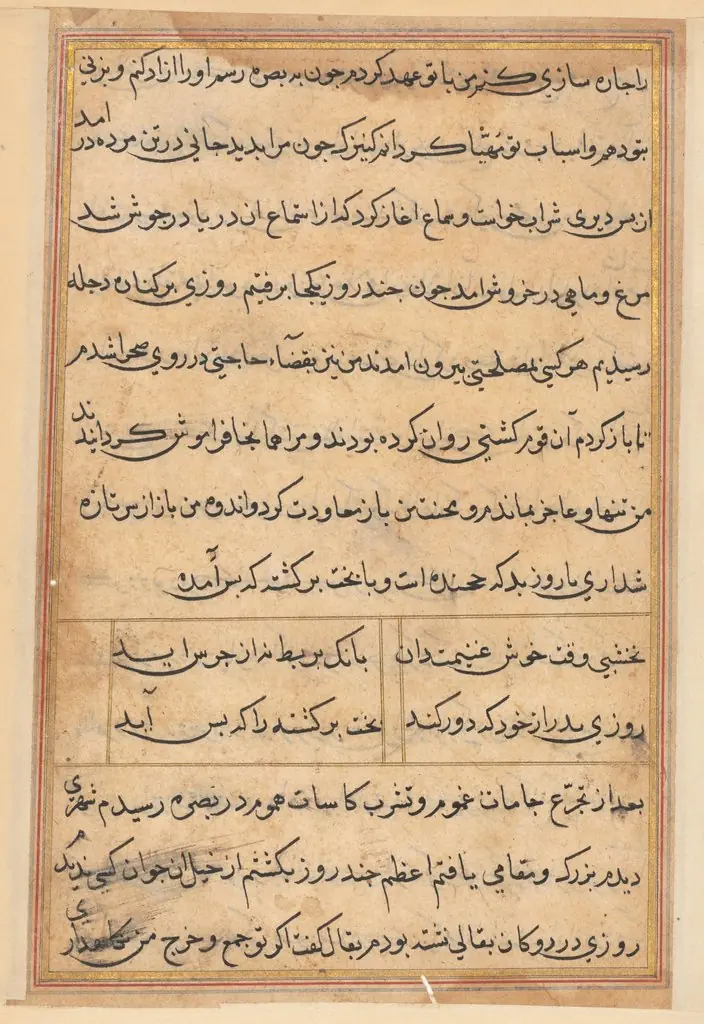
Page from Tales of a Parrot (Tuti-nama): text page is an unspecified painting. It dates from 1560 and is held in the collection of the Cleveland Museum of Art. This object is a single folio from the illustrated manuscript known as *Tuti‑nama* (Tales of a Parrot).
About this work
Overview
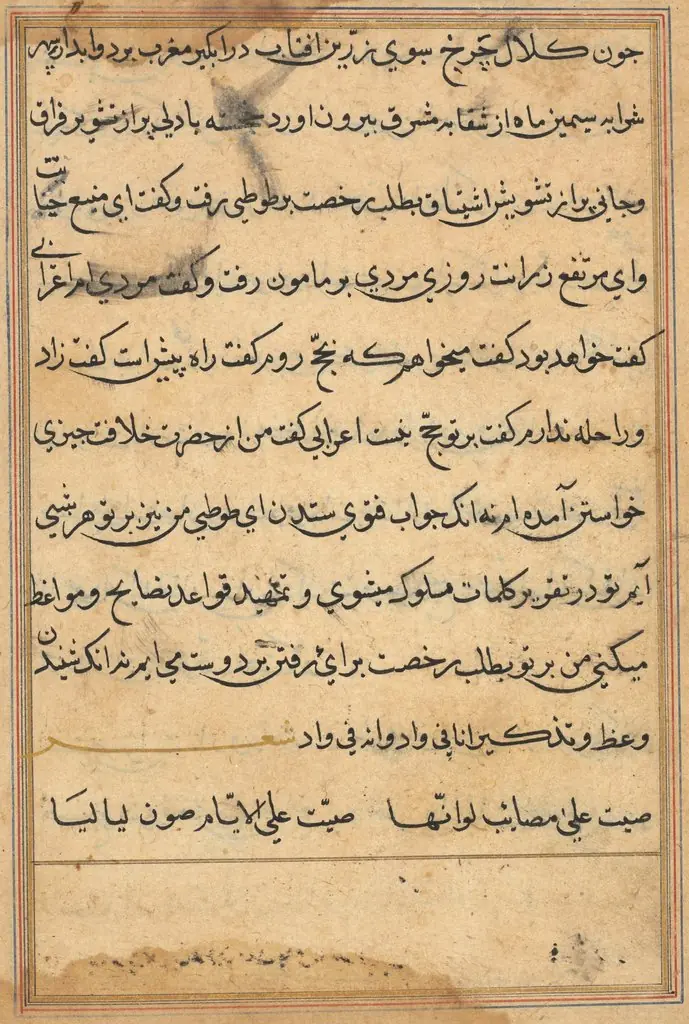
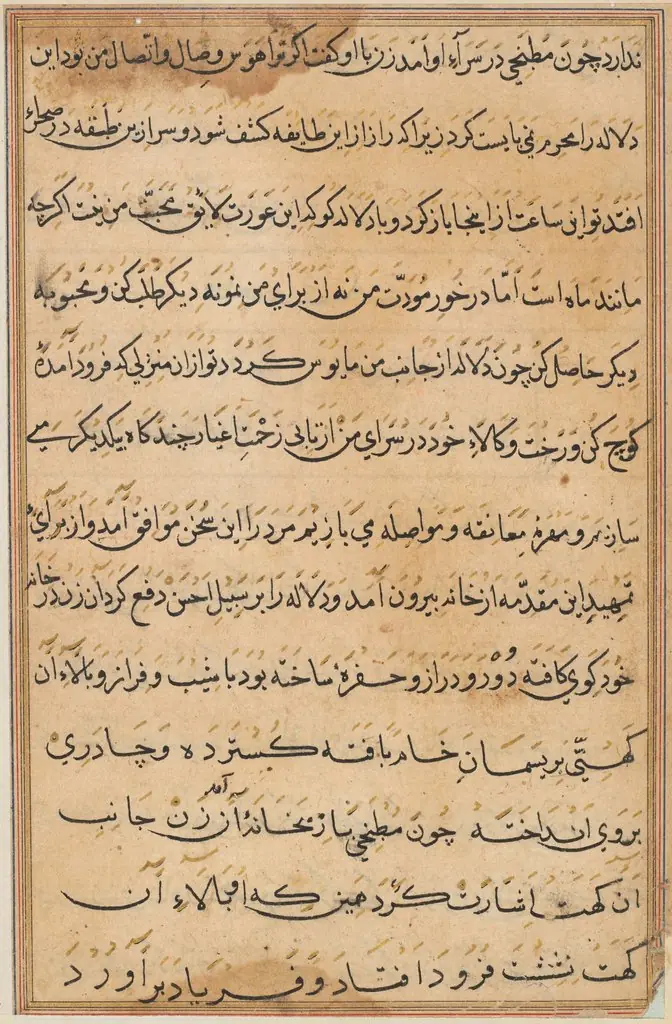
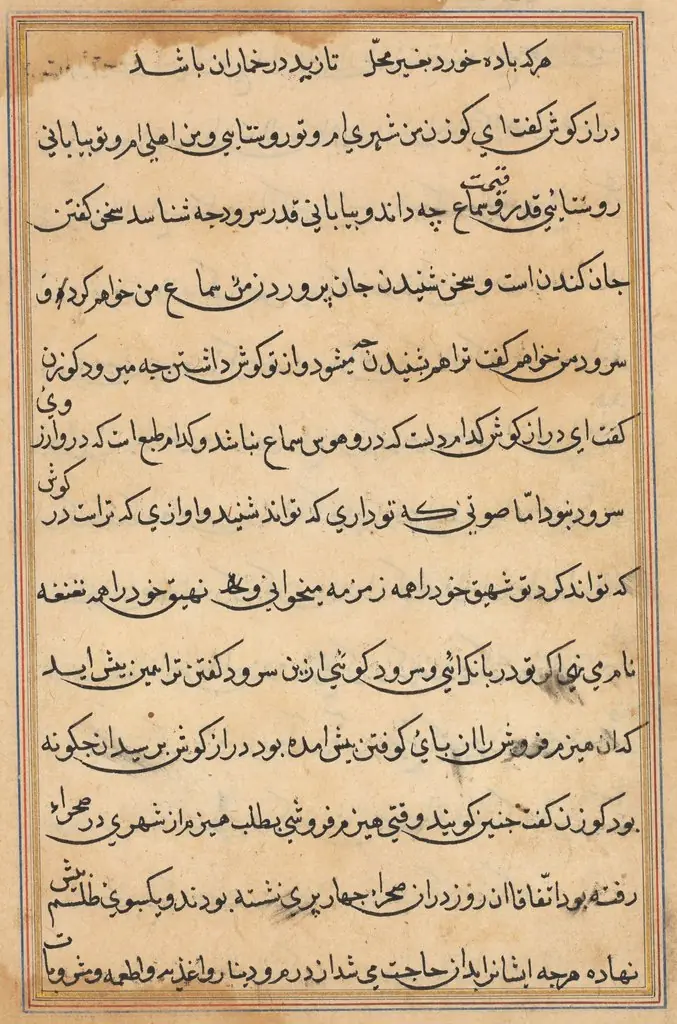
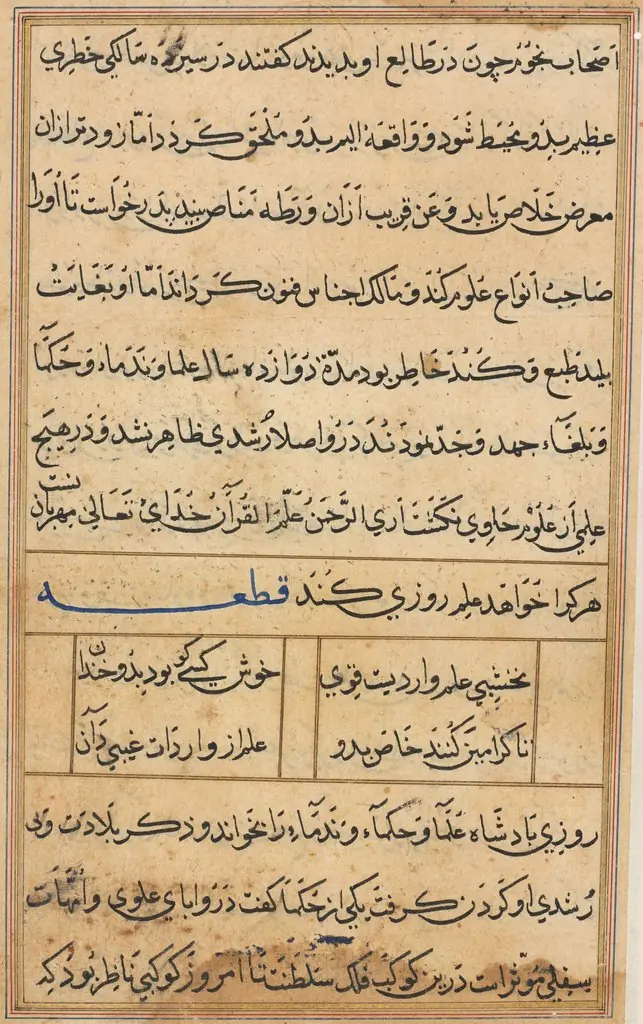
This object is a single folio from the illustrated manuscript known as *Tuti‑nama* (Tales of a Parrot). The page consists of dense black ink Arabic calligraphy, arranged in tightly packed, flowing lines. Thin blue bands frame certain lines, and occasional blue‑highlighted words function as visual cues, resembling arrows that draw the eye to related passages below.
Subject & Meaning
The text narrates a traditional story about a loquacious parrot, a motif common in Persian and Arabic folklore that often serves to convey moral lessons or social commentary through the bird's witty dialogue. The highlighted words likely mark key moments in the tale, guiding the reader through the narrative’s twists.
Technique & Style
The calligrapher employed a meticulous hand, using a reed pen to produce smooth, curved strokes characteristic of classical Arabic script. The integration of narrow blue borders and colored annotations reflects a decorative practice intended to enhance readability and aesthetic appeal without detracting from the primary black text.
History & Provenance
The folio originates from a medieval manuscript produced in the Islamic world, though the precise date and workshop remain unspecified. It entered the collection of the Cleveland Museum of Art as part of a larger acquisition of Persian and Arabic codices, where it is displayed alongside other pages from the same work.
Context
*Tuti‑nama* belongs to a genre of didactic literature that blends entertainment with ethical instruction, popular across the Middle East from the 12th to the 16th centuries. Such manuscripts were often copied by hand for elite patrons, indicating the cultural value placed on literary and artistic craftsmanship.
Legacy
Pages like this illustrate the interplay of text and ornamentation in pre‑modern Islamic book arts, informing contemporary scholarship on manuscript production, calligraphic styles, and the transmission of folklore across regions and centuries.
Artist & collection

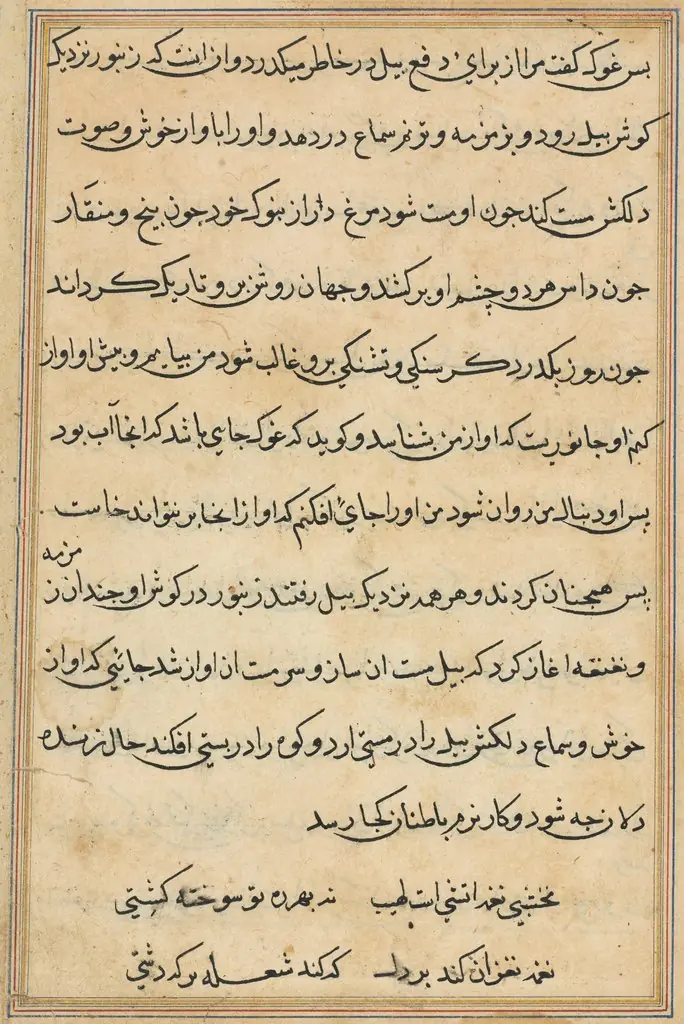 Page from Tales of a Parrot (Tuti-nama): text page
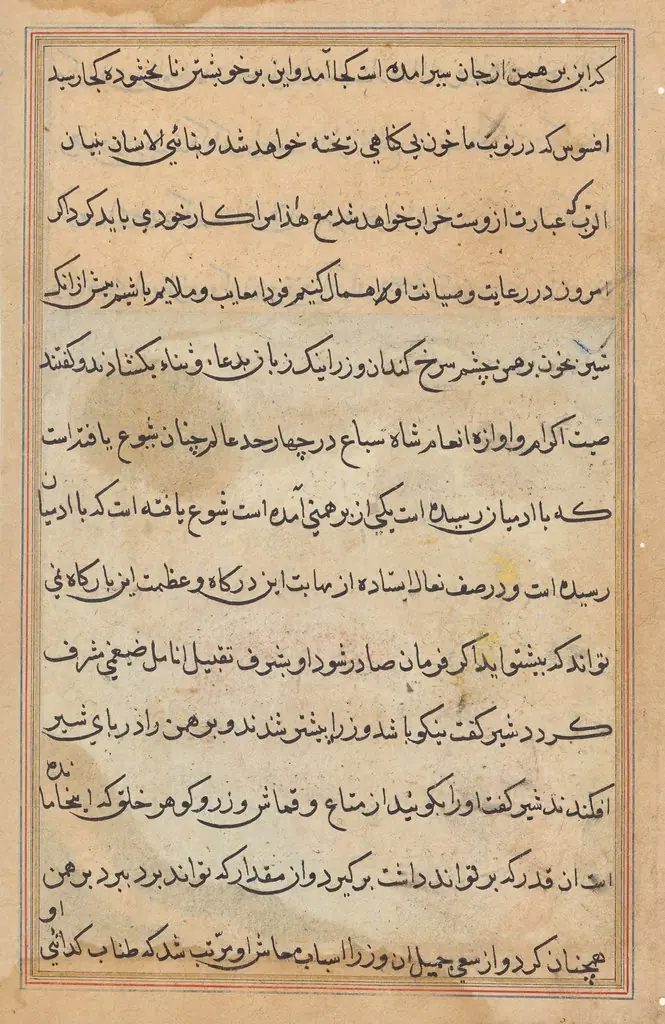 Page from Tales of a Parrot (Tuti-nama): text page
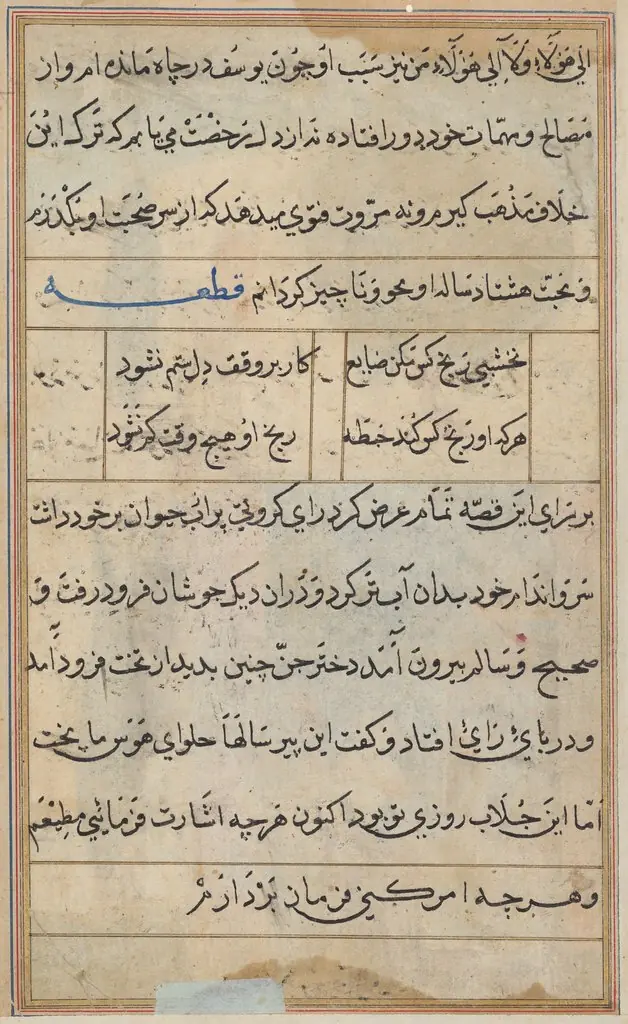 Page from Tales of a Parrot (Tuti-nama): text page
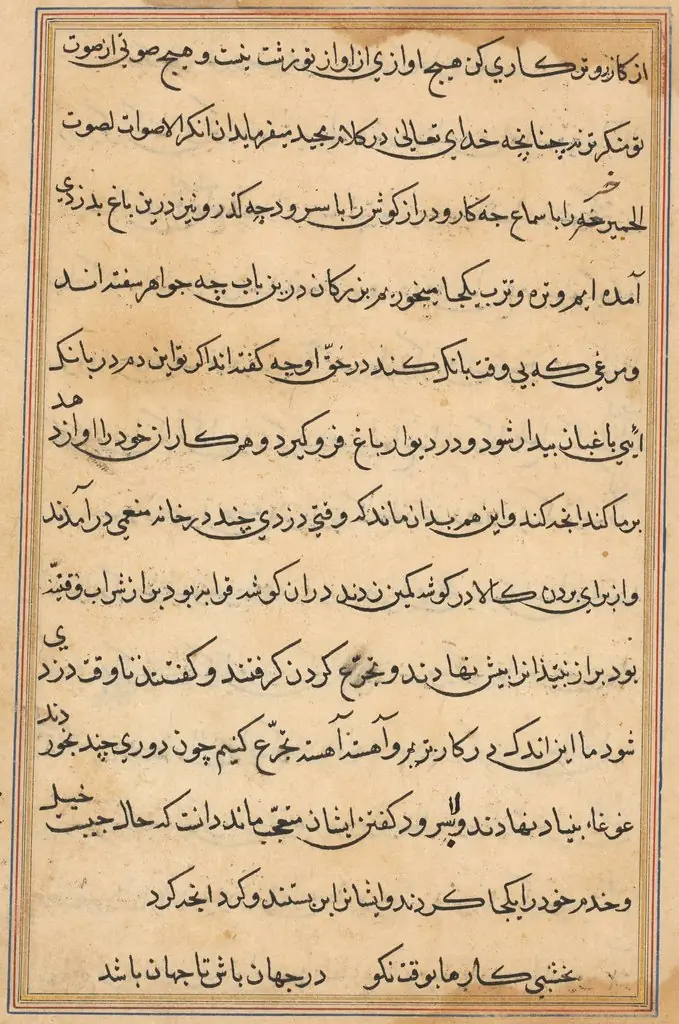 Page from Tales of a Parrot (Tuti-nama): text page
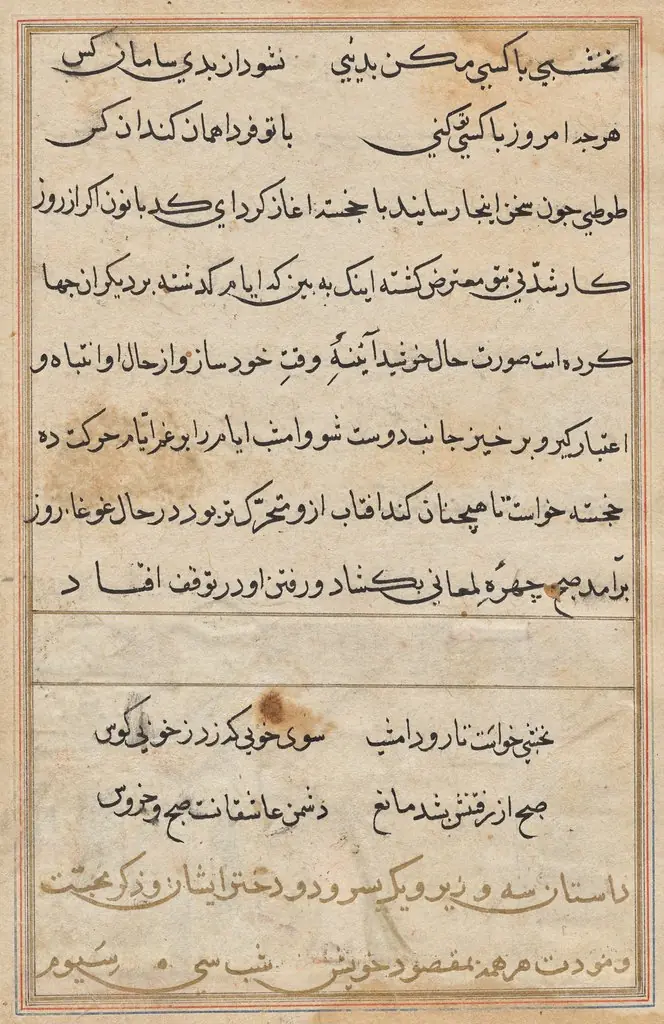 Page from Tales of a Parrot (Tuti-nama): text page
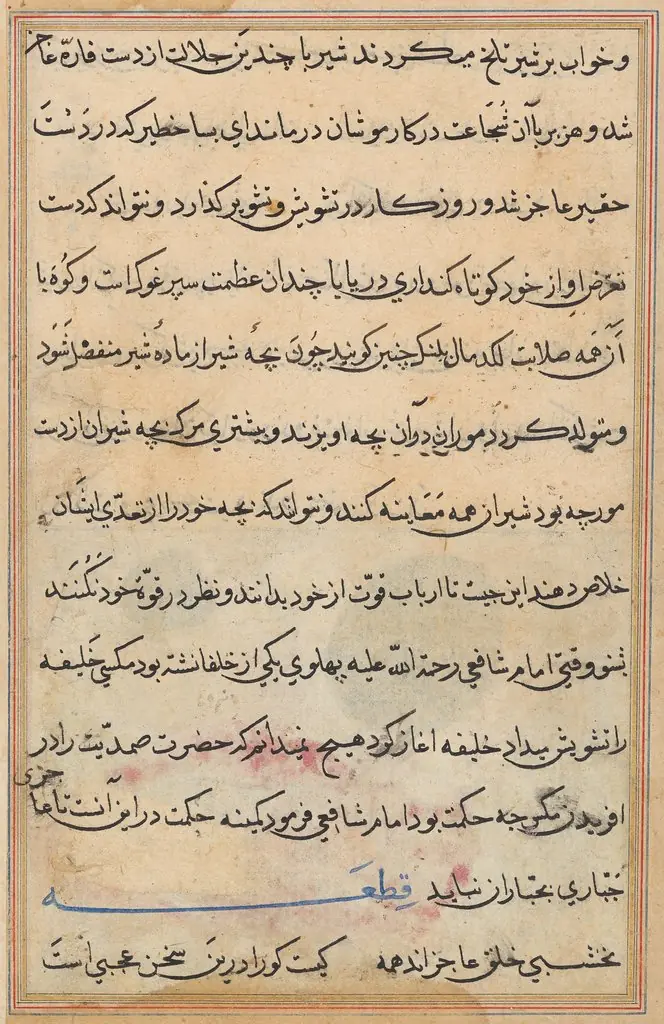 Page from Tales of a Parrot (Tuti-nama): text page
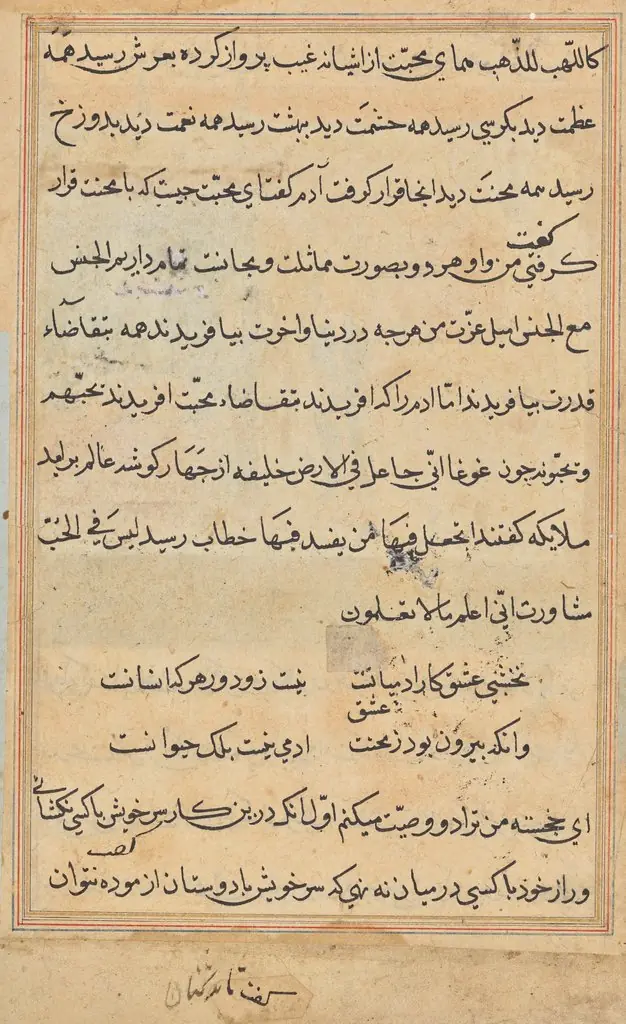 Page from Tales of a Parrot (Tuti-nama): text page
 Page from Tales of a Parrot (Tuti-nama): text page
 Page from Tales of a Parrot (Tuti-nama): text page
 Page from Tales of a Parrot (Tuti-nama): text page
 Page from Tales of a Parrot (Tuti-nama): text page
 Page from Tales of a Parrot (Tuti-nama): text page