Artwork
Page from Tales of a Parrot (Tuti-nama): text page
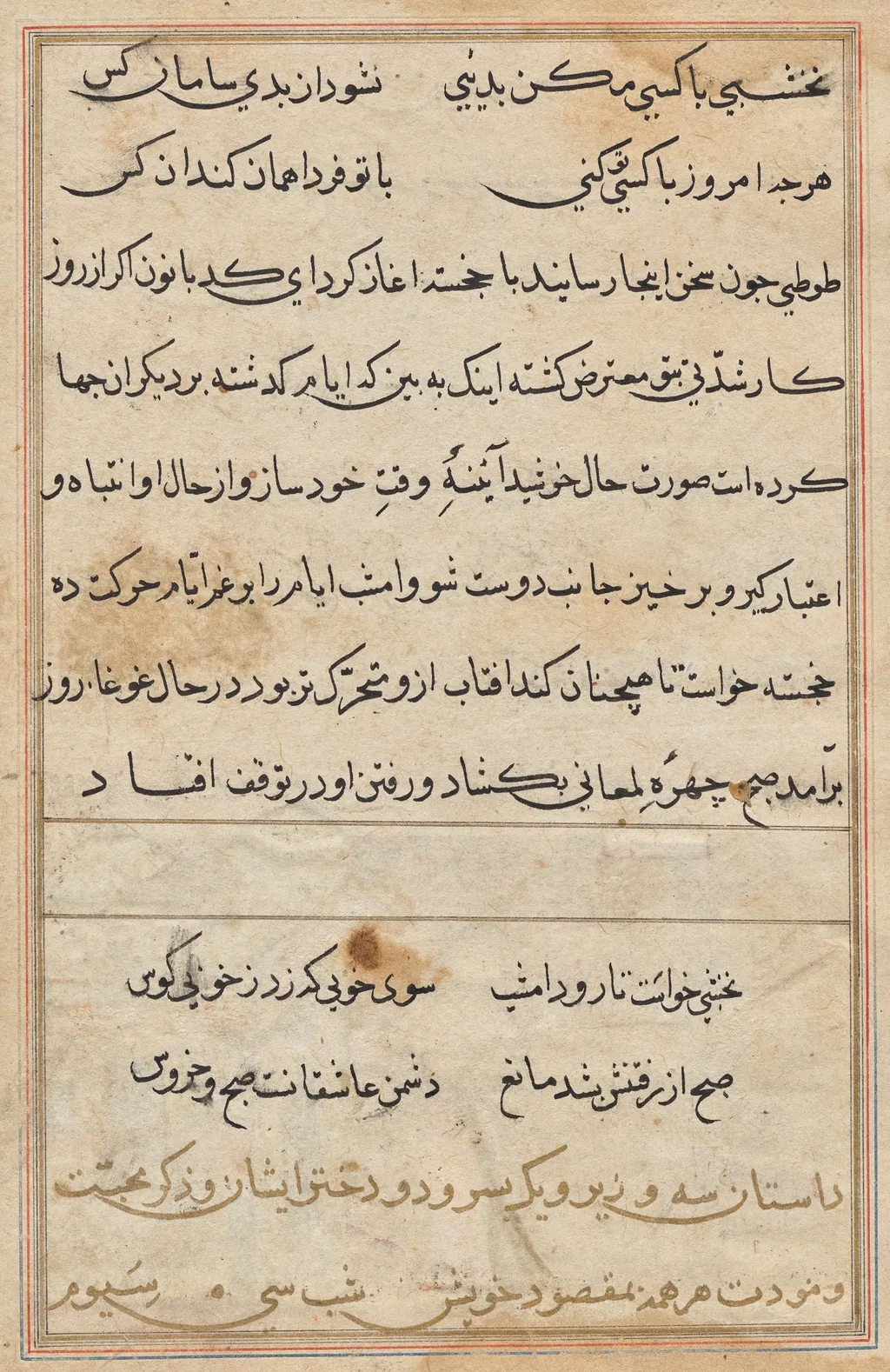
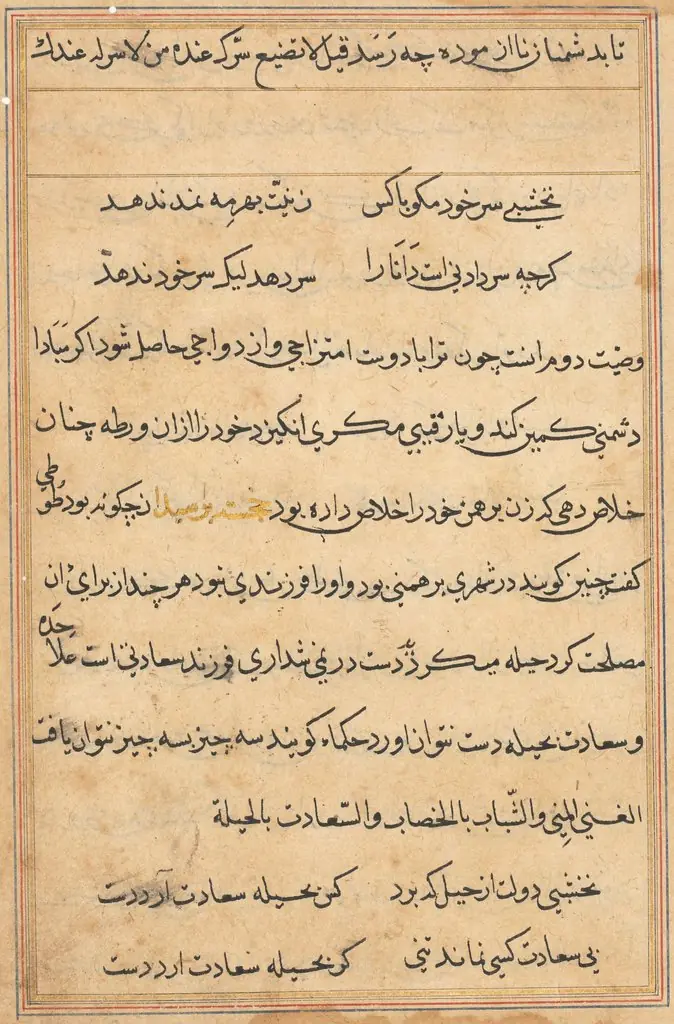
Page from Tales of a Parrot (Tuti-nama): text page is an unspecified painting. It dates from 1560 and is held in the collection of the Cleveland Museum of Art. This object is a single illustrated page from the Persian manuscript *Tuti‑nama* (Tales of a Parrot).
About this work
Overview
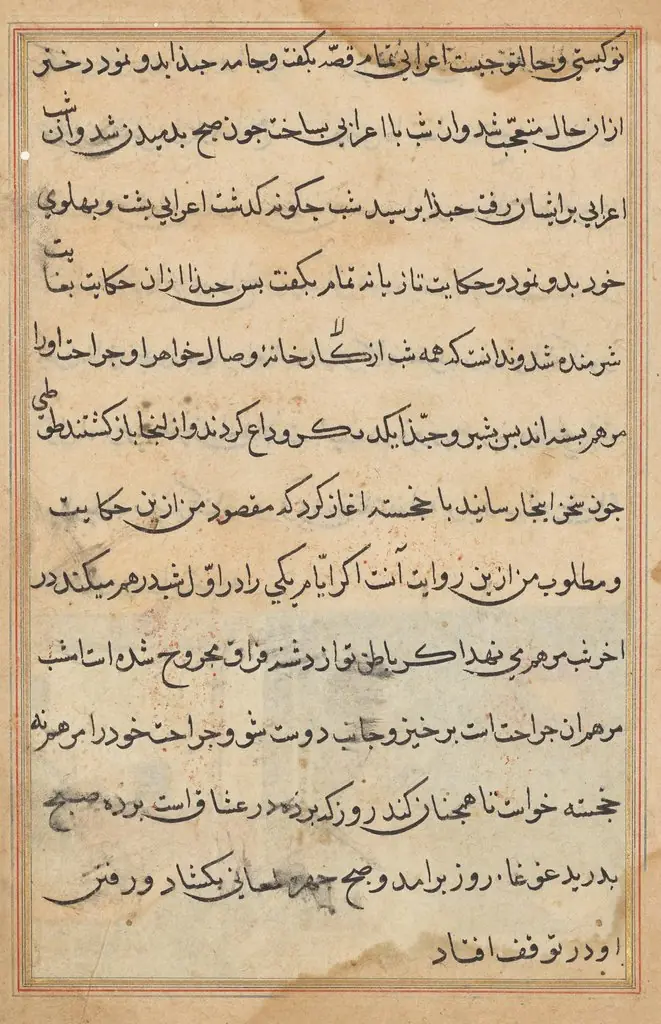
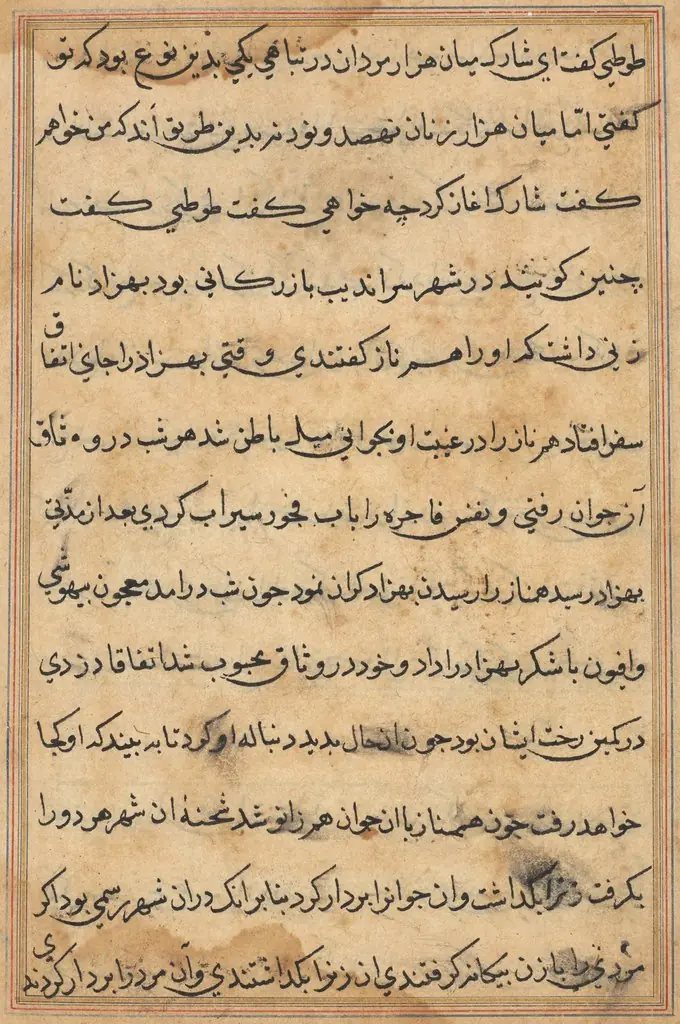
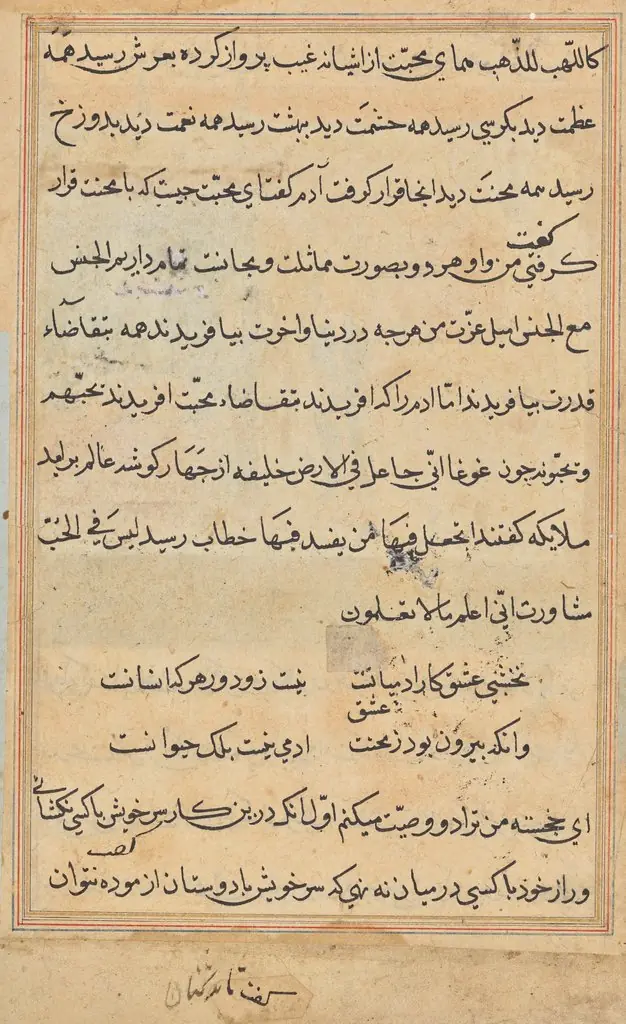
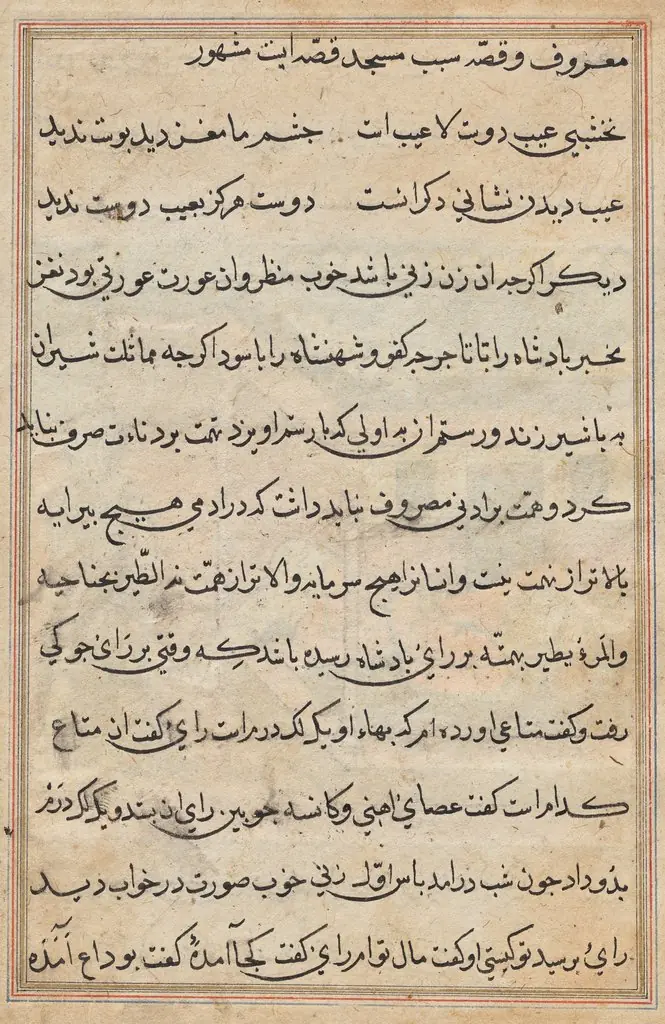
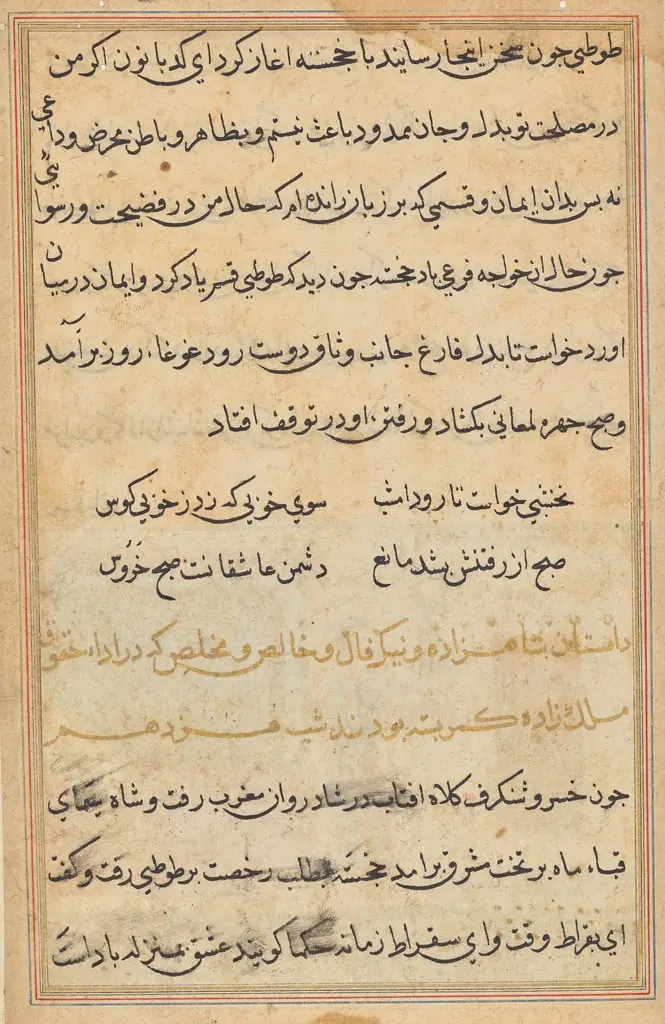
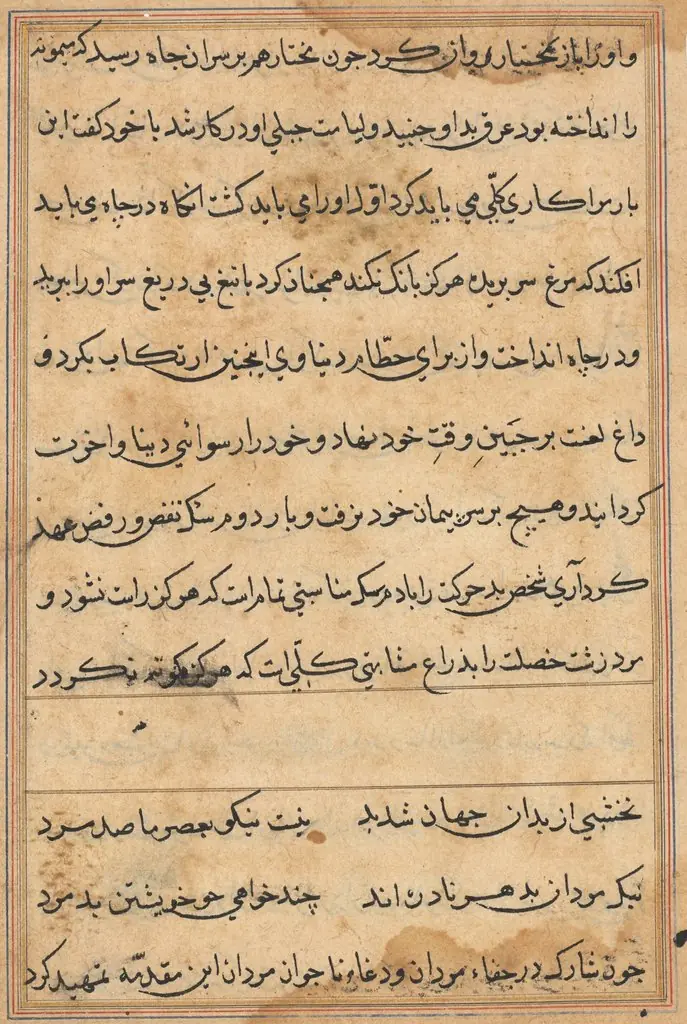
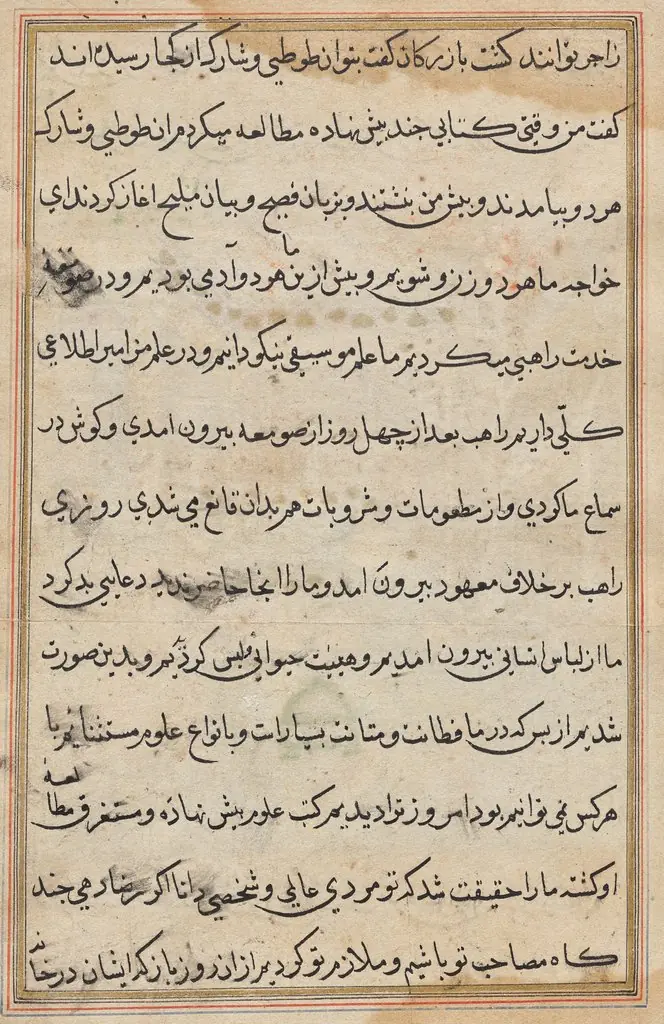
This object is a single illustrated page from the Persian manuscript *Tuti‑nama* (Tales of a Parrot). The sheet is composed of handwritten text in an elegant, flowing script, bordered by a narrow red line. The paper exhibits a patinated surface with minor stains and irregular edges, indicating age and handling.
Subject & Meaning
The page contains a portion of the *Tuti‑nama*, a moralistic collection of fables traditionally presented to royalty. In this copy, the narrative was commissioned for Prince Salim, suggesting the text was intended both as literary entertainment and as a vehicle for ethical instruction.
Technique & Style
The calligraphy is executed in a refined Persian hand, characterized by sweeping curves and decorative flourishes that enhance readability and visual appeal. The thin red border frames the text, a common decorative element in Safavid‑era manuscripts, providing a subtle contrast to the ivory‑toned paper.
History & Provenance
Created for a princely patron, the page reflects the courtly culture of early modern Persia. While specific details of its later ownership are not provided, the manuscript’s survival on paper with signs of wear indicates it was preserved and possibly circulated among elite collections before reaching a museum context.
Context
*Tuti‑nama* belongs to a broader tradition of illustrated Persian literature that combined poetic storytelling with moral lessons. Such works were often produced in royal workshops, where calligraphers and illuminators collaborated to produce objects that were both educational and aesthetically refined.
Legacy
Pages like this exemplify the high value placed on literary art in Persian courts and contribute to contemporary understanding of manuscript production, calligraphic styles, and the transmission of ethical narratives across generations.
Artist & collection

 Page from Tales of a Parrot (Tuti-nama): text page
 Page from Tales of a Parrot (Tuti-nama): text page
 Page from Tales of a Parrot (Tuti-nama): text page
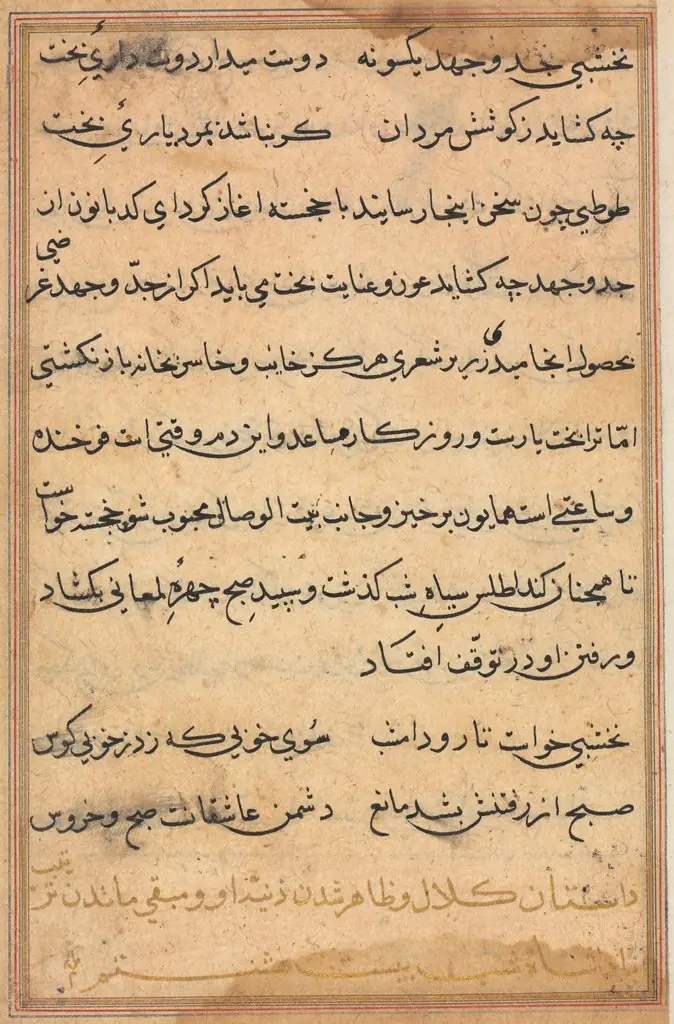 Page from Tales of a Parrot (Tuti-nama): text page
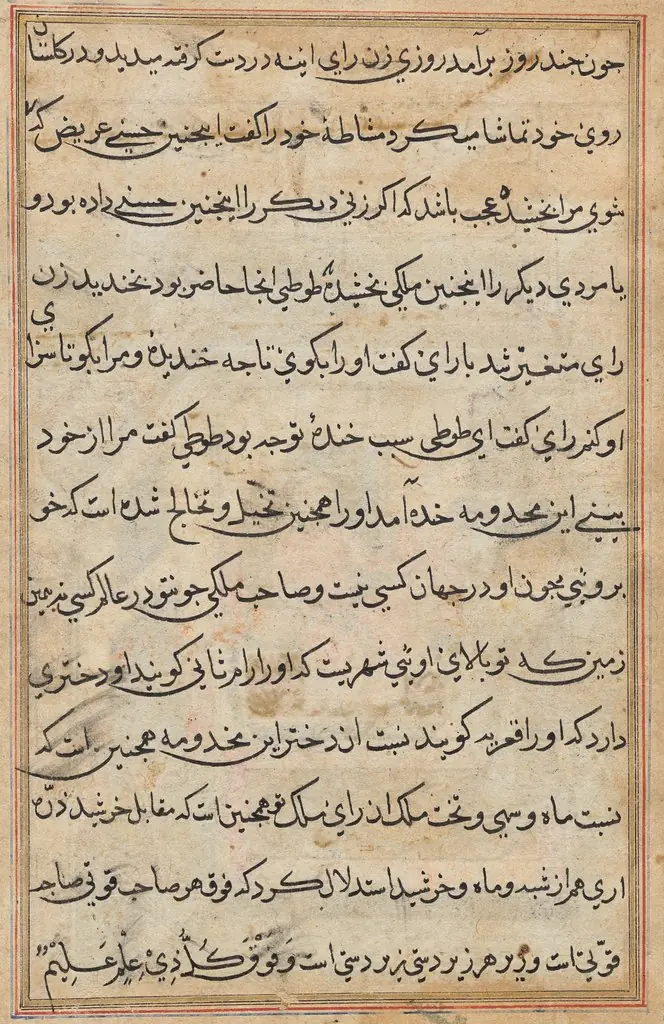 Page from Tales of a Parrot (Tuti-nama): text page
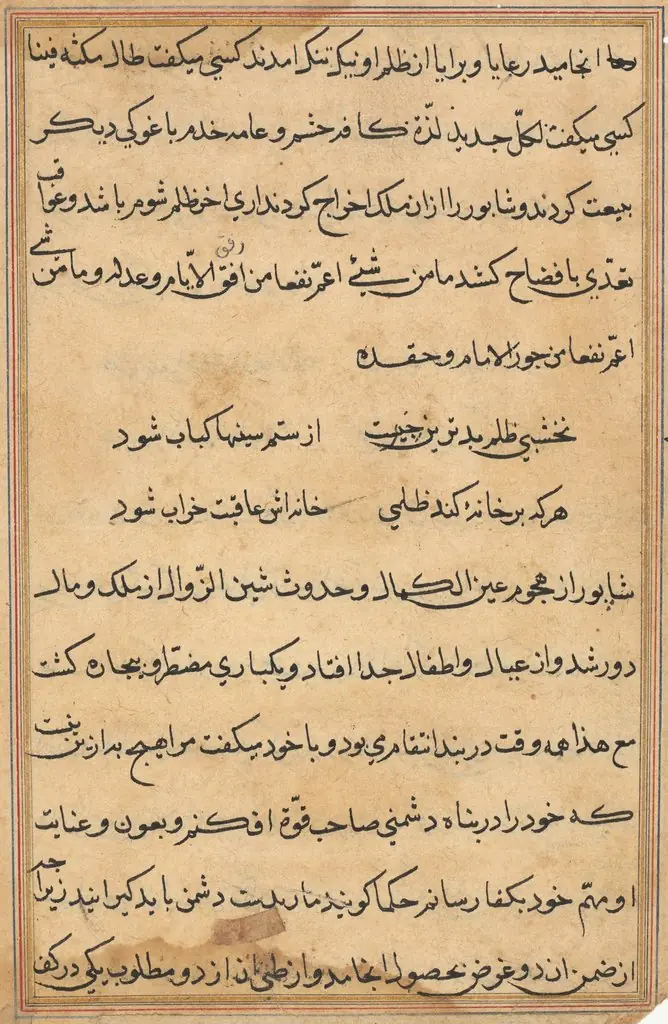 Page from Tales of a Parrot (Tuti-nama): text page
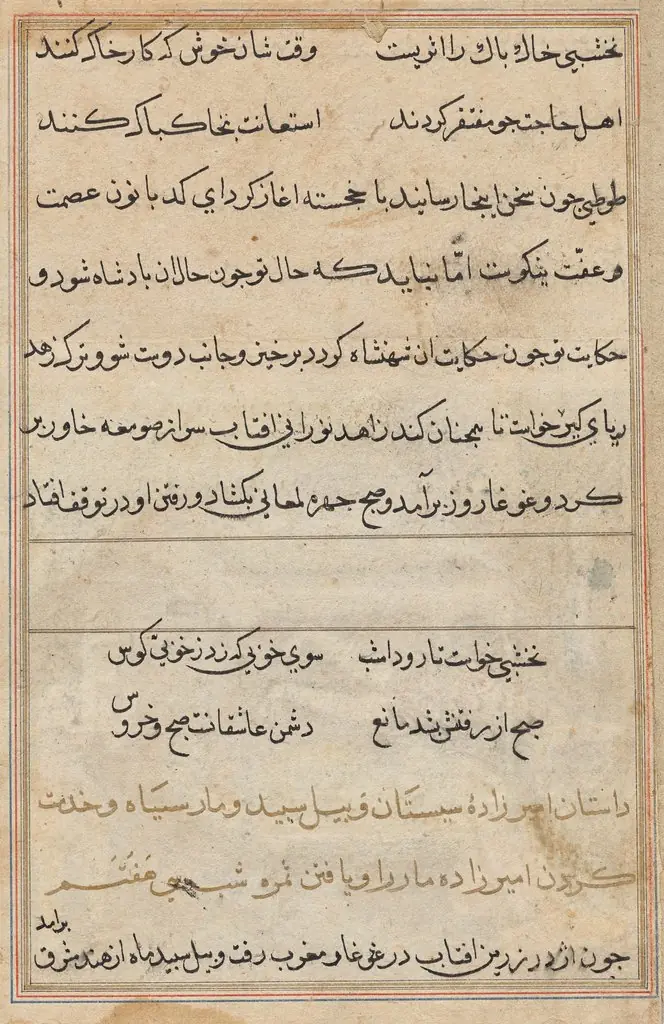 Page from Tales of a Parrot (Tuti-nama): text page
 Page from Tales of a Parrot (Tuti-nama): text page
 Page from Tales of a Parrot (Tuti-nama): text page
 Page from Tales of a Parrot (Tuti-nama): text page
 Page from Tales of a Parrot (Tuti-nama): text page
 Page from Tales of a Parrot (Tuti-nama): text page