Artwork
The merchant’s clerk replaces the sugar purchased by the philandering wife with gravel, from a Tuti-nama (Tales of a Parrot): Eighth Night
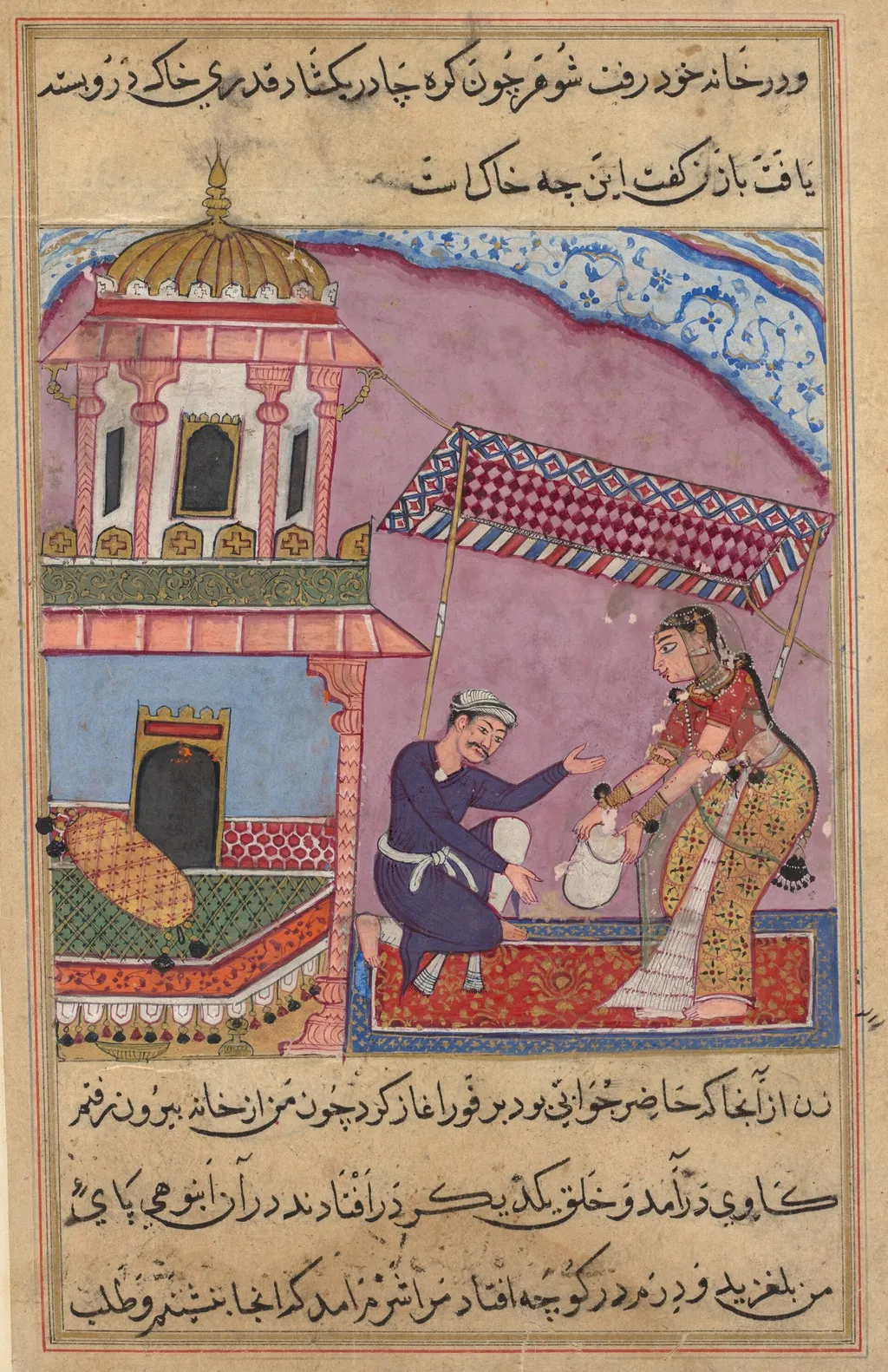
The merchant’s clerk replaces the sugar purchased by the philandering wife with gravel, from a Tuti-nama (Tales of a Parrot): Eighth Night is an unspecified painting. It dates from 1560 and is held in the collection of the Cleveland Museum of Art.
About this work
Overview
The work is a miniature painting illustrating a scene from the eighth night of the Persian collection of tales known as the Tuti‑nama, or Tales of a Parrot. It depicts a domestic episode in which a clerk substitutes gravel for the sugar a wife has purchased, a motif that underscores deceit and humor within the narrative.
Subject & Meaning
In the central tableau a man dressed in blue kneels on a red carpet, presenting an infant to a woman clad in a patterned red garment. The woman, holding an ornate umbrella, appears both surprised and resigned, reflecting the story’s focus on marital infidelity and the petty tricks that arise from it.
Technique & Style
Rendered in the traditional Persian miniature style, the painting employs flat, vivid pigments and precise outlines. The composition is framed by decorative borders bearing Persian‑Arabic script, and the architecture—featuring a golden dome and arched windows—adds a stylized, idealized backdrop typical of courtly manuscript illustration.
History & Provenance
The piece originates from a manuscript produced for a Persian patron in the late 16th or early 17th century, a period when illustrated storybooks were popular among the literate elite. It entered a Western collection in the early 20th century, eventually becoming part of the Cleveland Museum of Art’s holdings.
Context
The Tuti‑nama combines moral instruction with entertainment, using everyday domestic scenes to convey broader social values. This particular episode reflects contemporary concerns about marital fidelity, commerce, and the cleverness of servants, themes that resonated with audiences across the Islamic world.
Artist & collection

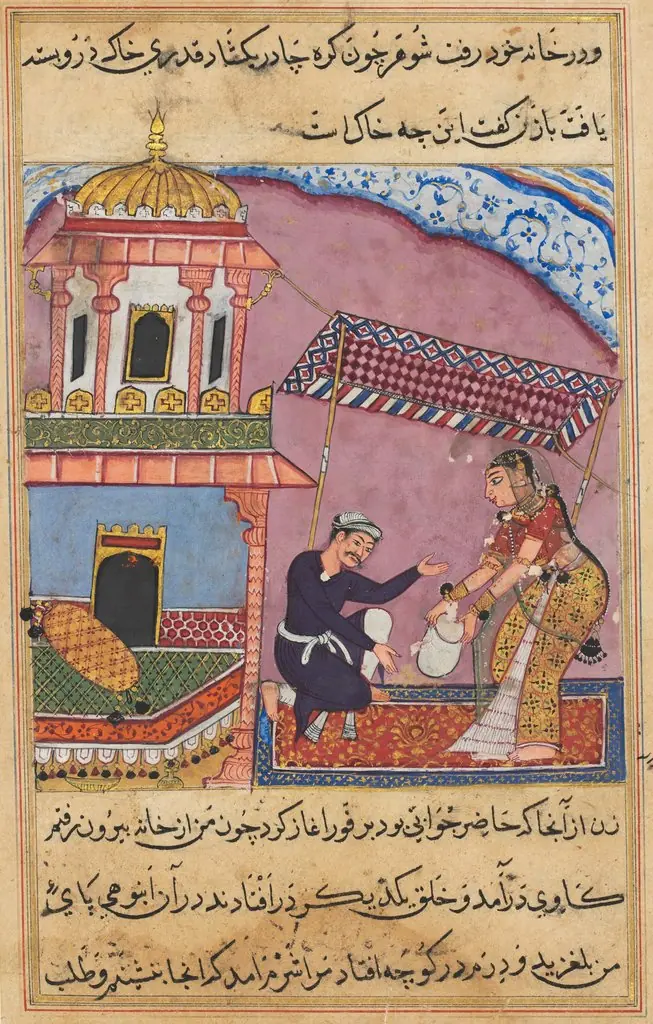 The husband berates his wife for purchasing gravel instead of sugar, from a Tuti-nama (Tales of a Parrot): Eighth Night
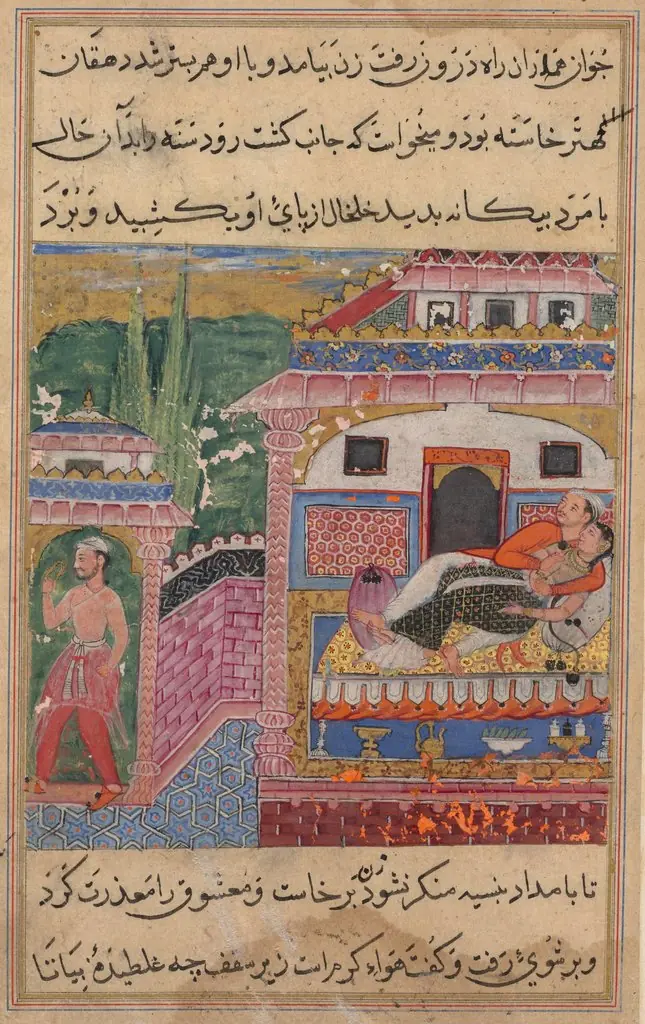 The deceitful wife persuades her husband to sleep in the same place where she had previously slept with her lover, from a Tuti-nama (Tales of a Parrot): Eighth Night
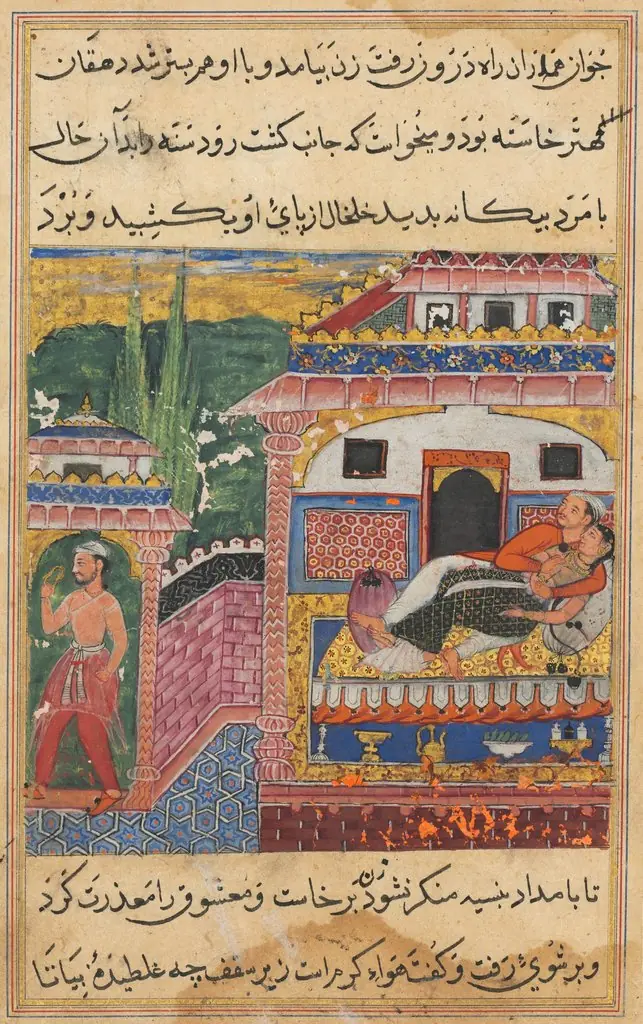 The farmer, father of the son with the deceitful wife, steals away with her anklet while she is in bed with her lover, from a Tuti-nama (Tales of a Parrot): Eighth Night
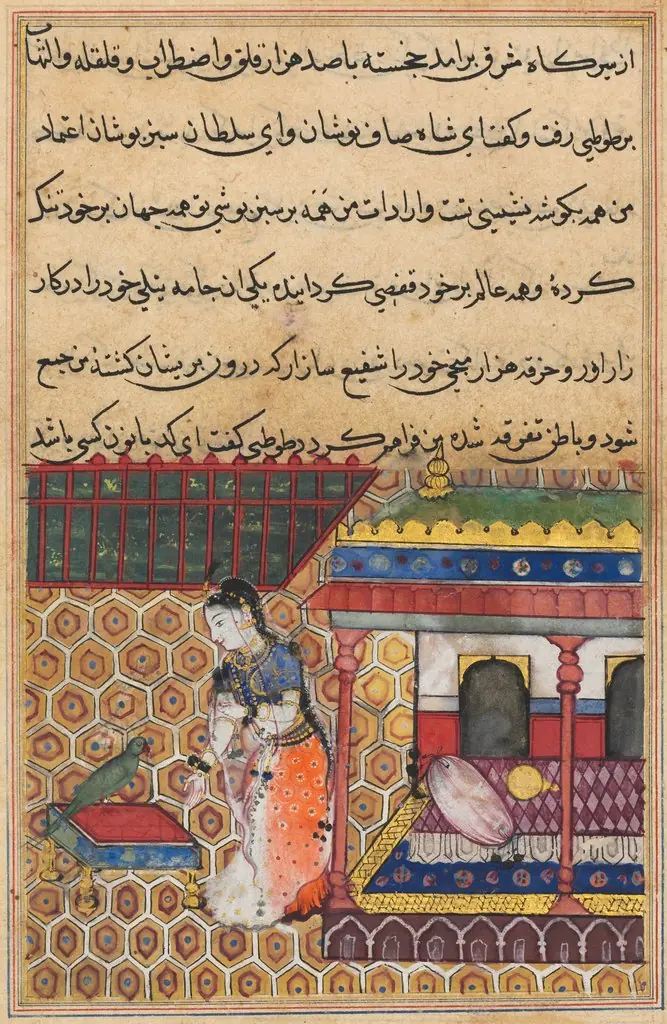 The parrot addresses Khujasta at the beginning of the thirty-eighth night, from a Tuti-nama (Tales of a Parrot)
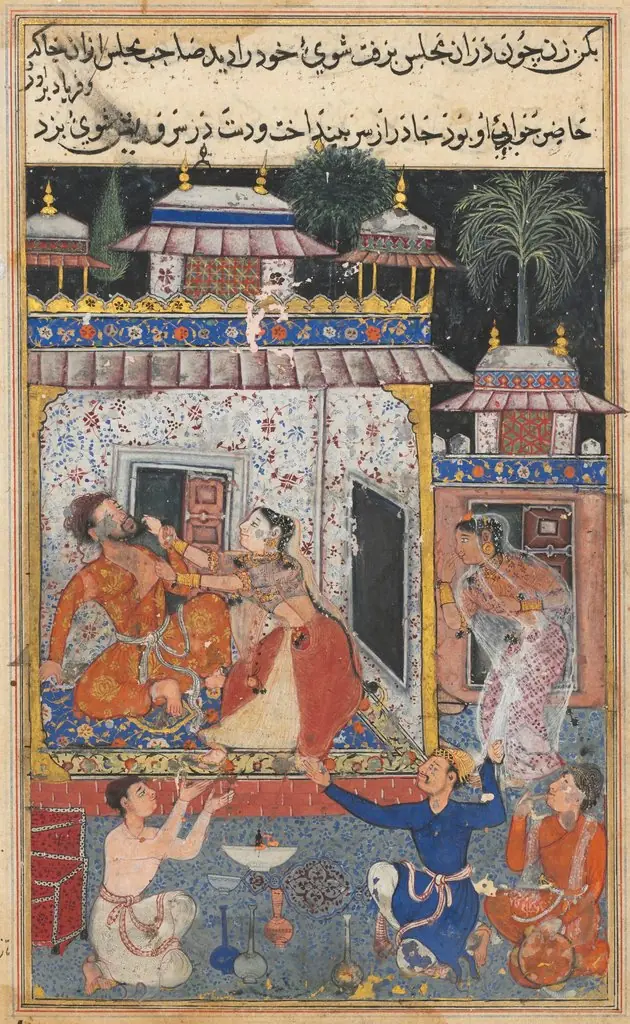 The deceitful wife assaults her erring husband, from a Tuti-nama (Tales of a Parrot): Eighth Night
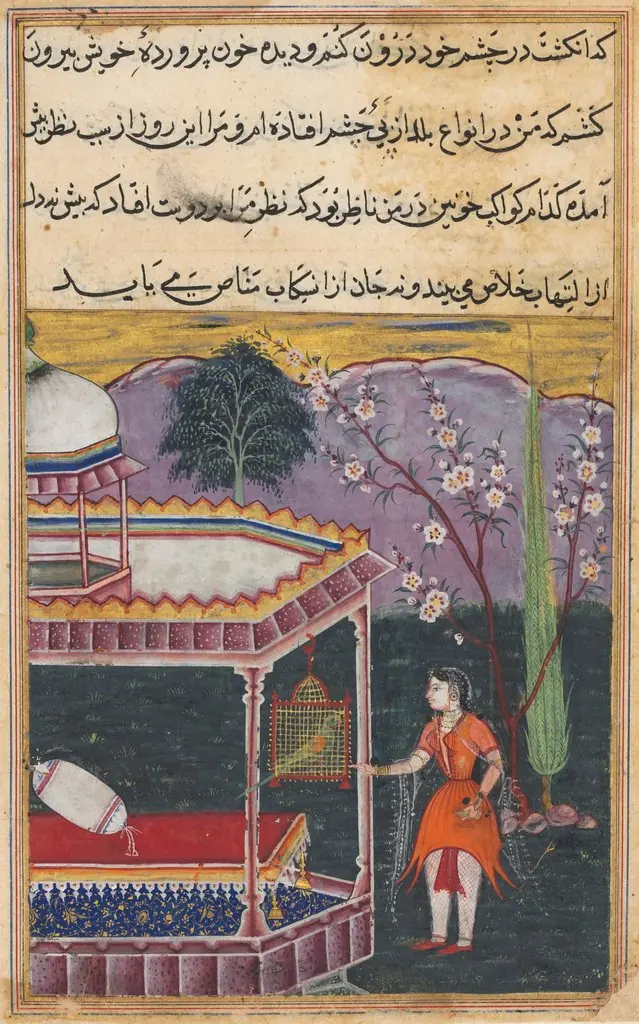 The Parrot Addresses Khujasta at the Beginning of the Eighth Night, from a Tuti-nama (Tales of a Parrot)
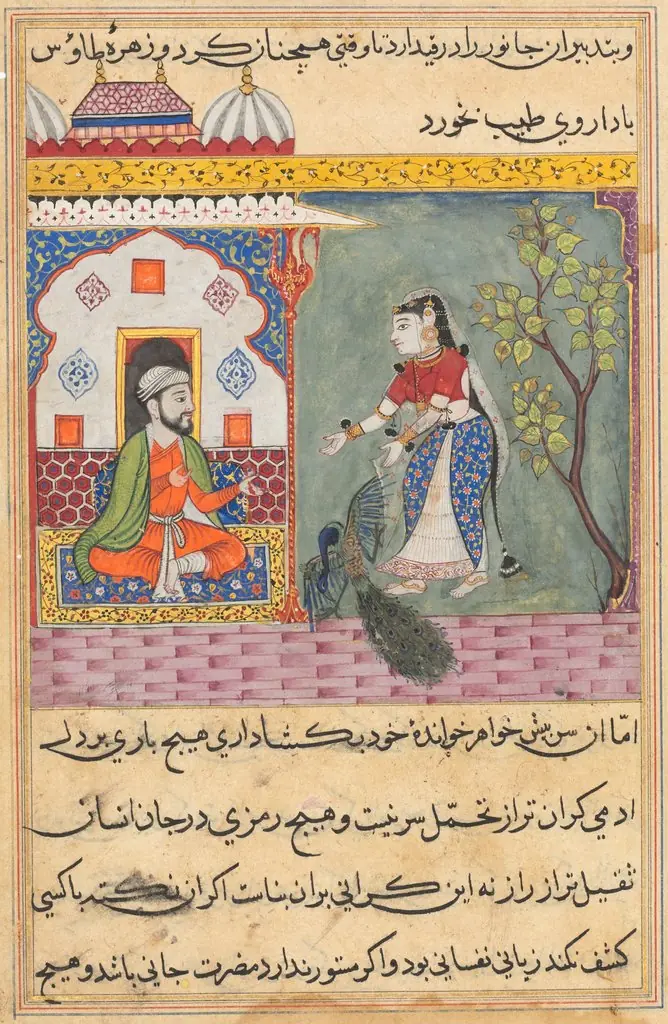 The Brahman’s wife who killed a peacock and ate its gallbladder on the physician’s advice, from a Tuti-nama (Tales of a Parrot): Nineteenth Night
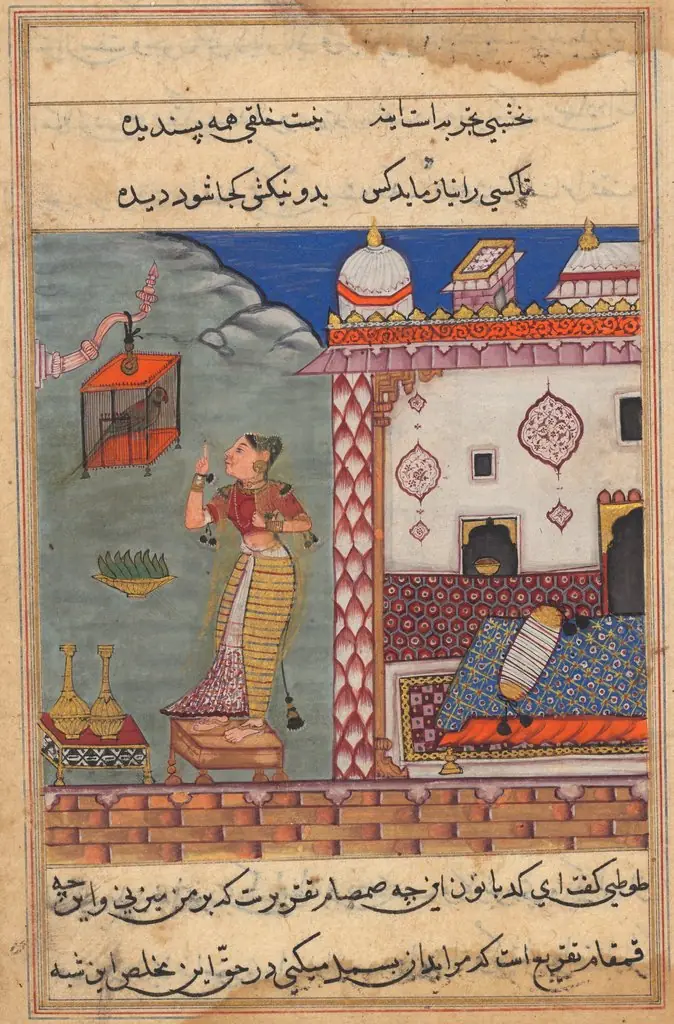 The Parrot Addresses Khujasta at the Beginning of the Twenty-seventh Night, form a Tuti-nama (Tales of a Parrot)
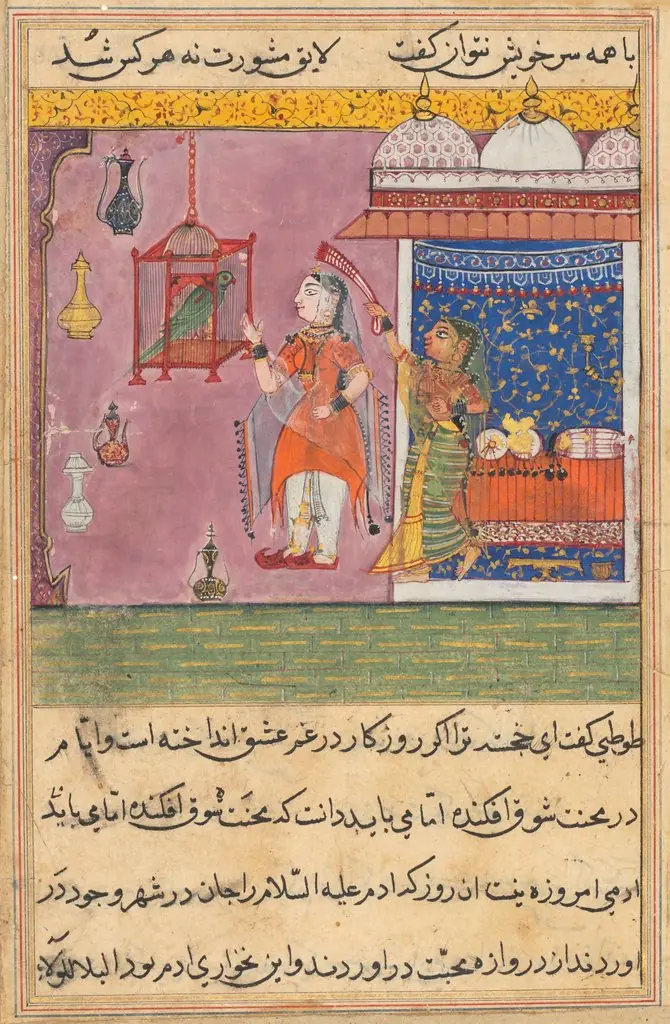 The Parrot Addresses Khujasta at the Beginning of the Nineteenth Night, from a Tuti-nama (Tales of a Parrot)
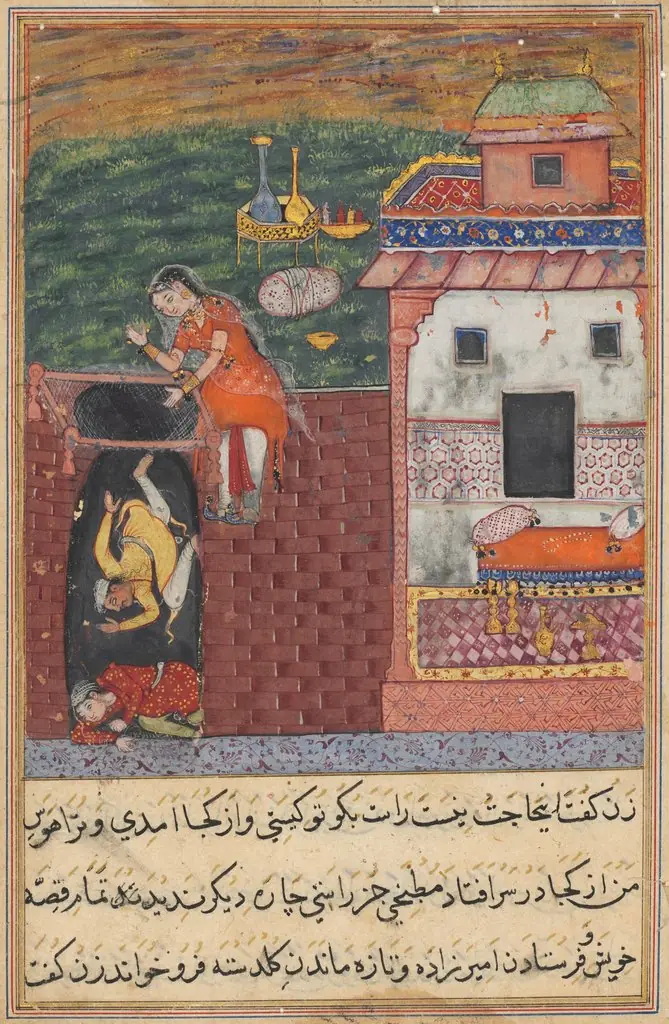 The two cooks, who attempt to seduce the warrior’s loyal wife, are trapped by her in a cellar, from a Tuti-nama (Tales of a Parrot): Fourth Night
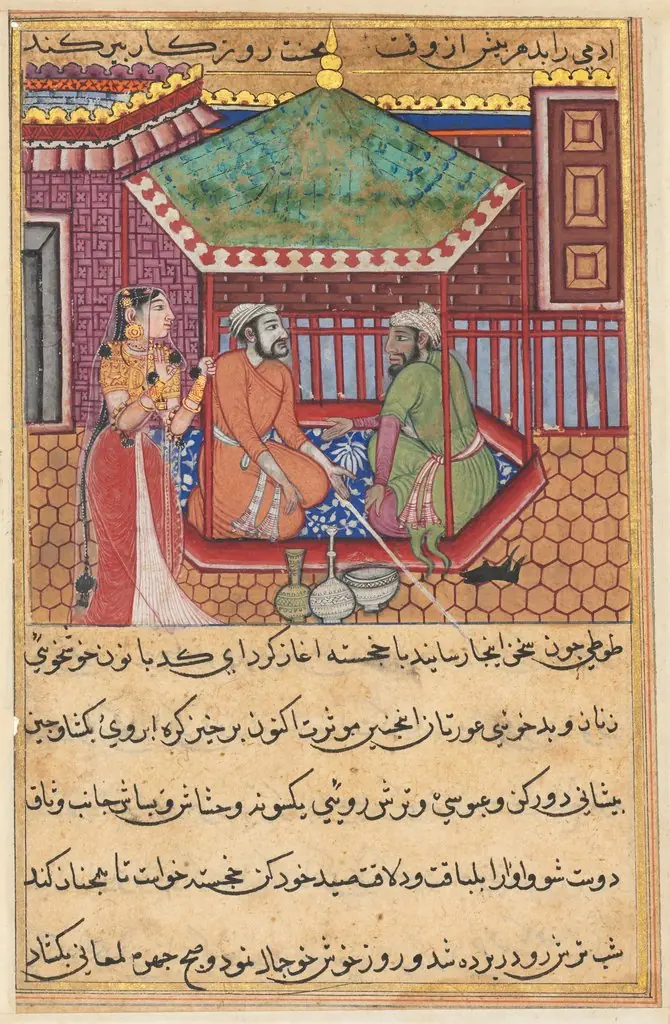 The eldest brother explains the reason for his youthful appearance, from a Tuti-nama (Tales of a Parrot): Forty-ninth Night
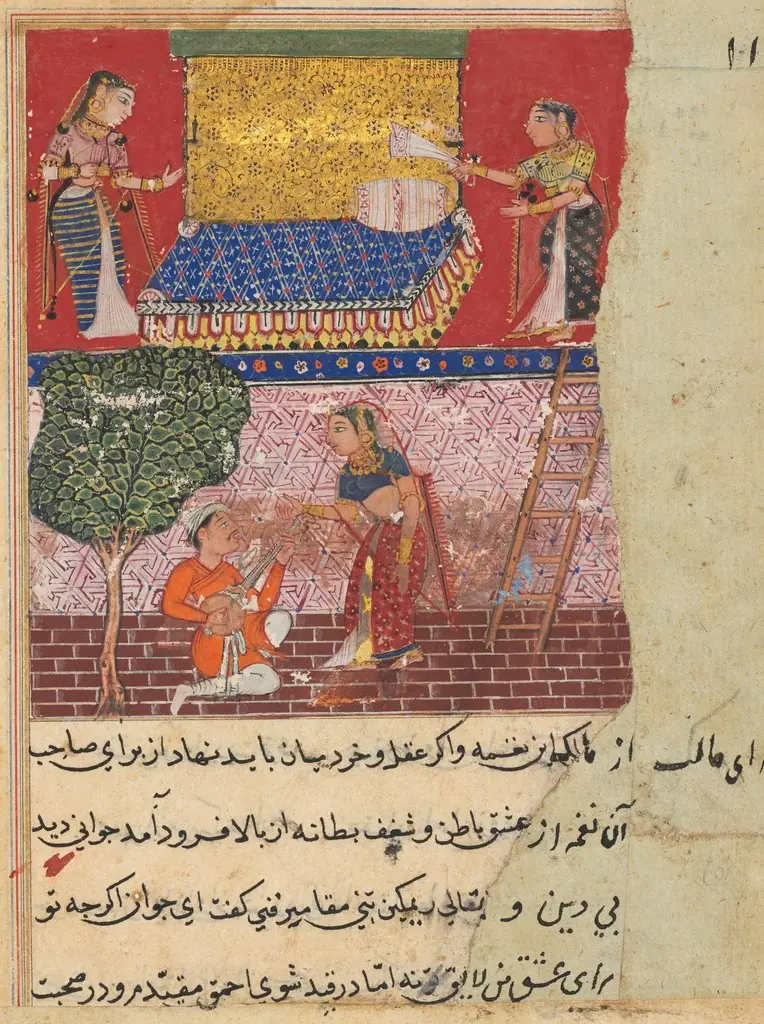 The daughter-in-law of the king of Banaras, charmed by the music of a vagabond, comes down to meet him, from a Tuti-nama (Tales of a Parrot): Sixteenth Night
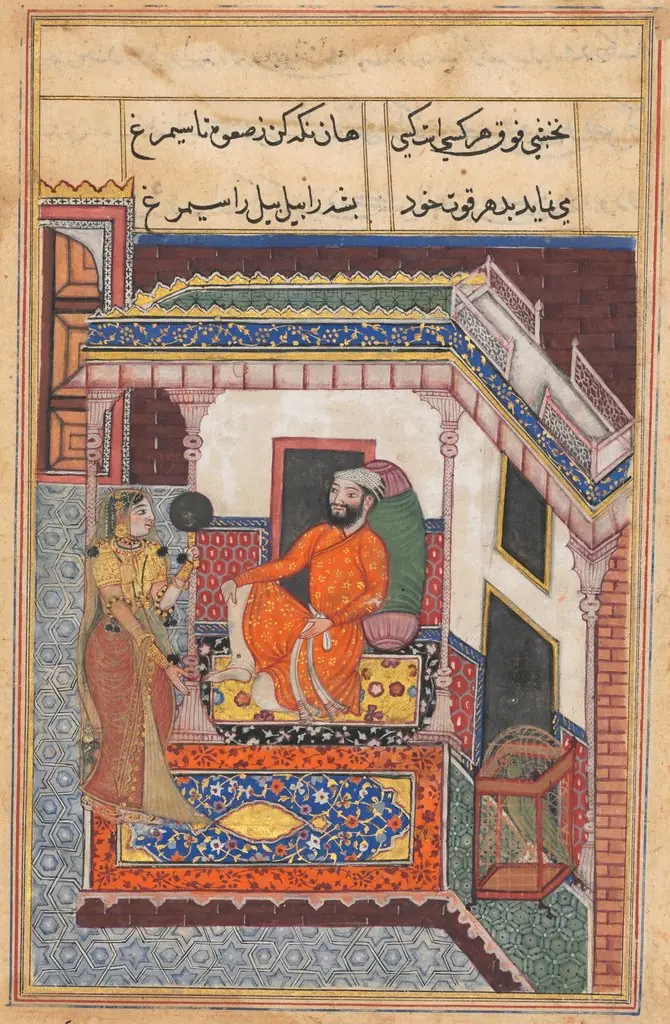 The parrot laughs on hearing the Raja of Ujjain’s wife admire her beauty in a mirror, from a Tuti-nama (Tales of a Parrot: Forty-sixth Night
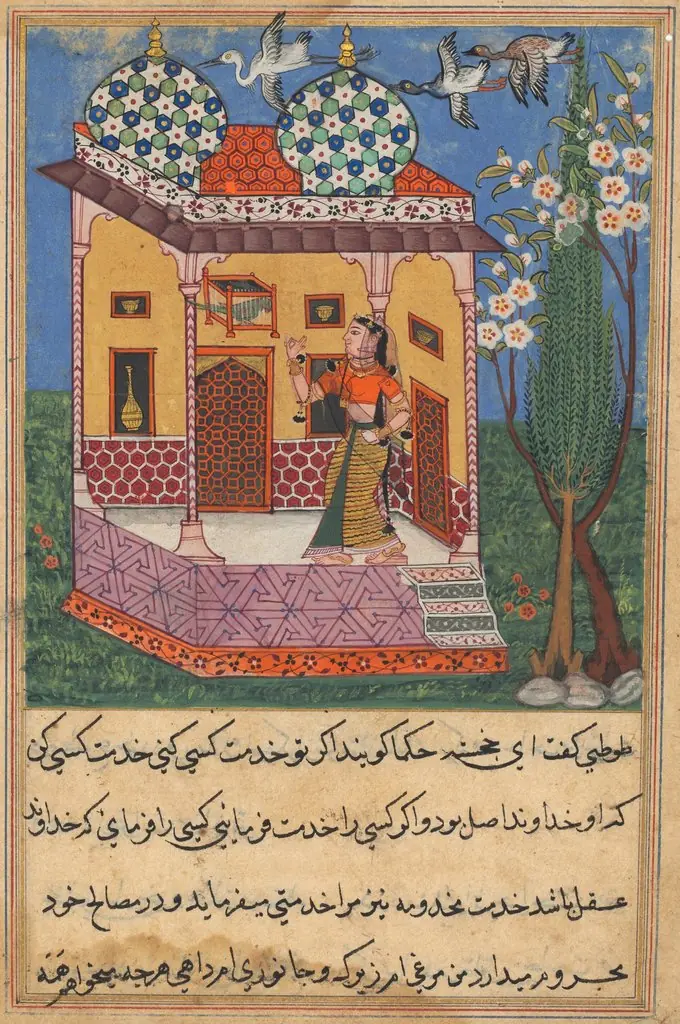 The Parrot Addresses Khujasta at the Beginning of the Twenty-sixth Night, from a Tuti-nama (Tales of a Parrot)
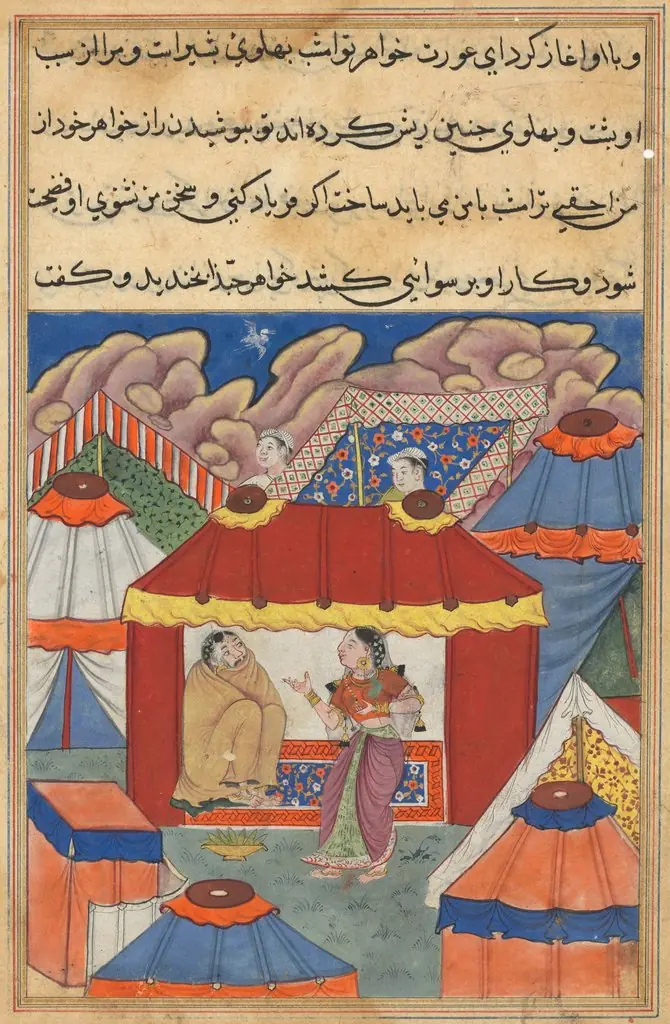 Habbaza’s sister, who is sent to console her, discovers the disguised Arab in her place, from a Tuti-nama (Tales of a Parrot): Twenty-fourth Night
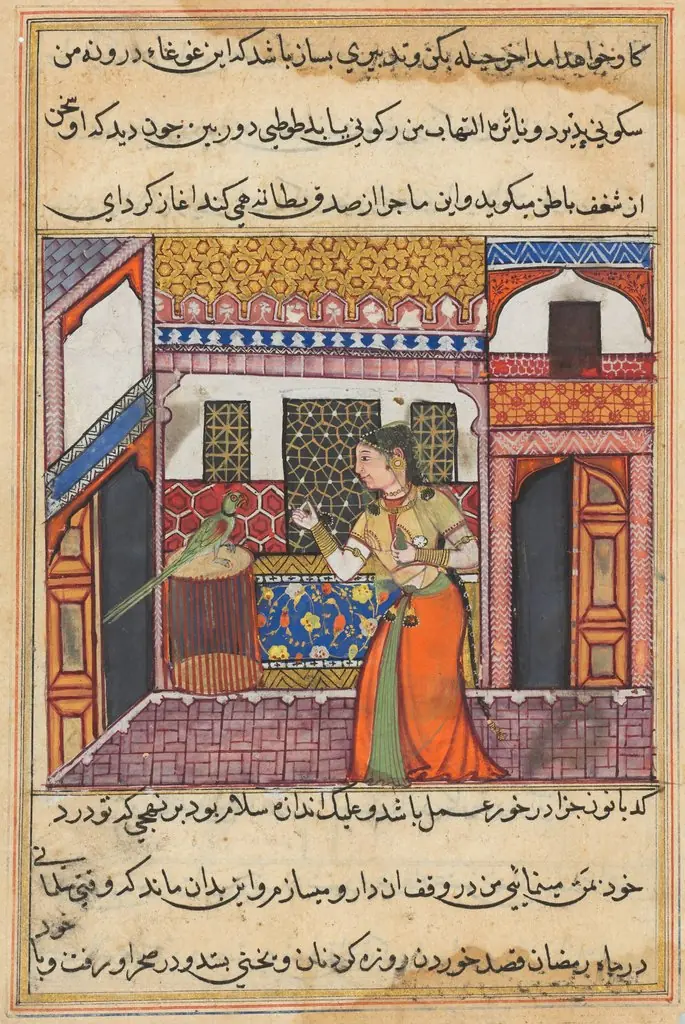 The parrot addresses Khujasta at the beginning of the forty-third night, from a Tuti-nama (Tales of a Parrot)