Artwork
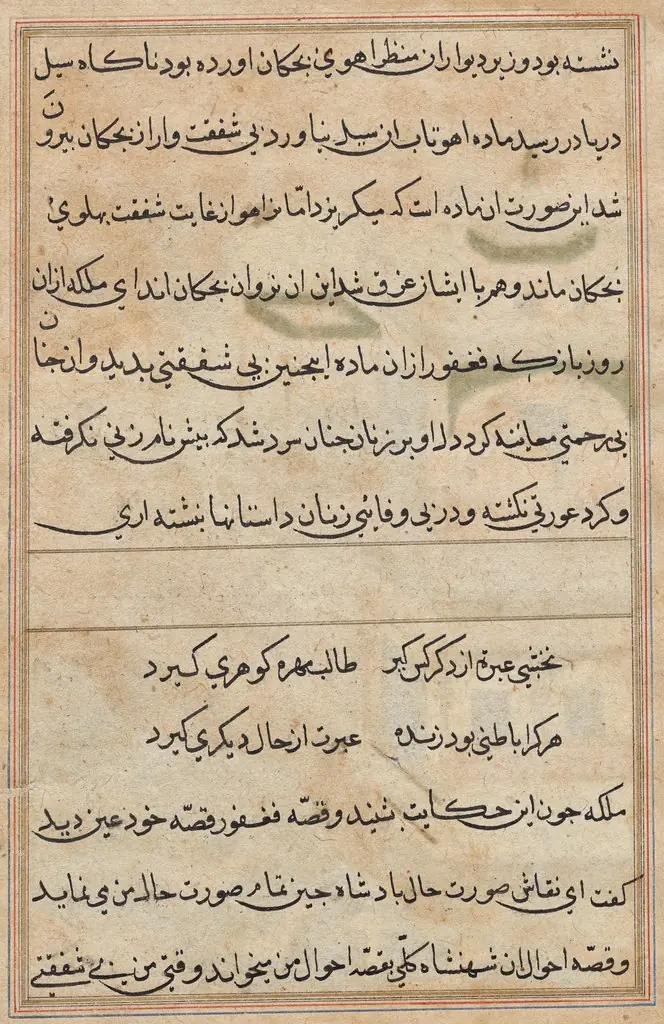
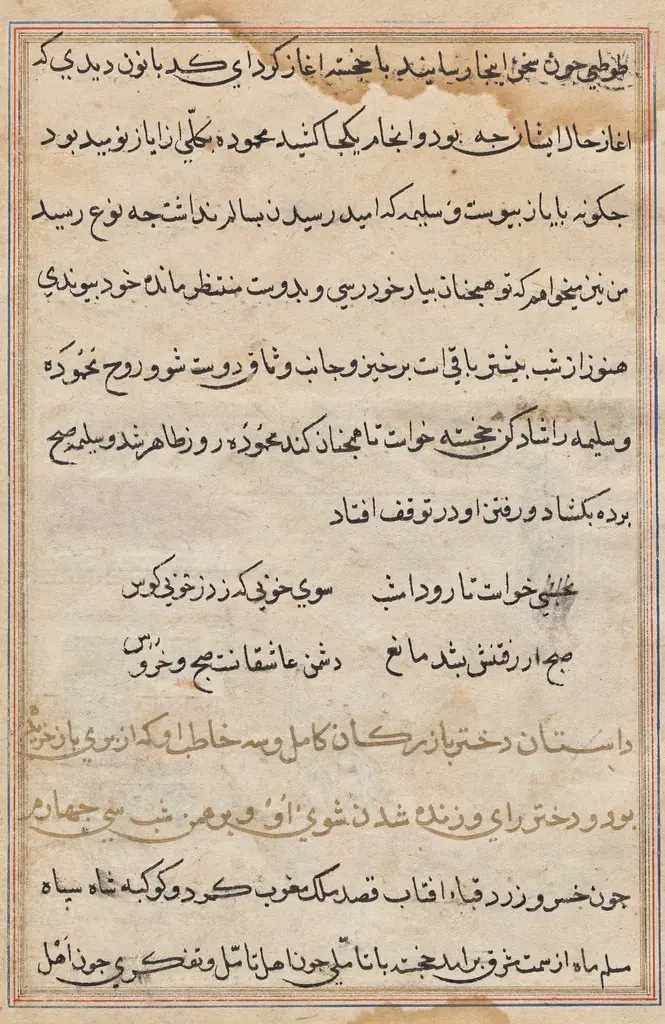
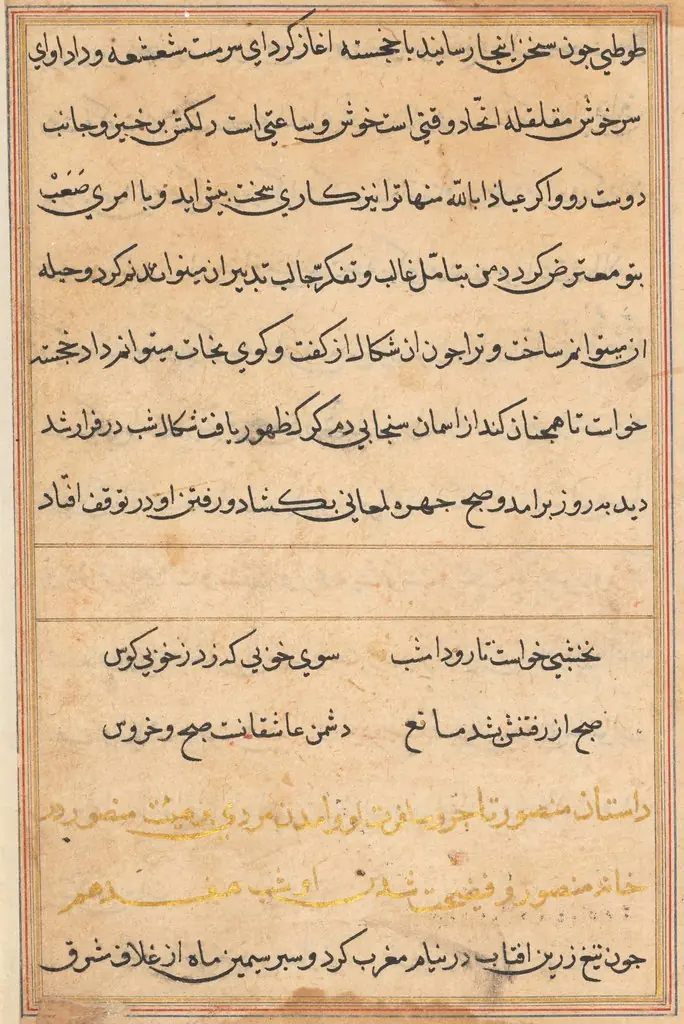
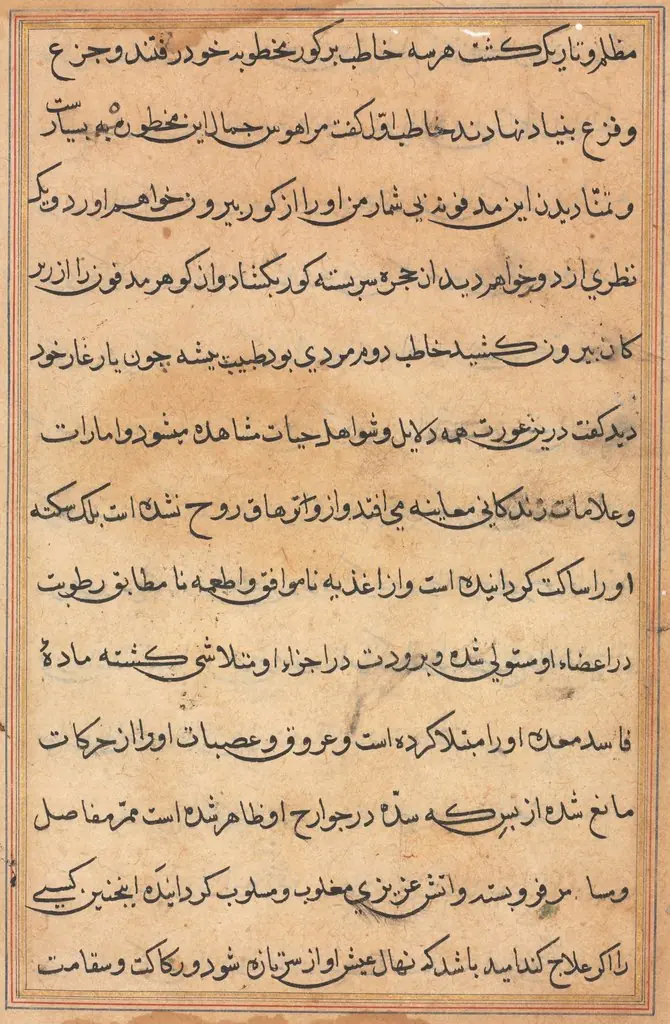
Page from Tales of a Parrot (Tuti-nama): text page
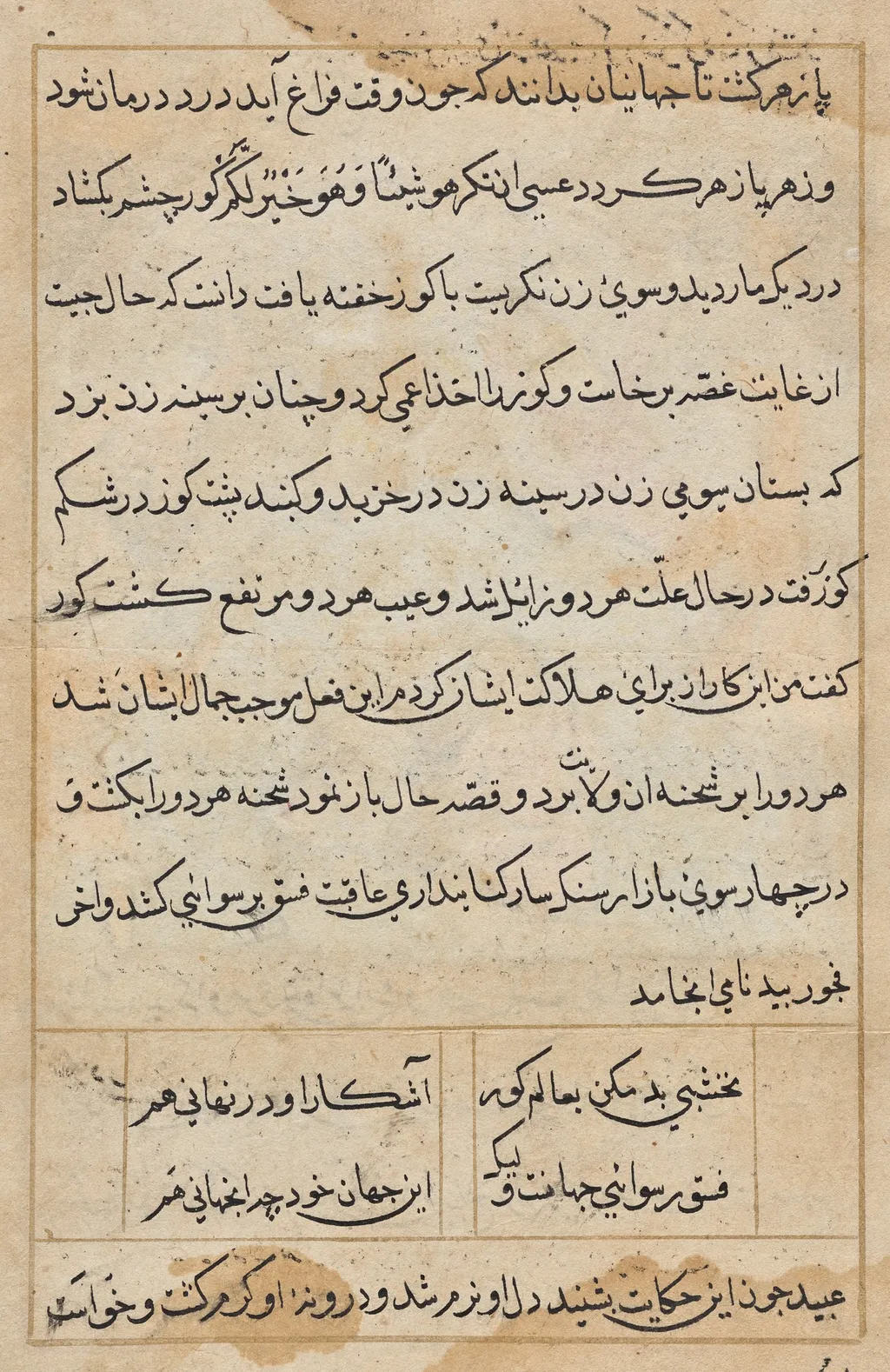
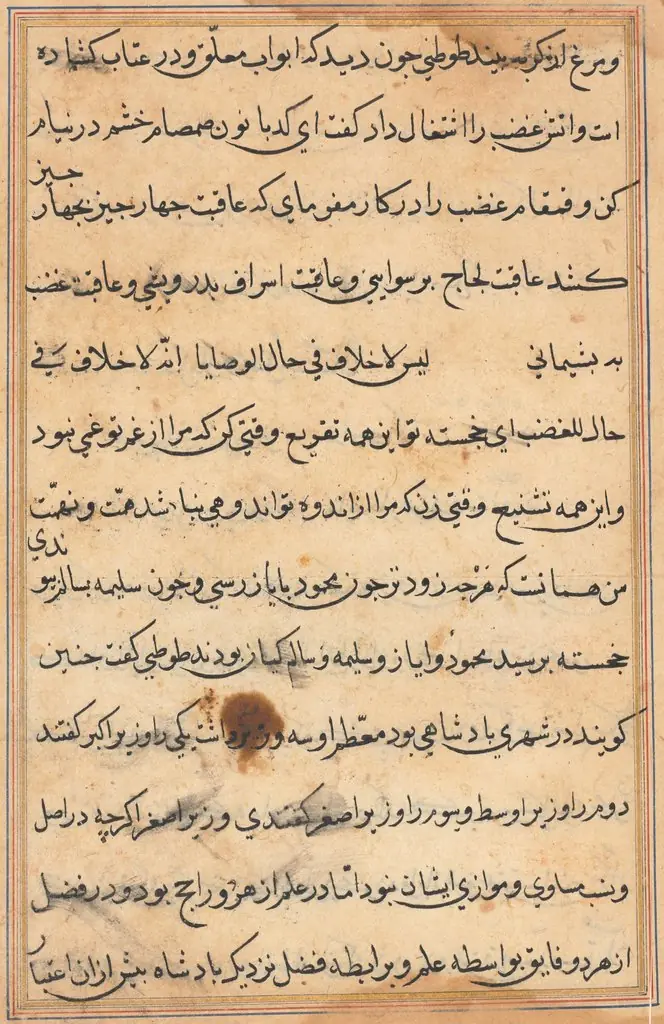
Page from Tales of a Parrot (Tuti-nama): text page is an unspecified painting. It dates from 1560 and is held in the collection of the Cleveland Museum of Art. This object is a single folio from the illustrated manuscript known as *Tales of a Parrot* (Tuti‑nama).
About this work
Overview
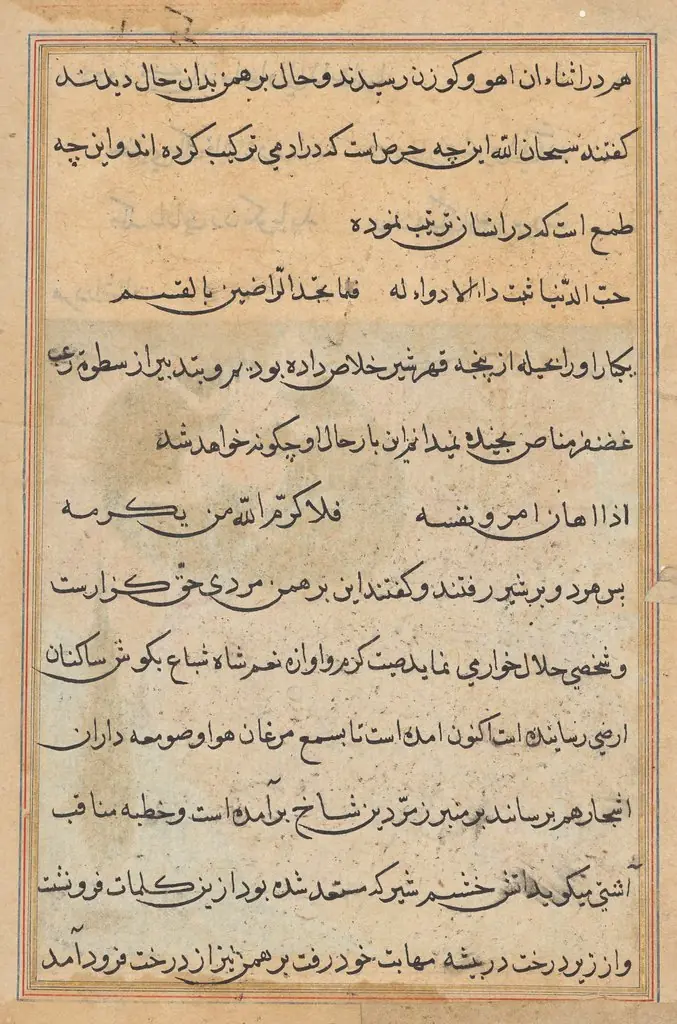
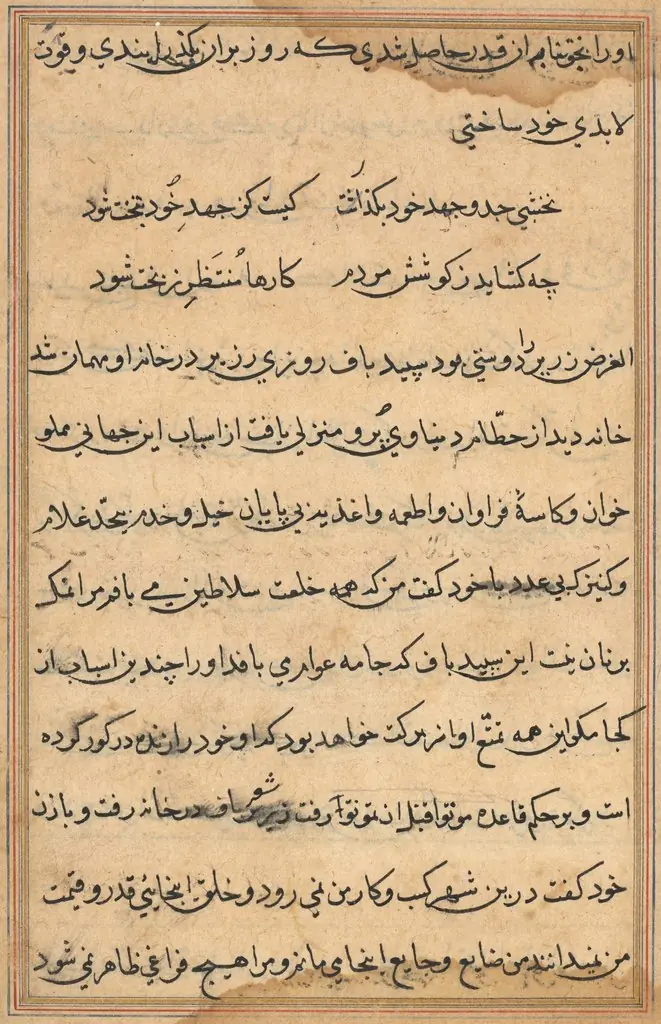
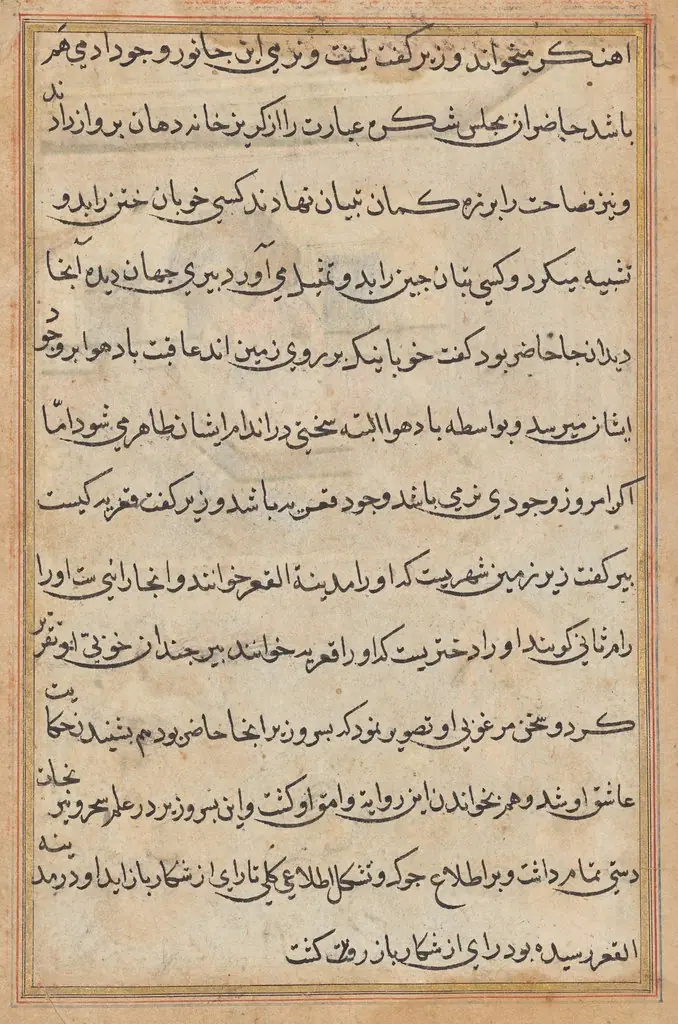
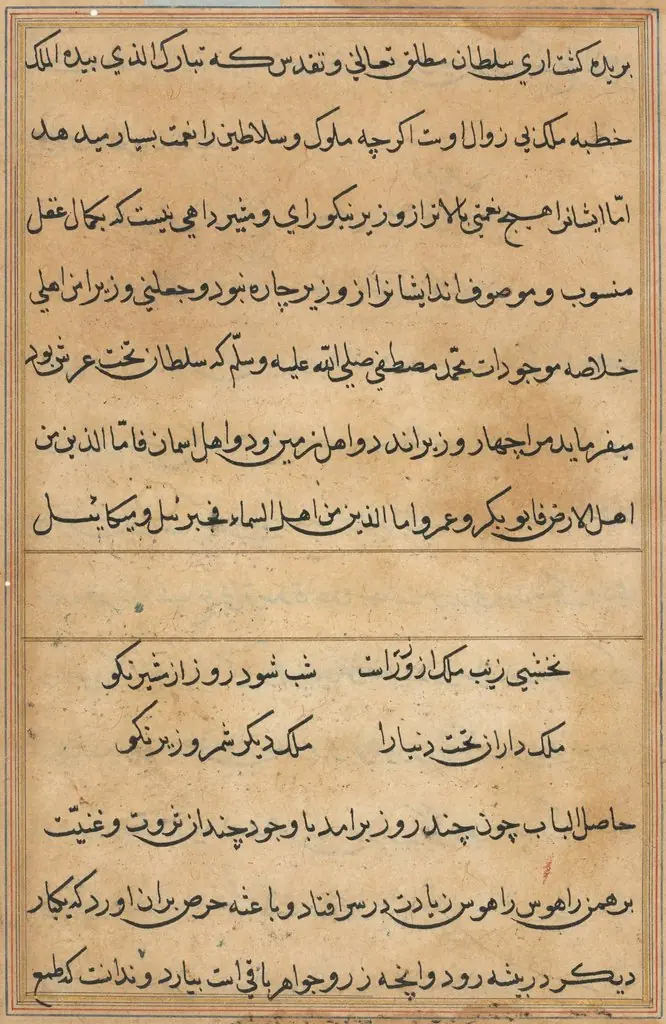
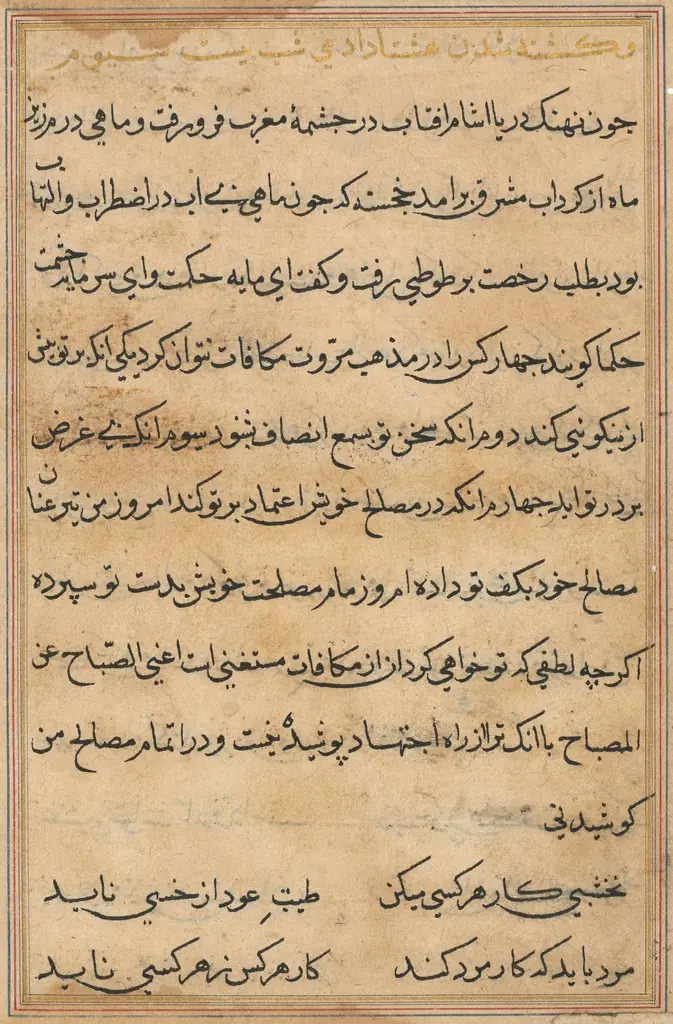
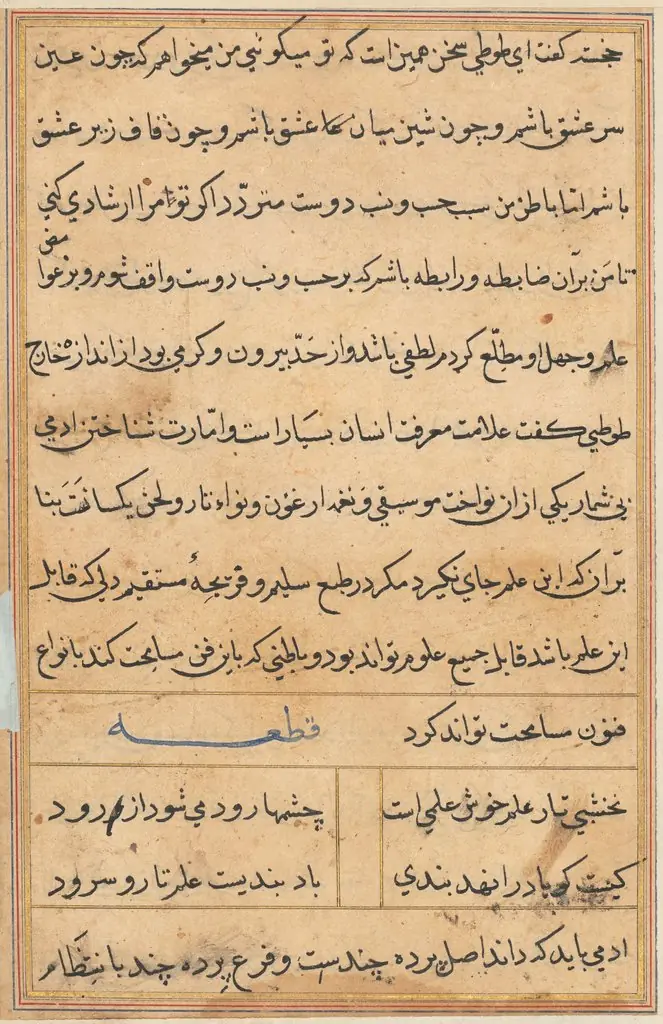
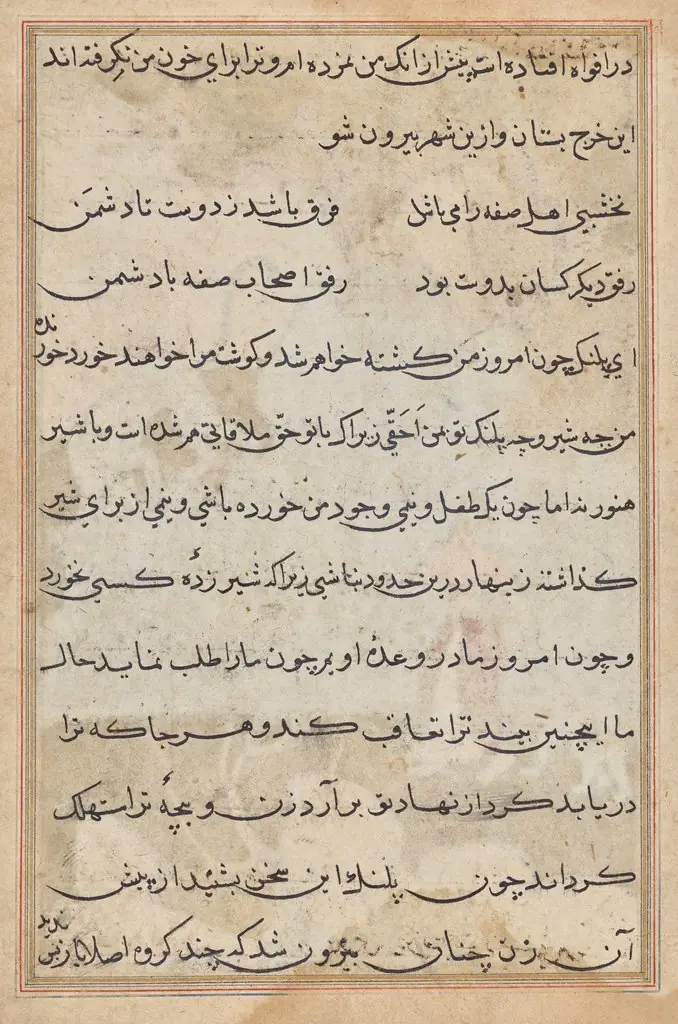
This object is a single folio from the illustrated manuscript known as *Tales of a Parrot* (Tuti‑nama). The page consists entirely of black‑ink calligraphy arranged in orderly rows, executed in a flowing hand that conveys a sense of formality. The paper is light‑colored, showing signs of age such as faint brown margins and occasional small stains.
Subject & Meaning
The text on the page forms part of a narrative addressed to Prince Salim, a royal patron for whom the manuscript was compiled. The language and presentation were chosen to convey elegance and authority, underscoring the importance of the story’s moral and entertainment value for its princely audience.
Technique & Style
The calligrapher employed a deliberate, graceful script, varying the size and weight of certain words to create visual emphasis. Ink was applied with a fine brush, producing consistent, dark strokes that contrast with the aged paper. The layout reflects a disciplined approach to manuscript design typical of courtly commissions.
History & Provenance
Created as a personalized gift for Prince Salim, the folio originates from a courtly workshop that produced luxury manuscripts in the early modern period. Its survival in relatively good condition suggests it remained within a private collection before entering a public institution, where it is now displayed for scholarly and public viewing.
Context
*Tales of a Parrot* belongs to a tradition of Persian narrative literature that blends moral instruction with entertainment. Such manuscripts were often produced for elite patrons, combining literary content with refined calligraphy to reinforce the cultural prestige of the patron’s court.
Legacy
The page exemplifies the high level of artistic and literary collaboration characteristic of royal manuscript production. Its preservation offers insight into the aesthetic preferences of princely patrons and the technical skill of calligraphers working within the manuscript tradition.
Artist & collection

 Page from Tales of a Parrot (Tuti-nama): text page
 Page from Tales of a Parrot (Tuti-nama): text page
 Page from Tales of a Parrot (Tuti-nama): text page
 Page from Tales of a Parrot (Tuti-nama): text page
 Page from Tales of a Parrot (Tuti-nama): text page
 Page from Tales of a Parrot (Tuti-nama): text page
 Page from Tales of a Parrot (Tuti-nama): text page
 Page from Tales of a Parrot (Tuti-nama): text page