Artwork
The magician disguised as a Brahman returns to claim his “daughter-in-law,” from a Tuti-nama (Tales of a Parrot): Thirty-fifth Night
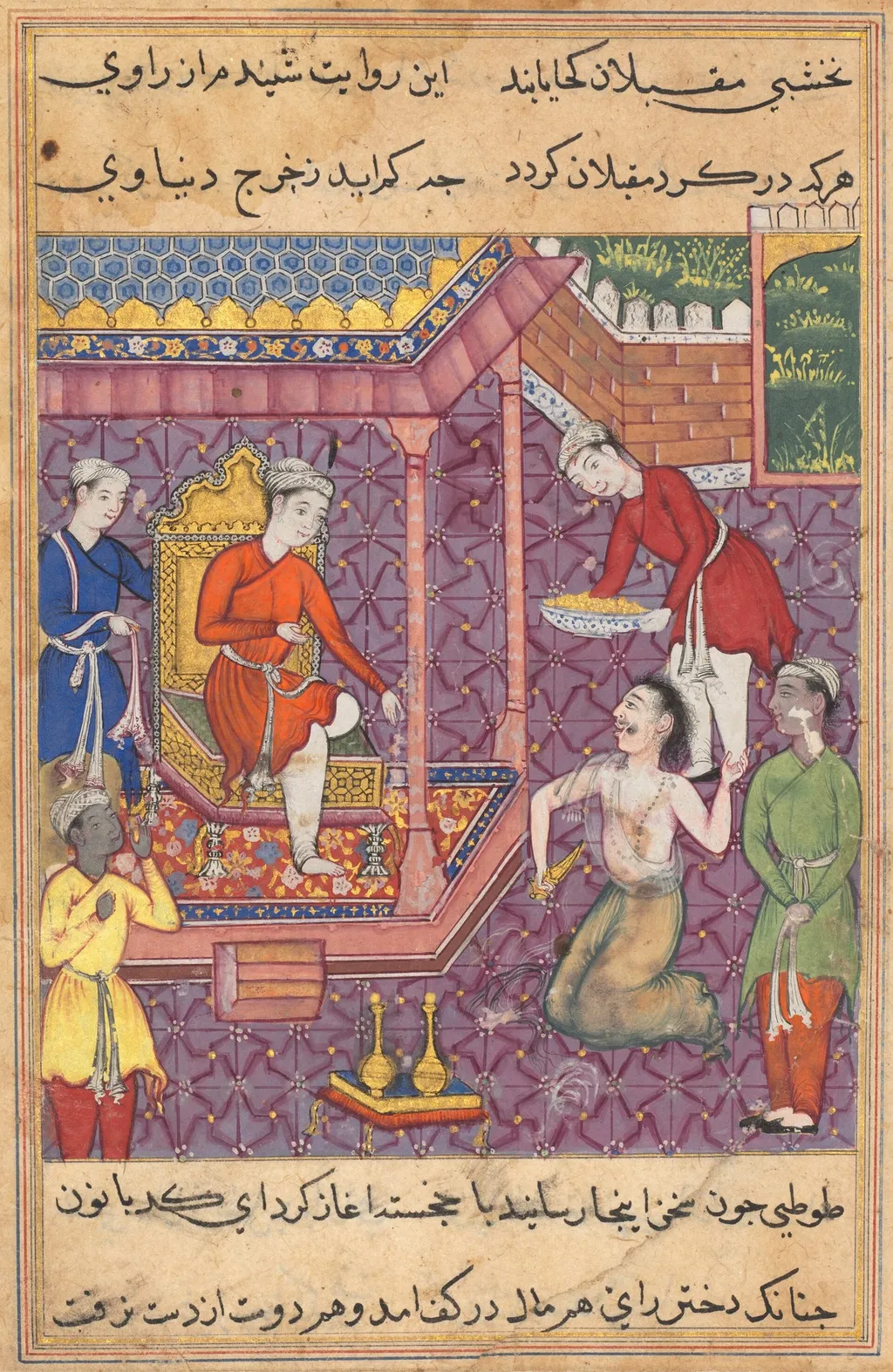
The magician disguised as a Brahman returns to claim his “daughter-in-law,” from a Tuti-nama (Tales of a Parrot): Thirty-fifth Night is an unspecified painting. It dates from 1560 and is held in the collection of the Cleveland Museum of Art. The work is a miniature illustration from a Tuti‑nama, a Persian manuscript of the “Tales of a Parrot.
About this work
Overview
The work is a miniature illustration from a Tuti‑nama, a Persian manuscript of the “Tales of a Parrot.” It portrays a narrative episode titled “The magician disguised as a Brahman returns to claim his ‘daughter‑in‑law.’” The composition is set on a deep purple ground with a repeating geometric motif, typical of courtly book art.
Subject & Meaning
The scene visualises the moment the disguised magician asserts his claim, reflecting themes of deception and familial obligation in the tale.
At the centre, a man in a red robe occupies a throne, clutching a small object that suggests a magical token. Around him, figures react: a kneeling man raises his hands in supplication, a standing attendant watches, and a woman in the distance holds a bowl, perhaps offering sustenance. The scene visualises the moment the disguised magician asserts his claim, reflecting themes of deception and familial obligation in the tale.
Technique & Style
Executed in fine ink and watercolor on paper, the illustration employs delicate line work and a limited palette of reds, blues, and gold highlights. The figures are rendered in profile with stylised gestures, and the background pattern creates a sense of spatial depth while maintaining the flat decorative quality characteristic of Persian miniature painting.
History & Provenance
The painting originates from a 16th‑century Persian Tuti‑nama manuscript, a popular literary genre that combined moral stories with elaborate visual commentary. The specific copy containing this illustration was part of a private collection before being acquired by a museum in the early 20th century, where it remains catalogued as a representative example of the genre.
Context
Tuti‑namas were often produced for elite patrons, serving both as entertainment and as moral instruction. The narrative of a magician posing as a Brahman reflects the cultural exchange between Persian and Indian motifs, illustrating how storytellers blended local religious figures with universal themes of trickery and justice.
Artist & collection

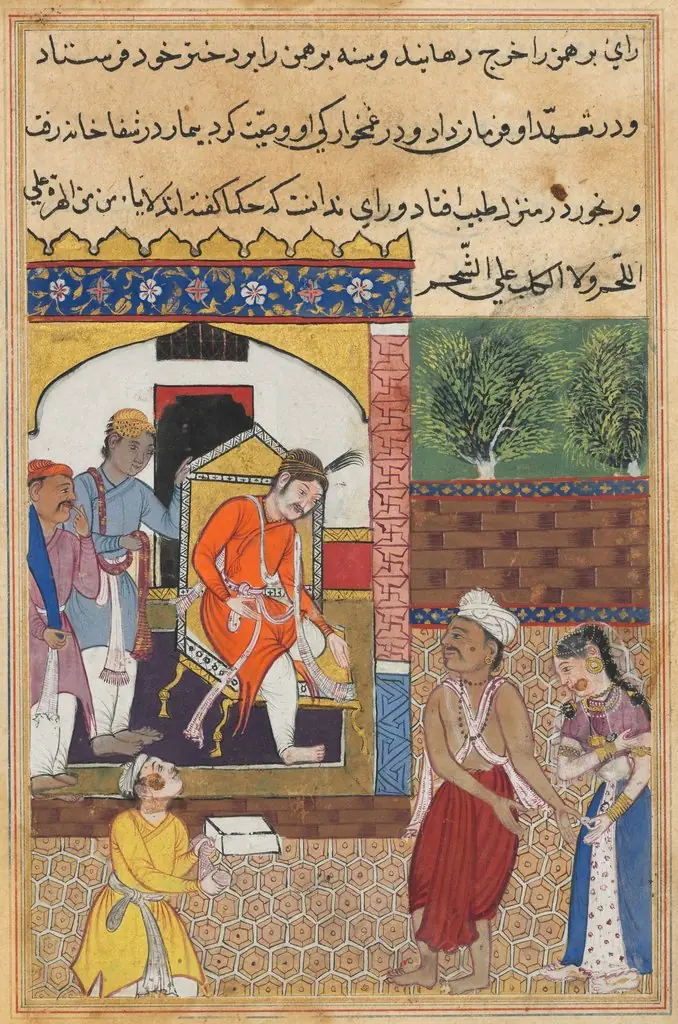 The magician, disguised as a Brahman, visits the king of Babylon, from a Tuti-nama (Tales of a Parrot): Thirty-fifth Night
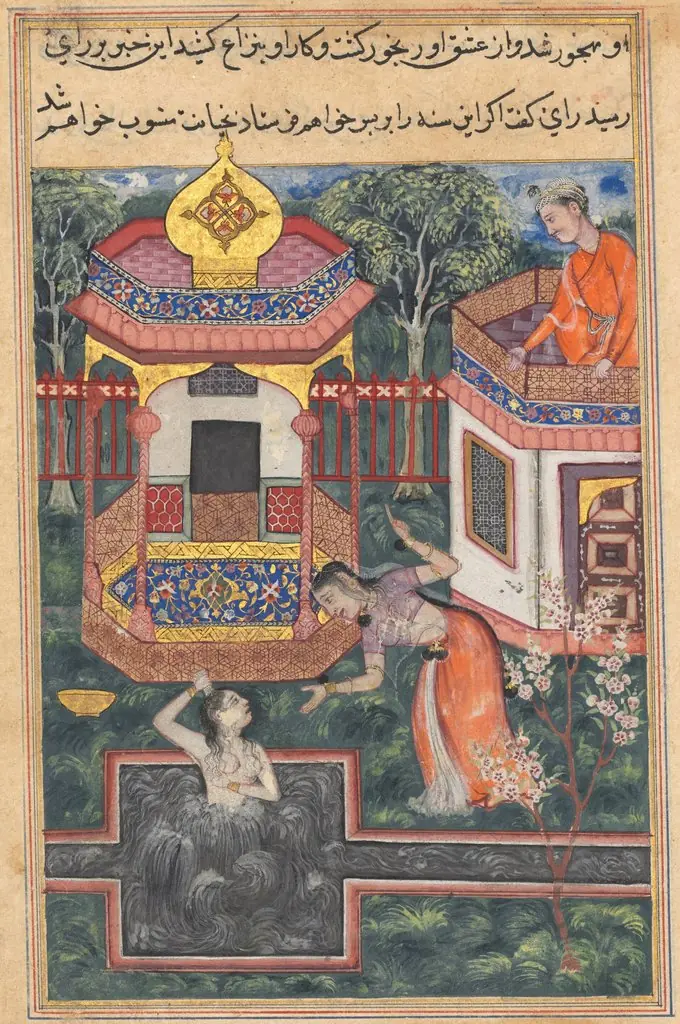 The son of the king of Babylon sees the Brahman transformed into a woman bathing and falls in love with her, from a Tuti-nama (Tales of a Parrot): Thirty-fifth Night
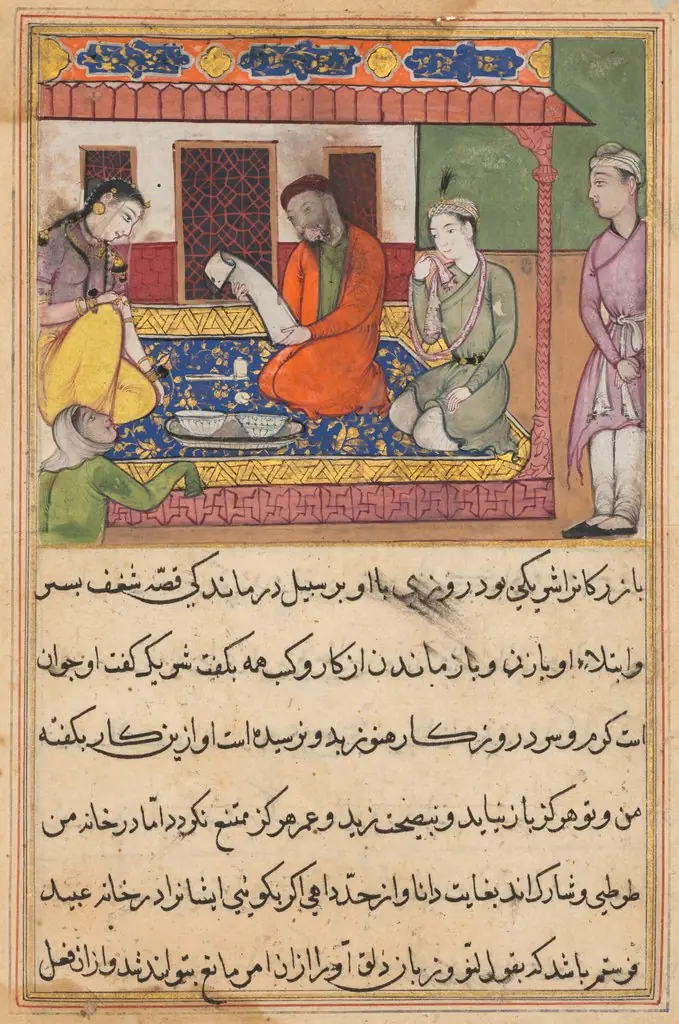 The marriage of ‘Ubaid, son of a merchant of Tirmiz, from a Tuti-nama (Tales of a Parrot): Forty-second Night
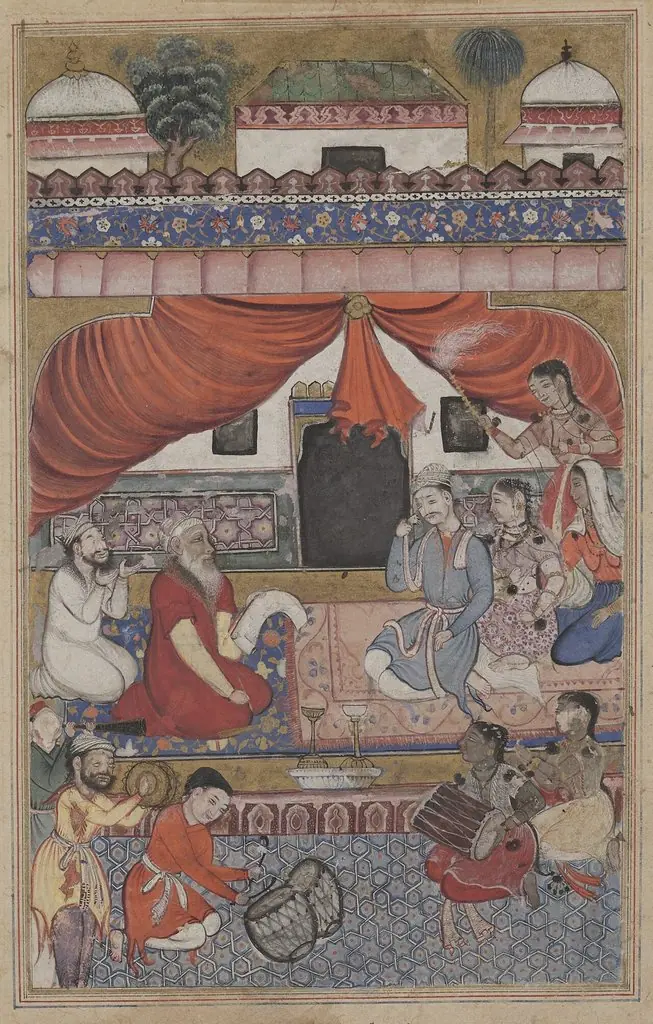 Preparation for the marriage of Mahmuda to the Young Vizier, from a Tuti-nama (Tales of a Parrot): Thirty-third Night
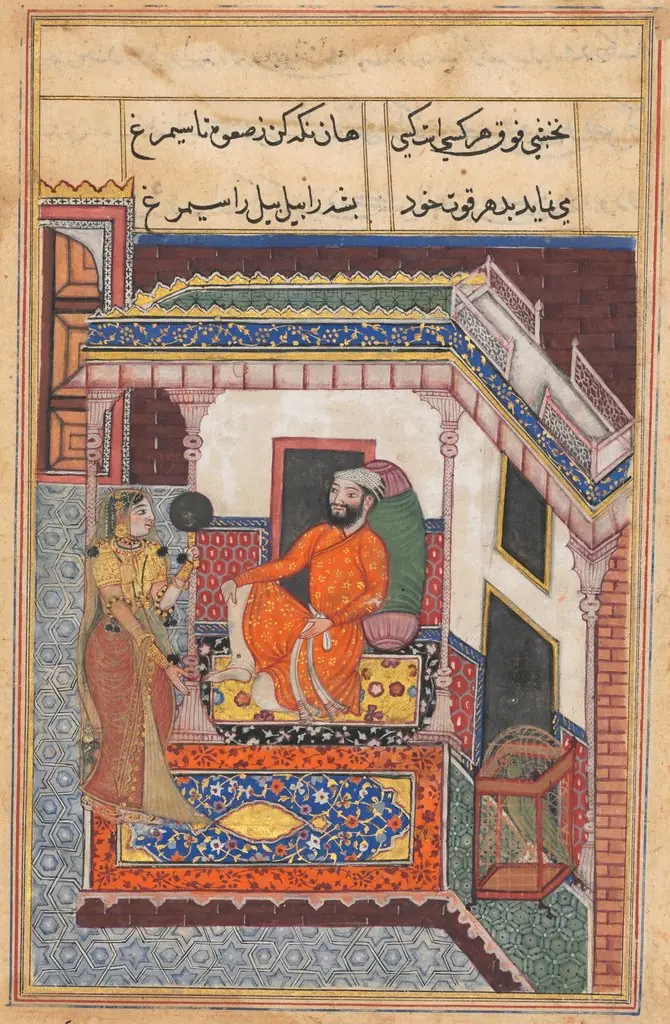 The parrot laughs on hearing the Raja of Ujjain’s wife admire her beauty in a mirror, from a Tuti-nama (Tales of a Parrot: Forty-sixth Night
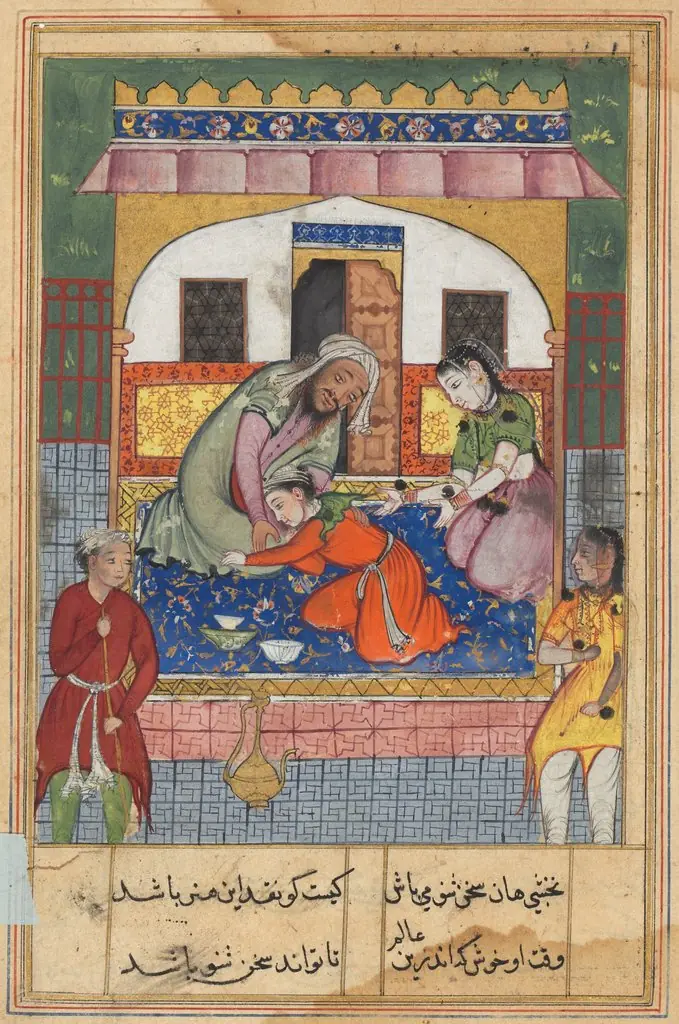 Repenting his conduct, ‘Ubaid falls at the feet of his parents, from a Tuti-nama (Tales of a Parrot): Forty-second Night
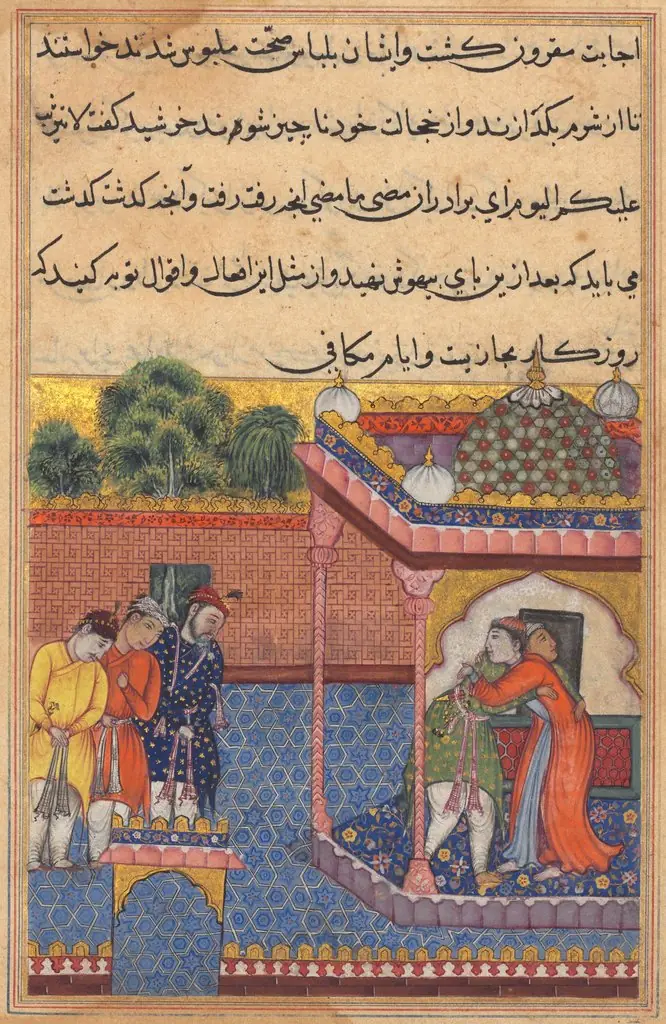 Khurshid reunited with her husband Utarid, from a Tuti-nama (Tales of a Parrot): Thirty-second Night
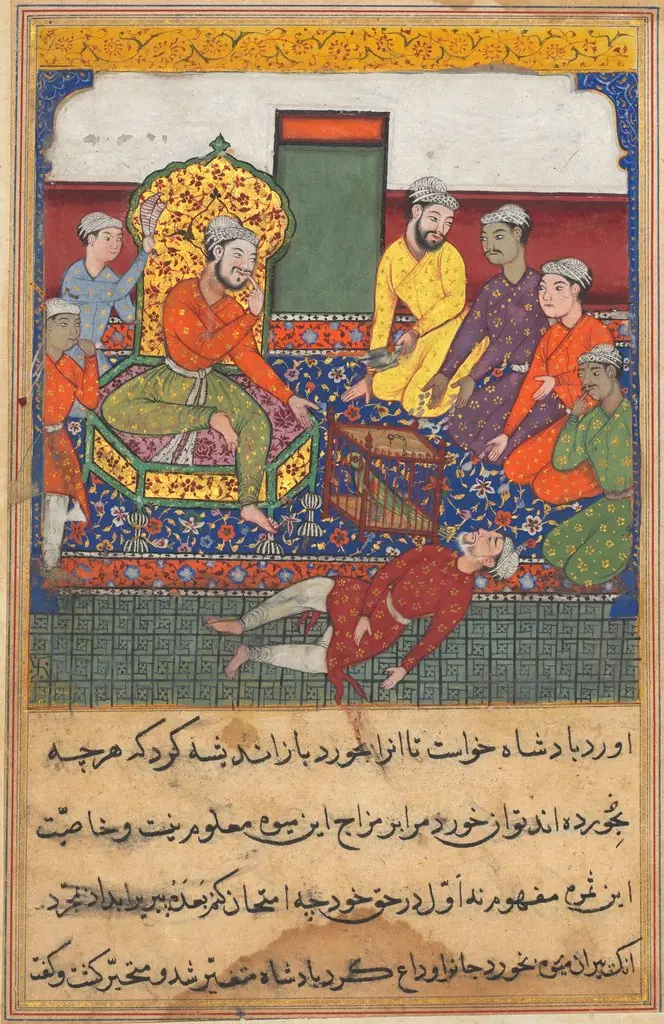 The old man eats of the fruit of the Tree of Life, but drops dead, from a Tuti-nama (Tales of a Parrot): Ninth Night
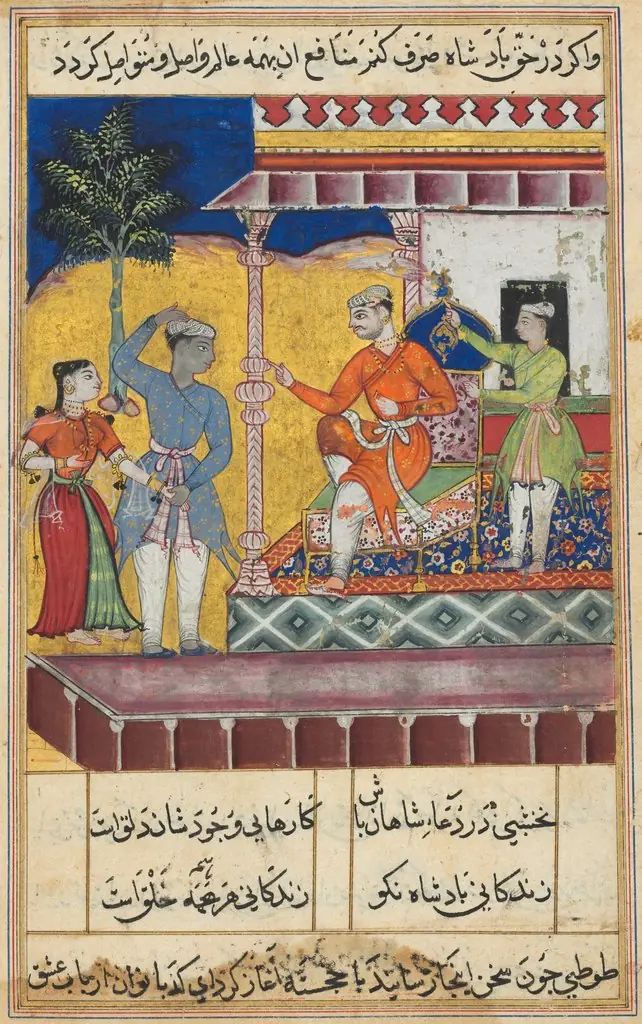 The rejuvenated old man and the daughter of the king of the jinns take leave of the King of Kings, from a Tuti-nama (Tales of a Parrot): Seventh Night
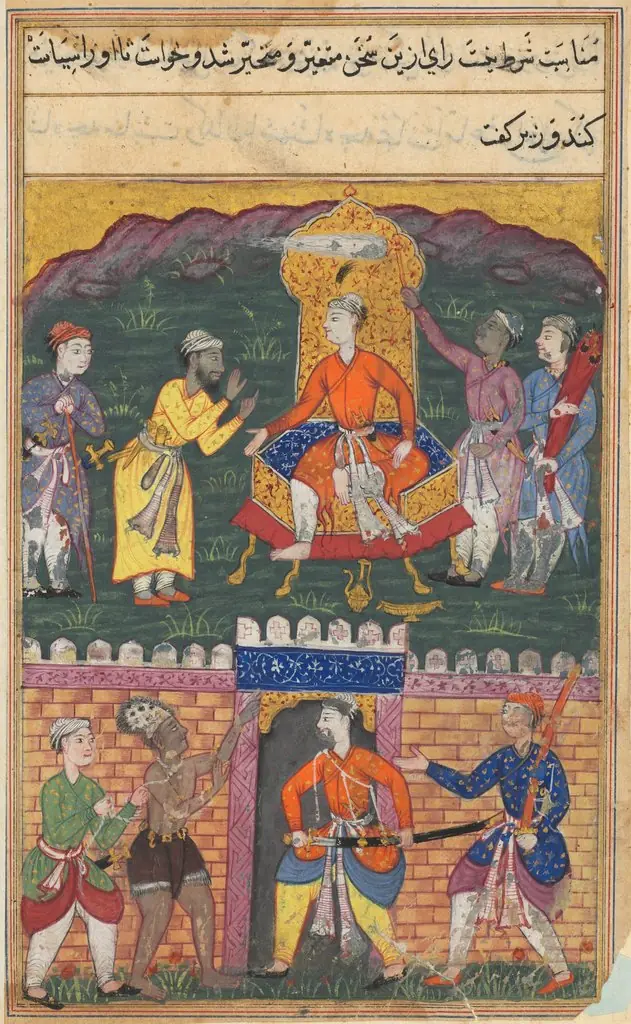 The vizier dissuades the king of Bahilistan from executing the dervish who asks for his daughter’s hand in marriage, from a Tuti-nama (Tales of a Parrot): Seventh Night