Artwork
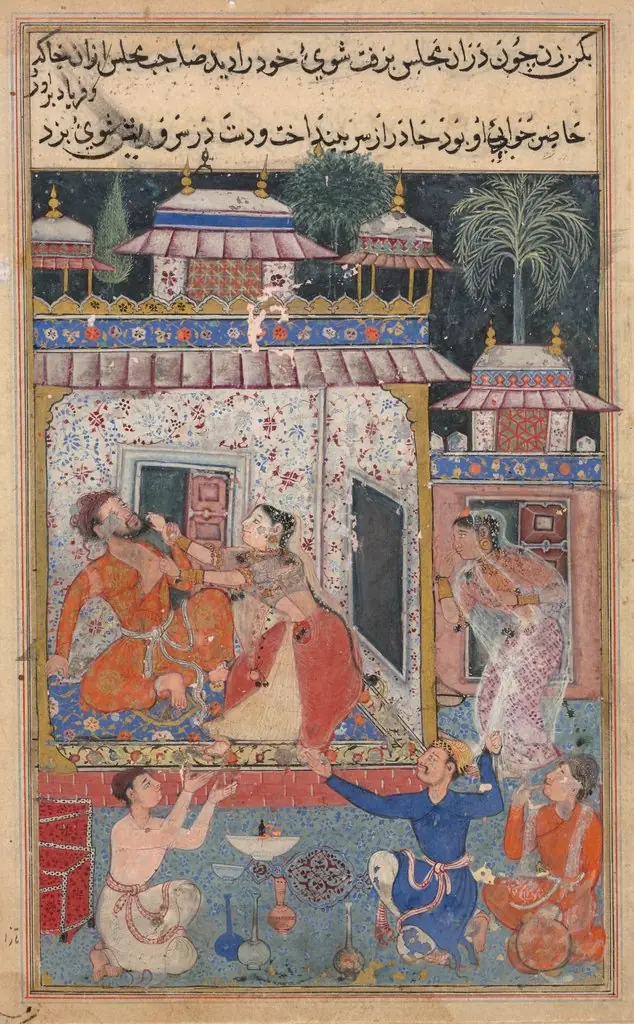
The son of the king of Babylon sees the Brahman transformed into a woman bathing and falls in love with her, from a Tuti-nama (Tales of a Parrot): Thirty-fifth Night
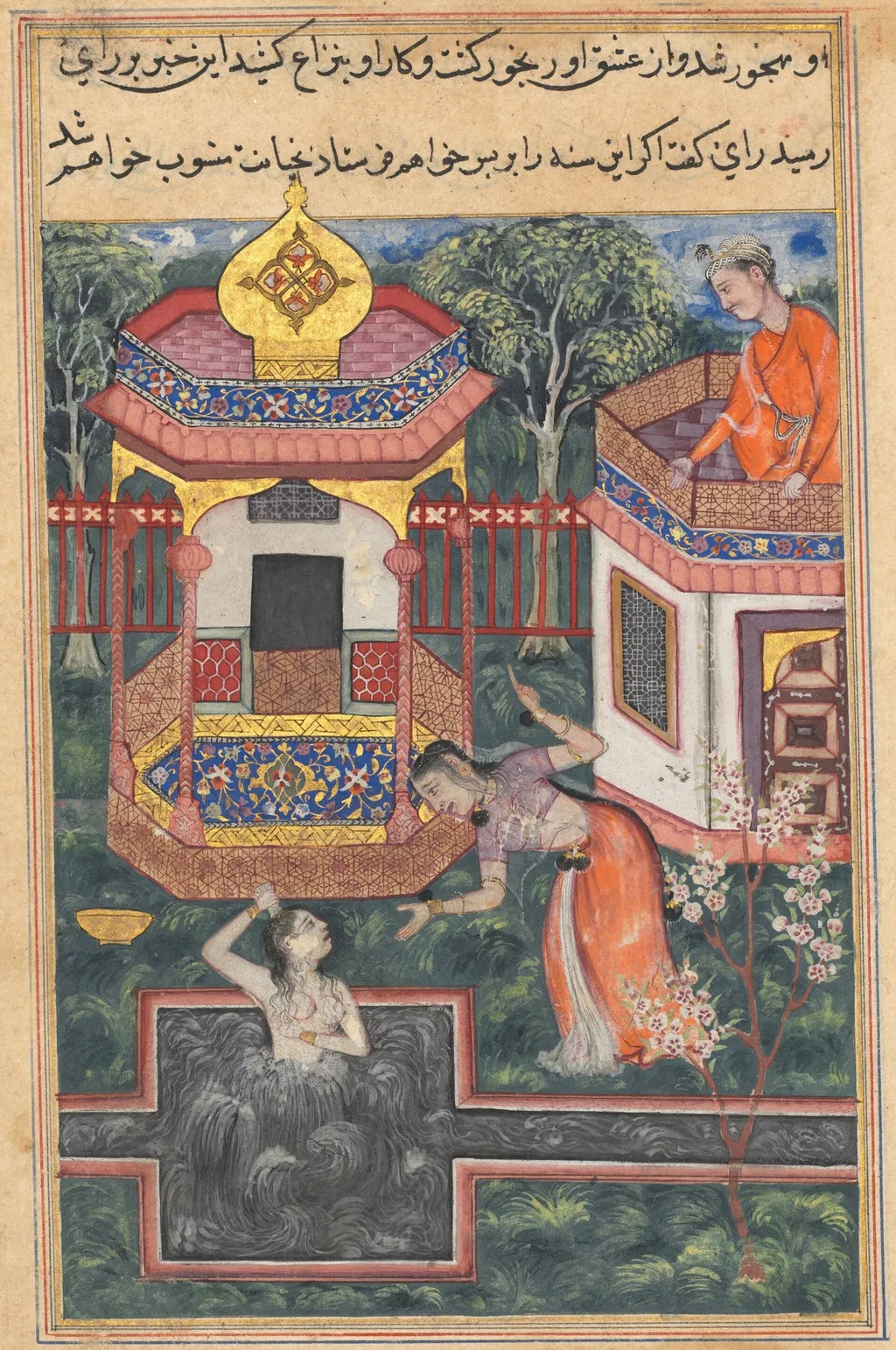
The son of the king of Babylon sees the Brahman transformed into a woman bathing and falls in love with her, from a Tuti-nama (Tales of a Parrot): Thirty-fifth Night is an unspecified painting. It dates from 1560 and is held in the collection of the Cleveland Museum of Art. The work illustrates a narrative episode from the Persian collection of tales known as the Tuti‑nama.
About this work
Overview
The work illustrates a narrative episode from the Persian collection of tales known as the Tuti‑nama. In the composition a woman is depicted bathing in a pool, her dark hair cascading as she arches backward with raised arms. A male figure, dressed in vivid orange robes, watches from a pavilion adorned with red and gold motifs and a golden dome, his expression one of startled surprise.
Subject & Meaning
The scene visualizes the moment when the son of the Babylonian king encounters the Brahman, transformed into a woman, and is instantly enamored. The juxtaposition of the voyeuristic observer and the vulnerable figure emphasizes themes of desire, transformation, and the crossing of cultural boundaries present in the tale’s moral framework.
Technique & Style
Executed in a miniature painting tradition, the piece employs fine brushwork to render intricate foliage, flowering shrubs, and architectural details. A decorative border of interlaced red and blue patterns frames the scene, while Arabic calligraphic text crowns the composition, integrating literary and visual elements typical of Persian illustrated manuscripts.
History & Provenance
The painting originates from a manuscript of the Tuti‑nama, a 14th‑century collection of stories popular across the Islamic world. It entered the Cleveland Museum of Art’s collection through a mid‑20th‑century acquisition of Persian miniatures, reflecting the museum’s broader holdings of South‑Asian and Middle‑Eastern art.
Artist & collection

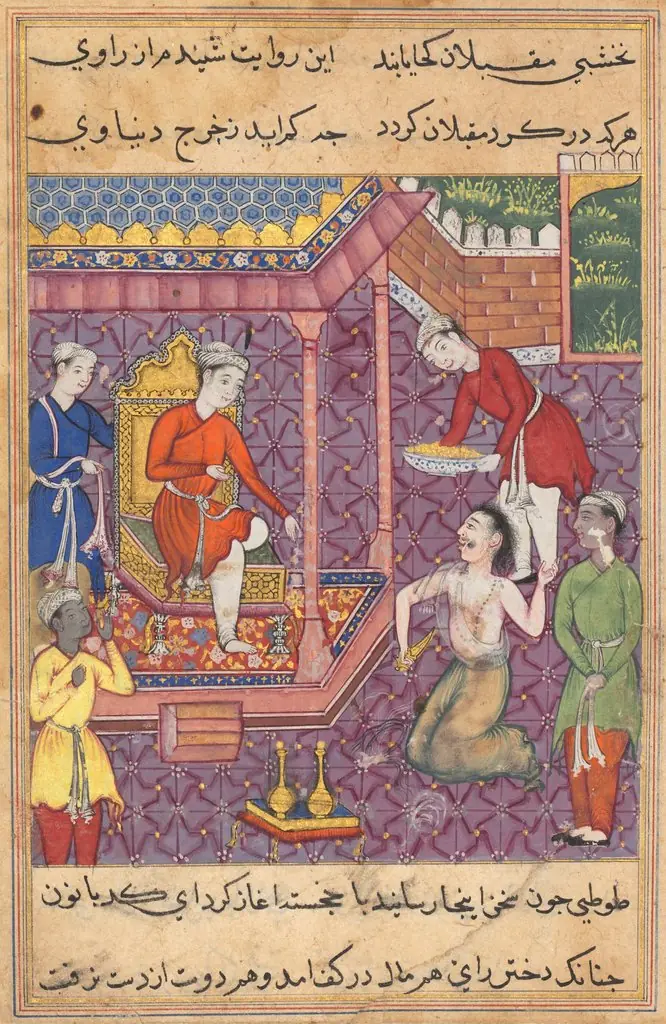 The magician disguised as a Brahman returns to claim his “daughter-in-law,” from a Tuti-nama (Tales of a Parrot): Thirty-fifth Night
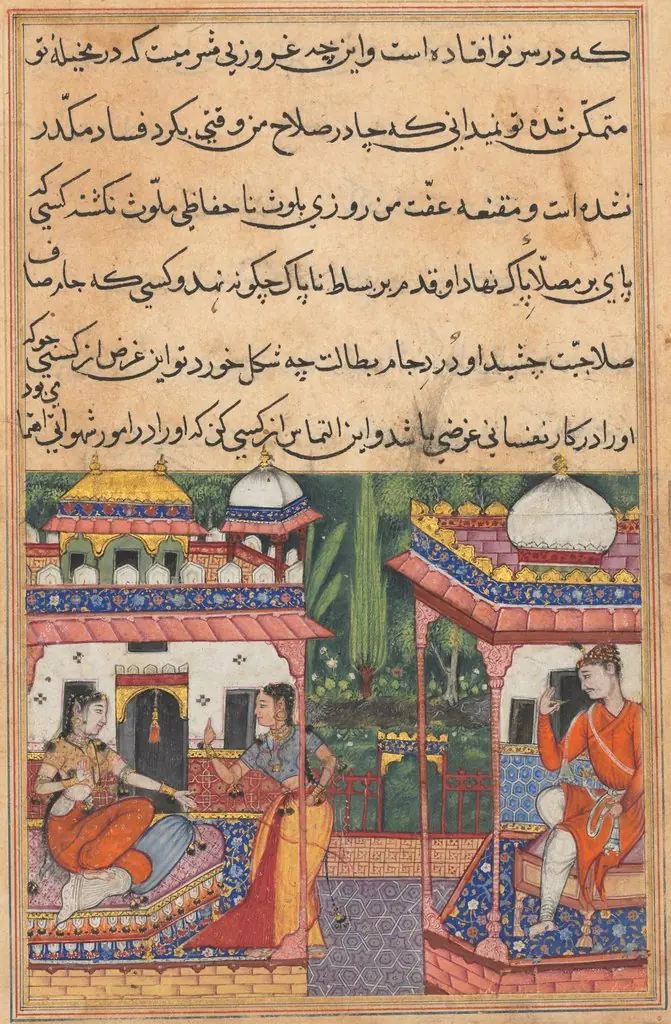 Kaiwan sends a message of love to Khurshid, wife of his brother Utarid who is away on a journey, from a Tuti-nama (Tales of a Parrot): Thirty-second Night
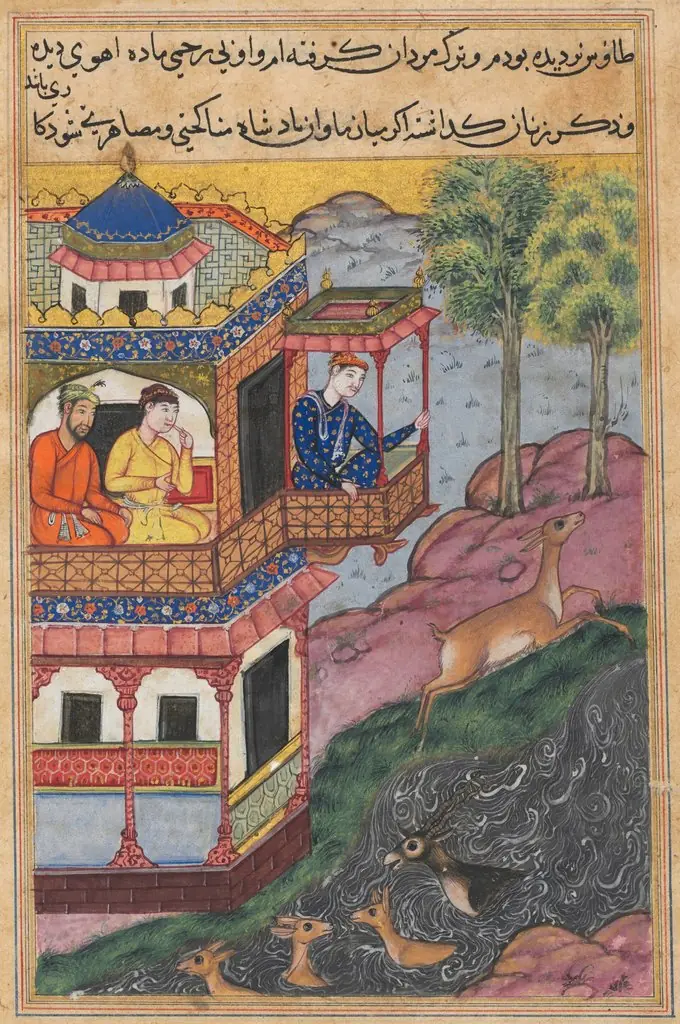 The painting made by the vizier of the emperor of China for the queen of Rum, from a Tuti-nama (Tales of a Parrot): Thirty-ninth Night
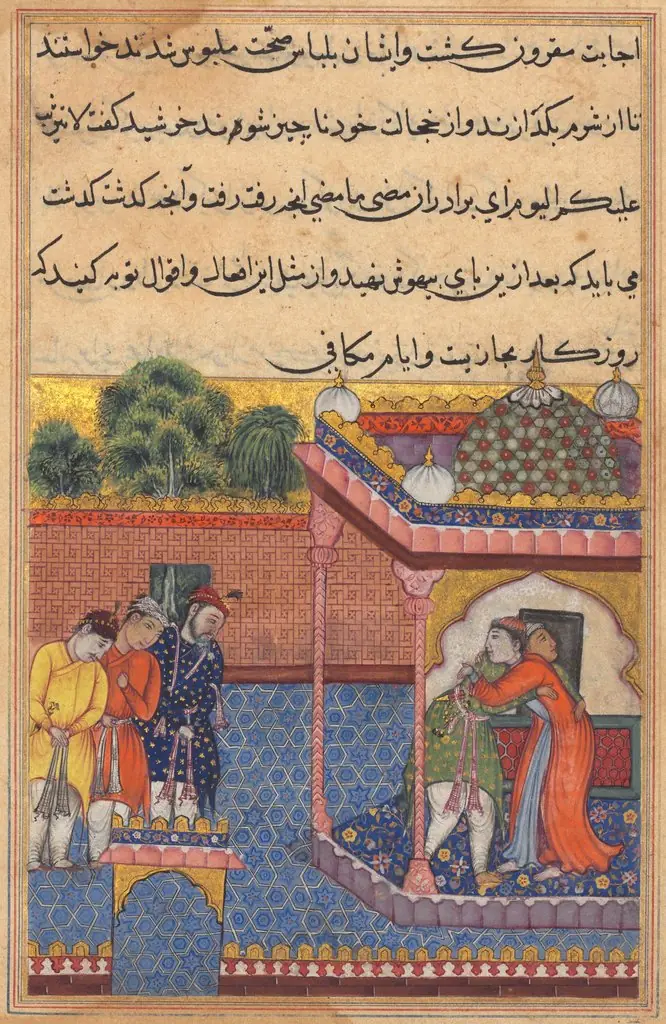 Khurshid reunited with her husband Utarid, from a Tuti-nama (Tales of a Parrot): Thirty-second Night
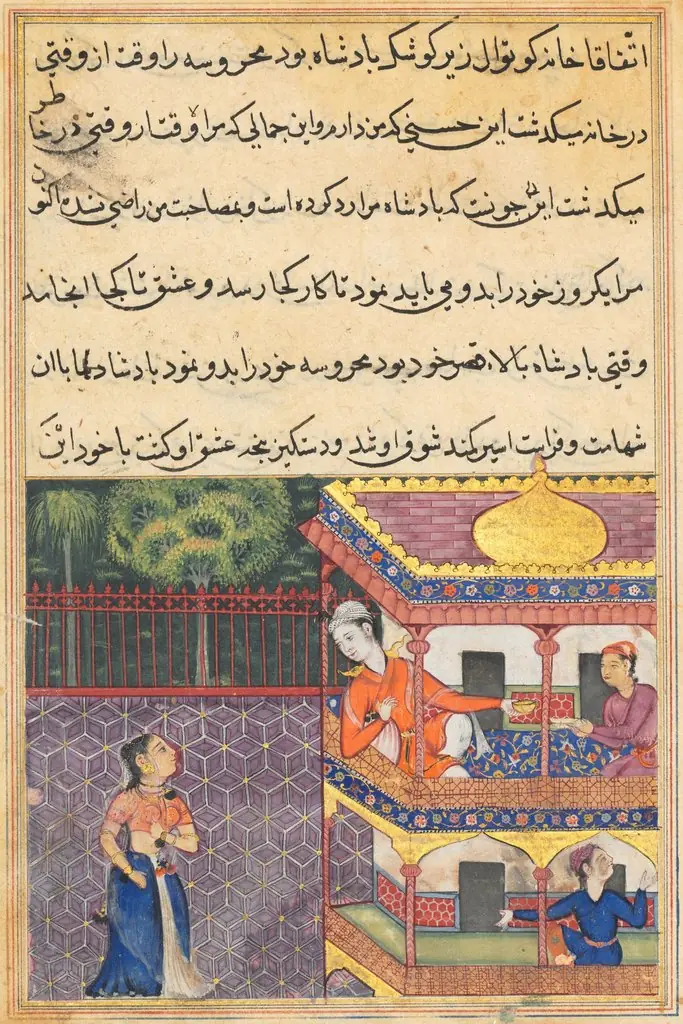 The king of Zabul sees Mahrusa from his palace balcony, from a Tuti-nama (Tales of a Parrot): Thirty-sixth Night
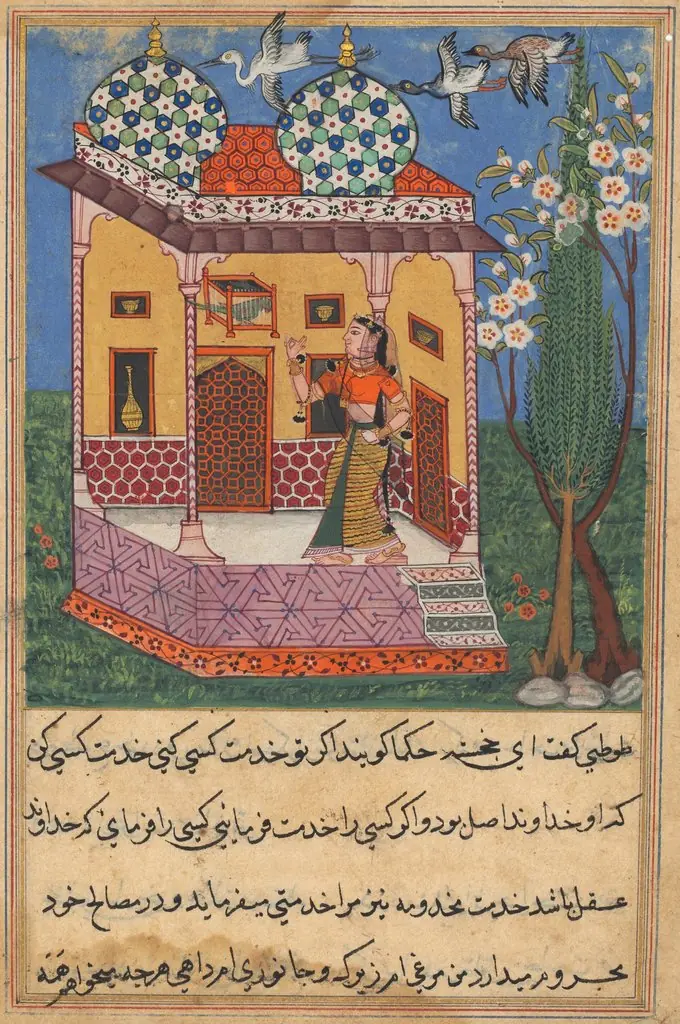 The Parrot Addresses Khujasta at the Beginning of the Twenty-sixth Night, from a Tuti-nama (Tales of a Parrot)
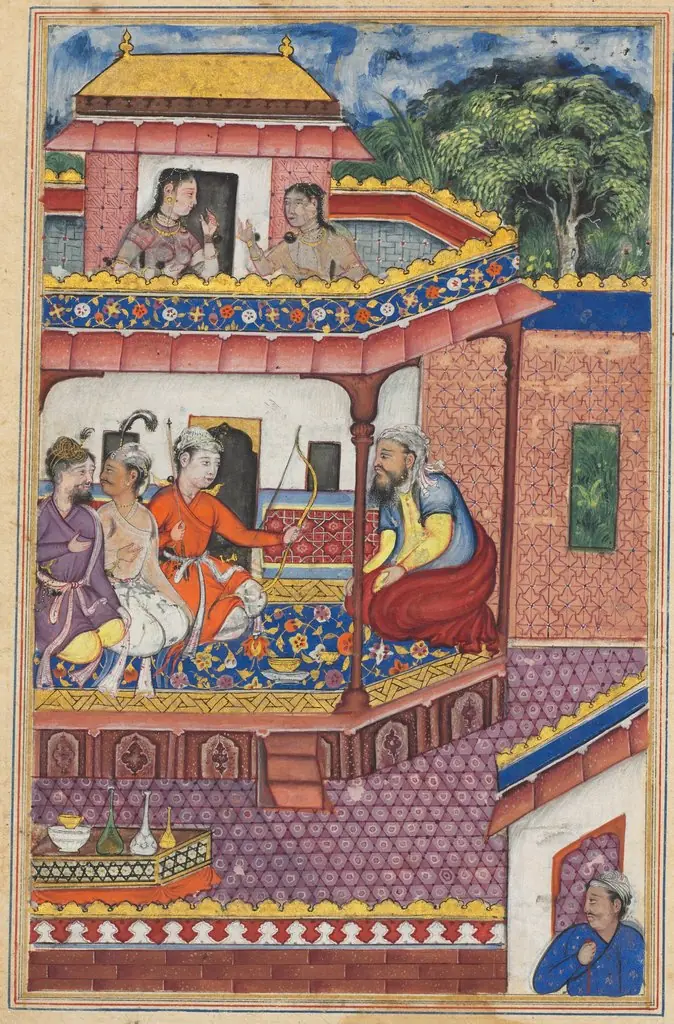 The three young men present themselves as suitors for the hand of Zuhra, the daughter of the merchant of Kabul, from a Tuti-nama (Tales of a Parrot): Thirty-fourth Night
 Page from Tales of a Parrot (Tuti-nama): text page