Artwork
Page from Tales of a Parrot (Tuti-nama): text page
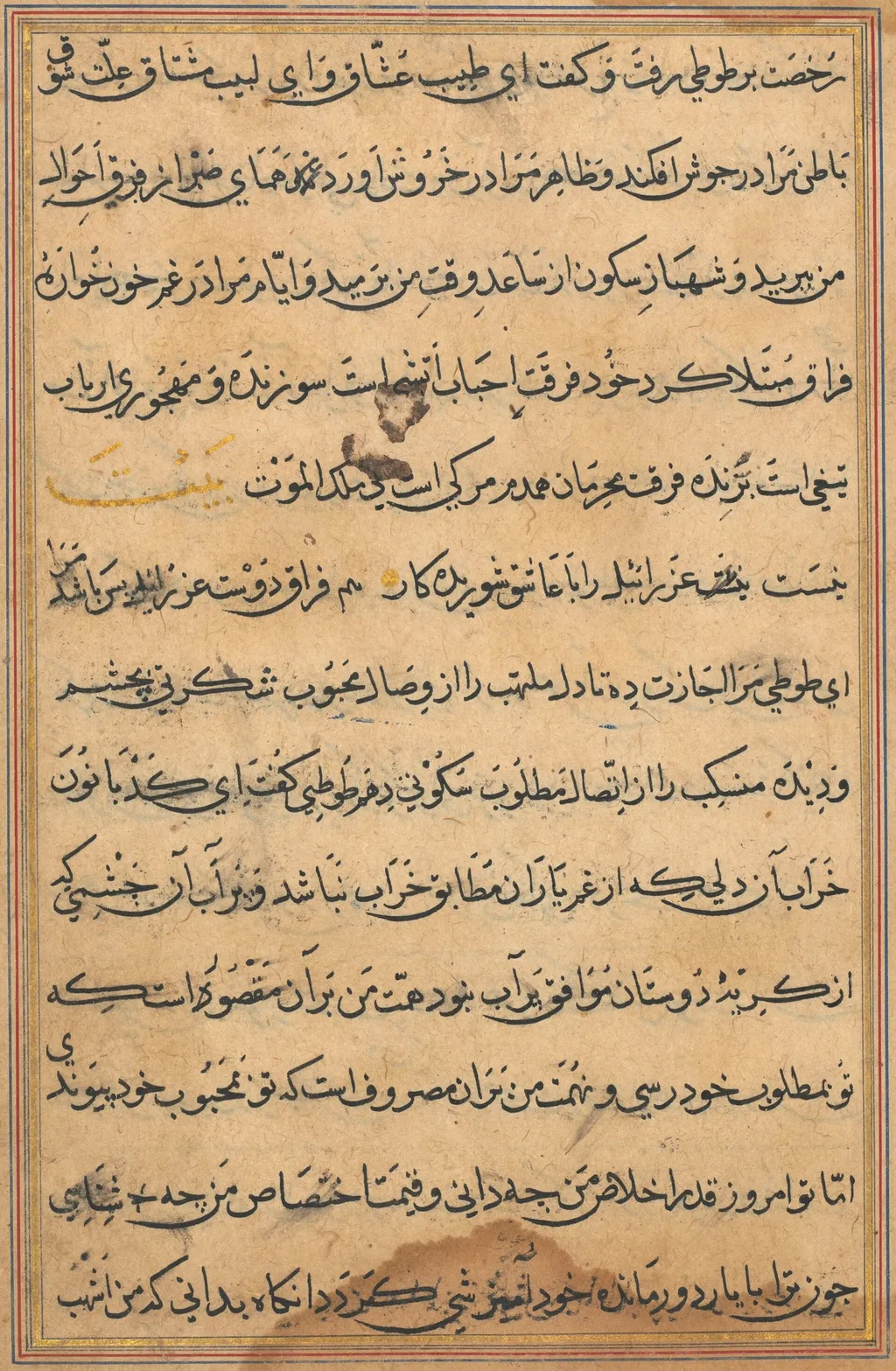
Page from Tales of a Parrot (Tuti-nama): text page is an unspecified painting. It dates from 1560 and is held in the collection of the Cleveland Museum of Art. This object is a single folio from the Persian illustrated manuscript known as the Tales of a Parrot (Tuti‑nama).
About this work
Overview
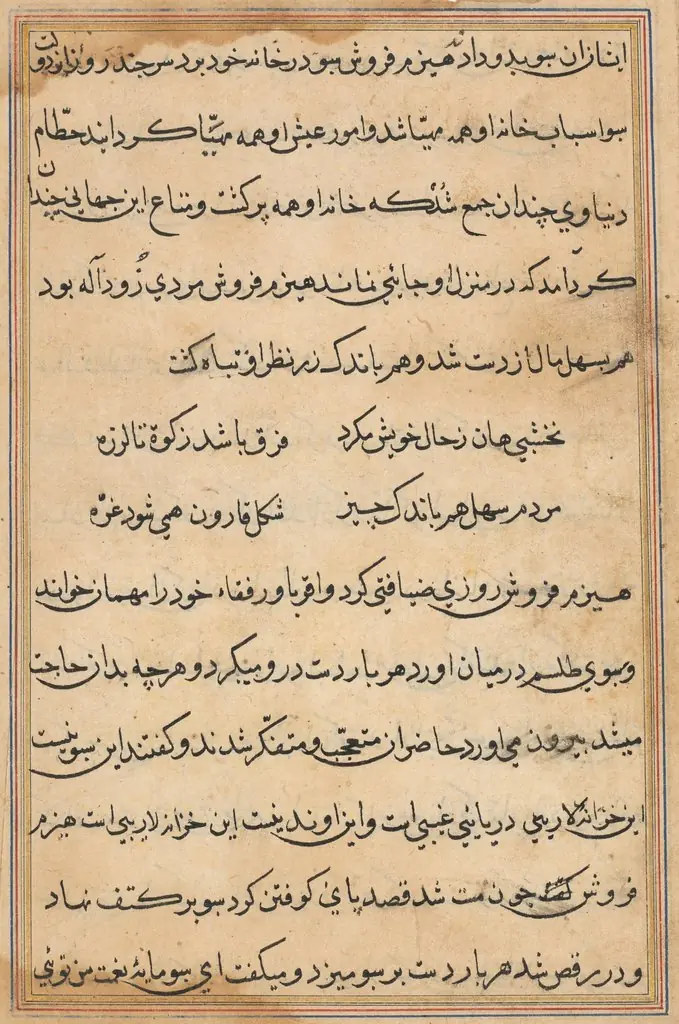
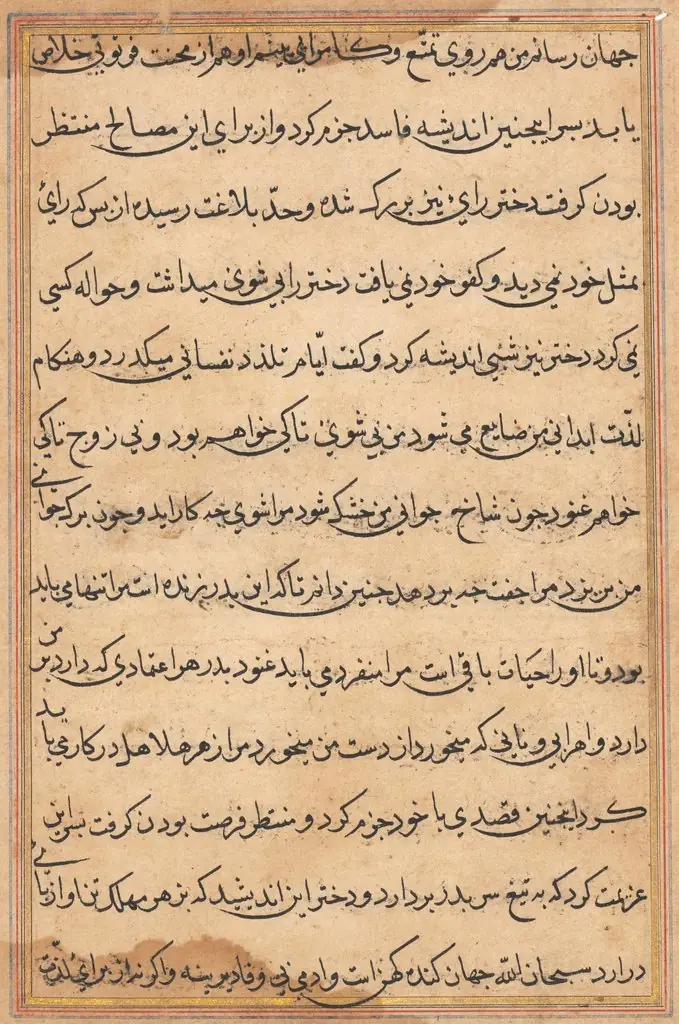
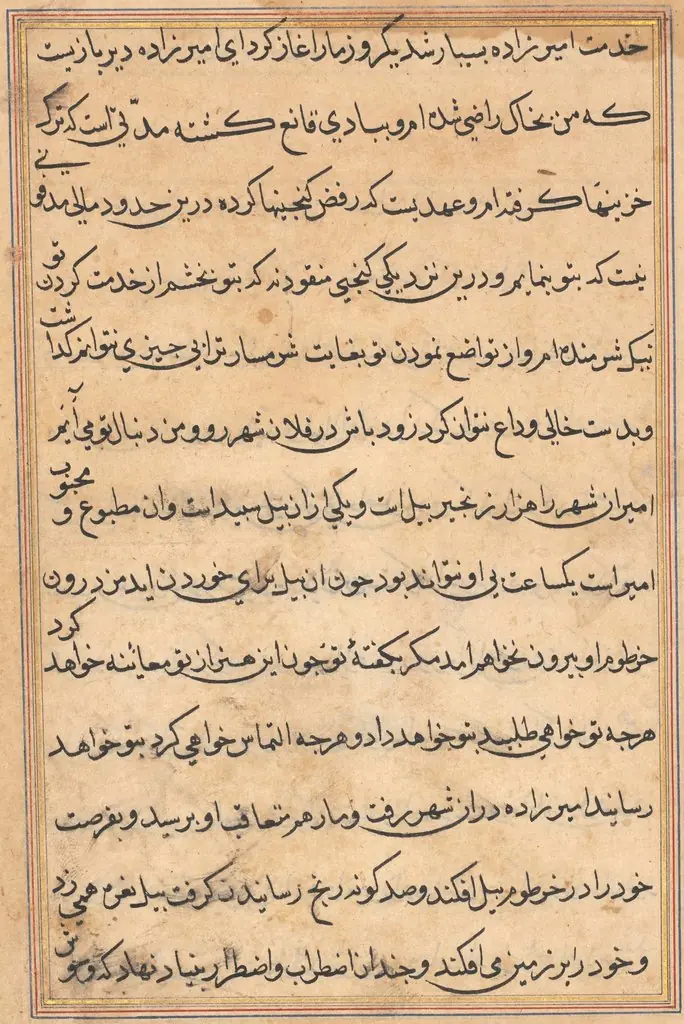
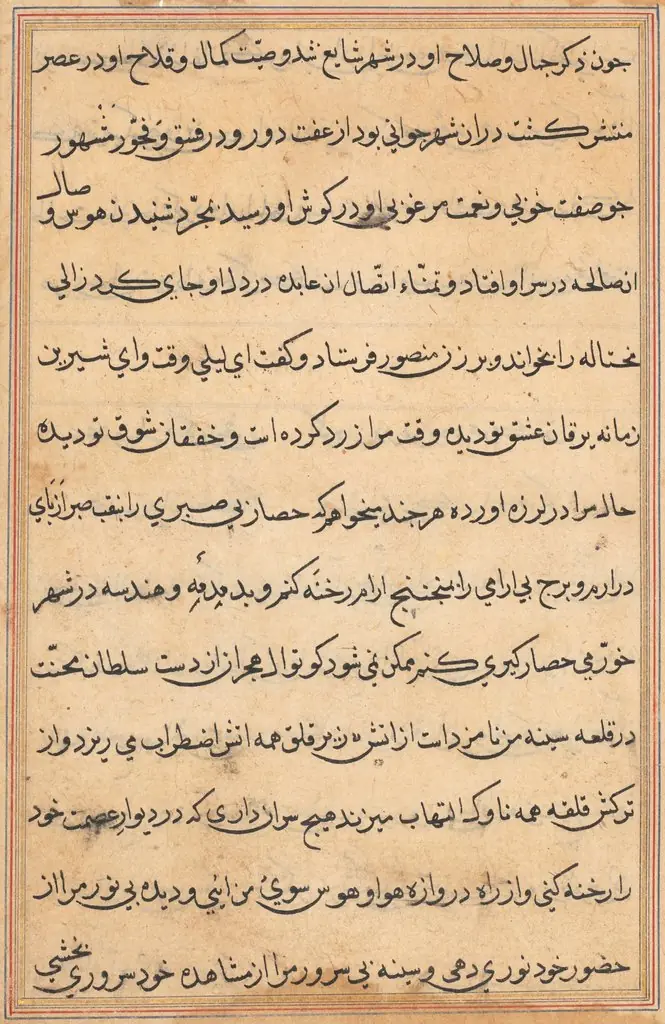
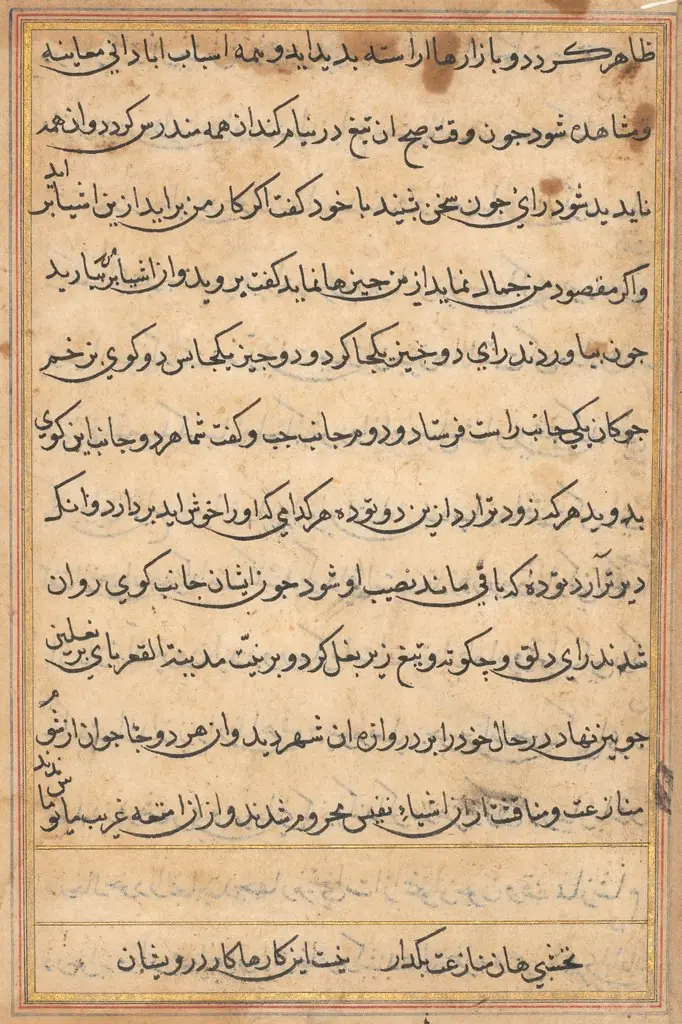
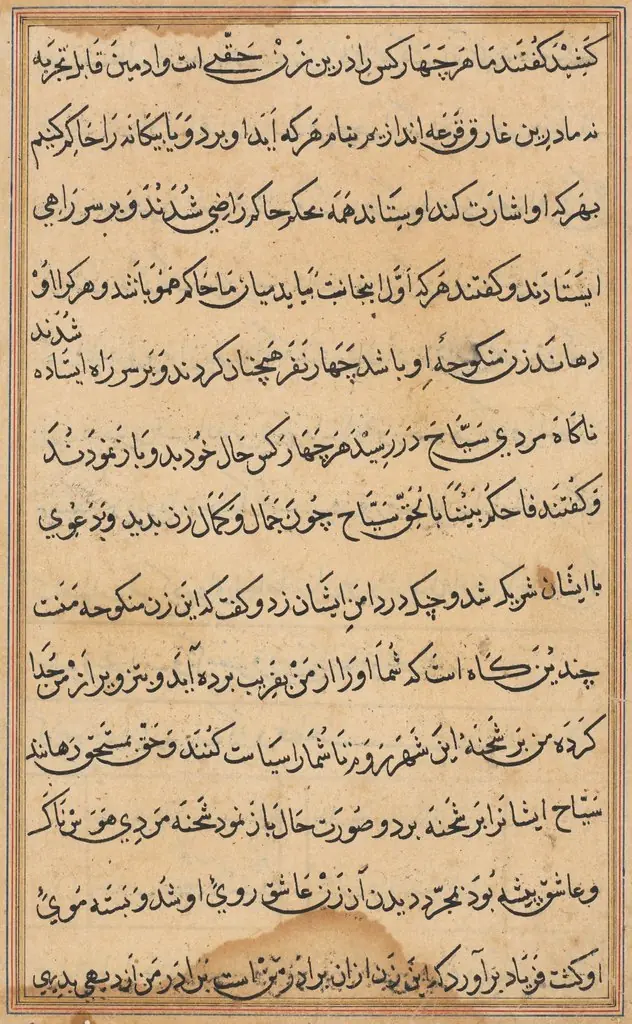
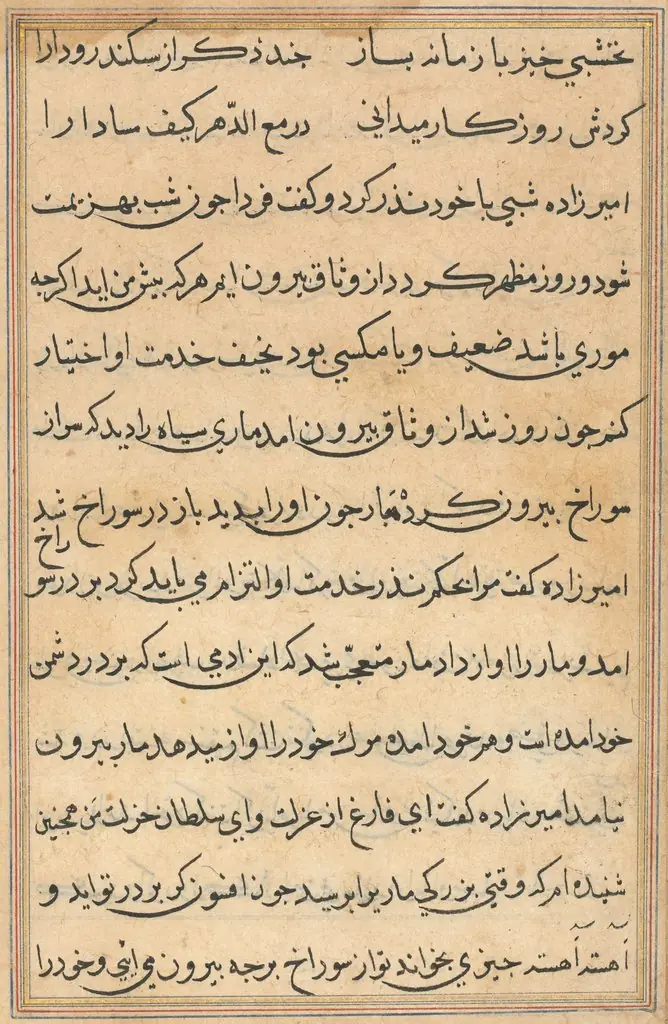
This object is a single folio from the Persian illustrated manuscript known as the Tales of a Parrot (Tuti‑nama). The page consists primarily of black calligraphic text set against a lightly toned, aged paper surface, bordered by a narrow red and blue frame. It is catalogued as a painted page, though the visual emphasis lies in the written narrative.
Subject & Meaning
The script records a portion of a story, typical of the moral and romantic tales compiled in the Tuti‑nama tradition. While the exact episode cannot be identified without the surrounding folios, the text was composed for a patron named Prince Salim, suggesting a personalized dedication within the larger collection.
Technique & Style
The calligraphy follows the Persian manuscript conventions of the early modern period, employing a fluid, black ink on paper. The border’s thin red and blue bands provide a modest decorative contrast, while the paper’s surface shows natural aging: faint brown stains and subtle marks that testify to centuries of handling.
History & Provenance
Created for Prince Salim, the page likely originated in a courtly workshop where literary manuscripts were produced for elite patrons. It entered the collection of the Cleveland Museum of Art, where it is presently conserved and displayed as part of the museum’s Islamic art holdings.
Context
The Tuti‑nama genre blends poetry, prose, and illustration to convey ethical teachings through animal allegories. This particular folio represents the textual component of that tradition, reflecting the cultural practice of commissioning personalized literary works for members of the Persian aristocracy.
Artist & collection

 Page from Tales of a Parrot (Tuti-nama): text page
 Page from Tales of a Parrot (Tuti-nama): text page
 Page from Tales of a Parrot (Tuti-nama): text page
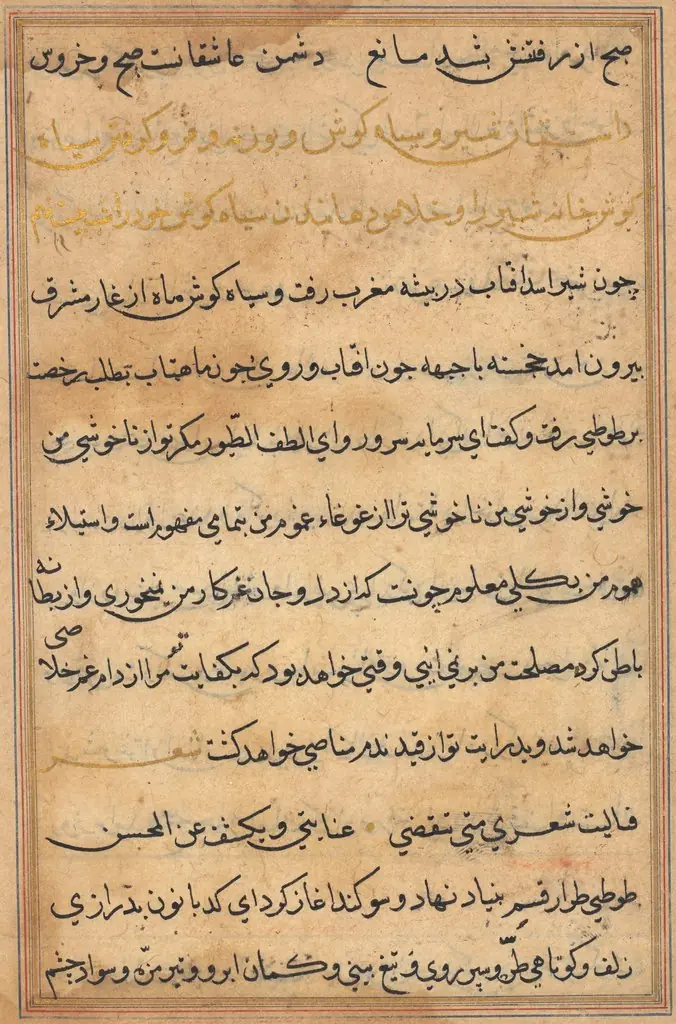 Page from Tales of a Parrot (Tuti-nama): text page
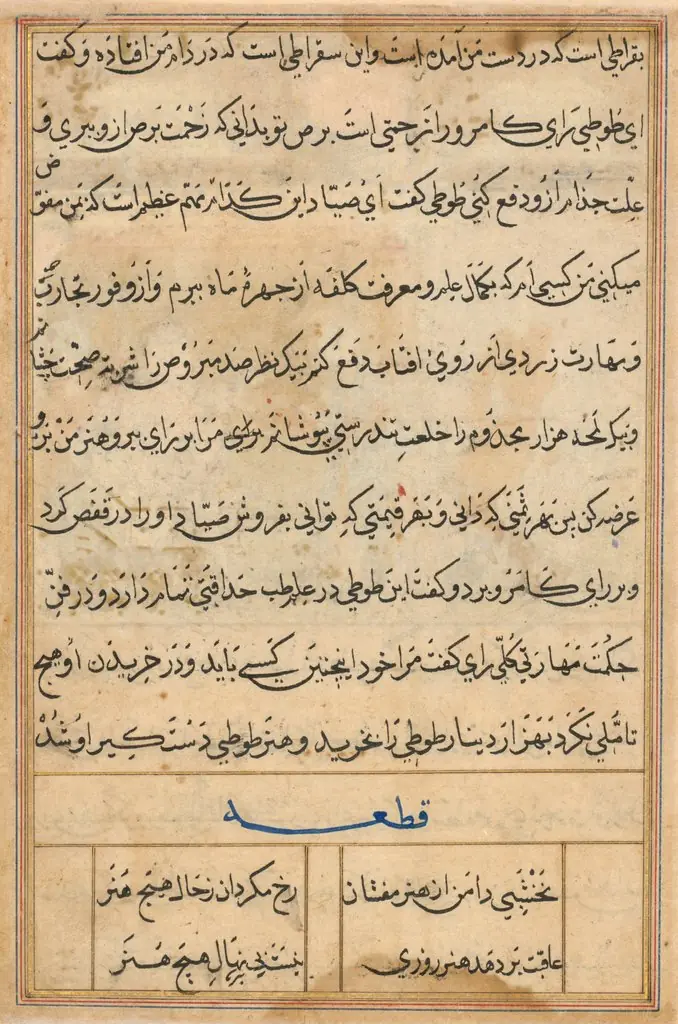 Page from Tales of a Parrot (Tuti-nama): text page
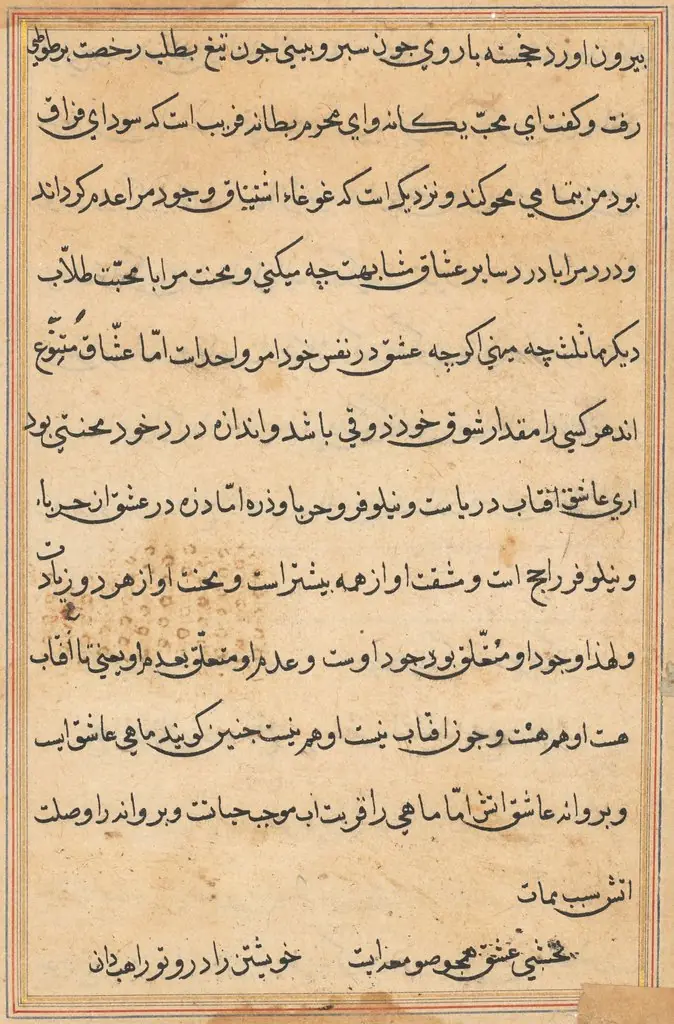 Page from Tales of a Parrot (Tuti-nama): text page
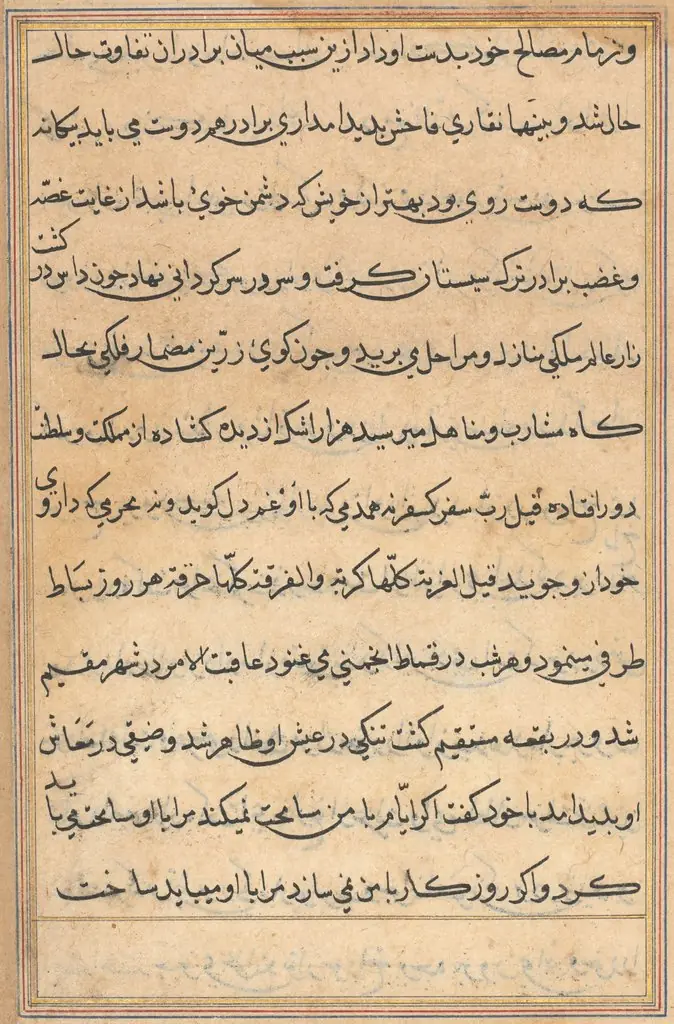 Page from Tales of a Parrot (Tuti-nama): text page
 Page from Tales of a Parrot (Tuti-nama): text page
 Page from Tales of a Parrot (Tuti-nama): text page
 Page from Tales of a Parrot (Tuti-nama): text page
 Page from Tales of a Parrot (Tuti-nama): text page