Artwork
The wife of the son of the vizier brings the magic wooden parrot to her lover, the monk, who exchanges it for the replica, from a Tuti-nama (Tales of a Parrot): Tenth Night
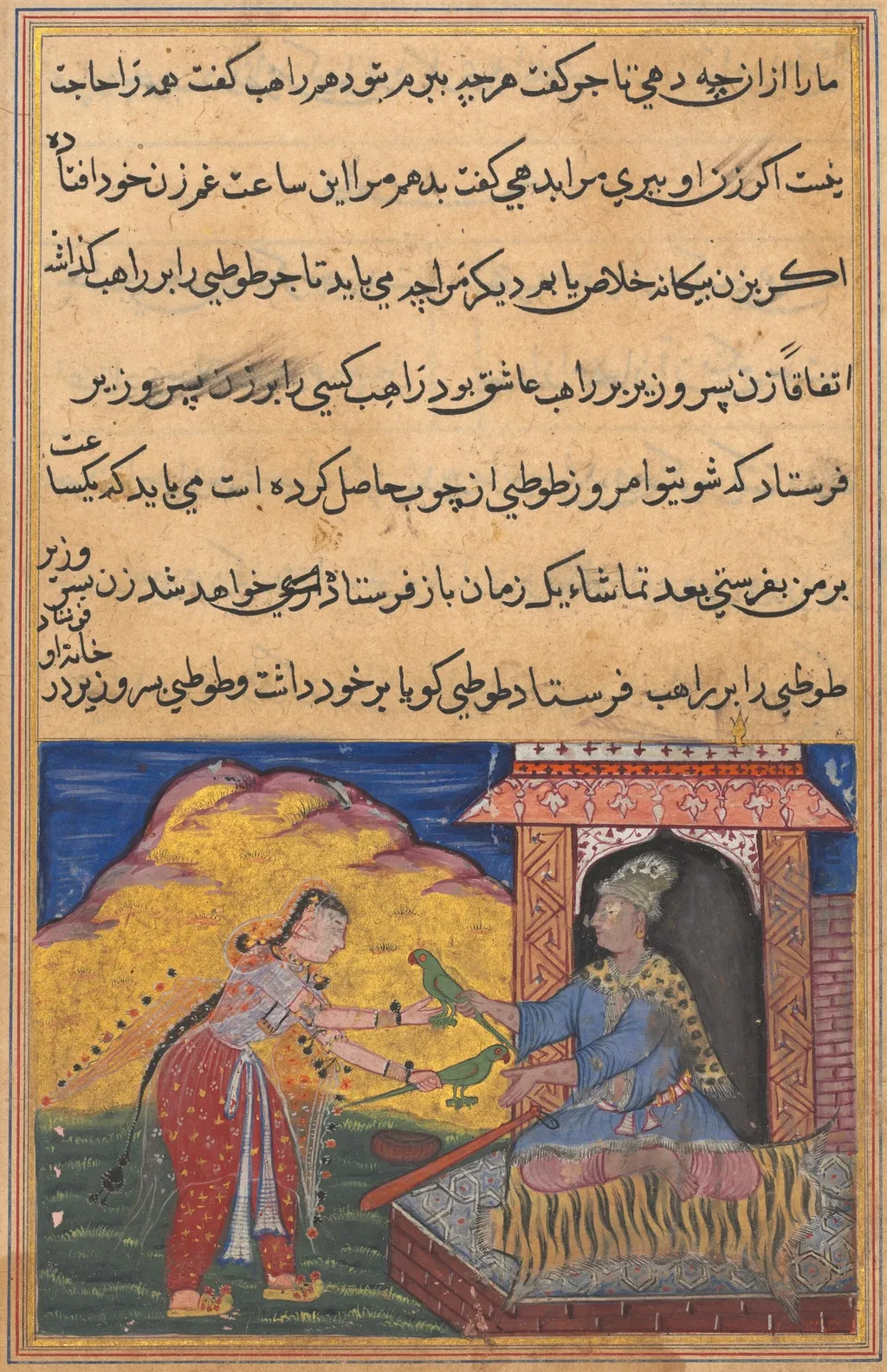
The wife of the son of the vizier brings the magic wooden parrot to her lover, the monk, who exchanges it for the replica, from a Tuti-nama (Tales of a Parrot): Tenth Night is an unspecified painting. It dates from 1560 and is held in the collection of the Cleveland Museum of Art. The work portrays a woman presenting a wooden parrot to a seated male figure, who rests upon a rug patterned like a tiger’s hide.
About this work
Overview
The work portrays a woman presenting a wooden parrot to a seated male figure, who rests upon a rug patterned like a tiger’s hide. The scene unfolds against a yellow wall topped by a blue sky, and the figures are clothed in vivid red‑white and blue‑yellow garments respectively. The composition suggests a narrative exchange within an imagined, possibly mythic, setting.
Subject & Meaning
The title links the image to a tale from the Tuti‑nama, a collection of parrot stories, describing a wife of a vizier’s son delivering a magical wooden bird to her lover, a monk, who in turn trades it for a replica. The gesture of gifting the parrot hints at themes of secrecy, barter, and the interplay between reality and illusion within the narrative.
Technique & Style
Executed in a bright palette, the painting relies on strong contrasts of red, white, blue, and yellow to delineate clothing and background. Fine detailing renders the texture of the tiger‑skin rug and the wooden parrot, while the flat yet atmospheric sky adds depth. The overall style merges decorative patterning with a narrative illustration typical of manuscript-inspired works.
Context
The Tuti‑nama is a Persian literary tradition that uses animal tales to convey moral and mystical lessons. By visualising a specific episode from its tenth night, the painting aligns itself with a broader cultural practice of illustrating literary episodes for didactic or decorative purposes, reflecting the interplay between text and image in courtly art.
Artist & collection

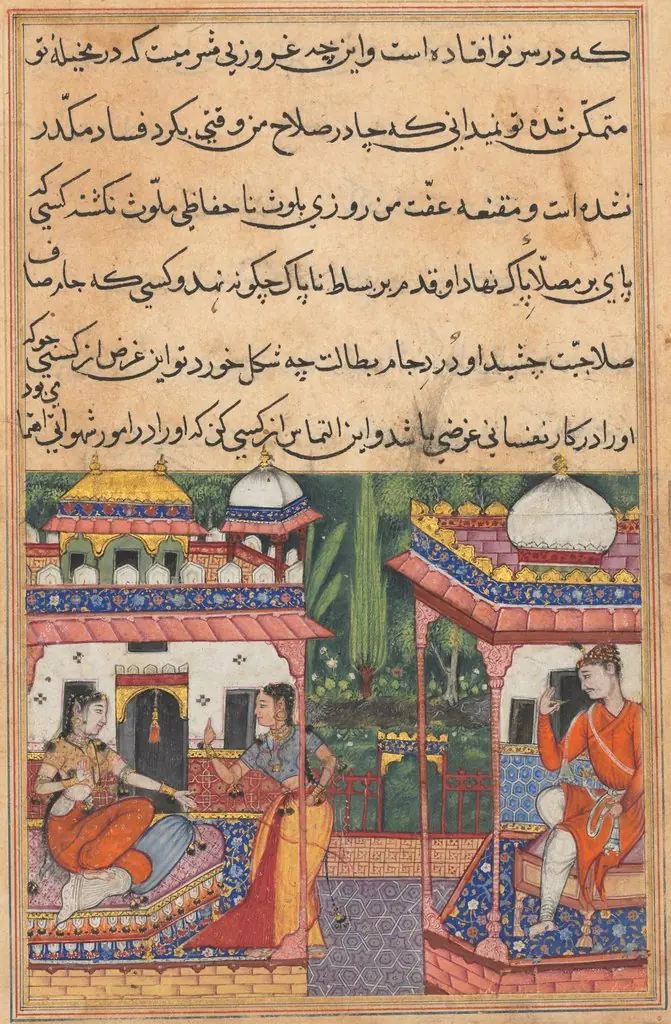 Kaiwan sends a message of love to Khurshid, wife of his brother Utarid who is away on a journey, from a Tuti-nama (Tales of a Parrot): Thirty-second Night
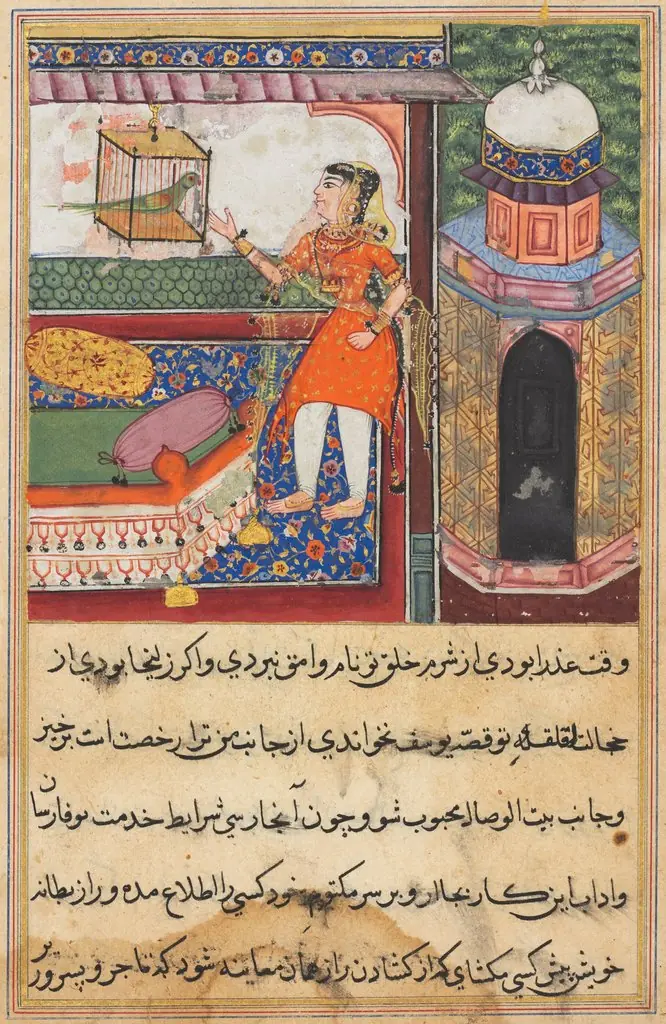 The Parrot Addresses Khujasta at the Beginning of the Tenth Night, from a Tuti-nama (Tales of a Parrot)
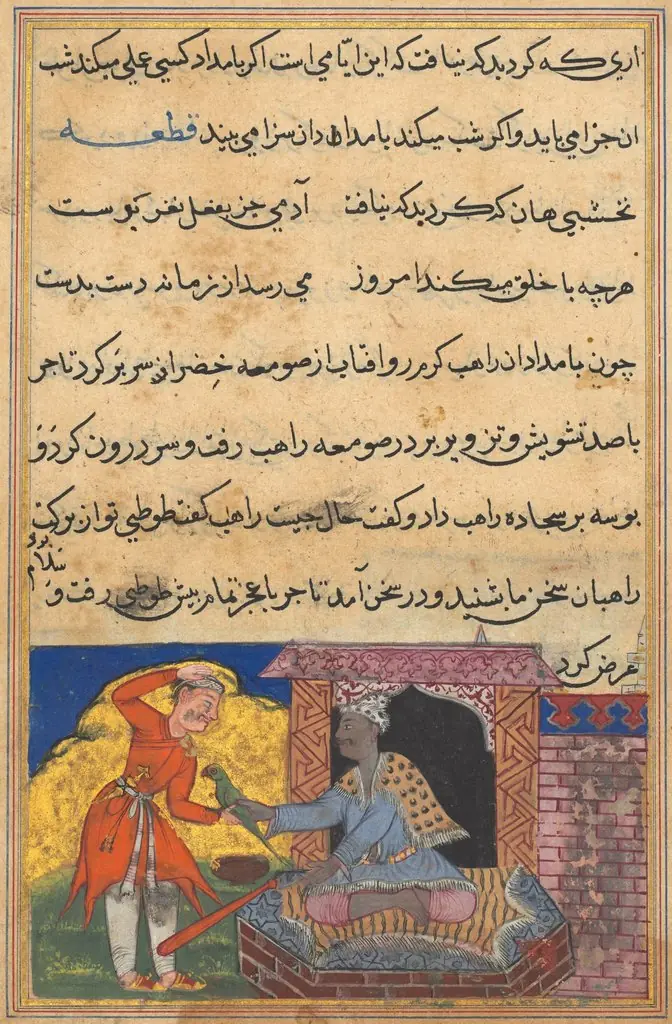 The monk returns the magic parrot to its rightful owner, the merchant, from a Tuti-nama (Tales of a Parrot): Tenth Night
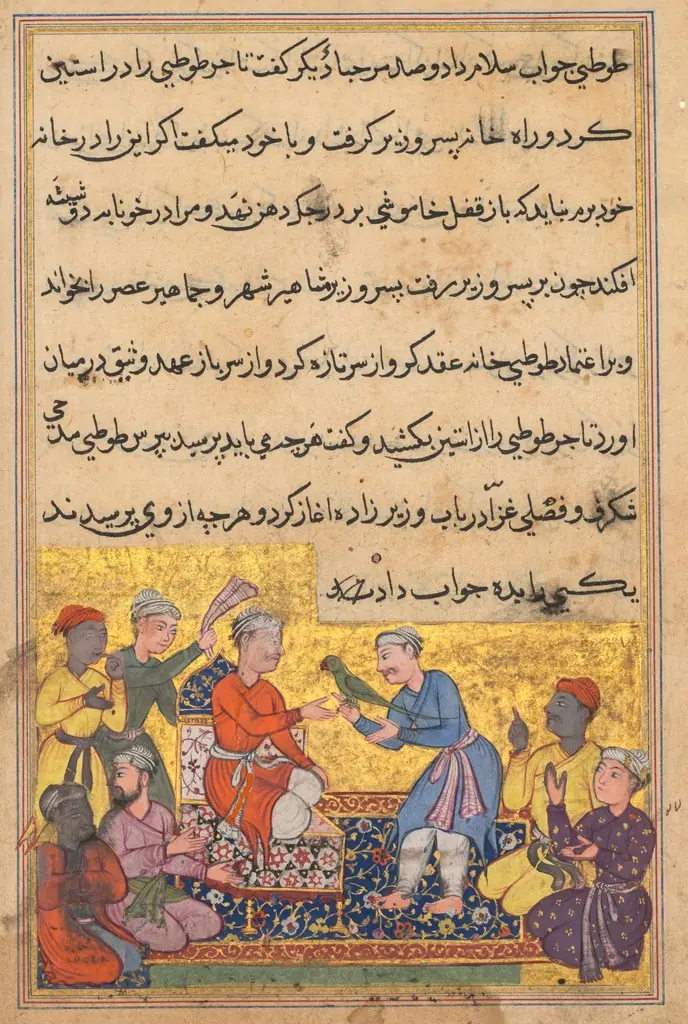 The magic parrot of the merchant talks to the vizier’s son, from a Tuti-nama (Tales of a Parrot): Tenth Night
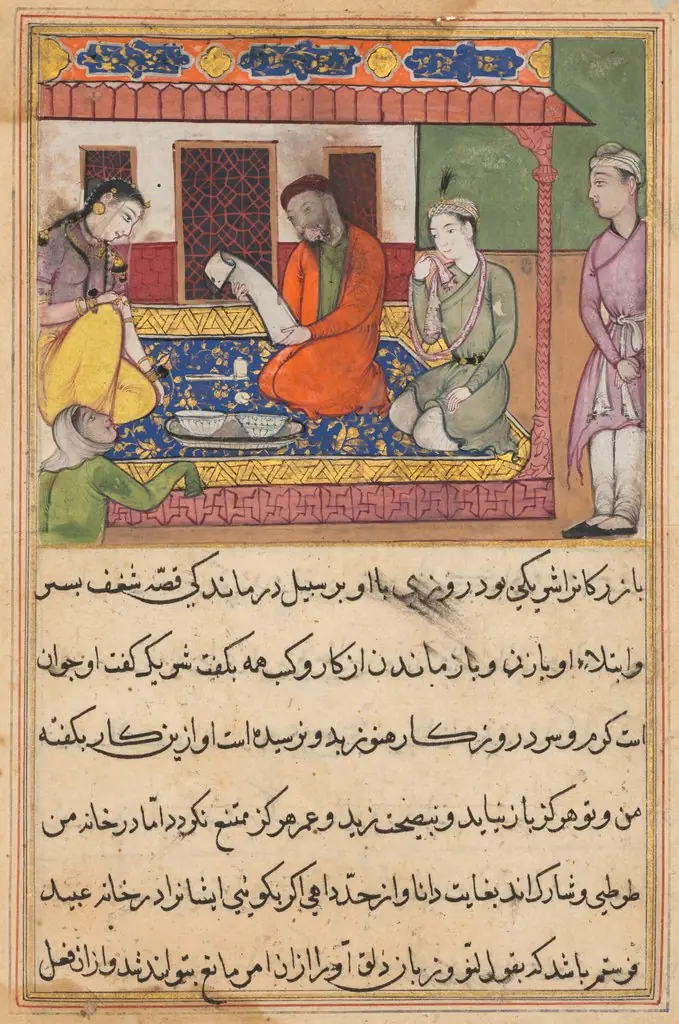 The marriage of ‘Ubaid, son of a merchant of Tirmiz, from a Tuti-nama (Tales of a Parrot): Forty-second Night
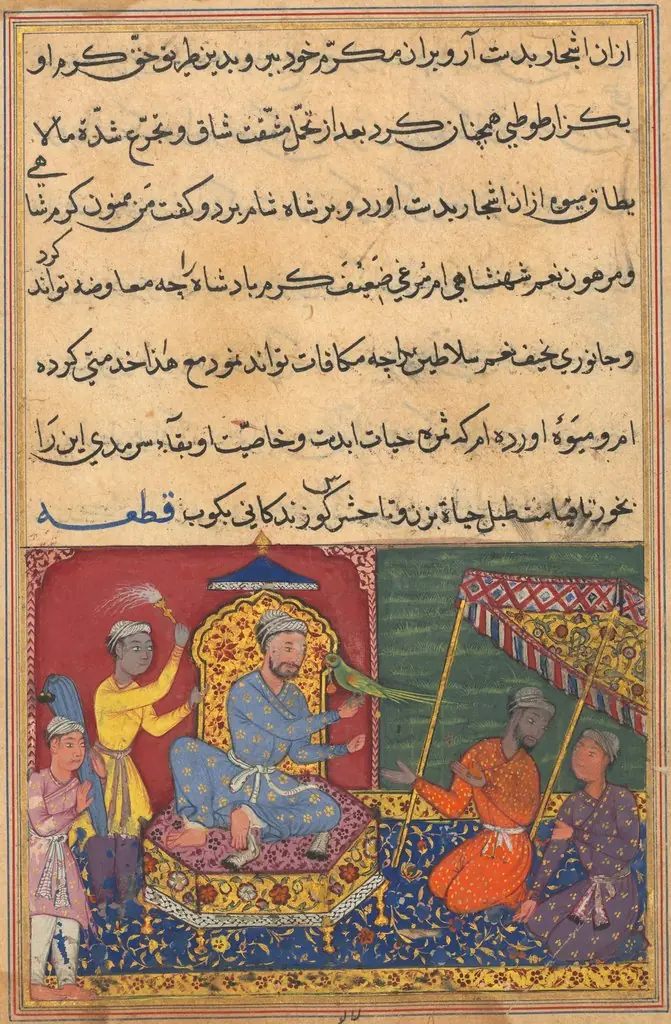 The parrot brings a fruit from the Tree of Life to the king of Syria, from a Tuti-nama (Tales of a Parrot): Ninth Night
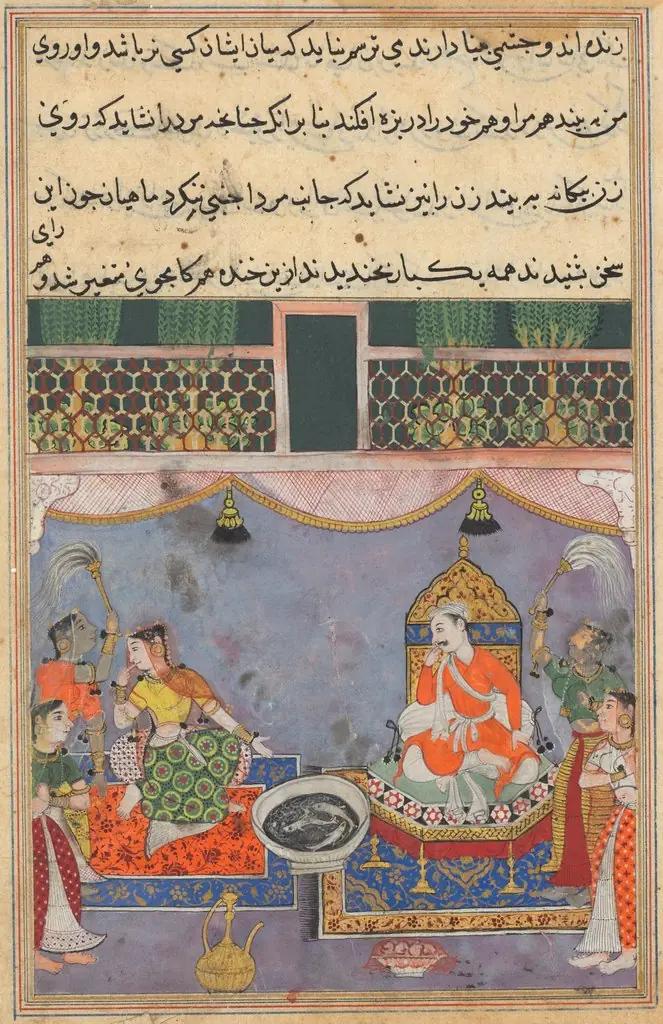 Kamjuy, the wife of the Raja, averts her face from the fishes, from a Tuti-nama (Tales of a Parrot): Twenty-third Night
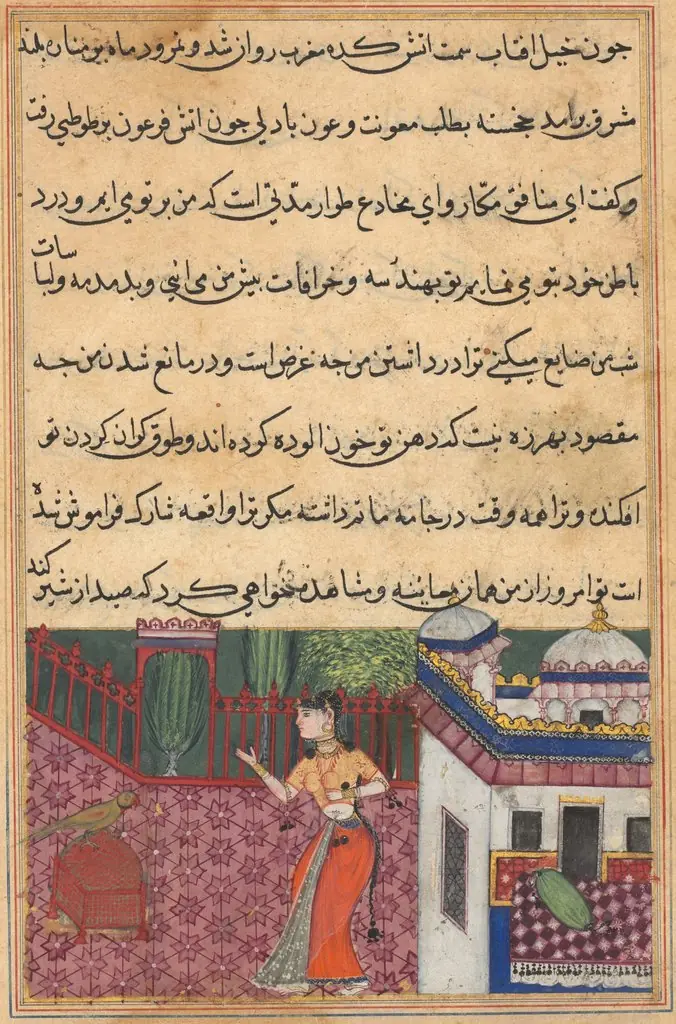 The parrot addresses Khujasta at the beginning of the thirty-third night, from a Tuti-nama (Tales of a Parrot)
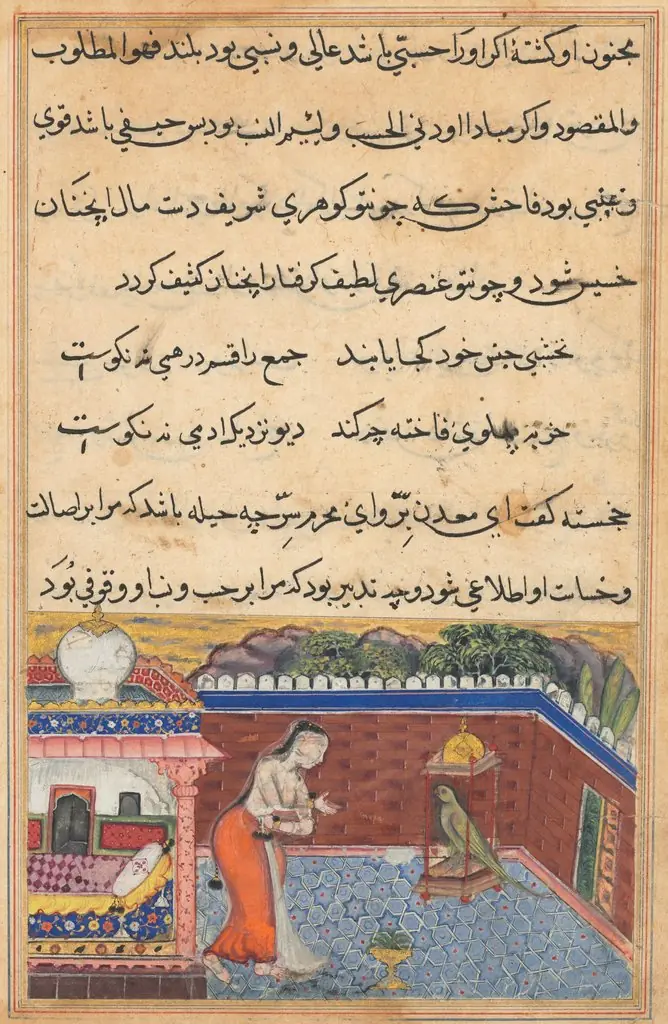 The parrot addresses Khujasta at the beginning of the thirty-first night, from a Tuti-nama (Tales of a Parrot)
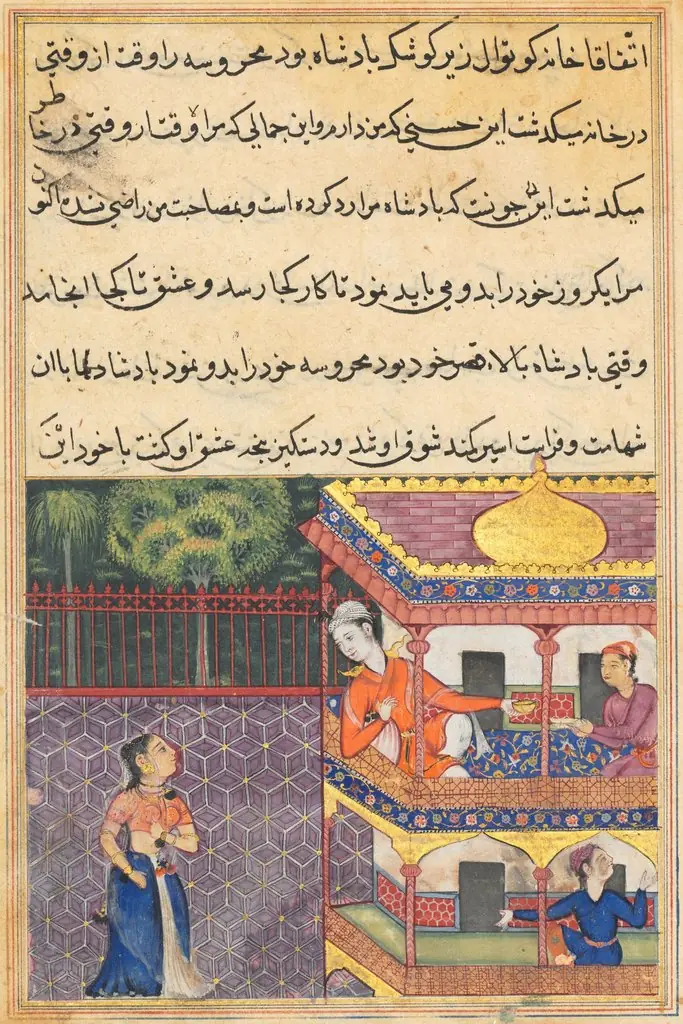 The king of Zabul sees Mahrusa from his palace balcony, from a Tuti-nama (Tales of a Parrot): Thirty-sixth Night
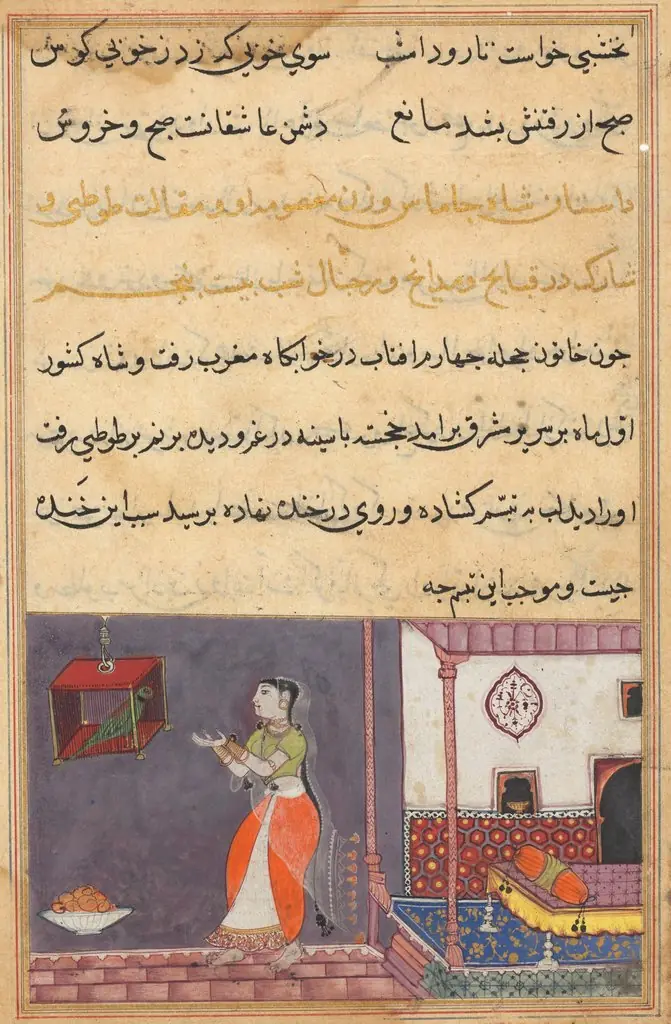 The Parrot Addresses Khujasta at the Beginning of the Twenty-fifth Night, from a Tuti-nama (Tales of a Parrot)
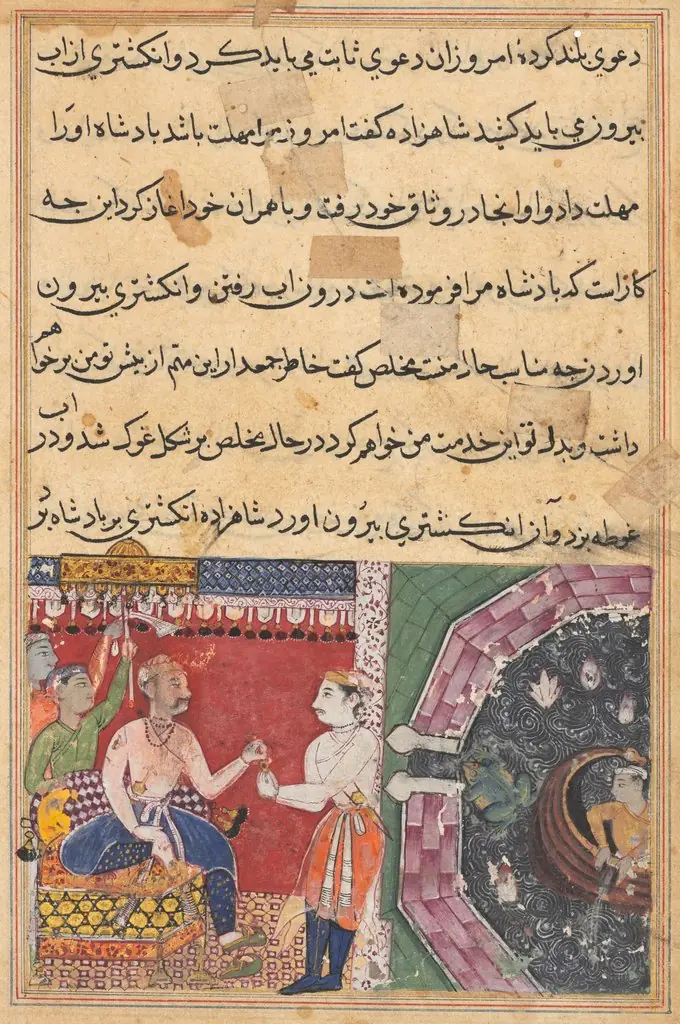 The prince, with the help of Mukhlis who changes into a frog, recovers the ring lost in the sea, and returns it to the king, from a Tuti-nama (Tales of a Parrot): Eighteenth Night
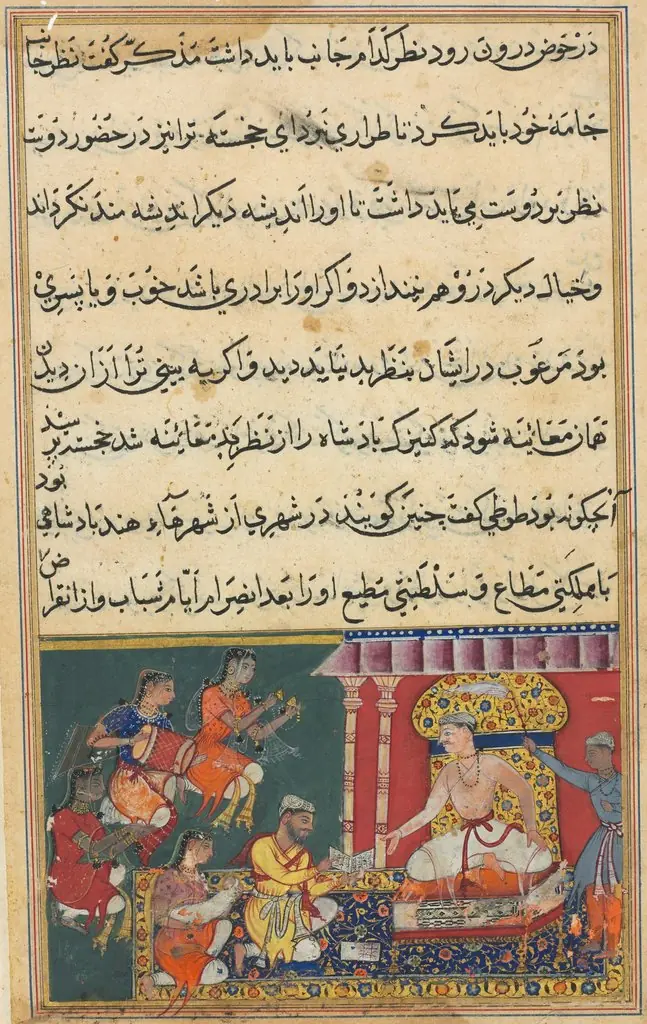 The astrologer predicts a calamity for the newly born prince in his thirteenth year, but one which he would be able to overcome, from a Tuti-nama (Tales of a Parrot): Eighth Night
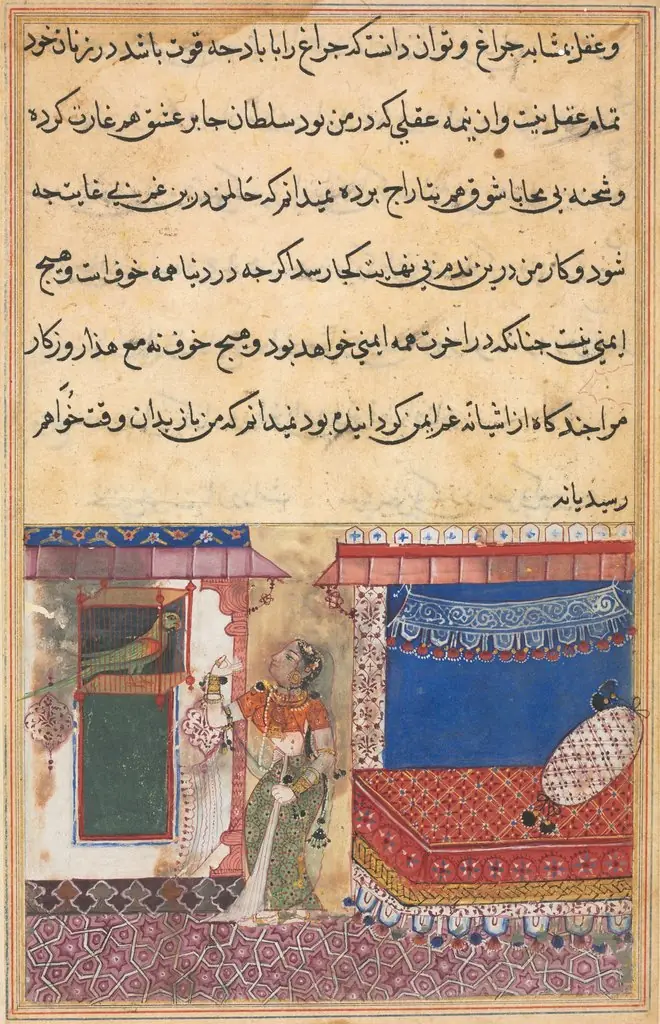 The Parrot Addresses Khujasta at the Beginning of the Eighteenth Night, from a Tuti-nama (Tales of a Parrot)