Artwork
An Allegory of Man
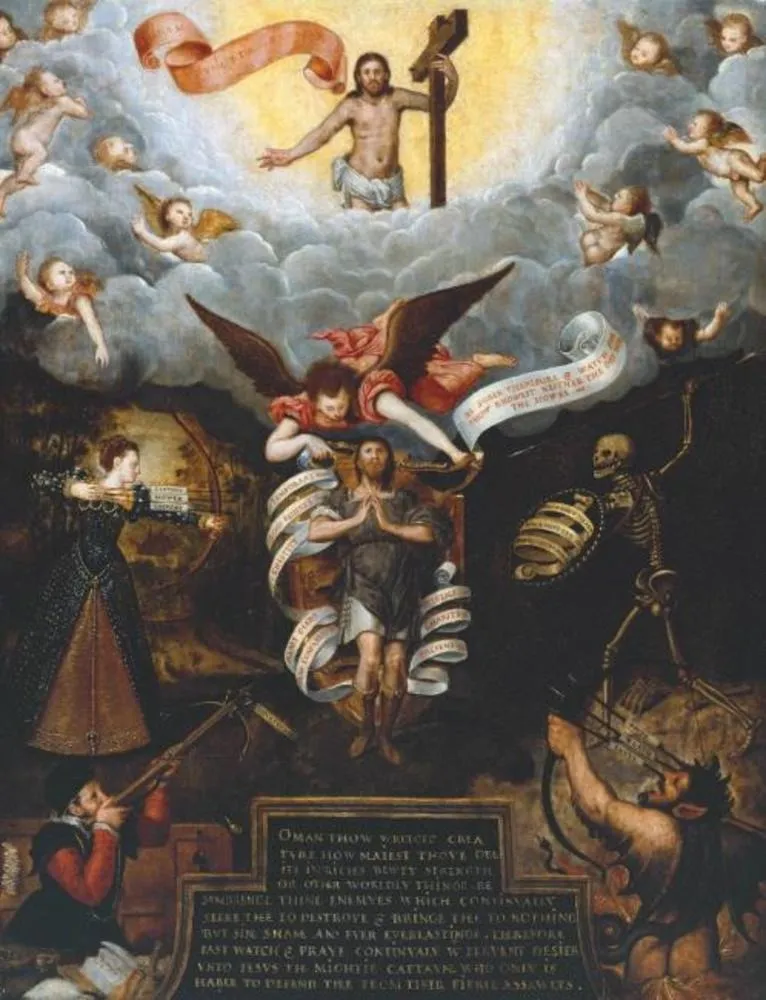
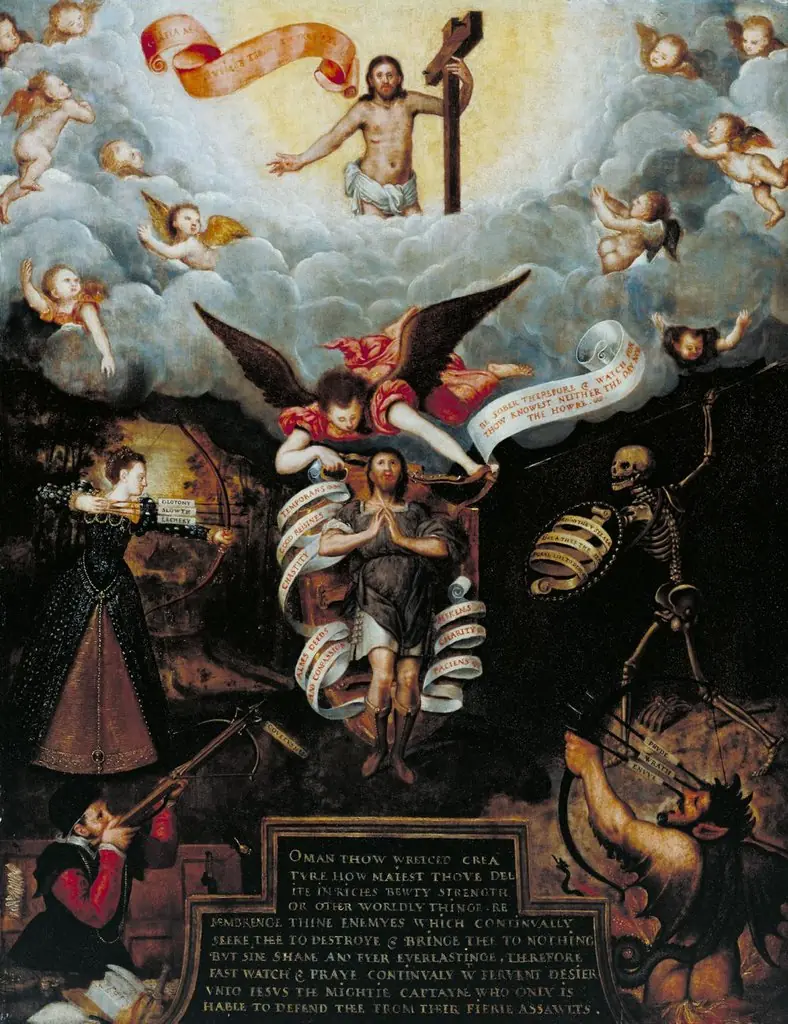
An Allegory of Man is an oil painting by the Mannerist artist Unknown. It dates from 1598 and is held in the collection of the Tate Britain.
About this work
Overview
An Allegory of Man is an oil painting that presents a kneeling figure in prayer, flanked by a skeletal presence and assorted symbolic elements. Above the central scene, an angel bears a banner, while a depiction of Christ appears among clouds. The composition is set against a dark backdrop, with the kneeling man and the angel highlighted by a pronounced light source.
Subject & Meaning
The work juxtaposes mortality, represented by the skeleton, with spiritual aspiration, shown through the praying figure and the celestial angel. The inclusion of a woman in a long dress and a man sounding a horn adds layers of allegorical narrative, suggesting themes of repentance, judgment, and the human quest for divine favor.
Technique & Style
The painting employs chiaroscuro, creating stark contrasts between illuminated forms and surrounding darkness to enhance three‑dimensionality and emotional intensity. The bright illumination on the central figures against the somber background underscores the dramatic tension typical of Baroque‑inspired visual strategies.
Context
The arrangement of figures, use of symbolic iconography, and dramatic lighting align the piece with traditions of religious allegory prevalent in European art, where moral and theological concepts are conveyed through complex visual metaphors.
Artist & collection

 Domestic Scene
 Giacomo and Cardinal Marco, investing Andrea, Abbot of San Zeno, with his Benefice
 The Nymph of Fontainebleau
 Portrait of a Woman
 Madonna and Child with Saints in the Enclosed Garden
 Venus and Minerva
 Family Group of Four on Sofa
 Wall painting from Room H of the Villa of P. Fannius Synistor at Boscoreale
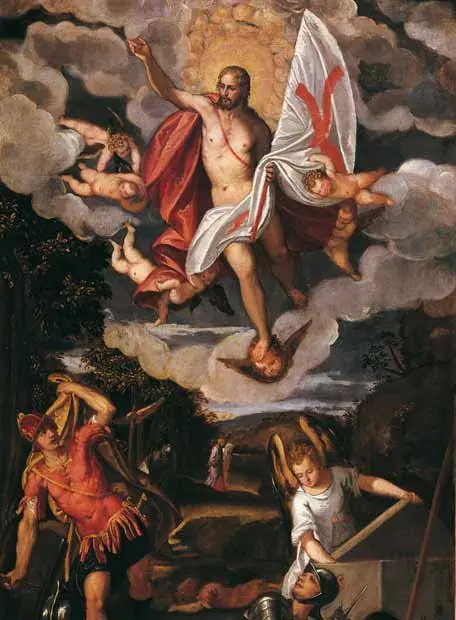 Resurrection of Christ
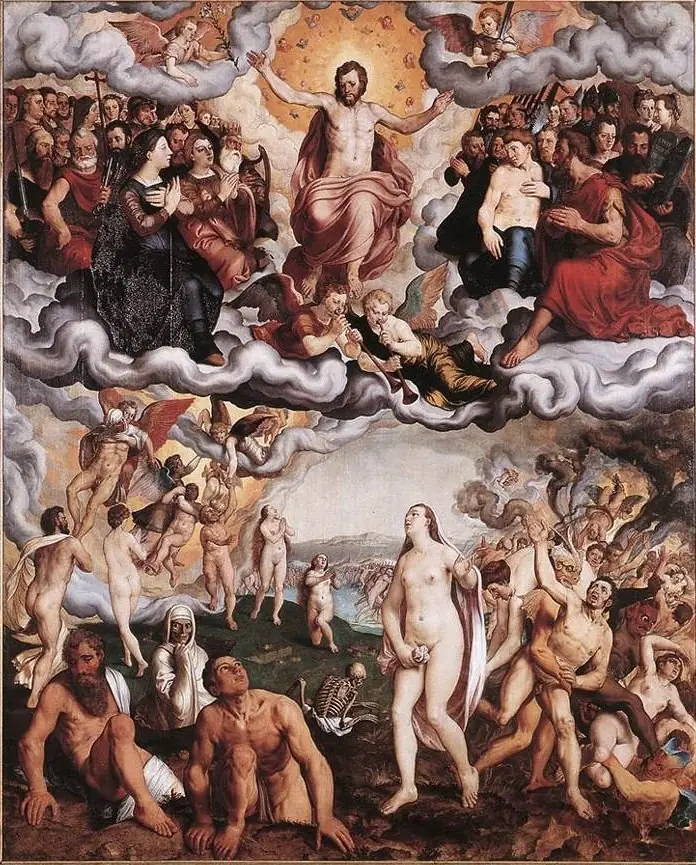 Last Judgement
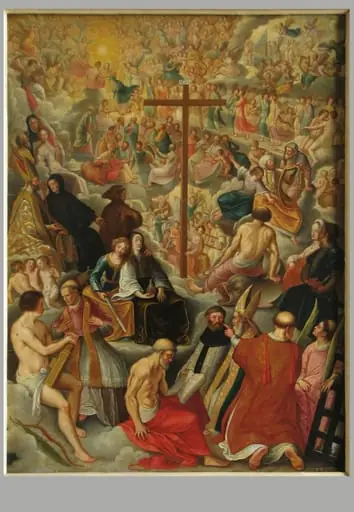 Încoronarea Mariei
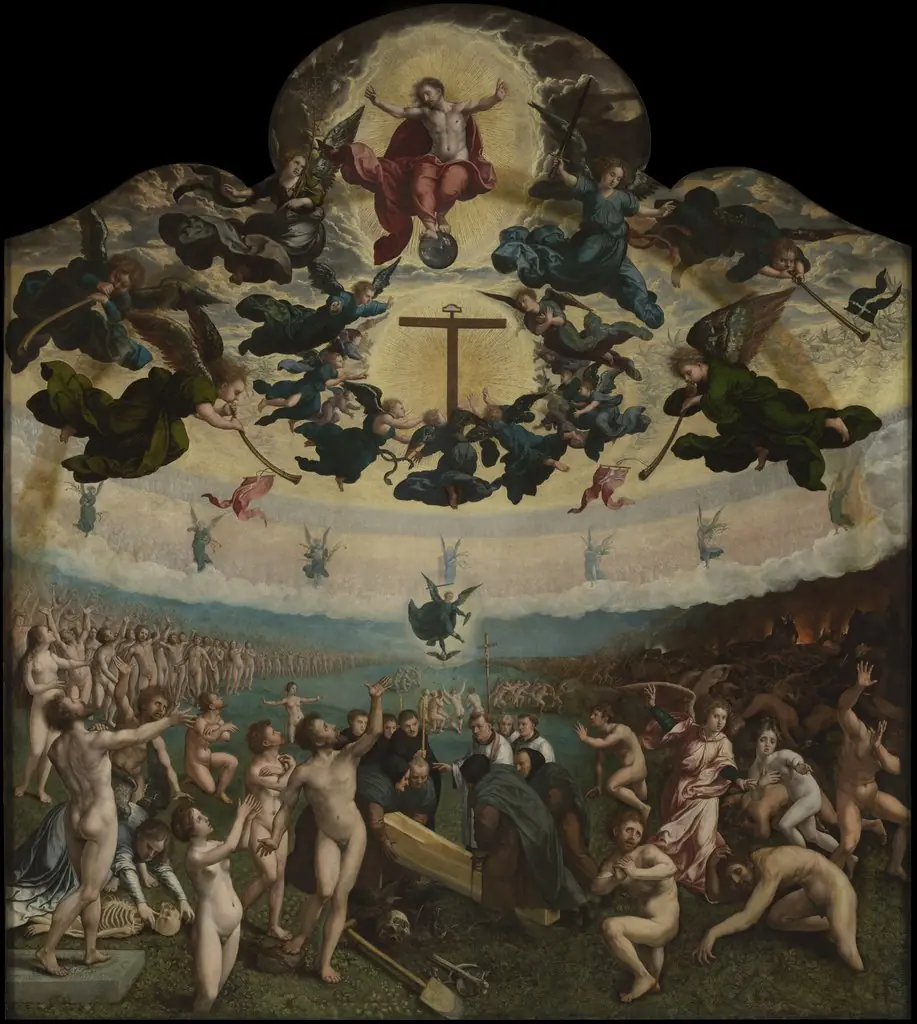 The last judgement and the seventh act of mercy
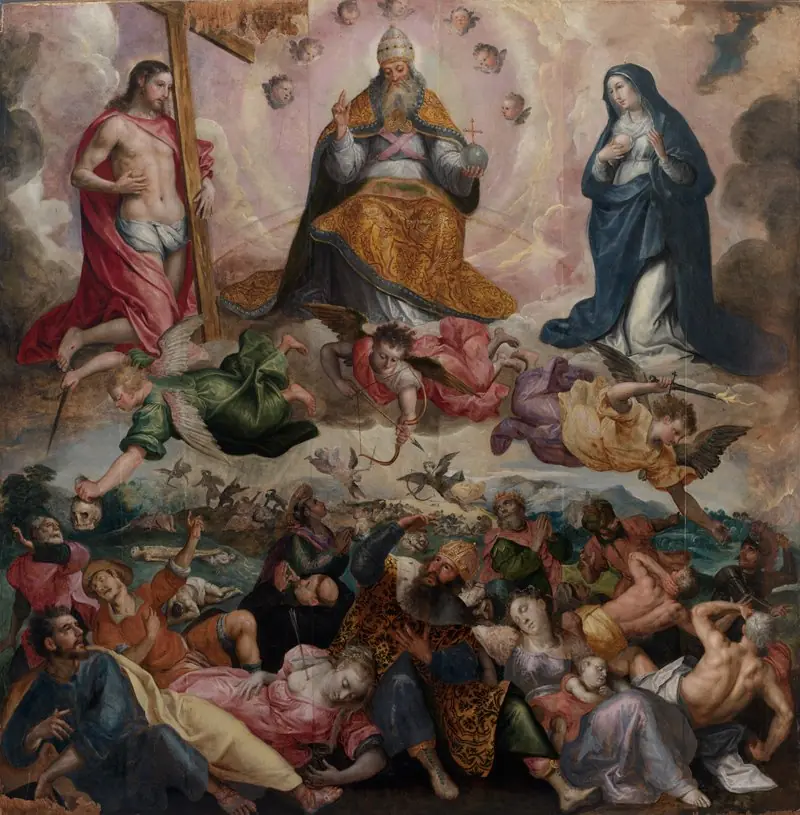 Last Judgement
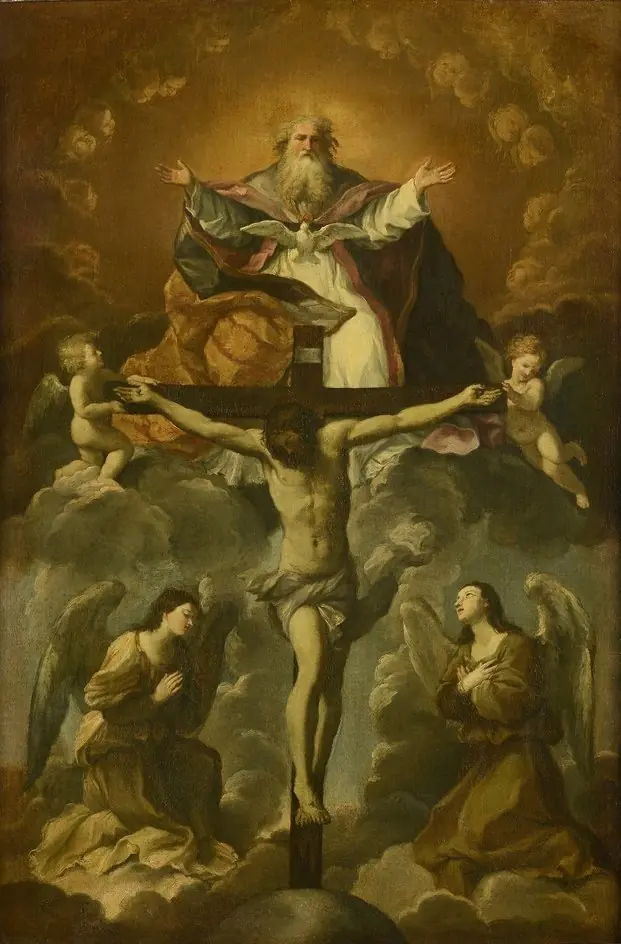 The Holy Trinity adored by Angels
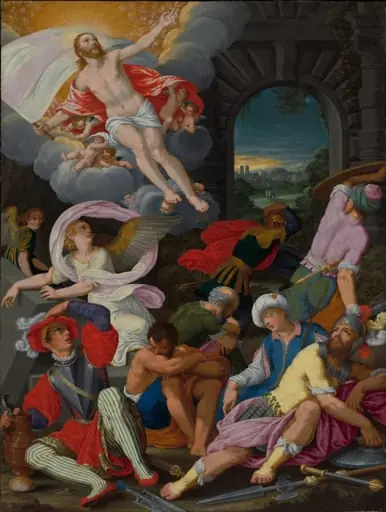 The Resurrection of Christ
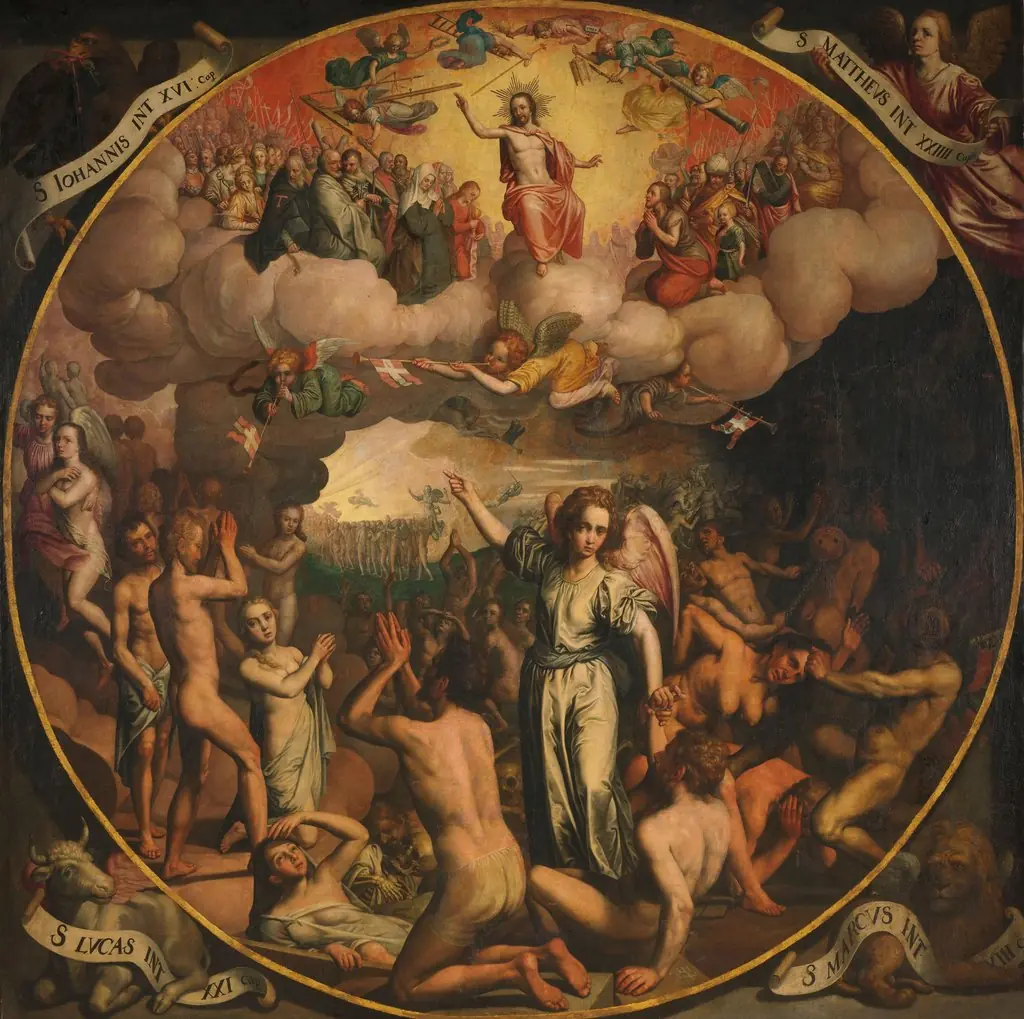 Last Judgment
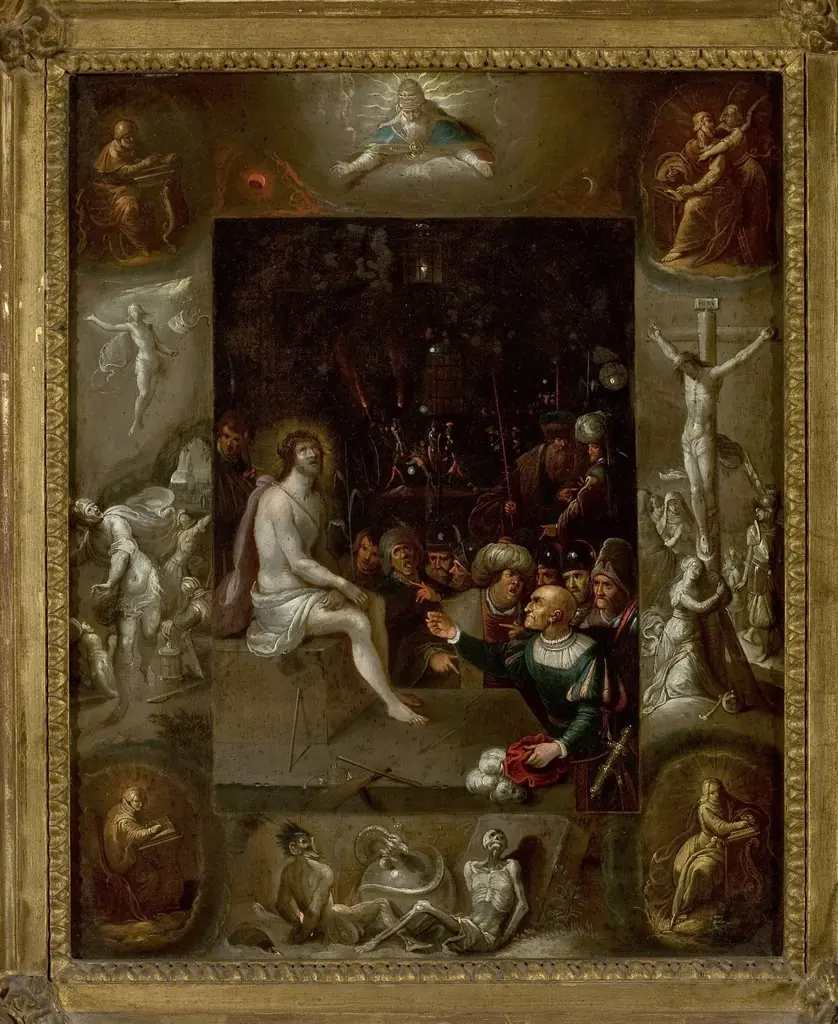 Mocking of Christ surrounded by images of the Evangelists and scenes from the Passion of Christ
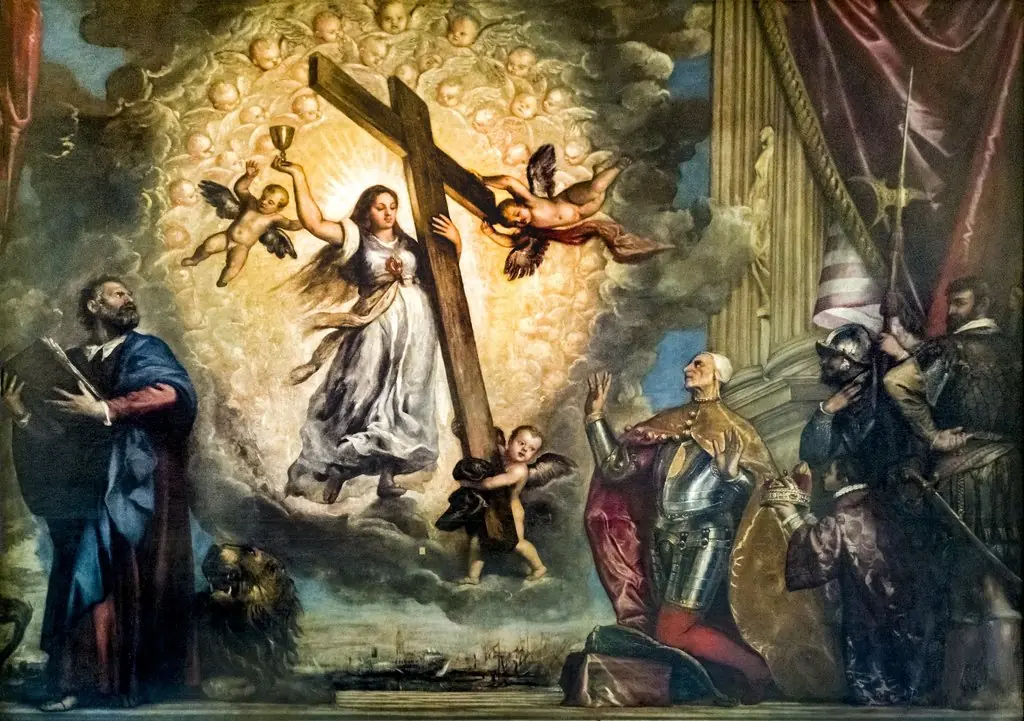 Doge Antonio Grimani Kneeling Before the Faith
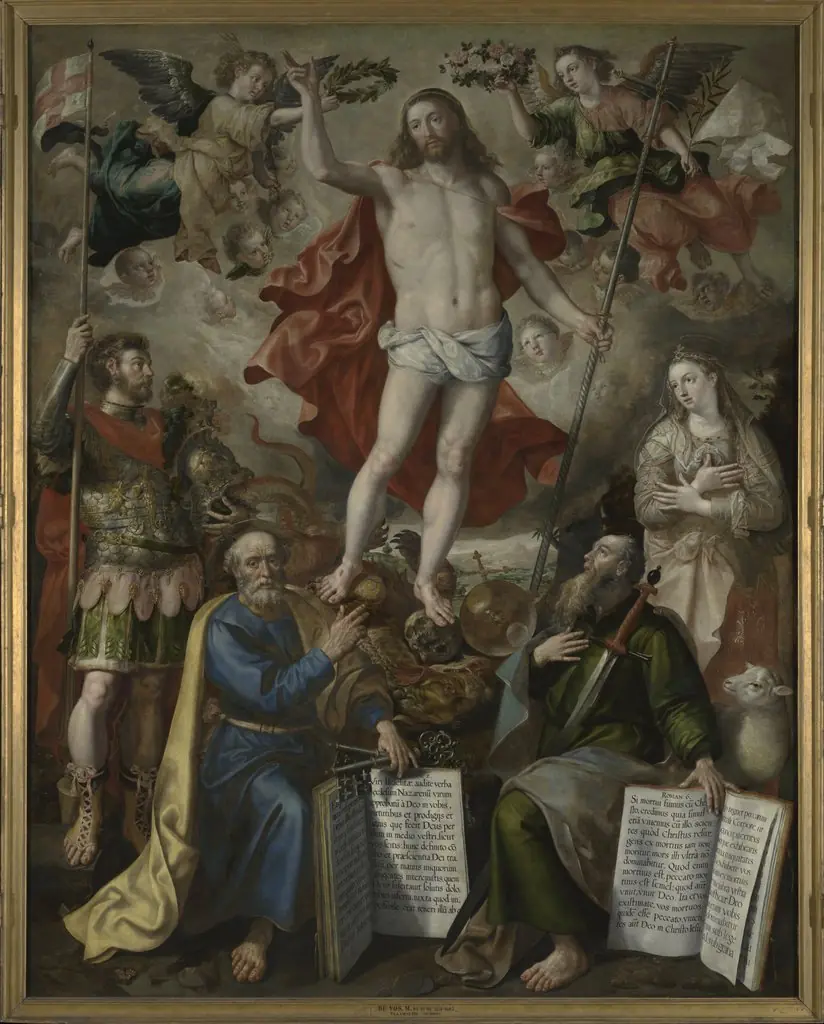 Christ Triumphant
 Allegory of Man