Artwork
A Procession Scene with Musicians, from a copy of the Padshanama
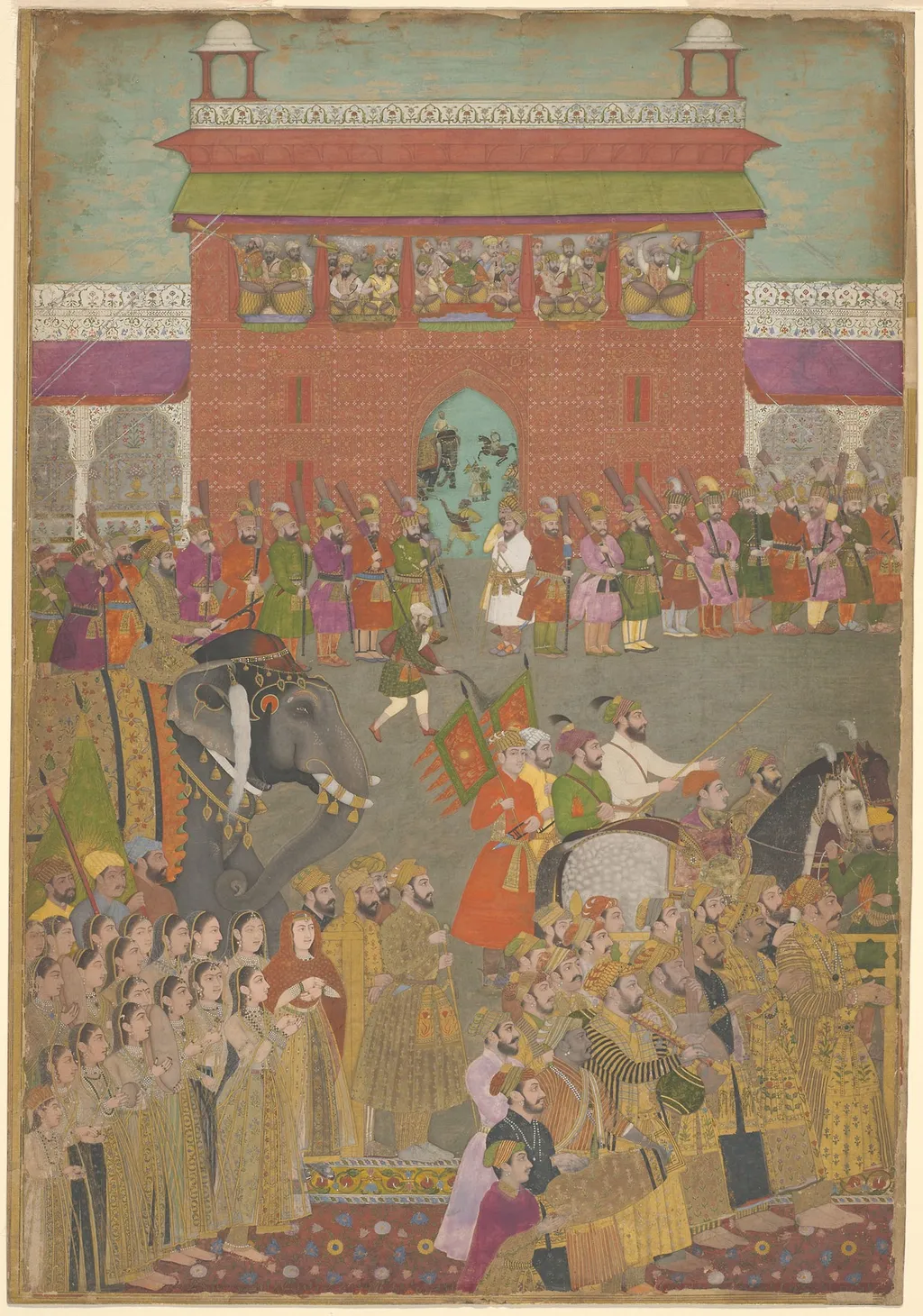
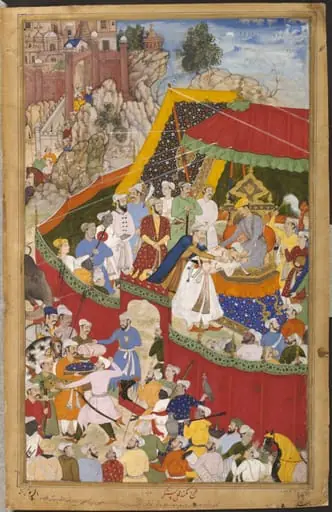
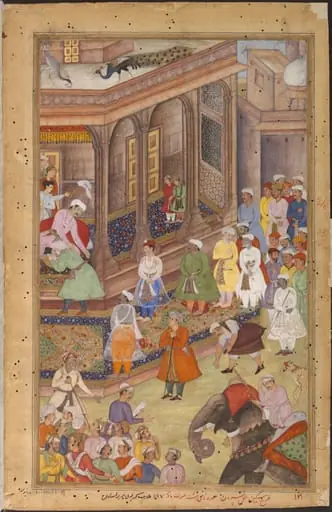
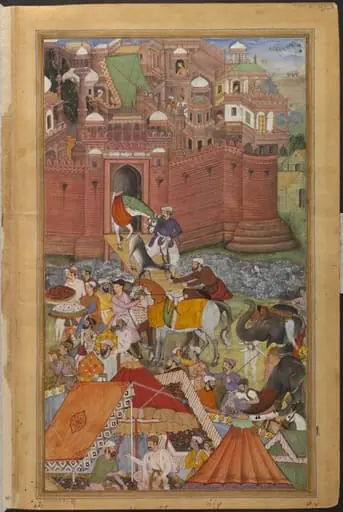
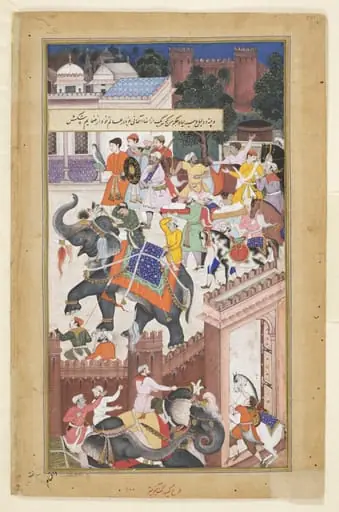
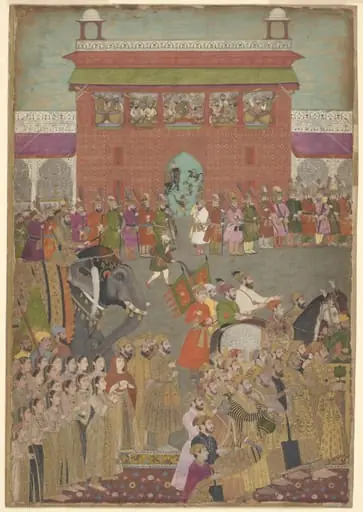
A Procession Scene with Musicians, from a copy of the Padshanama is an unspecified painting by the Mughal Painting artist Unknown. It dates from 1650 and is held in the collection of the Art Institute of Chicago. This painting is a detailed illustration from a copied version of the Padshahnama, a historical chronicle of the Mughal court.
About this work
Overview
The composition is tightly packed, with no empty space, reflecting the Mughal tradition of recording imperial events with precision and grandeur.
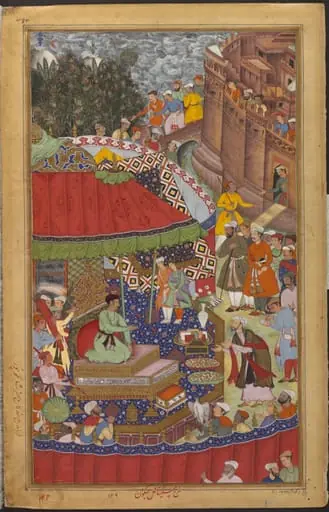
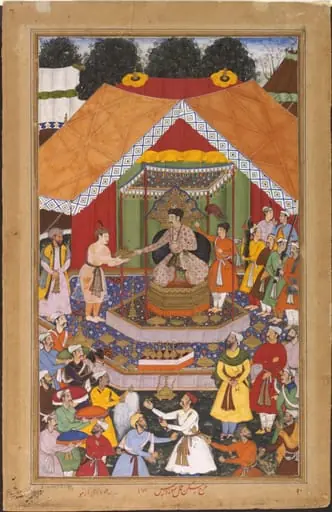
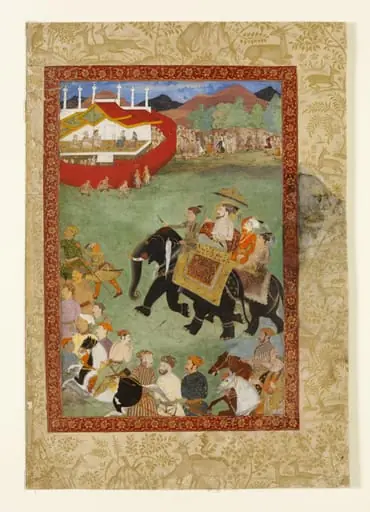
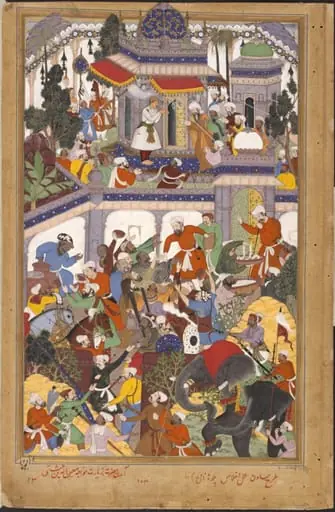
This painting is a detailed illustration from a copied version of the Padshahnama, a historical chronicle of the Mughal court. It captures a ceremonial procession, emphasizing movement and spectacle through a dense arrangement of figures, animals, and architecture. The composition is tightly packed, with no empty space, reflecting the Mughal tradition of recording imperial events with precision and grandeur.
Subject & Meaning
The scene depicts a royal procession, likely part of a public celebration or religious festival, with musicians leading the way to announce the presence of authority. Elephants and horses, symbols of power and status, flank the central axis, while crowds in varied attire suggest a diverse audience. The inclusion of musicians underscores the ceremonial nature of the event, reinforcing order and spectacle as expressions of imperial legitimacy.
Technique & Style
Executed in opaque watercolor on paper, the painting employs fine brushwork to render intricate textiles, architectural details, and animal anatomy. Bright pigments—vermilion, lapis lazuli, and malachite—are layered to create vivid contrasts. The flat perspective and decorative patterning reflect Persian and Indian miniature traditions, prioritizing symbolic richness over naturalistic depth.
History & Provenance
The work originates from a later copy of the Padshahnama, commissioned during the 17th century to preserve or replicate earlier imperial imagery. While the original was produced under Shah Jahan’s patronage, this version likely emerged from a workshop in the Deccan or Punjab, where Mughal styles were adapted by regional artists. Its survival suggests continued interest in courtly visual culture beyond the emperor’s lifetime.
Context
Processional imagery was central to Mughal visual propaganda, documenting rituals that reinforced the emperor’s divine authority. Such paintings were often kept in imperial libraries or presented as gifts to dignitaries. The emphasis on music, animals, and crowd dynamics aligns with broader Indo-Persian traditions that linked spectacle with political order, blending local customs with courtly ideals.
Legacy
This painting exemplifies how Mughal visual narratives were reproduced and transmitted across regions and generations. Its survival in private and institutional collections highlights its role as both historical record and artistic artifact. Later collectors valued it not only for its subject but for its craftsmanship, preserving a visual language of power that influenced regional painting traditions well into the 19th century.
Artist & collection

 Domestic Scene
 Giacomo and Cardinal Marco, investing Andrea, Abbot of San Zeno, with his Benefice
 The Nymph of Fontainebleau
 Portrait of a Woman
 Madonna and Child with Saints in the Enclosed Garden
 Venus and Minerva
 Family Group of Four on Sofa
 Wall painting from Room H of the Villa of P. Fannius Synistor at Boscoreale