Artwork
Akbar and Asaf Khan
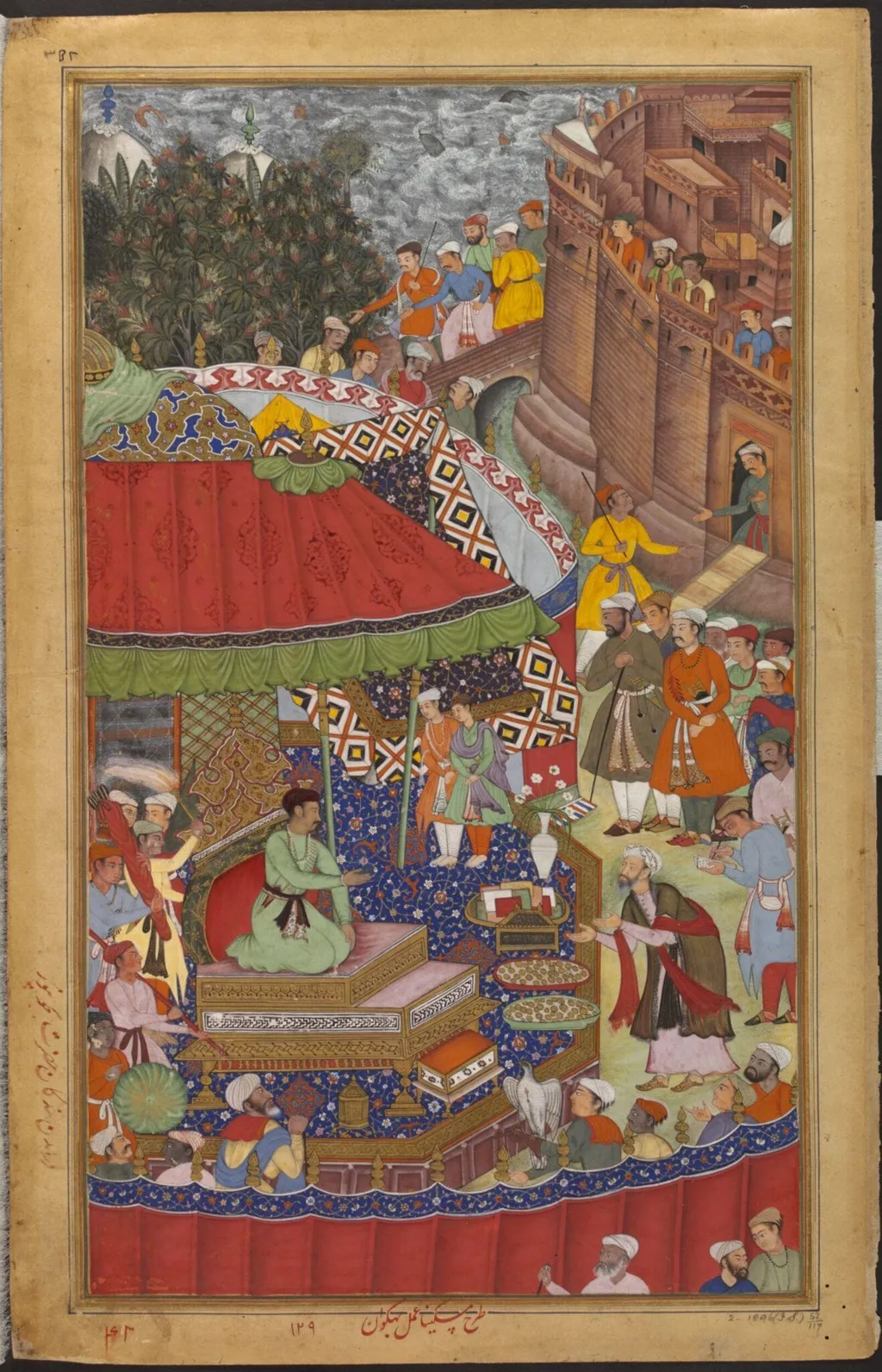
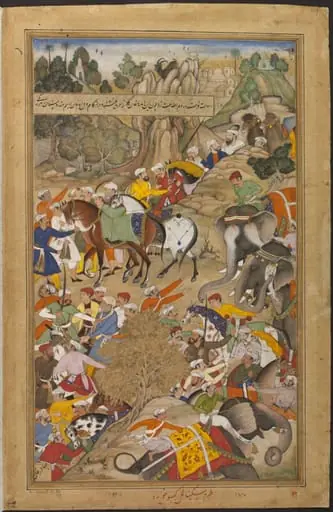
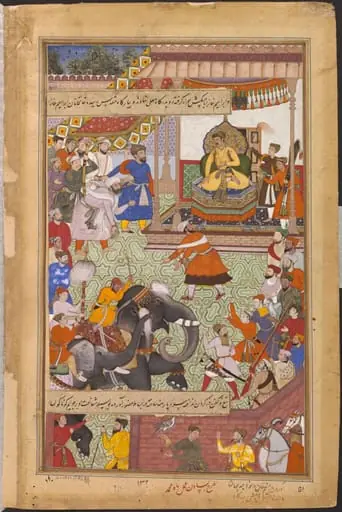
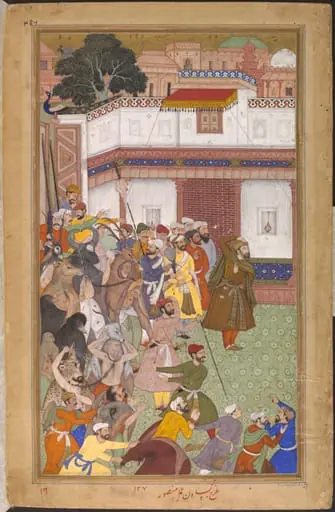
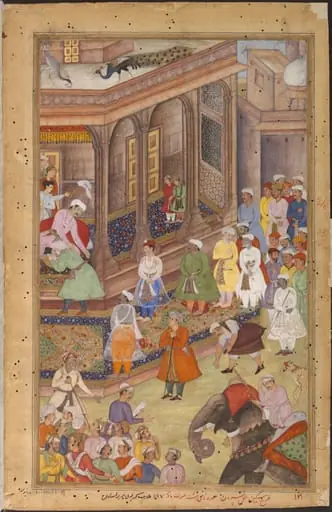
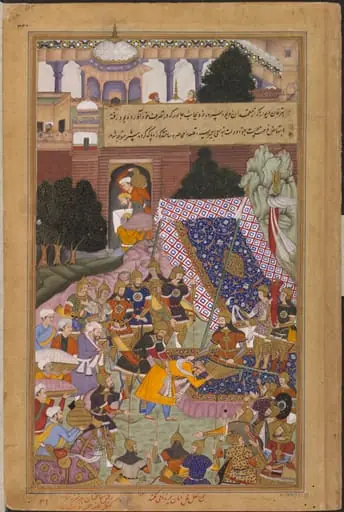
Akbar and Asaf Khan is a paint painting by the Mughal Painting artist Miskina. It dates from 1592 and is held in the collection of the Victoria and Albert Museum. The painting forms the left panel of a double-page spread from the Akbarnama, the official chronicle of Emperor Akbar’s reign.
About this work
The work is part of the Akbarnama, a book that tells Akbar’s life story.
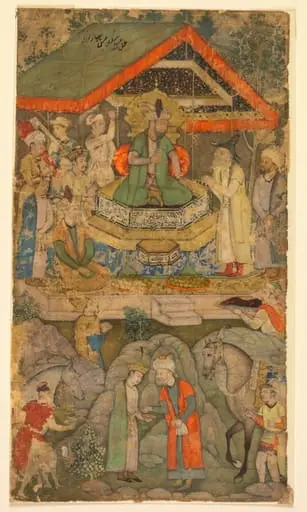
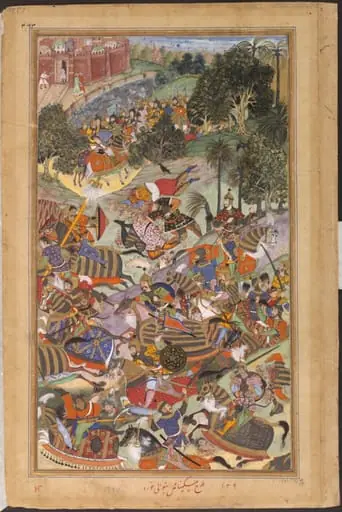
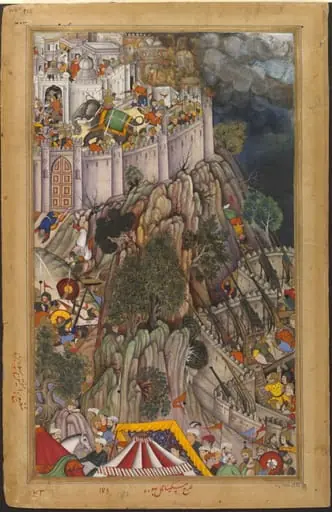
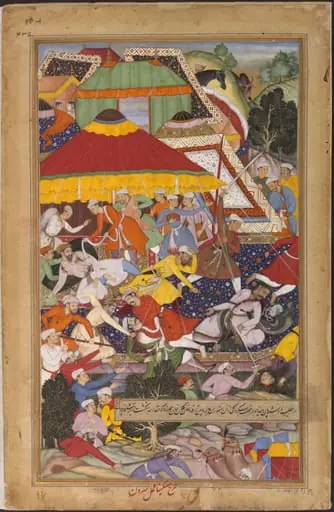
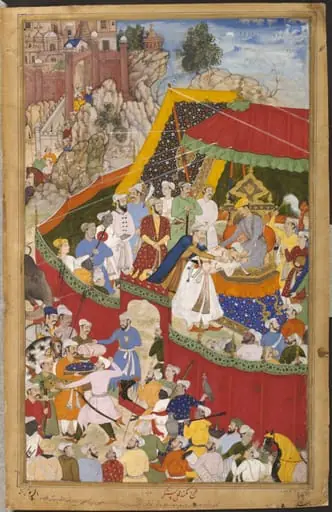
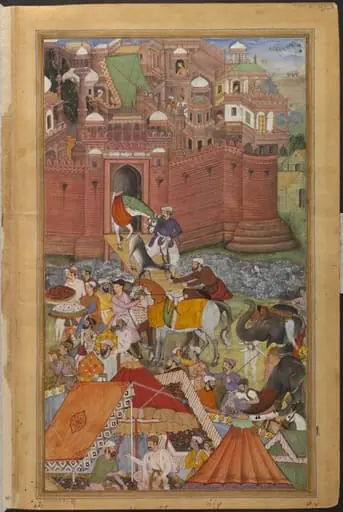
This half of the page shows Akbar seated under a striped canopy. A river runs behind the crowd of soldiers and horses. The fort’s walls rise in the distance.
The work is part of the Akbarnama, a book that tells Akbar’s life story. This scene marks a victory in 1565. The artist Miskina designed it, but Bhagwan painted the details here.
Look up the right half of this scene at the Victoria and Albert Museum.
Overview
The painting forms the left panel of a double-page spread from the Akbarnama, the official chronicle of Emperor Akbar’s reign. It shows the Mughal ruler receiving war booty from his commander Asaf Khan during a campaign in Jaunpur in 1565, set against an encampment beside a river and the distant walls of a fort.
Subject & Meaning
In the scene, Akbar sits beneath a striped canopy while Asaf Khan presents gifts that include exotic animals such as elephants and horses from Iran and Turkey. The composition emphasizes the emperor’s authority and the loyalty of his generals, illustrating a moment of triumph and the flow of tribute from conquered territories.
Technique & Style
The overall design was conceived by the court artist Miskina, a leading figure in Mughal visual culture, while the detailed painting was executed by Bhagwan. The work combines precise line work with rich coloration, typical of late‑16th‑century Mughal manuscript illustration, and integrates architectural and natural elements to create depth.
History & Provenance
The Akbarnama was commissioned by Akbar and written in Persian by his historian Abu’l‑Fazl between 1590 and 1596. This particular copy, now in the Victoria and Albert Museum, was illustrated around 1592–1595 and represents the earliest known illustrated version of the text. Red‑ink signatures beneath the image identify the royal artists, confirming it was a manuscript produced for the emperor himself.
Context
The illustration belongs to a broader narrative that records Akbar’s military successes and administrative reforms. The depiction of foreign horses and elephants reflects the Mughal interest in acquiring superior war assets and showcases the empire’s extensive trade and diplomatic contacts across Central and West Asia.
Artist & collection
Artist
Miskin (c. 1560 - c. 1604), also known as Miskina, was a Mughal painter in the court of Akbar I. The name 'Miskin' itself is a pen name. Miskin is recorded by the historian and grand vizier of Akbar, Abu'l-Fazl, in a…