Artwork
Akbar and Azim Khan at Dipalpur
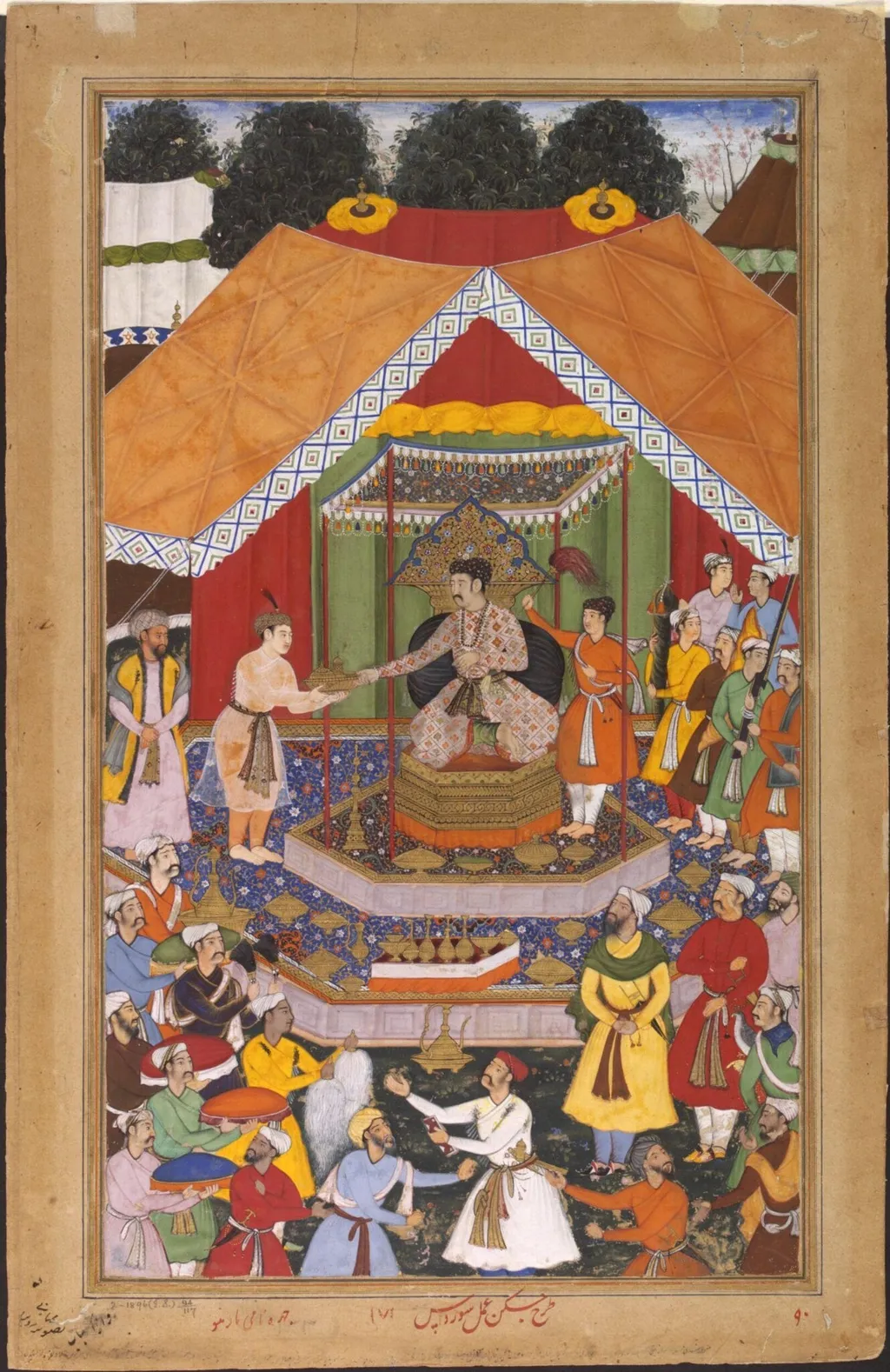
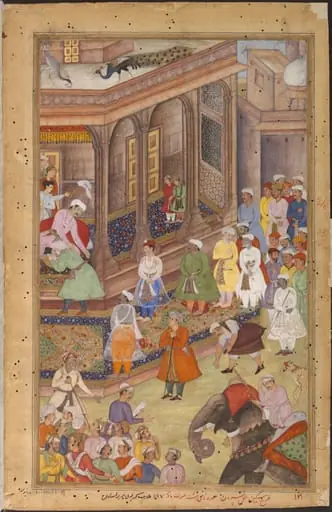
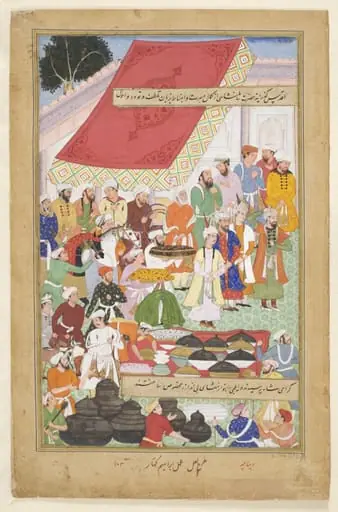
Akbar and Azim Khan at Dipalpur is a paint painting by the Mughal Painting artist Jagan. It dates from 1592 and is held in the collection of the Victoria and Albert Museum.
About this work
Overview
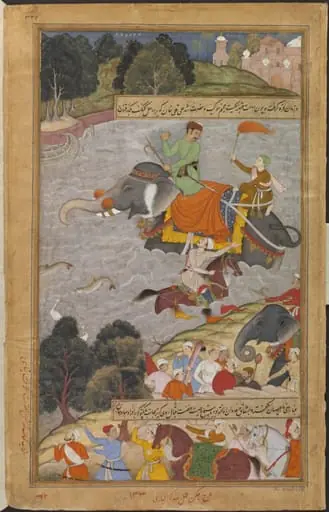
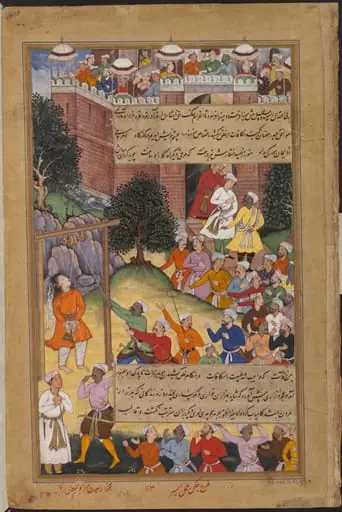
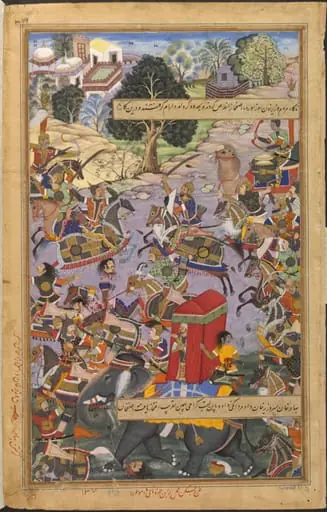
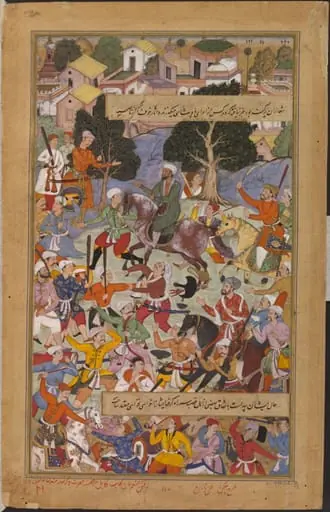
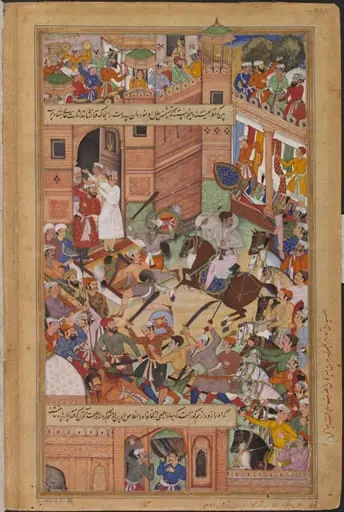
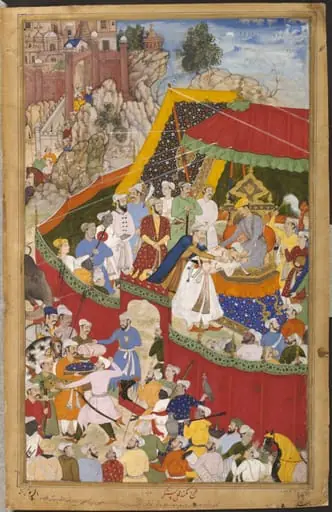
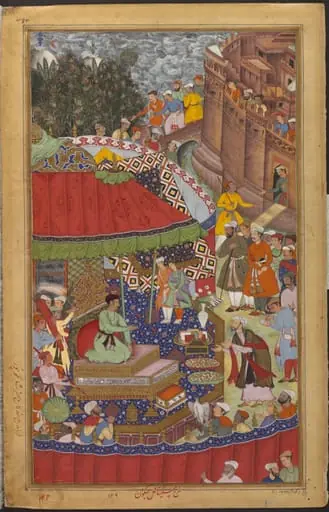
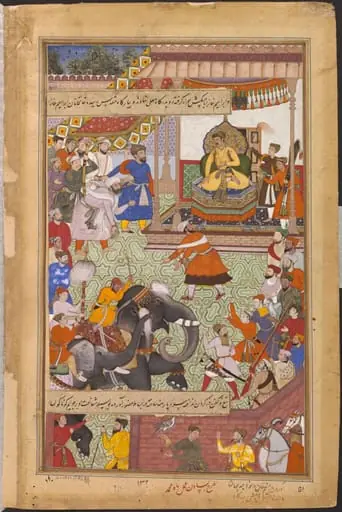
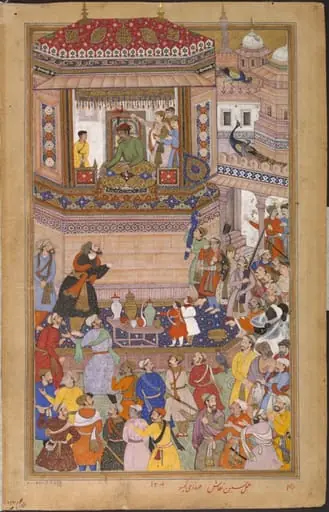
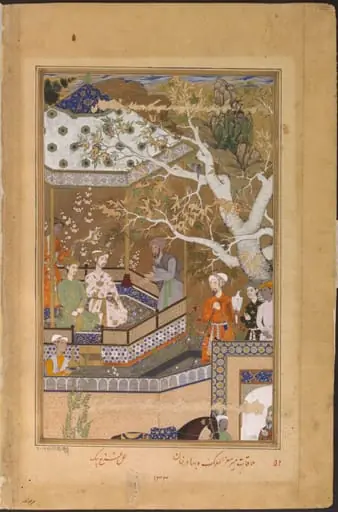
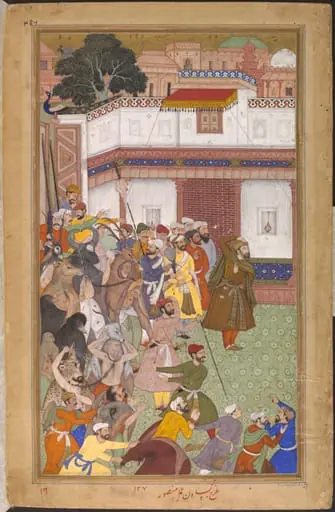
This painting depicts a scene from the Akbarnama, the official chronicle of Mughal Emperor Akbar's reign, illustrating a 1571 gathering at Dipalpur in the Panjab. It forms the right half of a double-page illustration, paired with a complementary piece (IS.2:95-1896).
Subject & Meaning
The artwork shows Emperor Akbar being entertained by his foster brother, Azim Khan, amidst a vibrant outdoor setting near Dipalpur. The scene conveys the intimacy and luxury of imperial relationships, set against the backdrop of Mughal nobility and servitude.
Technique & Style
Created by one of at least 49 artists from Akbar's studio between circa 1592-1594, the painting exemplifies the characteristic Mughal style of the period: intricate, colorful, and detailed, blending Persian and Indian artistic influences.
History & Provenance
Originally part of Akbar's library, the manuscript passed to his successors, Jahangir and Shah Jahan. It was later acquired by Major-General John Clarke in India (1858-1862) and eventually purchased by the Victoria and Albert Museum in 1896 from his widow, Mrs. Frances Clarke.
Context
Commissioned by Akbar, the Akbarnama was written by Abu'l Fazl between 1590-1596. This painting is one of many illustrations from the manuscript, reflecting the emperor's effort to document and glorify his reign through a fusion of literary and artistic expression.
Legacy
As part of the Akbarnama, this painting contributes to the historical and artistic record of the Mughal Empire's peak. It remains a significant example of Mughal manuscript illustration, offering insights into the period's court life, relationships, and aesthetic values.
Artist & collection
Artist
In the late 1500s, Jagan painted vibrant Mughal miniatures that put emperors and nobles on paper.