Artwork
The king of Bahilistan offers his daughter to the King of Kings, from a Tuti-nama (Tales of a Parrot): Seventh Night
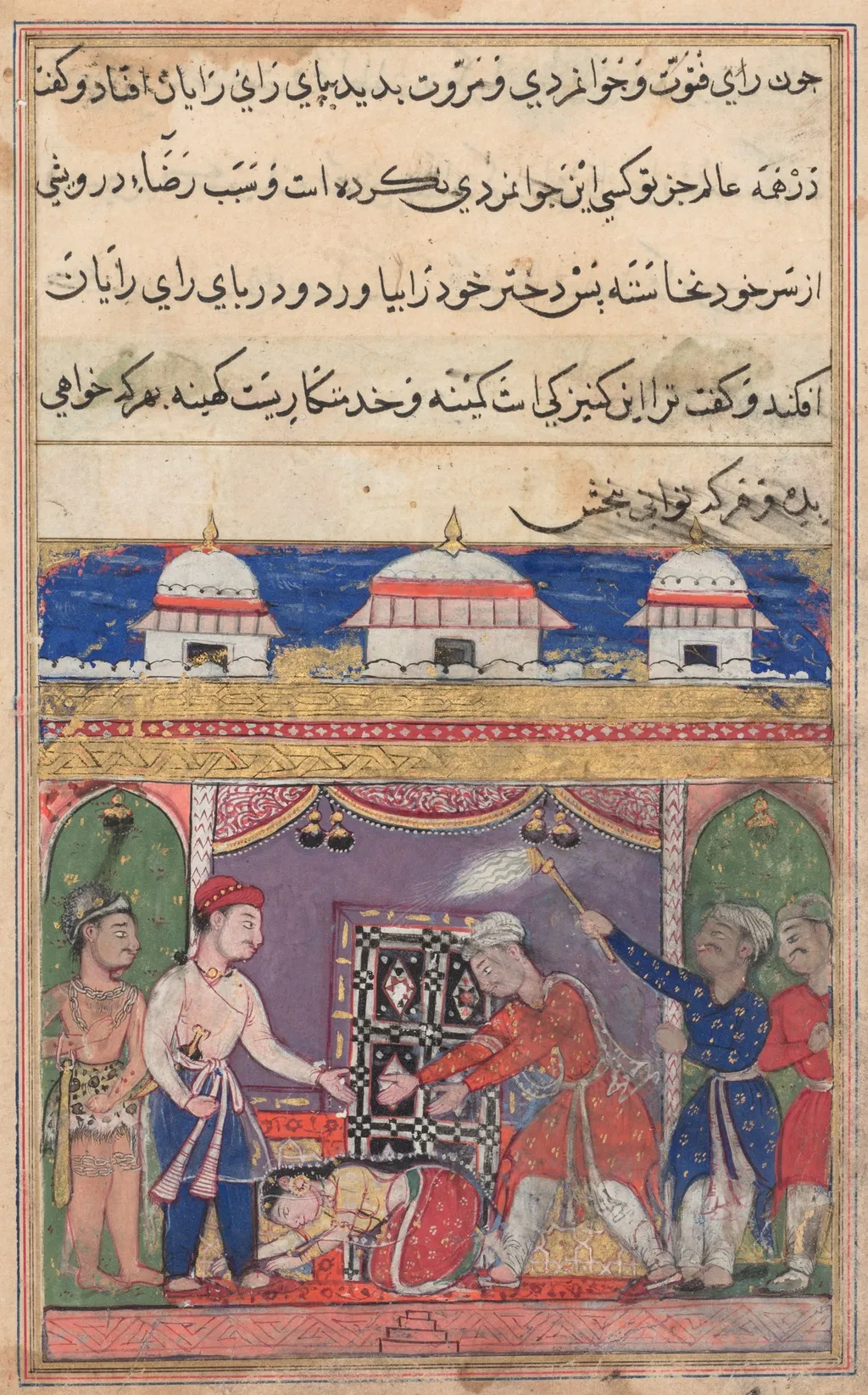
The king of Bahilistan offers his daughter to the King of Kings, from a Tuti-nama (Tales of a Parrot): Seventh Night is an unspecified painting. It dates from 1560 and is held in the collection of the Cleveland Museum of Art. The work illustrates a narrative episode from the seventh night of a Tuti‑nama, a collection of parrot‑told tales.
About this work
Overview
The work illustrates a narrative episode from the seventh night of a Tuti‑nama, a collection of parrot‑told tales. A royal delegation is gathered around a checkered object, with figures in vivid red, blue, white and a red hat, set against a richly colored backdrop of green, purple and blue that suggests an interior or palace setting.
Subject & Meaning
The scene depicts the king of Bahilistan presenting his daughter to the supreme ruler, a motif drawn from the story’s diplomatic marriage proposal. The gestures—one figure pointing to the object, another holding it—convey the exchange of a symbolic token, emphasizing themes of alliance and tribute within the tale.
Technique & Style
Executed in a miniature painting tradition, the piece employs fine brushwork to render intricate textile patterns and architectural details. A bright, saturated palette heightens the visual drama, while the flat, decorative background and stylized figures reflect the conventions of Persian manuscript illustration.
History & Provenance
The painting originates from a manuscript of the Tuti‑nama, a popular Persian literary work that circulated from the 15th to 18th centuries. Its precise date and creator remain unidentified, but the style aligns with courtly productions intended for elite patrons.
Context
Tuti‑nama illustrations often served both decorative and didactic purposes, visualizing moral lessons embedded in the parrot’s stories. This particular episode underscores the political significance of marriage alliances in the region’s historical narratives.
Artist & collection

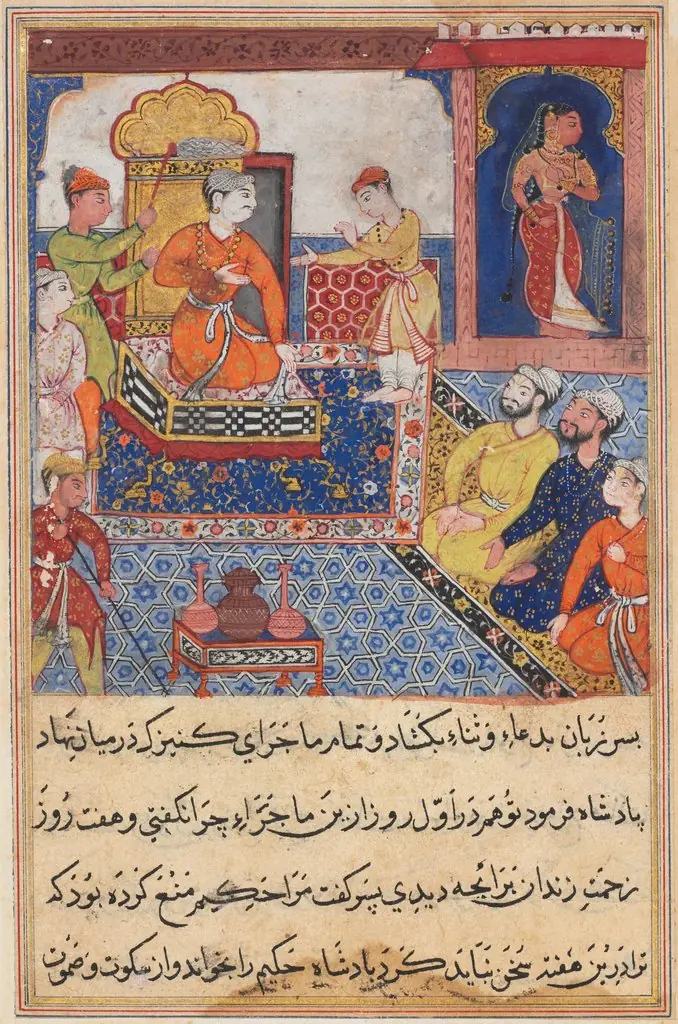 The young prince recounts his experiences to his father, the king, from a Tuti-nama (Tales of a Parrot): Eighth Night
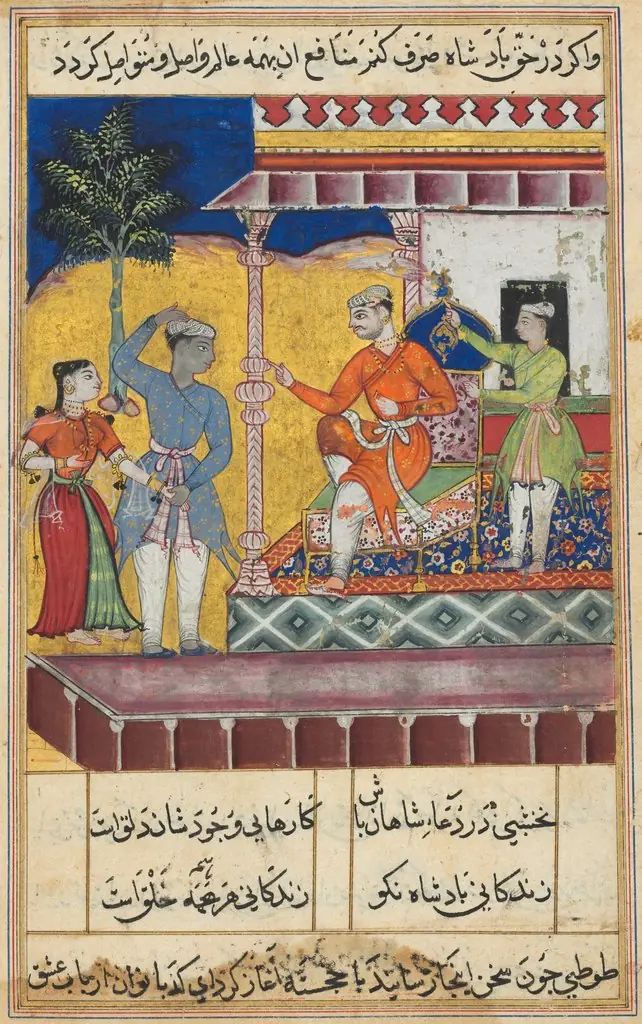 The rejuvenated old man and the daughter of the king of the jinns take leave of the King of Kings, from a Tuti-nama (Tales of a Parrot): Seventh Night
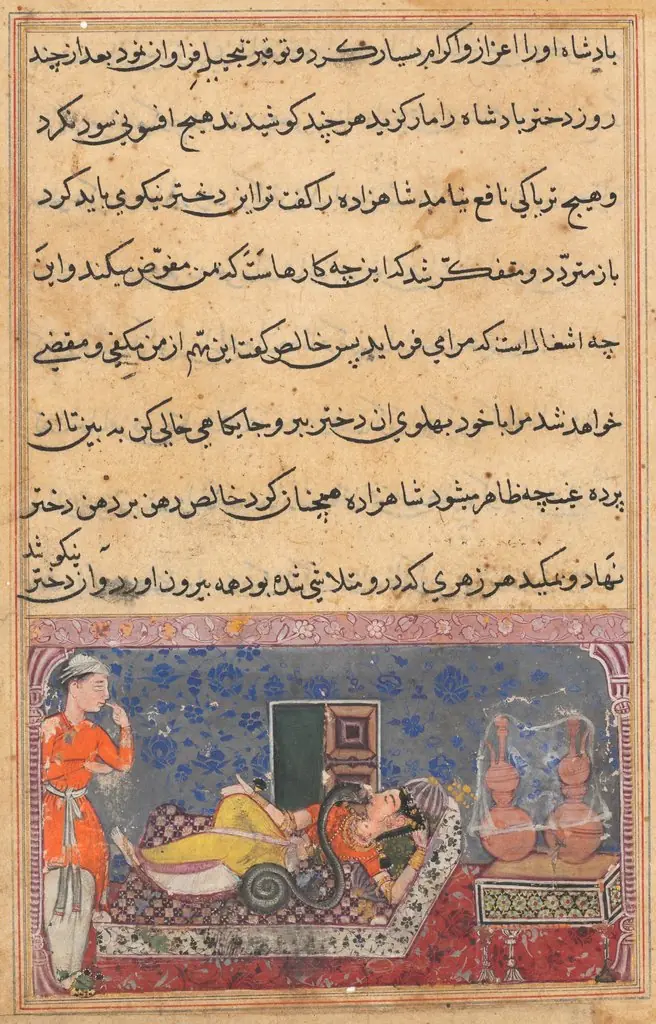 Khalis repays the prince for his kindness by changing into a snake and sucking the poison from the king’s daughter, from a Tuti-nama (Tales of a Parrot): Eighteenth Night
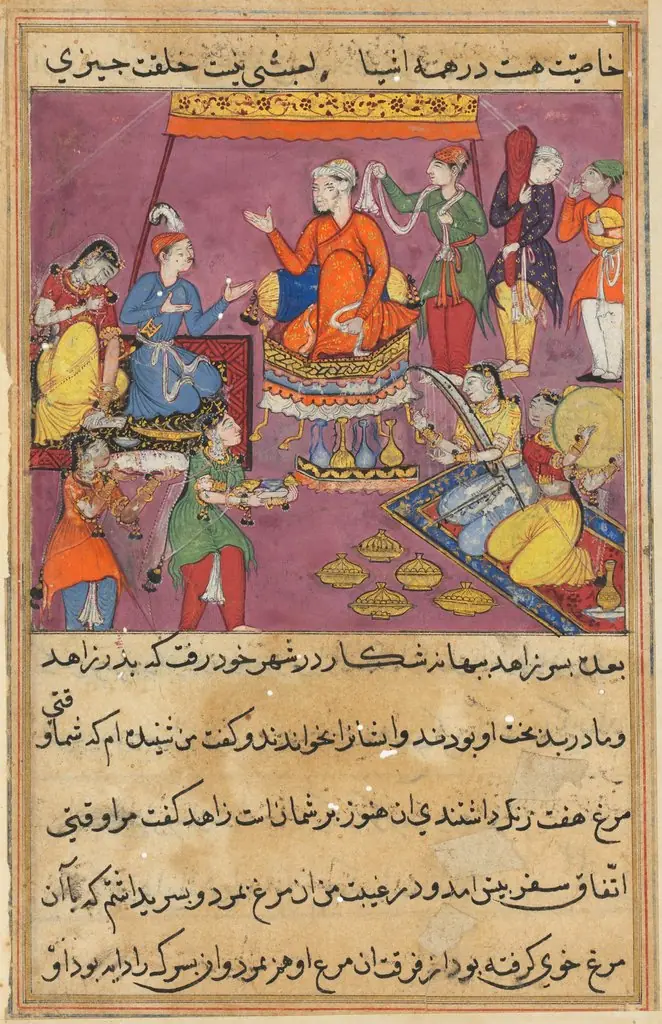 The king gives his daughter in marriage to the pious man’s son, from a Tuti-nama (Tales of a Parrot): Fifty-second Night
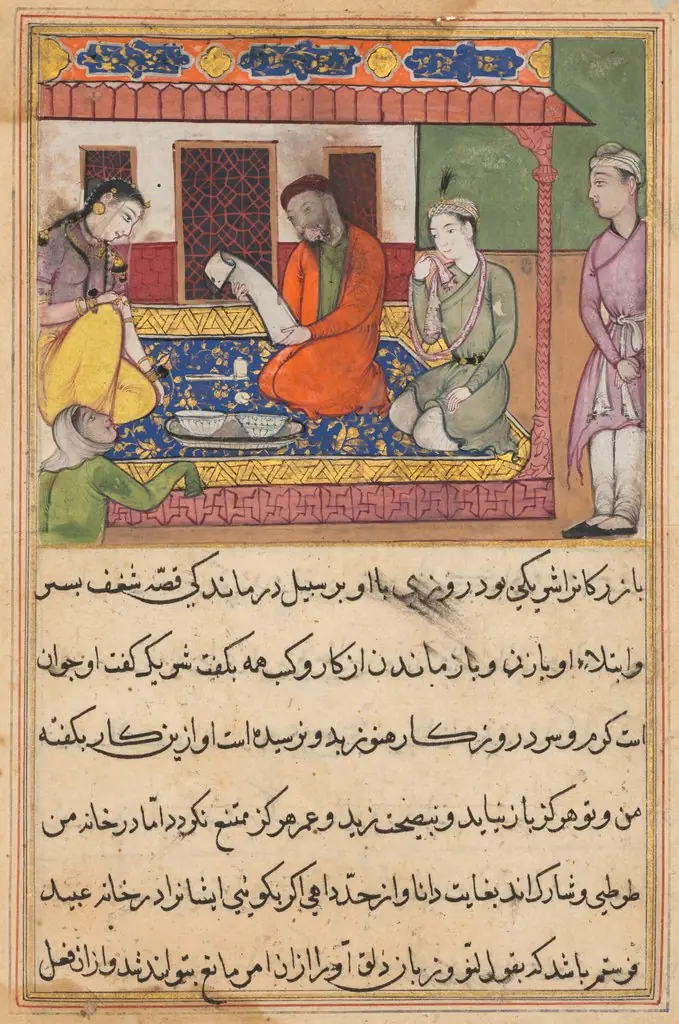 The marriage of ‘Ubaid, son of a merchant of Tirmiz, from a Tuti-nama (Tales of a Parrot): Forty-second Night
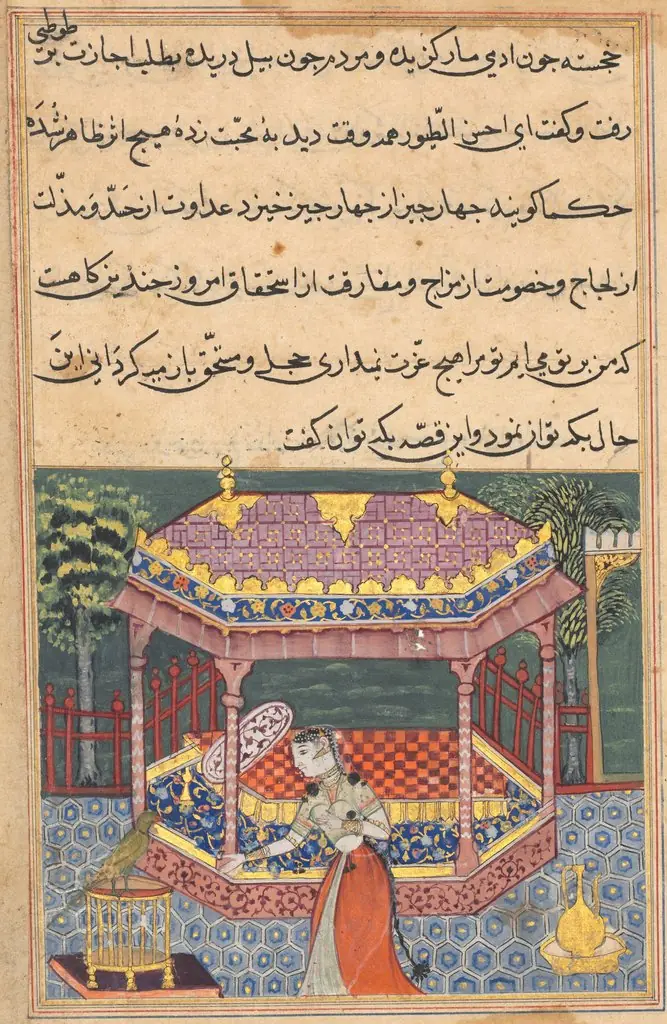 The parrot addresses Khujasta at the beginning of the thirty-seventh night, from a Tuti-nama (Tales of a Parrot)
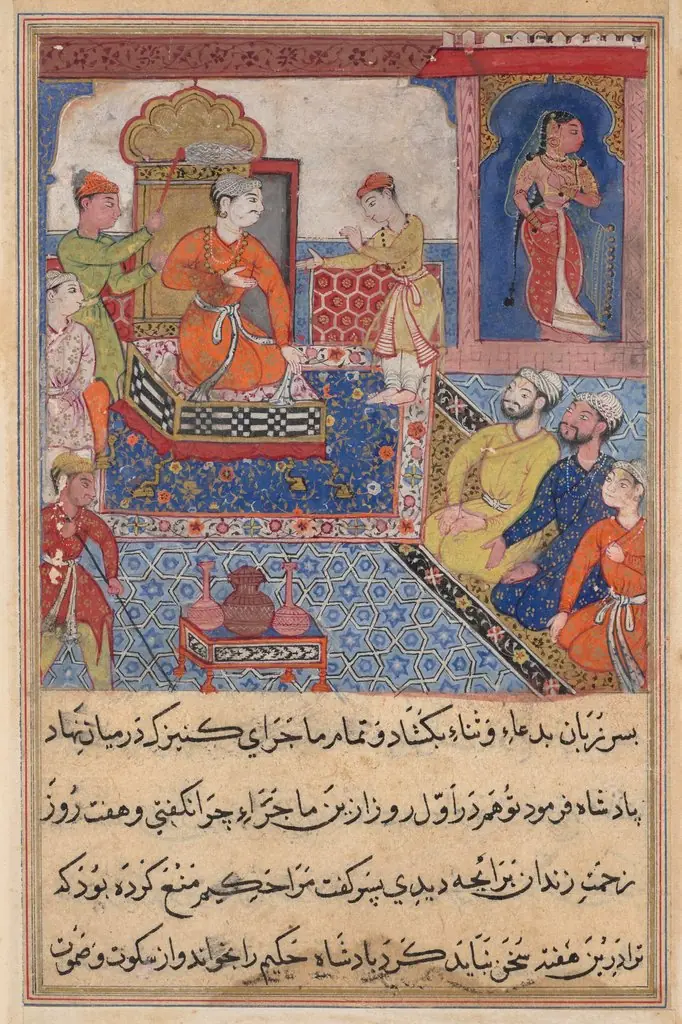 Page from Tales of a Parrot (Tuti-nama): text page
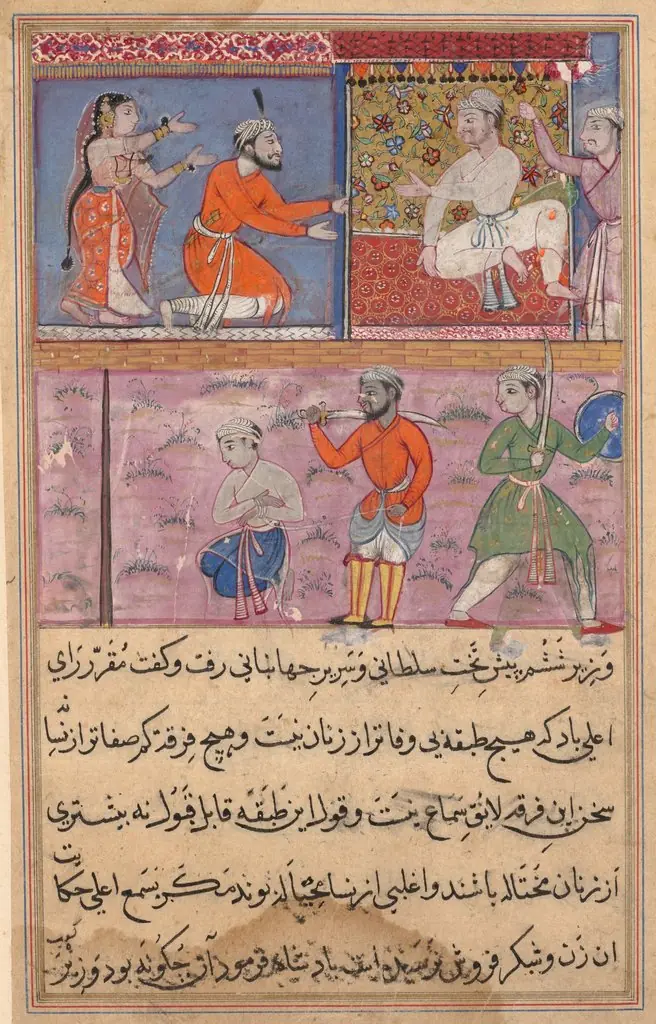 Page from Tales of a Parrot (Tuti-nama): text page
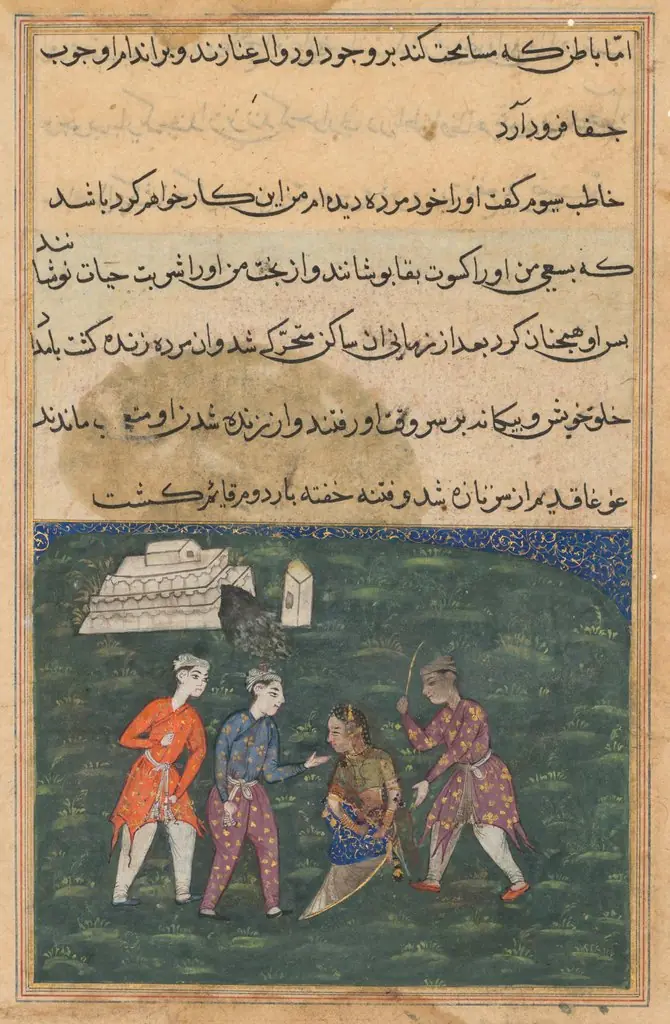 The third suitor strikes the devotee’s daughter and thus restores her to life, from a Tuti-nama (Tales of a Parrot): Twentieth Night
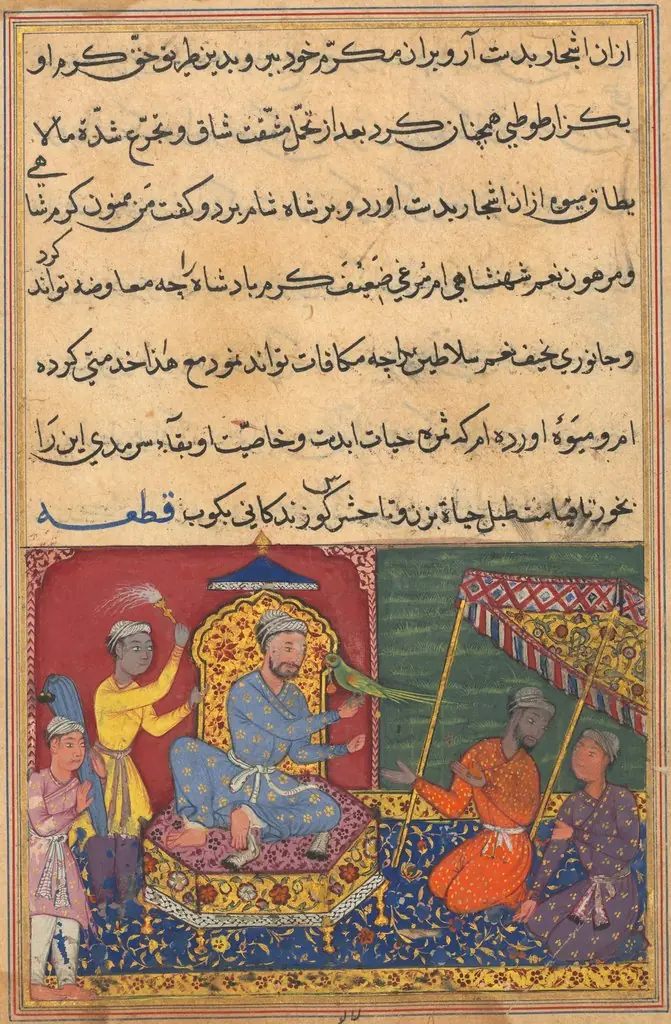 The parrot brings a fruit from the Tree of Life to the king of Syria, from a Tuti-nama (Tales of a Parrot): Ninth Night
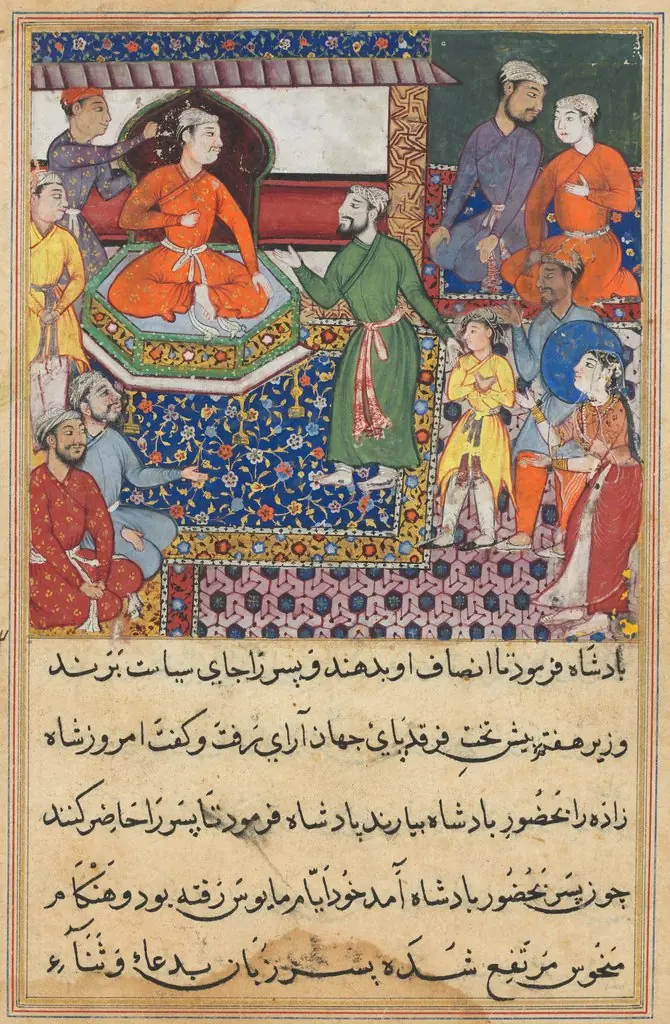 The handmaiden again pleads for the death of the prince, from a Tuti-nama (Tales of a Parrot): Eighth Night
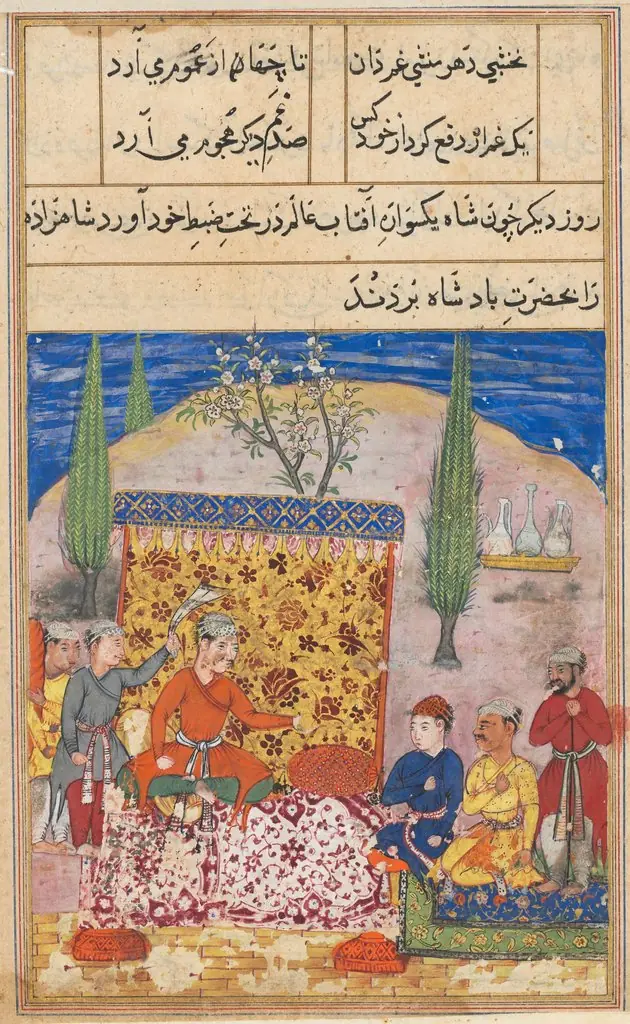 The young prince is presented to the king, his father, by his teacher, but refuses to speak, from a Tuti-nama (Tales of a Parrot): Eighth Night
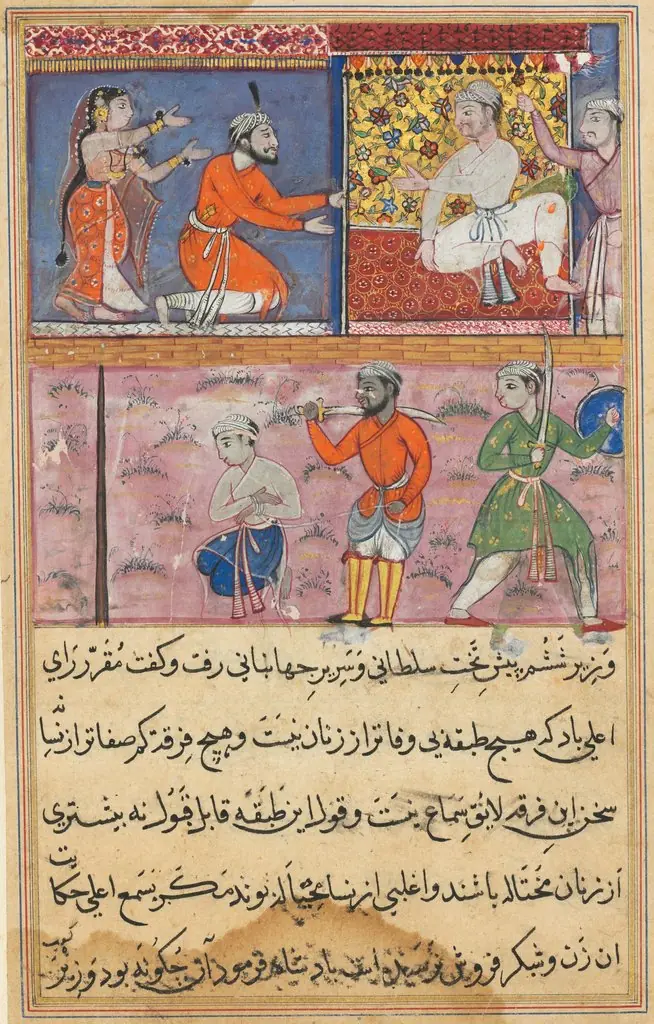 The prince sent back to the place of execution for the sixth time, from a Tuti-nama (Tales of a Parrot): Eighth Night
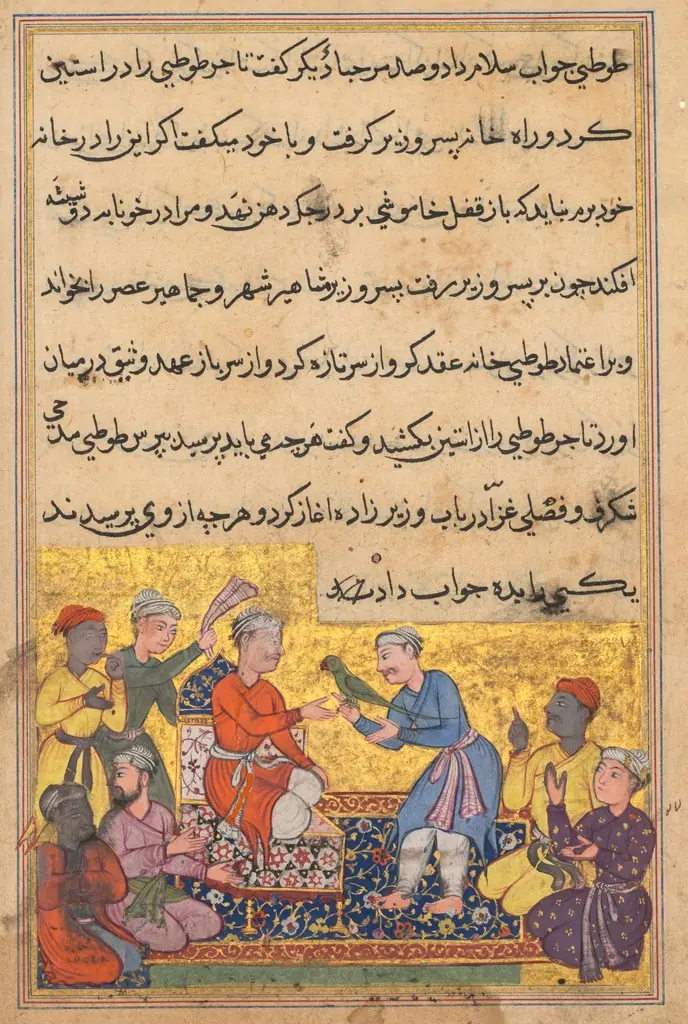 The magic parrot of the merchant talks to the vizier’s son, from a Tuti-nama (Tales of a Parrot): Tenth Night
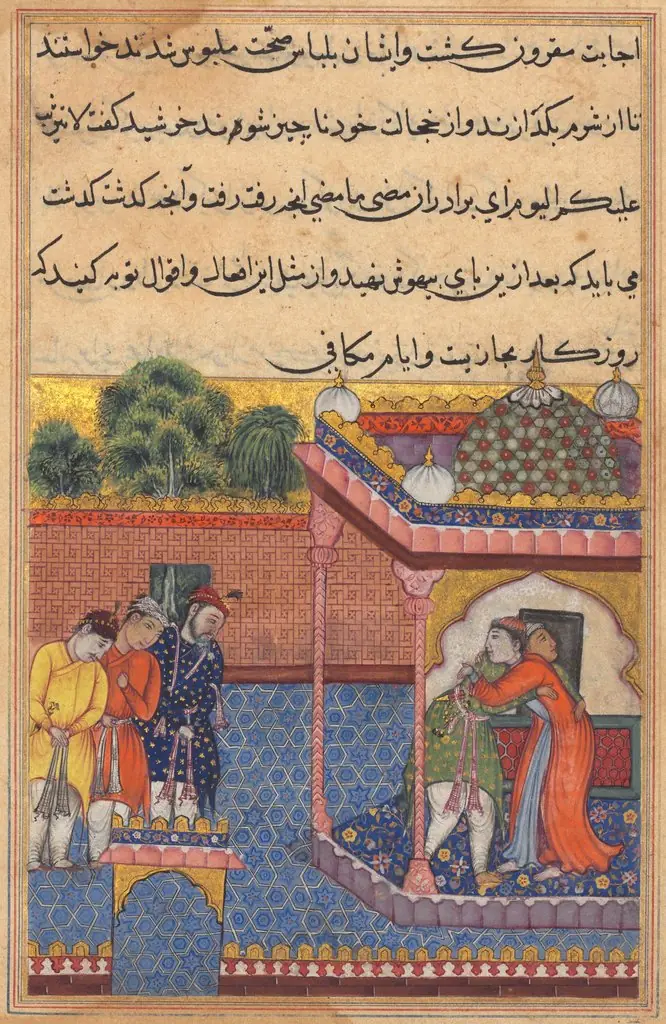 Khurshid reunited with her husband Utarid, from a Tuti-nama (Tales of a Parrot): Thirty-second Night