Artwork
Joseph recognizes in Mary the mother of the Messiah
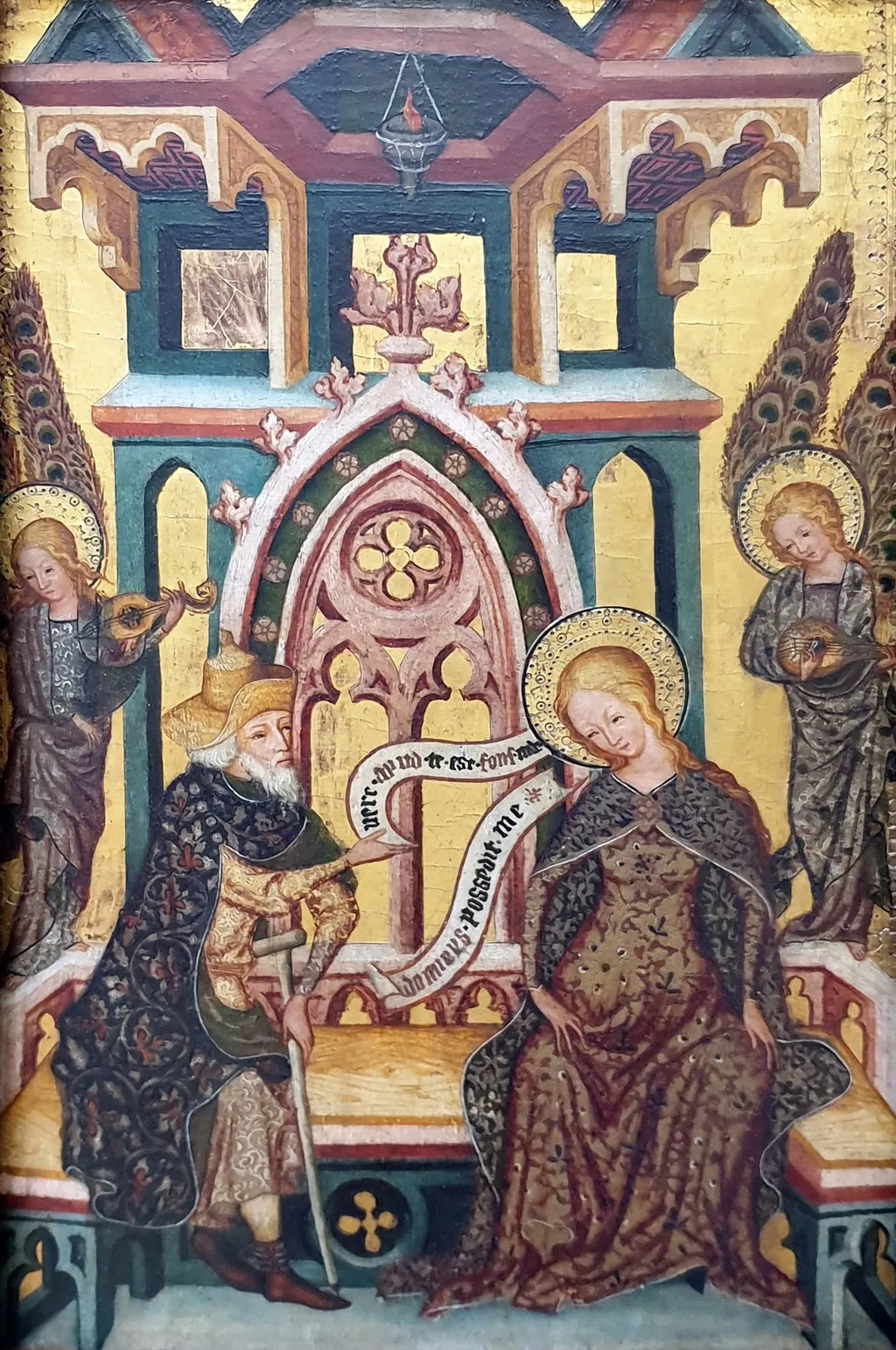
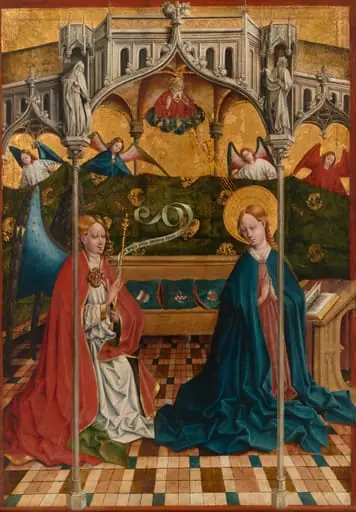
Joseph recognizes in Mary the mother of the Messiah is an unspecified painting by Unknown. It is held in the collection of the Gemäldegalerie Berlin. The work presents a solemn gathering centered on a seated woman on an elevated throne, her attire flowing and a halo encircling her head.
About this work
Overview
The work presents a solemn gathering centered on a seated woman on an elevated throne, her attire flowing and a halo encircling her head. To her right stands an elderly bearded figure, robed and holding a staff, both figures engaged in mutual gaze. Flanking them, two angels each clutch a musical instrument, while a luminous yellow backdrop and an imposing architectural element frame the scene.
Subject & Meaning
The composition portrays the biblical moment when Joseph recognizes Mary as the mother of the Messiah, a pivotal revelation in the Christian narrative. The halo signals Mary's sanctity, while Joseph’s staff underscores his role as protector. The angels’ instruments suggest heavenly celebration, reinforcing the divine approval of the forthcoming incarnation.
Technique & Style
Executed in oil on canvas, the painting employs a restrained palette dominated by warm yellows and muted earth tones. The figures are rendered with careful modeling, emphasizing volume through subtle chiaroscuro. Architectural forms in the background are stylized rather than detailed, directing focus toward the central interaction and the surrounding celestial attendants.
History & Provenance
The piece is part of the collection of the Gemäldegalerie in Berlin. Its acquisition history traces back to the museum’s 19th‑century expansion of Baroque and early‑modern religious works, though specific details of its earlier ownership remain undocumented in the available records.
Context
Created within the tradition of devotional art, the painting reflects the Counter‑Reformation emphasis on clear, emotionally resonant religious scenes. By depicting a moment of personal revelation rather than overt miracle, it aligns with contemporary efforts to make sacred narratives accessible to lay viewers through intimate, humanized portrayals.
Artist & collection

 Domestic Scene
 Giacomo and Cardinal Marco, investing Andrea, Abbot of San Zeno, with his Benefice
 The Nymph of Fontainebleau
 Portrait of a Woman
 Madonna and Child with Saints in the Enclosed Garden
 Venus and Minerva
 Family Group of Four on Sofa
 Wall painting from Room H of the Villa of P. Fannius Synistor at Boscoreale
 Die Verkündigung an Maria Rückseite: Teil einer Anbetung der Könige
 Coronació de la Mare de Déu amb àngels músics
 The Annunciation
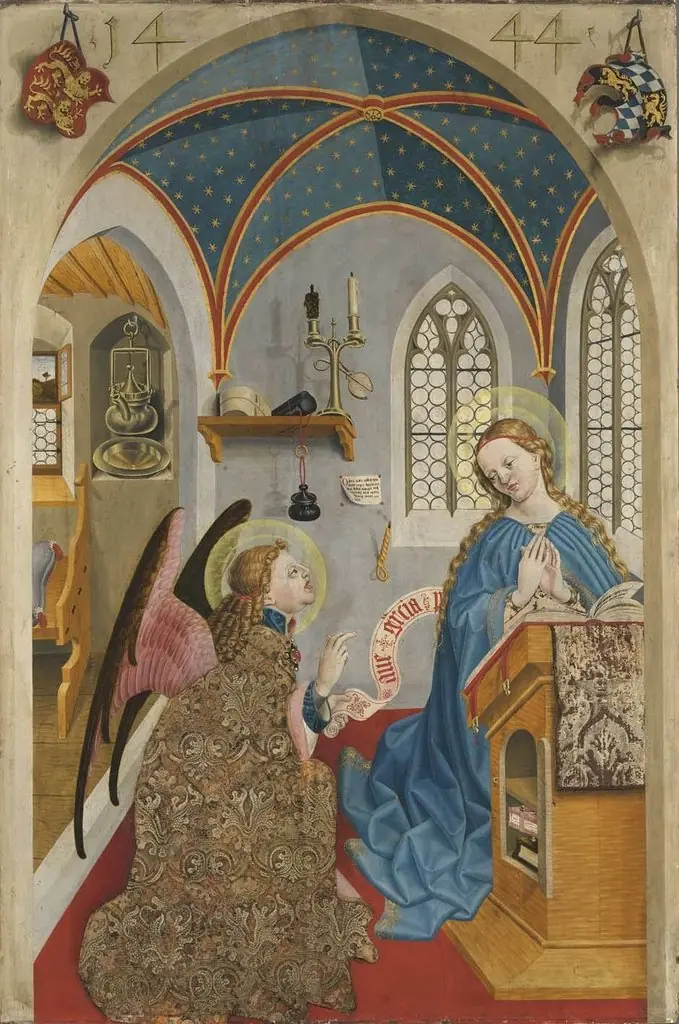 Altar of Mary: Annunciation to Mary
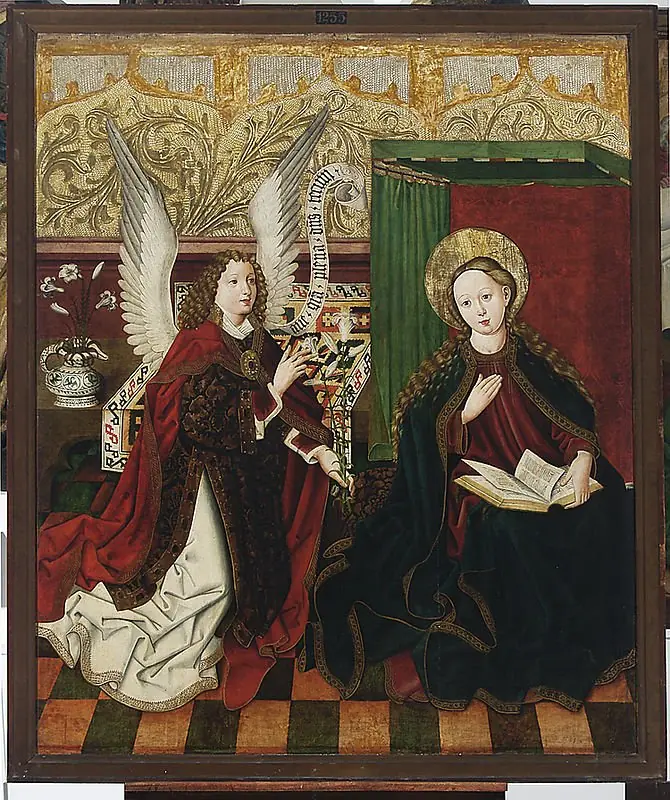 Legnica polyptych - left wing internal - upper panel - obverse: Annunciation; reverse: St Lawrence, St Vincent the Levite. St John the Baptist
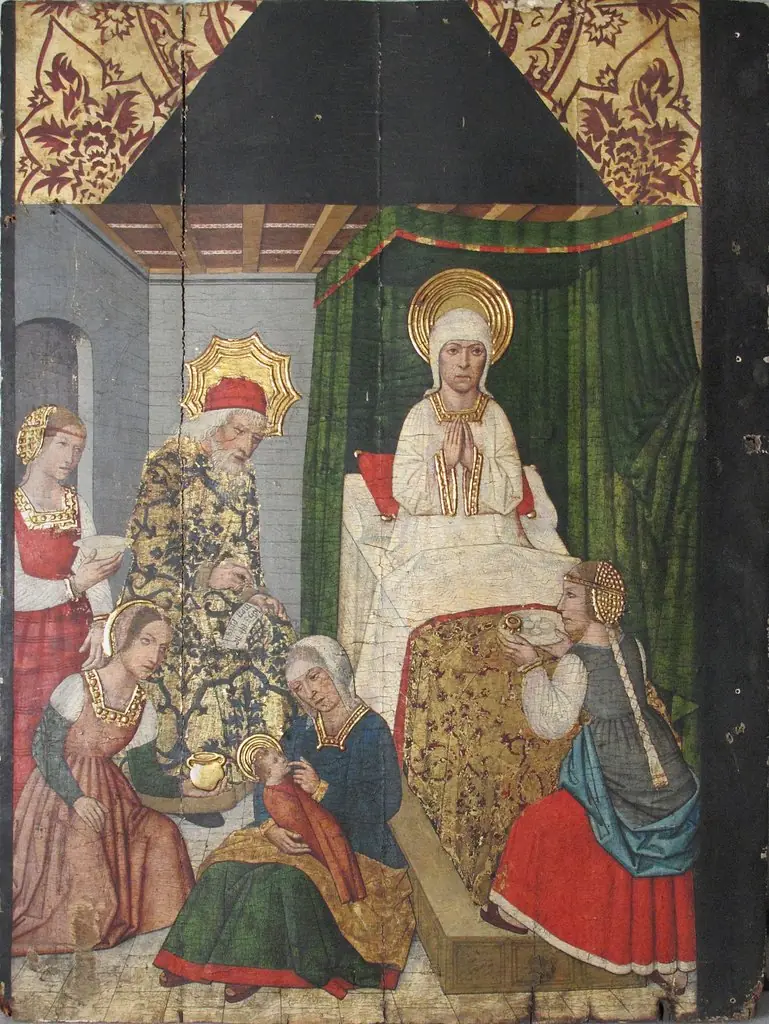 Panel with the Birth of St. John the Baptist from Retable
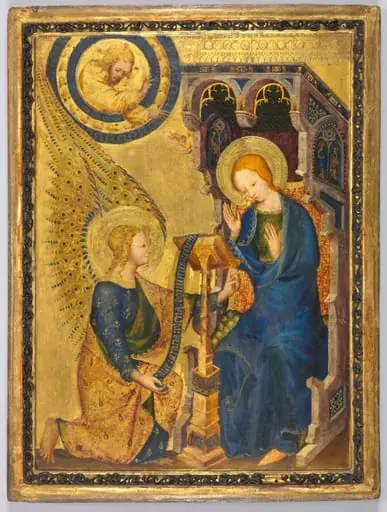 The Annunciation
 The Annunciation
 Annunciation to the Virgin
 Adoration of the Magi
 Nașterea Sf. Ioan Botezătorul
 The Annunciation